

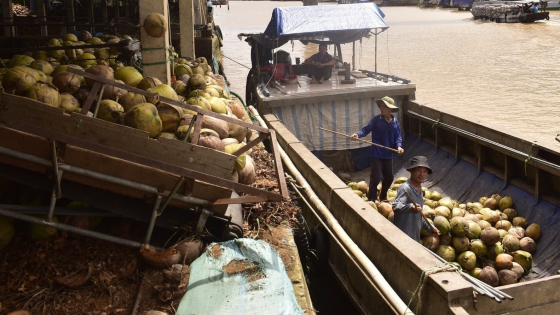
(VAN) With the largest coconut growing area nationwide, Vinh Long is accelerating the development of raw material zones, promoting processing, and expanding markets, aiming to achieve billion-dollar exports.
According to Mr. Van Huu Hue, Deputy Director of the Vinh Long Department of Agriculture and Environment, coconut is one of the province’s key crops, playing an important role in the agricultural economic structure as well as in local livelihoods.
Following the provincial merger, Vinh Long has become the locality with the largest coconut-growing area nationwide. This is considered a significant advantage for the province in developing its coconut industry toward large-scale commodity production, linking raw material areas with processing and export.
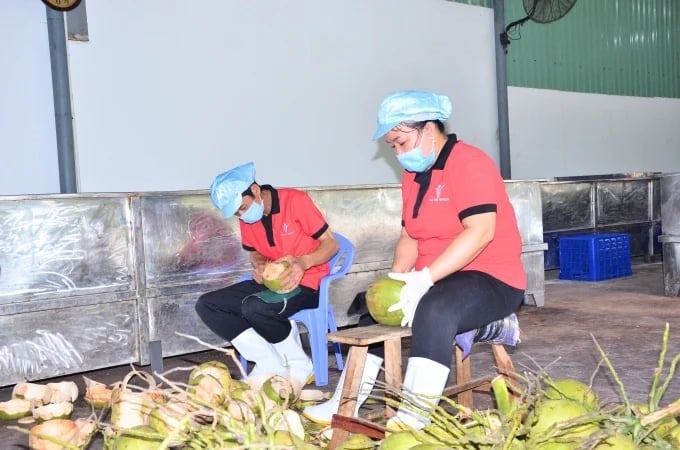
Vinh Long’s fresh coconut exports have recorded strong growth in recent years. Photo: Minh Dam.
“The coconut industry has been identified as one of the province’s key agricultural industries. Expanding raw material areas, promoting deep processing, and strengthening chain linkages will provide the foundation for enhancing the economic value of this crop in the coming period,” Mr. Hue said.
29 growing area codes for fresh coconut exports
Coconut has long been closely associated with the livelihoods of people in many localities across the province. In recent years, Vinh Long’s agricultural sector has implemented a range of measures to develop the coconut industry sustainably.
The province has focused on developing concentrated coconut production zones, rehabilitating inefficient coconut gardens, and encouraging intercropping models within coconut plantations to improve land-use efficiency and increase farmers’ incomes.
In parallel, numerous research and technology transfer programs have been carried out to enhance coconut productivity and quality. Research topics have focused on developing new coconut varieties, managing pests and diseases, and applying technical advances in coconut cultivation.
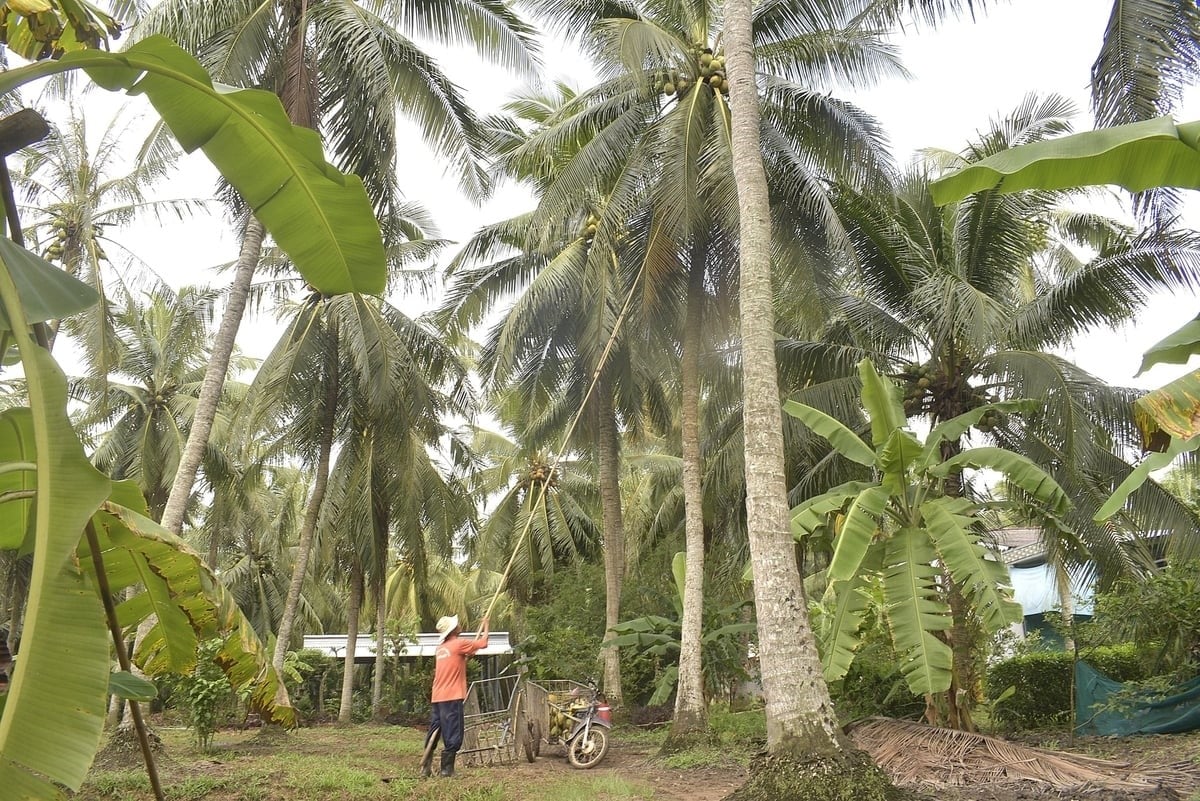
Harvesting organic coconuts at Quoi Dien Cooperative in Quoi Dien commune, Vinh Long province. Photo: Minh Dam.
It is estimated that by the end of 2025, the province will have around 119,000 hectares of coconut plantations, ranking first nationwide in coconut-growing area. Commonly grown varieties include tall coconuts for industrial processing, such as local green and local yellow coconuts, with an area of 99,900 hectares, and dwarf varieties for drink demand, such as green Siamese coconuts, accounting for roughly 18,000 hectares. In addition, there are about 1,300 hectares of Macapuno coconuts.
Planting density typically ranges from 190 to 200 trees/hectare, depending on coconut varieties and local soil conditions. In recent years, coconut yields in the province have remained relatively stable and shown an upward trend. Average yield increased from about 10.98 tons/hectare in 2020 to approximately 11.95 tons/hectare in 2025.
The province currently has 105 mother coconut gardens with 9,735 trees recognized for propagation and production development. Notably, many coconut production areas have met international standards. About 30,355 hectares are produced under organic standards in the US, the EU, China, and Japan. In addition, 29 growing area codes for fresh coconuts have been granted for export to the Chinese market, contributing to the expansion of consumption opportunities for the province’s coconut products.
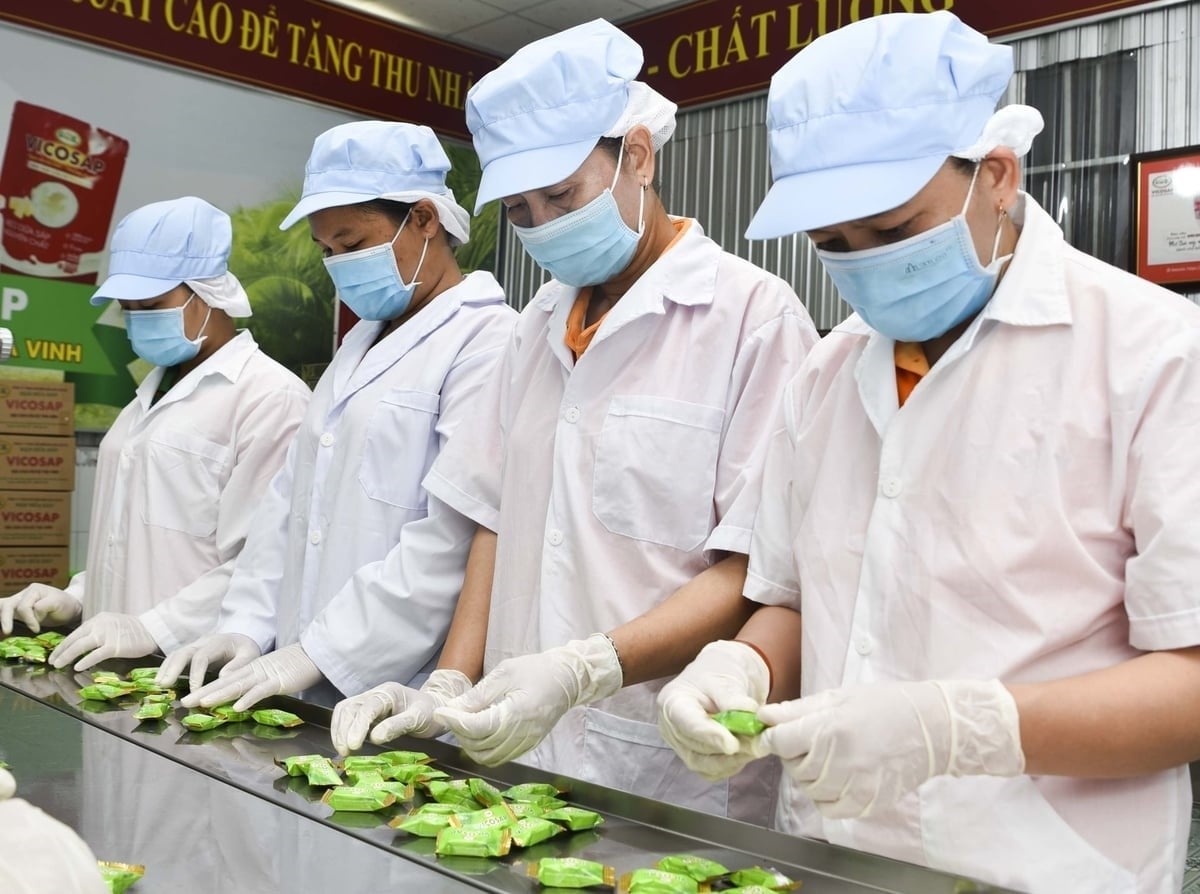
Processing macapuno coconut candy at Cau Ke Wax Coconut Processing Co., Ltd. (Vicosap) in Tam Ngai commune, Vinh Long province. Photo: Minh Dam.
Coconut processing generates VND 8,150 billion
In parallel with expanding raw material areas, Vinh Long province has paid attention to developing the processing industry to enhance the added value of coconuts. The province currently has around 151 enterprises engaged in the production and processing of coconut products.
These enterprises participate in multiple stages of the value chain, including processing coconut husks, coconut coir, coconut fiber, coconut shells, and activated carbon, as well as producing handicrafts, desiccated coconut, coconut milk, and a wide range of coconut-based food products. In addition, many companies have invested in coconut water processing, producing items such as coconut jelly, canned coconut water, and coconut-based beverages for both domestic consumption and export markets.
Coconut processing technology is currently concentrated on the food field. Many enterprises have applied modern production lines and advanced packaging technologies such as Tetra Pak, helping to improve product quality and meet international market standards.
The production value of the coconut processing industry in the province reached approximately VND 7,700 billion in 2024 and is estimated to rise to around VND 8,150 billion in 2025. Output of industrial coconuts for export in 2024 reached about 82 million fruits, up 8.43% compared to 2023.
Towards billion-dollar exports
In recent years, Vinh Long has stepped up trade promotion activities to expand markets for coconut products. Supply–demand connection programs, trade fairs, and international trade events have been regularly organized to support businesses in promoting products and seeking partners.
The province has also participated in various trade activities in potential markets such as Japan, Singapore, Malaysia, China, Australia, and Thailand. Local enterprises have been supported to attend numerous international exhibitions to expand export markets and promote the coconut product brand. At the same time, communication and promotion of coconut products have been strengthened through press channels, television, and e-commerce platforms.
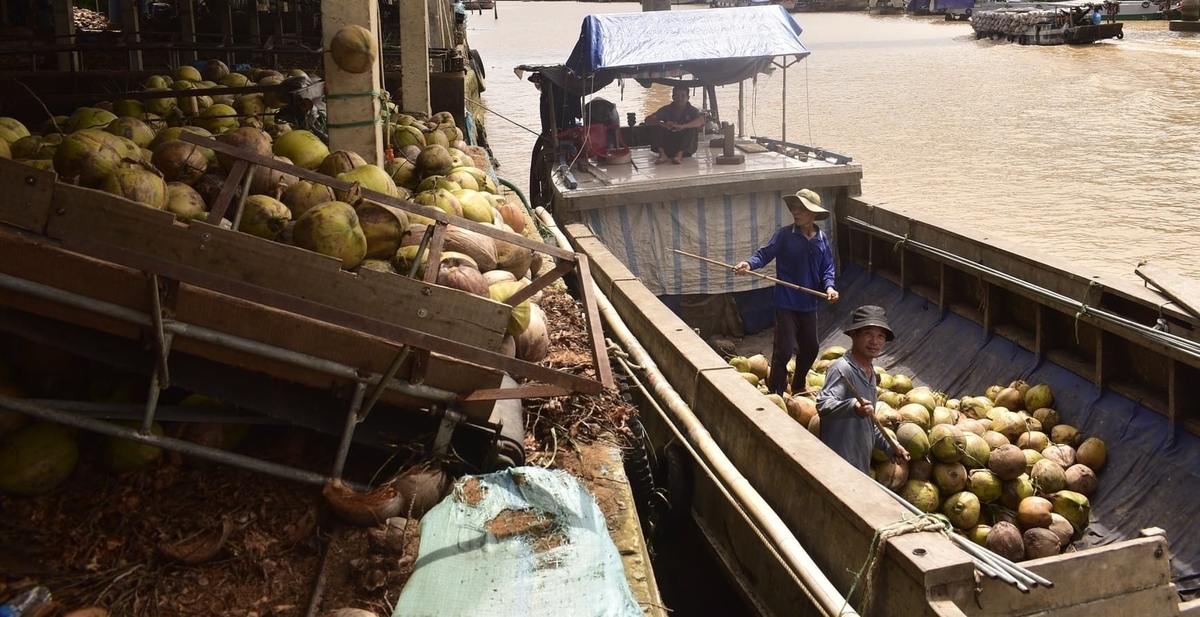
The output of industrial coconuts for export in Vinh Long reached approximately 82 million fruits in 2024, up 8.43% compared to 2023. Photo: Minh Dam.
In the coming period, Vinh Long will continue to develop its coconut sector toward sustainability, enhancing added value, and improving competitiveness in international markets. The province will focus on rehabilitating aging coconut gardens, expanding concentrated production areas associated with value chains, and further developing organic coconut zones.
At the same time, the province will promote the application of digital technologies in production management, build traceability systems, and attract investment in deep processing. The target is to maintain an annual growth rate of coconut production value above 10%, while striving for an average annual increase of around 10% in export turnover for coconut products.
Beyond processing, the province also aims to develop orchard-based ecotourism associated with OCOP products derived from coconuts, particularly the locality’s distinctive macapuno coconuts. Through the development of stable raw material areas, the promotion of processing industries, and stronger linkages between farmers and enterprises, Vinh Long aims to build a sustainable coconut industry and gradually bring its coconut products to international markets.
“The Department will coordinate with relevant sectors to guide and support enterprises in fully accessing preferential policies on credit, tax, and land. The province will also implement many measures synchronously to attract investment in coconut processing and high-tech agriculture, ensuring that farmers feel secure in production and businesses are confident in investing. Thereby developing Vinh Long’s coconut sector in a sustainable, high-value direction with a billion-dollar export orientation,” said Mr. Van Huu Hue, Deputy Director of the Vinh Long Department of Agriculture and Environment.
* $1 = VND 26,362 – Source: Vietcombank
Agriculture News | Agri Products Price