



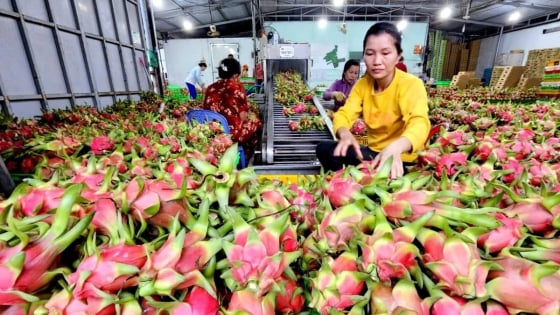
(VAN) Amid market volatility, GlobalGAP-certified dragon fruit production models and cooperative linkages are proving their sustainable value, ensuring profits for farmers.
Sustainable linkages: Key to income stability
Amid frequent fluctuations in agricultural markets, the dragon fruit farm of Mr. Tran Quoc Thang in Ham Thuan Nam commune, Lam Dong province, still maintains a bustling production pace to fulfill export orders.
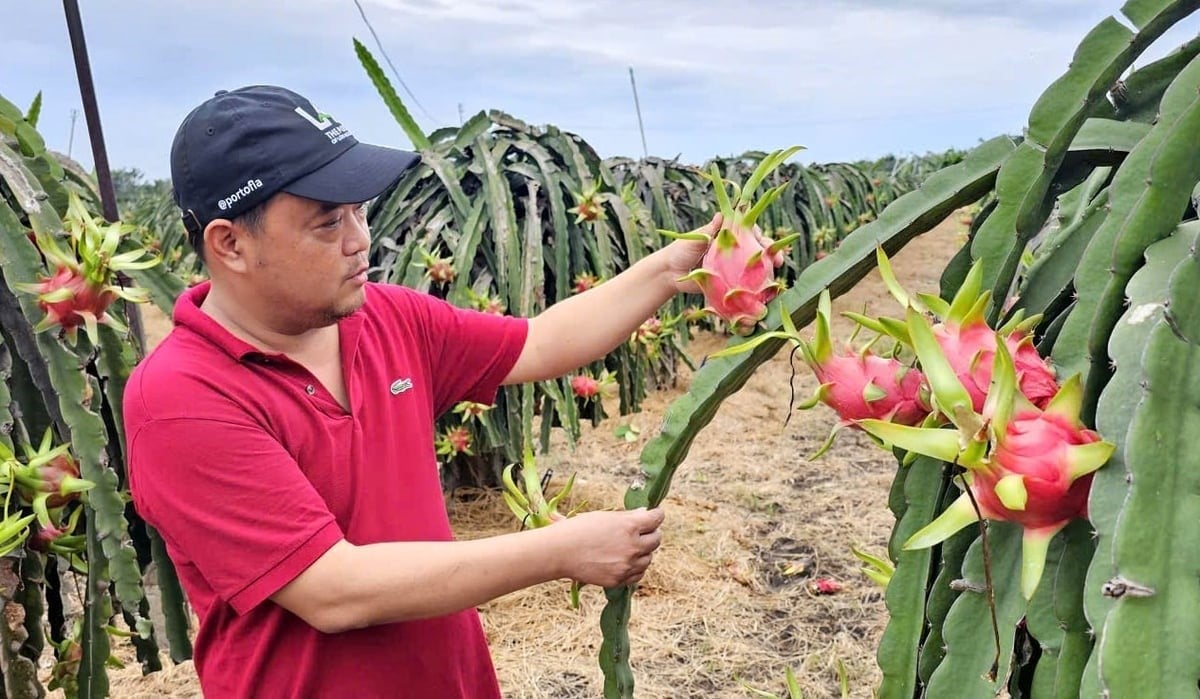
For more than a decade, Mr. Tran Quoc Thang in Ham Thuan Nam commune, Lam Dong province,has consistently adhered to GlobalGAP-certified dragon fruit production. Photo: KS.
With 46 hectares of dragon fruit cultivated under GlobalGAP standards, Mr. Thang stands as a typical example of steadfast commitment to clean agriculture.
For more than a decade, Mr. Thang’s farm’s product output has remained remarkably stable. Purchase prices are secured year-round at around VND 18,000/kg for white-fleshed dragon fruit and VND 30,000/kg for red-fleshed varieties. At these price levels, after deducting production costs, his farm achieves profit margins of 40–50%. As a result, farmers do not need to worry about price fluctuations in the market.
A close linkage between the farm and export enterprises in Ho Chi Minh City has been established and maintained since 2010. Under signed contracts, these partners consistently place monthly orders of 300–400 tons of dragon fruit. Thanks to its credibility and the product quality meeting contractual commitments, sales have proceeded smoothly even during the most challenging periods, such as the pandemic and the ongoing Middle East conflict.
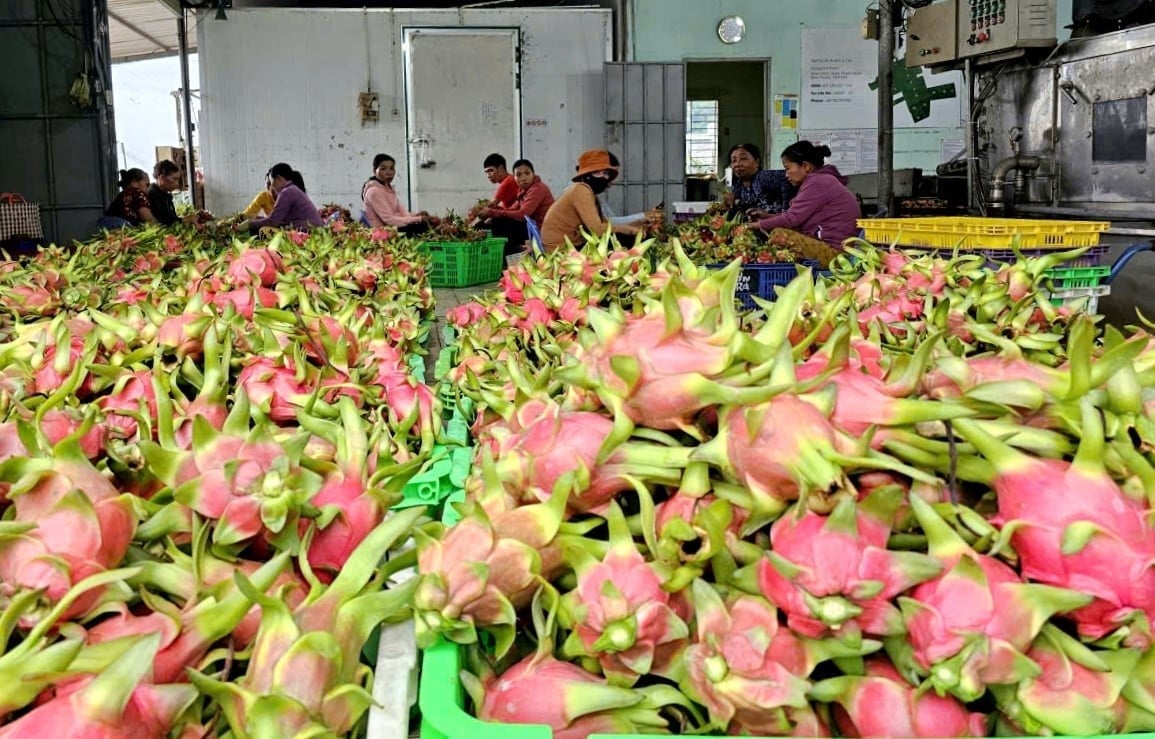
Mr. Thang’s farm supplies thousands of tons of dragon fruit for export each year. Photo: KS.
Last year alone, the farm’s total dragon fruit output reached approximately 1,500–1,600 tons. These figures underscore the outstanding economic efficiency of a clean production model associated with market linkages.
Pressure on transportation costs
However, dragon fruit production is also facing numerous challenges. According to Mr. Do Thanh Hiep, Director of Hoa Le Clean Dragon Fruit Cooperative (Ham Thuan commune, Lam Dong province), while GlobalGAP-certified dragon fruit prices have remained at a high level of over VND 20,000/kg, prices on the open market have dropped sharply, now fluctuating between VND 5,000–9,000/kg.
In addition to price pressure, rising transportation costs are also reducing the profits of enterprises and cooperatives. Due to the impact of fuel prices and expressway tolls, transport costs have increased by about VND 200/kg compared to normal levels. Moreover, weather conditions and farming techniques also pose certain challenges. It is currently the lighting period, during which dragon fruit plants are prone to sprouting new shoots that can easily break during electric stimulation, thereby affecting productivity.
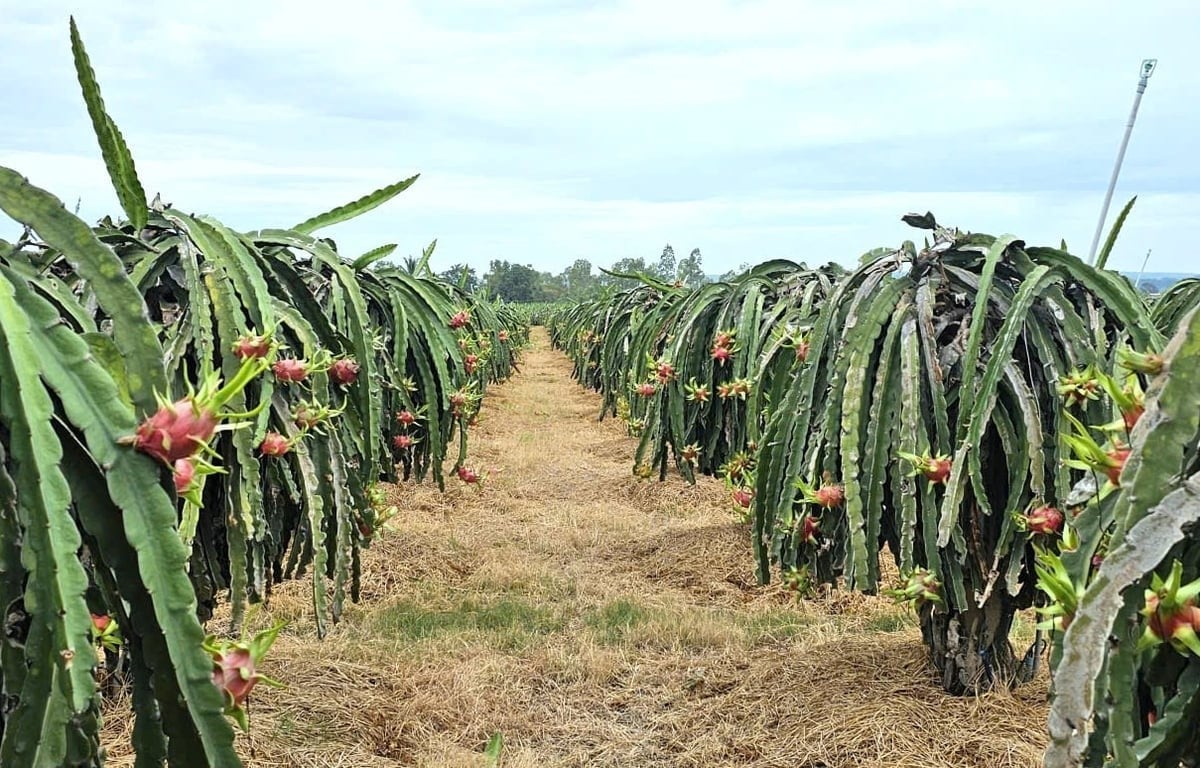
Lam Dong is currently the country’s dragon fruit production hub. Photo: KS.
Mr. Bien Tan Tai, Deputy Director of the Lam Dong Department of Industry and Trade, said that dragon fruit exports in the first two months of 2026 remained generally stable, with an output of around 10,000 tons and a value of approximately USD 7 million. However, export value declined slightly compared to the same period in 2025, as the average export price currently stands at only about USD 700/ton.
Particularly, international geopolitical fluctuations, such as tensions between the U.S. and Iran, have directly impacted the logistics sector. Volatile freight rates have made many exporters hesitant to sign new contracts. Nevertheless, there are still bright spots in the market, as imports from India are showing positive signs, with growth of around 15%.
To cope with current challenges, Hoa Le Clean Dragon Fruit Cooperative and its partners are accelerating the development of clean production models with clear origins, requiring farmers to strictly comply with production log recording. The cooperative currently has 10 hectares certified under GlobalGAP and is linking with other farmer households across a total area of approximately 200–300 hectares to ensure a stable supply of quality products.
Contributing to realizing double-digit growth targets
Dragon fruit currently remains a key export fruit of Lam Dong province, with more than 80% of output exported to major markets such as China, India, Australia, the U.S., the EU, and Japan. Among these, China continues to account for the largest share, representing over 70% of total export volume.
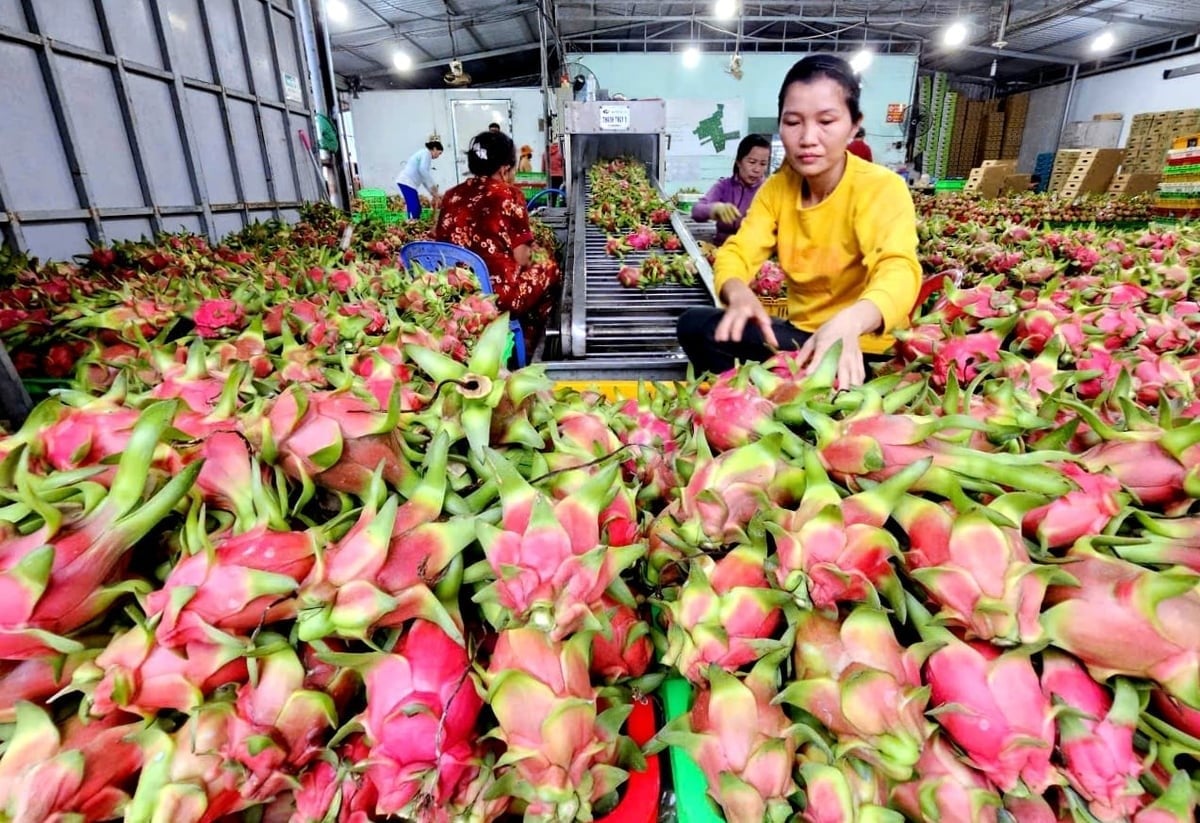
Workers carry out pre-processing of dragon fruit for export. Photo: KS.
Mr. Tran Duc Thien, Deputy Head of the Lam Dong Sub-Department of Crop Production and Plant Protection, said that the province currently has 26,126 hectares of dragon fruit, with output reaching nearly 578,000 tons in 2026. However, the proportion of cultivated area that applies good agricultural practices still needs improvement. Specifically, VietGAP-certified area accounts for about 34.03%, GlobalGAP for 2.07%, and organic production for only 0.48%.
In implementing the double-digit growth scenario set by the Lam Dong Provincial People’s Committee for 2026, the province’s industry and trade sector and the agriculture and environment sector have identified key solution groups.
Mr. Tran Duc Thien emphasized the need to effectively advise and implement the Government’s Decree No. 38/2026/ND-CP on plantation codes and packing facility codes. Compliance with technical barriers on pesticide residues, food safety, and quarantine requirements is the only pathway for Lam Dong dragon fruit to firmly establish itself in demanding markets.
Alongside improving the quality of fresh fruit, the province is also promoting deeply processed products such as soft-dried and dried dragon fruit to enhance added value. E-commerce channels are also identified as an effective solution for enterprises and cooperatives to access global customers in the digital era.
The Lam Dong Department of Industry and Trade forecasts that, with efforts to upgrade machinery and strengthen trade promotion, dragon fruit export turnover from local enterprises in 2026 is expected to reach around USD 45 million, up about 5% from 2025.
Lam Dong dragon fruit’s journey to expand its global presence depends not only on the diligence of farmers like Mr. Thang or the dynamism of cooperatives such as Hoa Le, but also on the close support of regulatory authorities in building a clean, reputable, and professional agricultural ecosystem. When each dragon fruit carries its own “passport” in the form of international certifications, it will no longer need to fear fluctuations in the global market.
According to Mr. Tran Duc Thien, Deputy Head of the Lam Dong Sub-Department of Plant Production and Protection, the province currently has 13 dragon fruit production linkages with a total annual output of over 90,975 tons, including 540 hectares certified under GlobalGAP and 124.5 hectares under organic cultivation. The Lam Dong Department of Industry and Trade reported that the province’s dragon fruit export value reached approximately USD 42 million in 2025.
* $1 = VND 26,361. Source: Vietcombank.
Agriculture News | Agri Products Price