

(VAN) The Middle East conflict is not only a challenge but also an opportunity for Viet Nam’s agriculture to restructure, enhance value, and become more proactive in the global supply chain.
Logistics “weak point”
Amid fluctuations from the Middle East conflict, rising energy and logistics costs are creating unprecedented pressure on global supply chains. For Viet Nam’s agriculture and food sector, this is not only a cost issue but also a “mirror” reflecting long-standing structural weaknesses.
Regarding this issue, a reporter from VAN News spoke with Mrs. Duong Hong Loan, Director of the Institute for Viet Nam Initiatives.
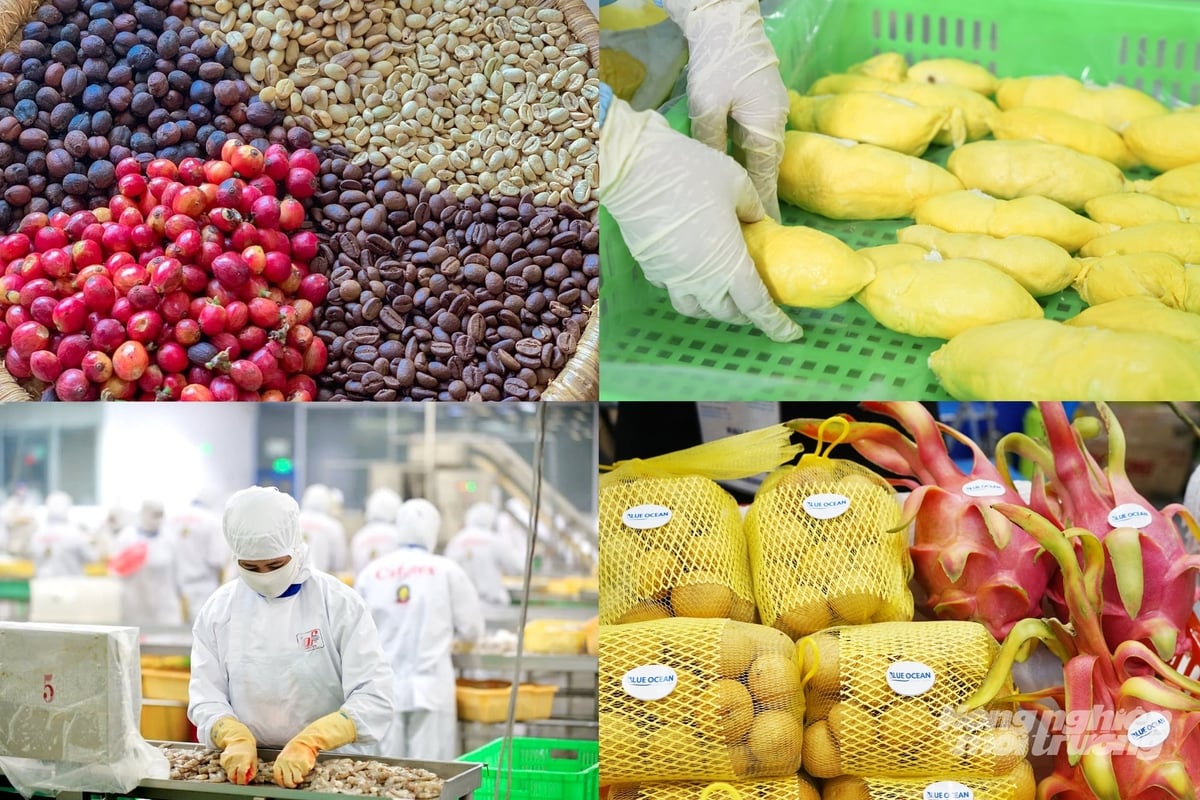
The Ministry of Agriculture and Environment sets a target for 2026 that export turnover of agriculture, forestry and fisheries will reach approximately USD 73–74 billion. Photo: Nguyen Thuy.
The Middle East conflict is disrupting supply chains, pushing energy and logistics prices to fluctuate strongly. From your perspective, how do you assess the level of impact of this geopolitical shock on Viet Nam’s agriculture and food sector?
The Middle East conflict is creating a clear ripple effect on Viet Nam’s agriculture and food sectors, not only in terms of costs but also on the operational structure of the entire supply chain.
First, rising energy and logistics prices directly impact production and export costs. Given that Viet Nam’s agricultural products heavily depend on international transportation, even a 15–30% increase in logistics costs can significantly “erode” business profits, especially for products such as seafood and fresh fruits.
Second, Viet Nam’s agriculture still depends heavily on imported inputs. According to international reports, more than 70% of agricultural imports are inputs for production, such as animal feed and processing materials. This pushes costs up as they are affected by both energy prices and the risk of supply chain disruptions.
Third, this shock “highlights” a structural weakness: the low-value export model, dependent on logistics and fossil fuels. Currently, about 60% of exported agricultural products remain in raw or semi-processed form, resulting in low added value and vulnerability to rising transportation costs.
Meanwhile, agriculture remains a pillar of the economy, accounting for about 11–12% of GDP, with export turnover exceeding USD 62 billion in 2024 and USD 70 billion in 2025. Therefore, any shock to energy and logistics has a significant impact. This is not only a short-term difficulty but also a warning signal that requires restructuring the entire sector.
Restructuring with a long-term vision
In three conflict scenarios (short-term, medium-term, and long-term), how should agricultural and food enterprises restructure to adapt and take advantage of FTAs and tariffs?
Enterprises need to approach according to three layers of scenarios. In the short term, they need to respond flexibly: optimize logistics and energy costs, diversify input supply sources, take advantage of FTAs to reduce taxes and expand markets. In reality, many seafood enterprises have shifted part of their orders to Japan and South Korea when shipping costs to the EU increased sharply.
In the medium term, strategic adaptation is needed. Enterprises should diversify export markets, reduce dependence on a few markets, and at the same time choose strategic markets such as the US, EU, and Japan to invest deeply. Additionally, promote deep processing to reduce reliance on logistics. For example, instead of exporting fresh fruit, it is possible to shift to frozen durian, juice or processed products to extend preservation time and increase value.
In the long term, comprehensive restructuring is needed: reduce dependence on fossil fuels, move towards renewable energy, build domestic and regional supply chains, shift from raw exports to branded, high-value exports. This is the transition from “growth by volume” to “growth by value”.

Mrs. Duong Hong Loan, Director of the Institute for Vietnam Initiative. Photo: Nguyen Thuy.
What recommendations do you have for regulatory agencies and the business community so that Viet Nam’s agriculture is not passive in the face of geopolitical shocks in the future?
At the macro level, it is necessary to invest heavily in logistics infrastructure and cold storage systems; develop clean energy for agriculture; and, at the same time, build an early warning system for global supply chain risks.
At the enterprise level, it is necessary to shift from “producing what we have” to “producing according to market demand”; invest in data, forecasting, and risk management; and strengthen value chain linkages. In reality, linkage models in the coffee and seafood sectors have proven effective in controlling quality and costs.
For the US market, what should Vietnamese enterprises focus on?
The US is a large market, but it also has very high standards. Enterprises need to standardize quality and strictly comply with food safety and traceability regulations. At the same time, they must build brands, not just stop at processing.
For example, Vietnamese coffee, if built as a brand, can increase its value many times over raw export value. In addition, it is necessary to develop products aligned with consumption trends, such as green, organic, convenient, and health-friendly foods.
In addition, as the US is restructuring the global supply chain, Viet Nam has great opportunities but must meet sufficient standards and scale.
In summary, this geopolitical shock is not only a challenge but also an opportunity for Viet Nam’s agriculture to shift from passive to proactive, from dependence to self-reliance, and from low-value to high-value in the global supply chain.
Thank you so much!
* $1 = VND 26,362 – Source: Vietcombank
Agriculture News | Agri Products Price