

(VAN) With exports hitting record highs, Viet Nam’s coffee industry is shifting from a volume-driven model to competing on quality, specialty products and brand storytelling rooted in culture, as it seeks to conquer global markets.
In the 2024-2025 crop year, Viet Nam exported over 1.5 million kilos of coffee, which generated over $8.4 billion, according to the Viet Nam Coffee and Cocoa Association (Vicofa). The country’s increasing prominence in the global coffee trade is underscored by exports in calendar year 2025 totaling approximately 1.59 million kilos, valued at $9 billion.
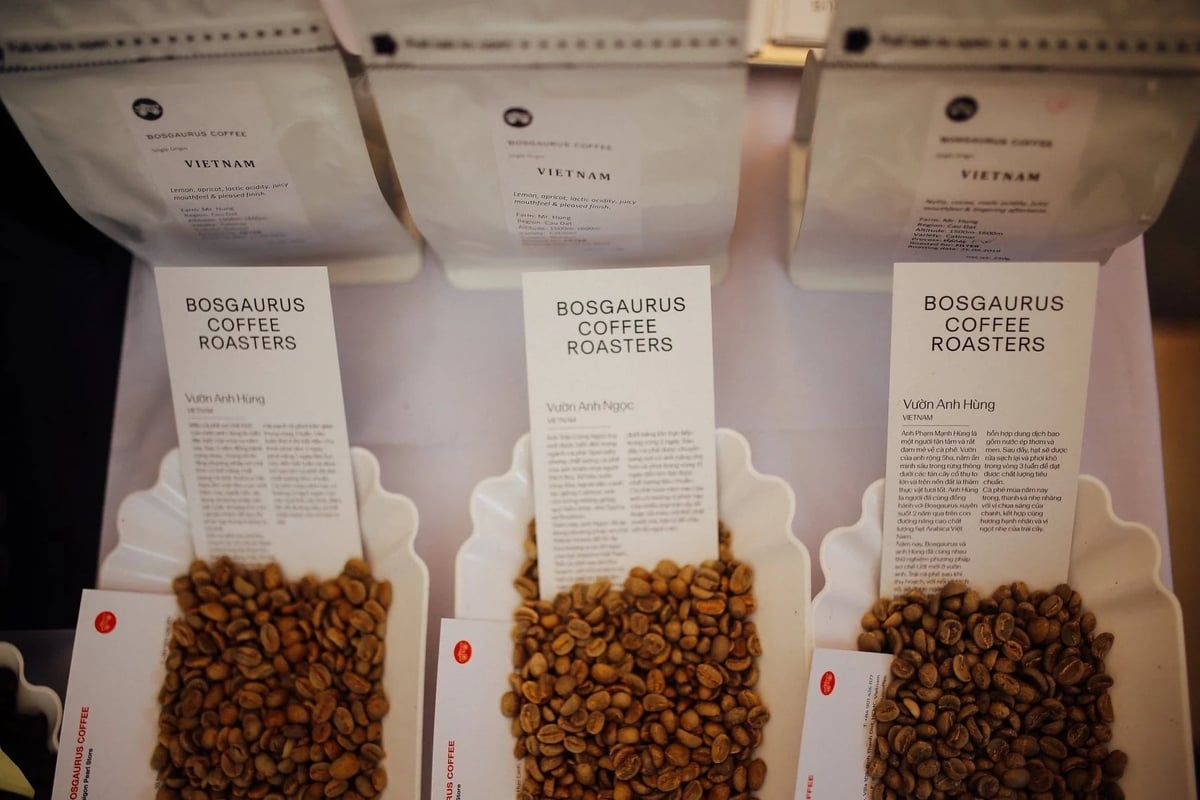
Vietnamese coffee enters high-value-added game, rooted in culture. Photo: Jovel Chan.
A golden opportunity: specialty coffee
Nguyen Duc Hung, the director of Napoli Coffee Import-Export Production Trading JSC, stated that export trends are shifting significantly toward high-quality, specialty coffee with explicit traceability, as well as toward greater demand for sustainability and transparency.
Global consumers are becoming more focused on the origin, story, and experience of each cup. In the interim, the popularity of instant coffee is rising, particularly among convenient products offering novel flavors. In general, the market is transitioning toward sustainability, differentiation, and quality.
Hung emphasized the importance of rigorous quality control, as coffee is a food product that is directly ingested. To meet the stringent standards of markets in Japan, South Korea, China, the U.S., and Indonesia, Vietnamese producers must enhance quality, streamline production processes, and build market trust.
The expert Nguyen Quang Binh observed that firms could sell 100,000-300,000 tons annually at prices $300- $400 per ton higher than the market price by integrating into the supply chains of large corporations such as Nestlé. Nevertheless, this has been accomplished by a limited number of Vietnamese companies. In the interim, specialty coffee, which has the potential to increase the value of a ton by $1,000- $2,000, remains underdeveloped due to inadequate market access and policy support.
According to expert Nguyen Tan Vinh, Viet Nam is well-positioned to enter the premium segment. Although specialty coffee accounts for over 40% of industry value, it represents only approximately 20% of global output.
Viet Nam has discreetly established a foundation over the past decade: the number of Robusta cupping experts has increased, specialty coffee competitions have expanded, and businesses have begun exporting newly processed coffee batches to demanding markets such as Japan. Vietnamese specialty coffee is now served by numerous café franchises in the United States.

Conference “Solutions to promote deep processing to enhance the value of Vietnamese coffee,” organized by Nguoi Lao Dong Newspaper. Photo: Nguyen Thuy.
Beyond coffee: the art of storytelling
According to Bui Hoang Yen, the director of the Trade Promotion Agency’s office in Ho Chi Minh City, which is under the Ministry of Industry and Trade, the enhancement of processed coffee exports and further integration into global supply chains require three fundamental components: market connectivity, brand development, and a narrative.
She emphasized that branding is not limited to packaging or insignia; it is rooted in the product narrative, which reflects the distinctive identity of Vietnamese coffee and its over 200-year history. Vietnam has opportunities in traditional markets like Brazil and Latin America, provided it offers high-quality products with compelling narratives connected to people and place.
According to Nguyen Lam Thanh, the policy director of TikTok Vietnam, the way products are promoted is being transformed by digital platforms. Consumers prioritize quality, health, and product credibility, particularly in the food and beverage industry, as their living standards increase.
He observed that storytelling is being revolutionized by technology, particularly artificial intelligence. The creation of content, including livestreams and videos, has become more cost-effective and accessible, allowing businesses and creators to reach global audiences in multiple languages.
Thanh emphasized that the coffee industry must tell its own story, as a compelling story can rapidly reach millions, even tens of millions of people, when told effectively. He proposed forming a small group of well-informed content creators to build reputable digital platforms focused on Vietnamese coffee.

Nguyen Lam Thanh, Policy Director of TikTok Vietnam. Photo: Nguyen Thuy.
“Outreach could potentially reach hundreds of millions in the first year and even billions in the future if executed in a systematic manner.” More significantly, it will gradually establish consumer confidence,” he stated.
He further stated that coffee is not merely a beverage, but a cultural experience that tells the story of value creation from cultivation to processing. This is the reason why a product can command a higher price. To elevate Vietnamese coffee, it is necessary to convey the narrative with authenticity, depth, and expertise.
Agriculture News | Agri Products Price