


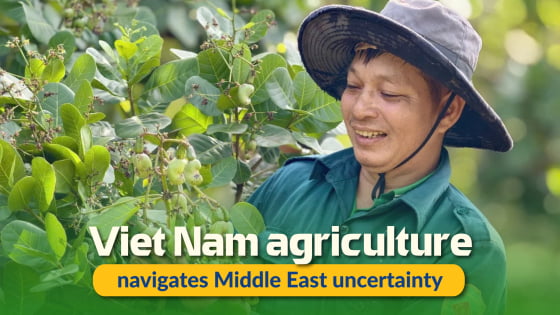
(VAN) The Middle East conflict forced cashew industry businesses to focus more on two largest markets to compensate for the current market
High risk from market changes
In 2025, amid a significant decline in cashew exports to the U.S. due to tariff policies, the Middle East emerged as a potential destination for Vietnamese cashews. By the end of 2025, the Middle East had become a major market for Vietnamese cashews, accounting for about 12% of the market share.
Since the outbreak of the Middle East conflict, cashew exports have faced numerous difficulties and challenges, especially for orders destined for the region.
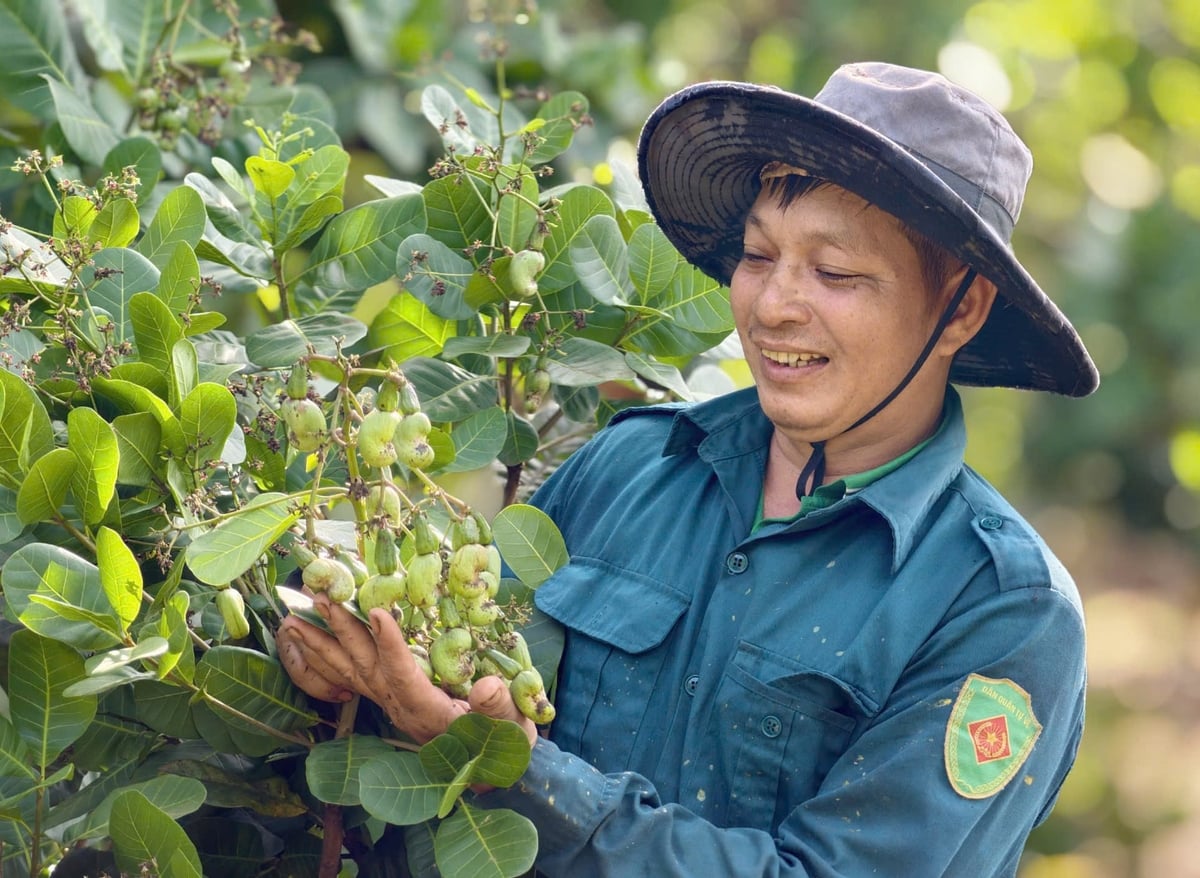
A cashew orchard in Dong Nai. Photo: Son Trang.
Mr. Bach Khanh Nhut, Standing Vice President of the Viet Nam Cashew Association (VINACAS), stated that many Vietnamese cashew exporters are facing difficulties as shipments were already loaded onto vessels about 10 days before the Middle East conflict broke out. Currently, these ships cannot dock at ports in the Middle East, leaving many consignments stranded at sea.
Notably, most exporters allow importers to pay only after the goods arrive. With shipments now stuck at sea, payments are on hold, while the funds are bank loans that must be repaid on schedule, causing cash flow disruptions.
Risks also arise from market changes. Under normal conditions, cashews are a common consumer product. But due to the conflict, people tend to tighten spending, prioritizing essential food items over products like cashews. This could lead to a sharp drop in cashew prices. Even when contracts are finalized, buyers may renegotiate prices, forcing exporters to incur further losses.
Currently, even traditional partners in the Middle East are cautious and hesitant to sign new contracts because future prices and demand are highly unpredictable. Orders scheduled for delivery from April to June this year could face declining market demand, exposing both buyers and sellers to significant risk.
Focusing on 2 markets
In this context, Mr. Bach Khanh Nhut emphasized that cashew businesses must adapt to survive. This is no longer a choice but a matter of survival.
Accordingly, VINACAS recommends that exporters remain cautious about the Middle East market for the time being and await further information before signing new contracts. At the same time, businesses should proactively re-engage traditional markets such as the U.S. and China.
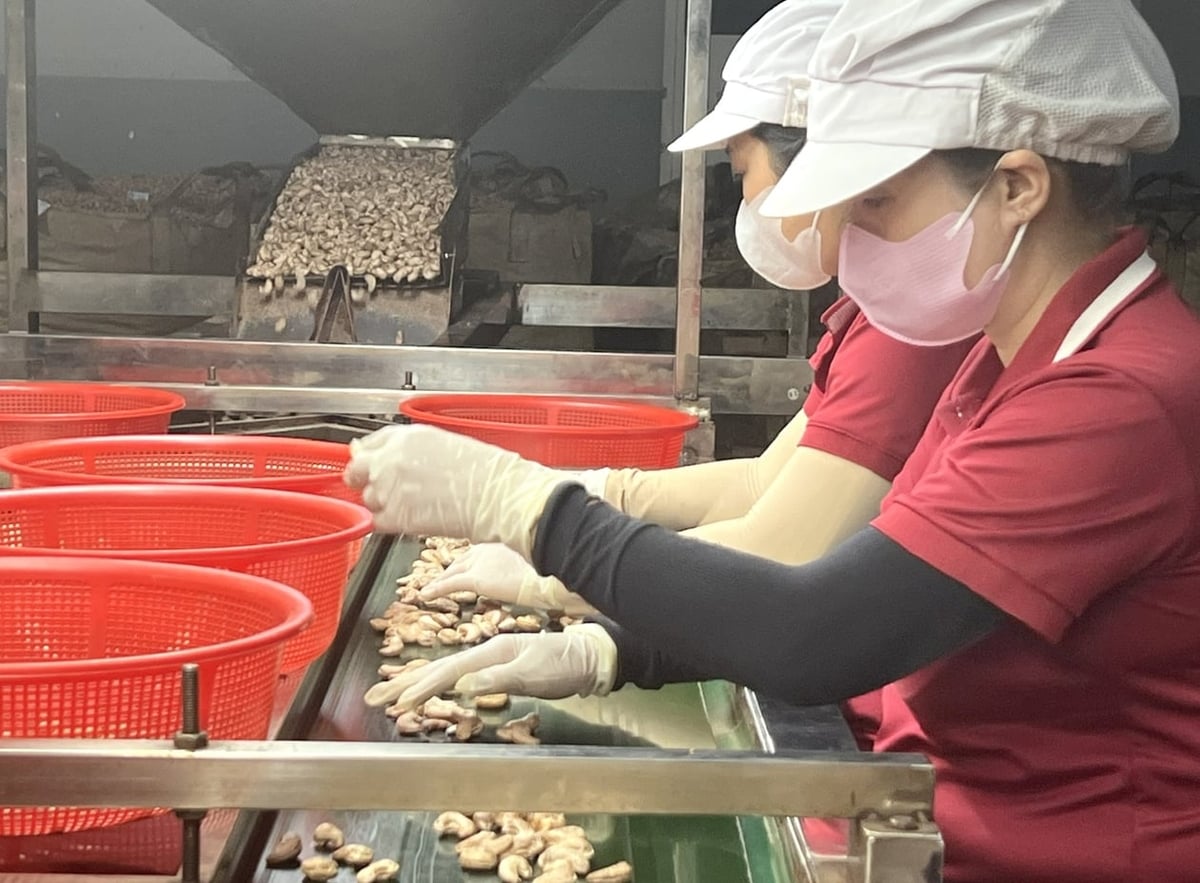
Processing cashew exports. Photo: Son Trang.
With the long-established trade foundation between Viet Nam and the U.S. in cashews and the current import duty on cashews into the U.S. returning to 0%, the United States is expected to regain its position as Vietnam’s number-one cashew market in 2026.
In fact, since the beginning of the year, cashew exports to the U.S. have been growing very well. In the first two months, exports to the U.S. reached 18,000 tons, valued at 123 million USD, up 18% in volume and 19% in value compared to the same period in 2025. With these volumes and values, the U.S. has surpassed China to become Viet Nam’s largest cashew market over the past two months.
Besides the U.S., China has also emerged as a stable market, with strong import growth over the past two years and maintaining positive momentum from the beginning of this year. In the past two months, exports to China reached 8,000 tons, valued at 55 million USD, up 15% in volume and nearly 24% in value. The shift of Chinese consumers toward healthy foods has attracted a significant volume of Vietnamese cashews to this market.
Mr. Nhut emphasized that with strong demand in the U.S. and China, simply increasing market share in these two largest cashew-consuming markets could fully offset the roughly 12% market share currently affected by the Middle East.
According to the International Nut and Dried Fruit Council (INC), demand from traditional markets such as the U.S. and the EU remains stable, particularly for premium nuts and organic cashew products.
Demand from China and the Middle East is becoming the main growth driver for the global cashew industry. In China, demand for cashews is rising sharply for healthy foods and snack products.
Viet Nam’s cashew industry first entered the global cashew kernel market in the early 1990s. Following its establishment in November 1990, the Viet Nam Cashew Association (VINACAS) rapidly began efforts to shift cashew exports from raw cashew nuts to processed kernels. Viet Nam started exporting cashew kernels to China in 1992 and to the United States in 1994.
Agriculture News | Agri Products Price