


(VAN) MAE directs, drought and saltwater intrusion forecasting to be proactive with real-time updates and effective, timely response measures.
According to the Ministry of Agriculture and Environment, total export turnover of agriculture, forestry and fishery (AFF) products in the first two months of 2026 reached $11.3 billion, up 17.1% compared with the same period last year.
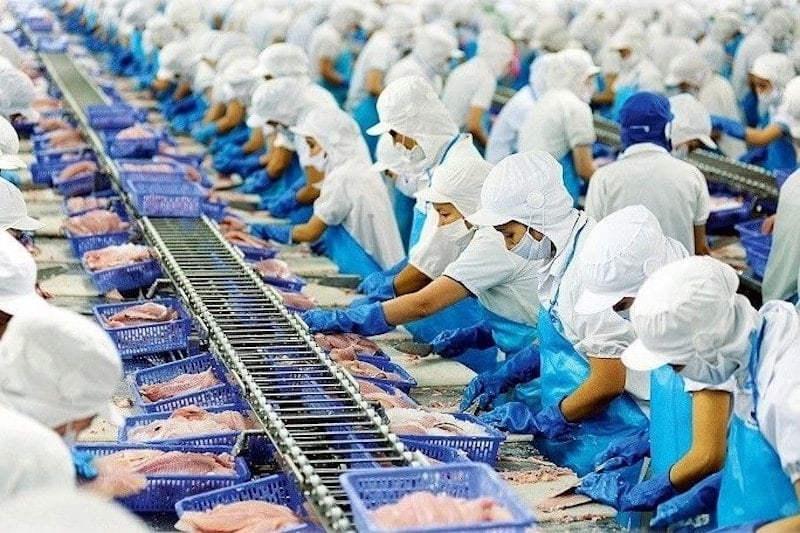
AFF exports in 2 months of 2026 reach $11.3 billion.
Market restructuring amid Middle East conflict
Deputy Minister Phung Duc Tien stated that 2026 is expected to be a period with both opportunities and challenges. Requirements for quality standards, traceability and green development are becoming increasingly stringent, while risks from drought and saltwater intrusion during the dry season, supply chains and logistics may be affected by regional tensions.
Middle East market accounts for about 2% of the sector’s total export turnover projected to face noticeable impacts. Export value to Europe and North Africa could decline by up to 50%. Traditional export items such as fruits and vegetables, cashew nuts, coffee and seafood are likely to be directly affected. In addition, logistics costs for refrigerated containers used to transport seafood and produce, as well as insurance costs, may rise due to surging oil prices.
According to a scenario developed by the National Authority for AFF Quality, Processing and Market Development, if the conflict lasts for one month, export value could fall by about $1 billion. If it extends beyond three months, losses could reach $3-3.5 billion. However, shifting focus to traditional markets and redirecting exports to alternative destinations could offset about 2% of the direct export turnover from the Middle East.
Deputy Minister Phung Duc Tien also noted that after the Lunar New Year holiday, production sectors have continued to maintain growth momentum. Food production remains stable, while the cultivated area has increased compared with the same period last year. By the end of February 2025, the national pig herd was estimated to have risen by 1.58%, while the total poultry population increased by 1.9% year-on-year.

Deputy Minister Phung Duc Tien chairs the press briefing of MAE on March 11. Photo: Tung Dinh.
The area of newly planted forests nationwide is estimated at 21,700 hectares, up 4.5% compared with the same period last year, while timber output is estimated at more than 2 million cubic meters, an increase of 0.9%. In the first two months of 2026, total export value of wood and wood products reached more than $2.6 billion, up 5.8% year-on-year.
At the press conference, Deputy Minister Phung Duc Tien also announced the National Livestock and Veterinary Science Conference 2026, scheduled to take place from March 27–28. The conference will serve as an important scientific forum organized by MAE to review five years of implementing Decision No. 1520/QD-TTg approving the Livestock Development Strategy for 2021-2030 with a vision to 2045, along with five key programs on livestock breeds, animal feed, slaughtering and processing, environment and equipment, and science and technology.
Saltwater intrusion yet to cause serious impacts in Mekong Delta
Speaking about the situation of drought and saltwater intrusion in the Mekong Delta, Nguyen Hong Khanh, Deputy Director of the Irrigation Works Management and Construction Department, said that saltwater intrusion in the region has so far occurred at levels similar to the multi-year average, as previously forecast.
In the South Central and Southeast regions, water resources are generally sufficient for agricultural production during the 2025-2026 dry season. Risks of drought or water shortages may occur only in localized areas, mainly in small irrigation systems or areas outside the reach of irrigation infrastructure. Particular attention should be paid to coastal areas of the South Central region during the peak period in July and August 2026.
The department also recommended that from now until May, water flow from the Mekong River into the Mekong Delta will continue to decline. The most severe saltwater intrusion at river mouths is expected to occur between March 19 and 23. From June to August this year, the ENSO phenomenon is likely to remain in a neutral phase, though the probability of transitioning to El Niño is gradually increasing, with an estimated likelihood of 35-45%.

The Deputy Director of Irrigation Works Management and Construction Department informed the drought and saltwater intrusion situation in the Mekong Delta. Photo: Tung Dinh.
Deputy Minister Phung Duc Tien directed: The department must continue to closely monitor and forecast developments, proactively implement solutions and update information in real time to ensure timely, effective and efficient responses. The spirit is to take the initiative in ensuring water security during the dry season and avoid being caught unprepared by drought and saltwater intrusion.
Specifically, attention should be paid to the risk of localized water shortages that may occur in some downstream areas of provinces such as Tay Ninh, Dong Thap, Vinh Long and Ca Mau. Irrigation systems requiring close monitoring include Go Cong (Dong Thap), Nam Mang Thit (Vinh Long), Long Phu – Tiep Nhat (Can Tho City), and Nhat Tao – Tan Tru (Tay Ninh Province).
MAE has issued Document No. 1643/BNNMT-TL dated February 23, 2026, on implementing Official Dispatch No. 15/CD-TTg dated February 20, 2026, from the Prime Minister on proactively responding to saltwater intrusion in the Mekong Delta and drought and forest fire risks in the South Central and Southeast regions.
Deputy Minister affirmed that leaders of MAE along with its affiliated agencies, will continue to organize working missions to directly inspect, guide and direct drought and saltwater intrusion prevention efforts, ensuring sufficient water supply for agricultural production and daily life.
Agriculture News | Agri Products Price