



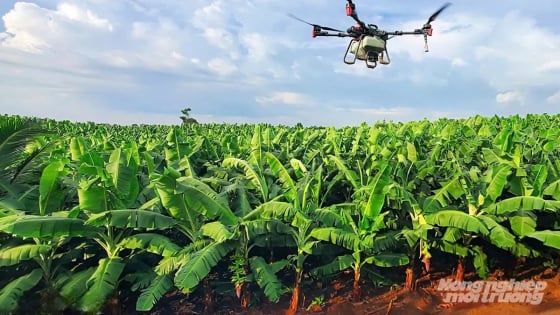
(VAN) The banana export ceremony in Dong Nai saw hundreds of tons of bananas heading to global markets, carrying hopes of increasing agricultural value and farmers’ income.
On April 2, the Dong Nai Provincial People’s Committee held a ceremony to mark the export of bananas and promote agricultural exports in 2026 in Bau Ham Commune. The event, organized by the Dong Nai Provincial People’s Committee, aimed to promote fresh bananas and key agricultural products to international markets, while strengthening connections between producers and export enterprises, meeting increasingly stringent requirements on plant quarantine and traceability.
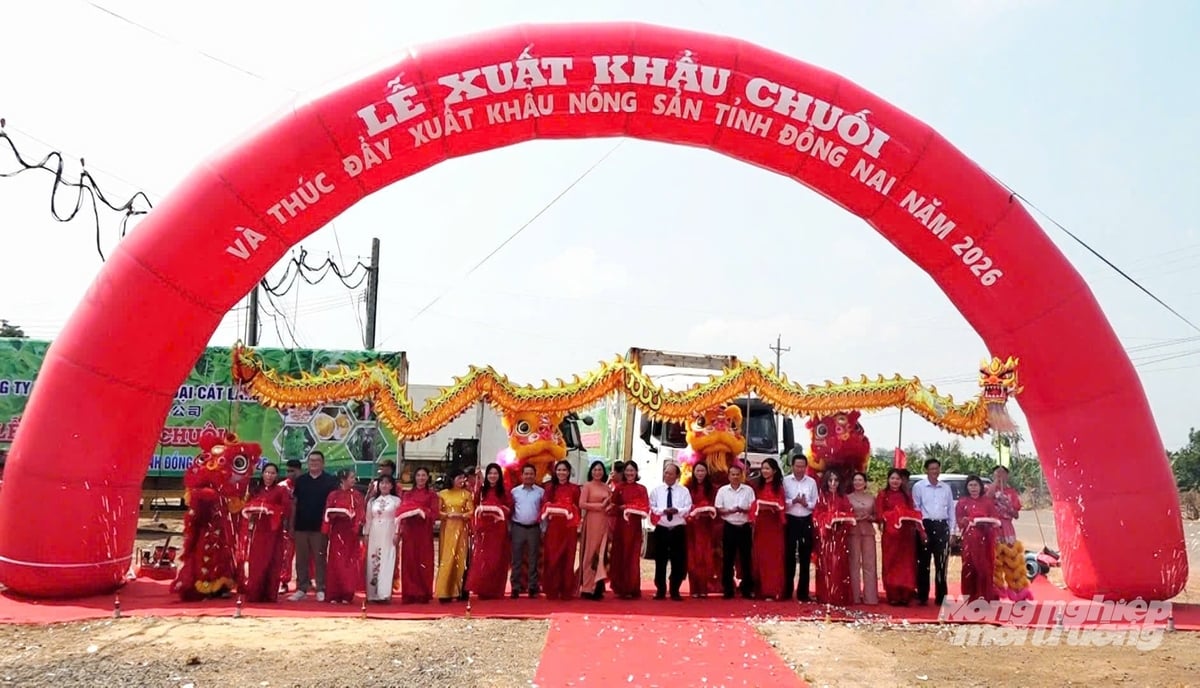
Ribbon-cutting ceremony launching banana exports and promoting agricultural exports in Dong Nai Province in 2026. Photo: Minh Sang.
From early morning, a large number of farmers gathered at the event site, eagerly watching containers of fresh bananas being packed and prepared for export. On their faces were joy and hope, as local agricultural products increasingly affirm their position in international markets.
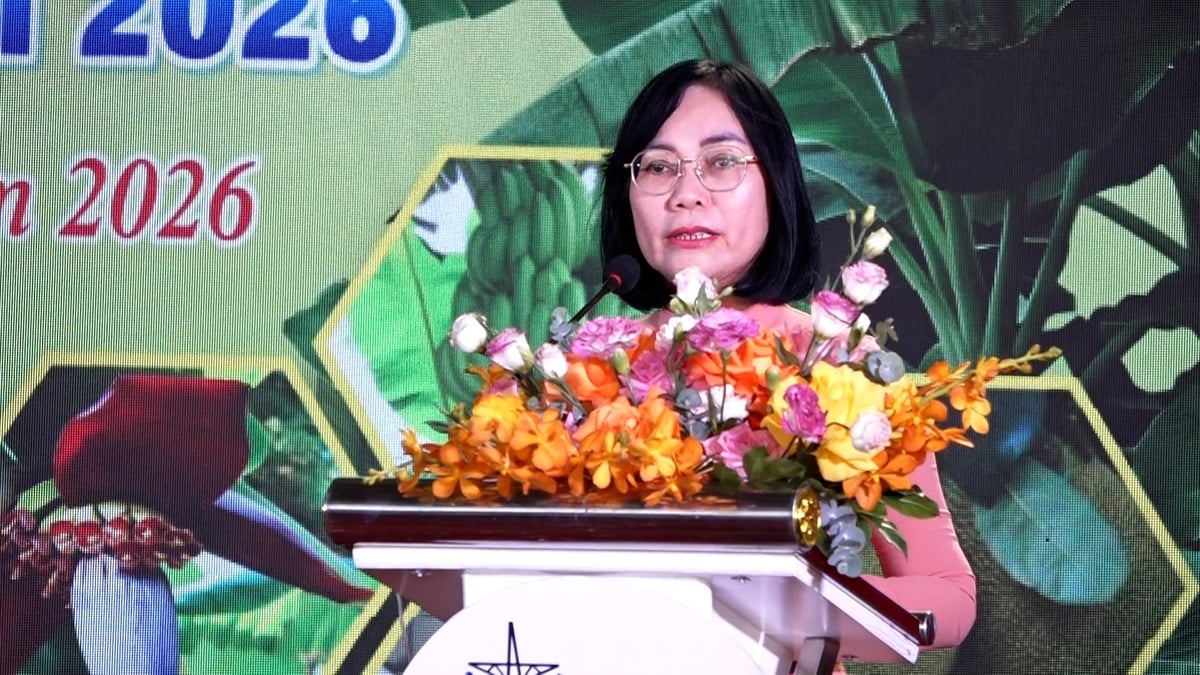
Ms. Nguyen Thi Hoang, Vice Chairwoman of the Dong Nai Provincial People’s Committee, delivers the opening speech at the 2026 banana export ceremony. Photo: Minh Sang.
In her opening remarks, Ms. Nguyen Thi Hoang, Vice Chairwoman of the Dong Nai Provincial People’s Committee, emphasized that the 2026 banana export event is an important milestone in the context of deep international economic integration. This is not only an opportunity to promote key fruit products, but also a bridge connecting the “four stakeholders”: government, scientists, businesses, and farmers with the aim of elevating Vietnamese agricultural products in the global market.
According to Ms. Hoang, Dong Nai has many advantages for agricultural development, with more than 1 million hectares of production land and well-developed transport infrastructure, which is favorable for large-scale commodity production. To date, about 80% of the province’s agricultural land area has applied scientific and technological advances, contributing to improving productivity and product quality.
Bananas alone, one of the key products, currently cover more than 20,000 hectares, with an annual output of over 900,000 tons, of which about 80% is for export. In addition, many other agricultural products of Dong Nai such as rubber, cashew, and durian continue to affirm their position in the market. In 2025, the province’s agricultural export turnover achieved many impressive results, including nearly USD 2.8 billion from cashew nuts, nearly USD 1.6 billion from coffee, and nearly USD 1.7 billion from wood products.
Dong Nai will continue to promote modern agricultural development, apply high technology, expand standardized cultivation areas, and improve product quality to meet the increasingly stringent requirements of international markets. Photo: Minh Sang.
Speaking at the ceremony, Mr. Le Viet Binh, Deputy Chief of Office of the Ministry of Agriculture and Environment, stated that the agricultural sector continues to affirm its role as a pillar of the economy. In particular, the fruit and vegetable sector has been a bright spot, with export turnover in 2025 reaching nearly USD 8.6 billion, up by nearly 20% from the previous year. Entering 2026, this growth momentum has been maintained, with agro-forestry-fishery exports in the first three months estimated at USD 16.69 billion, of which fruit and vegetable exports increased by more than 32%.
Within this overall picture, bananas are emerging as a commodity with great potential, capable of reaching USD 1 billion in export value if production is effectively organized. However, the banana sector still faces many challenges, including increasingly stringent technical requirements, the risk of disease outbreaks, and pressure to meet quality standards. This calls for stronger value chain linkages, greater application of science and technology, and enhanced production capacity.
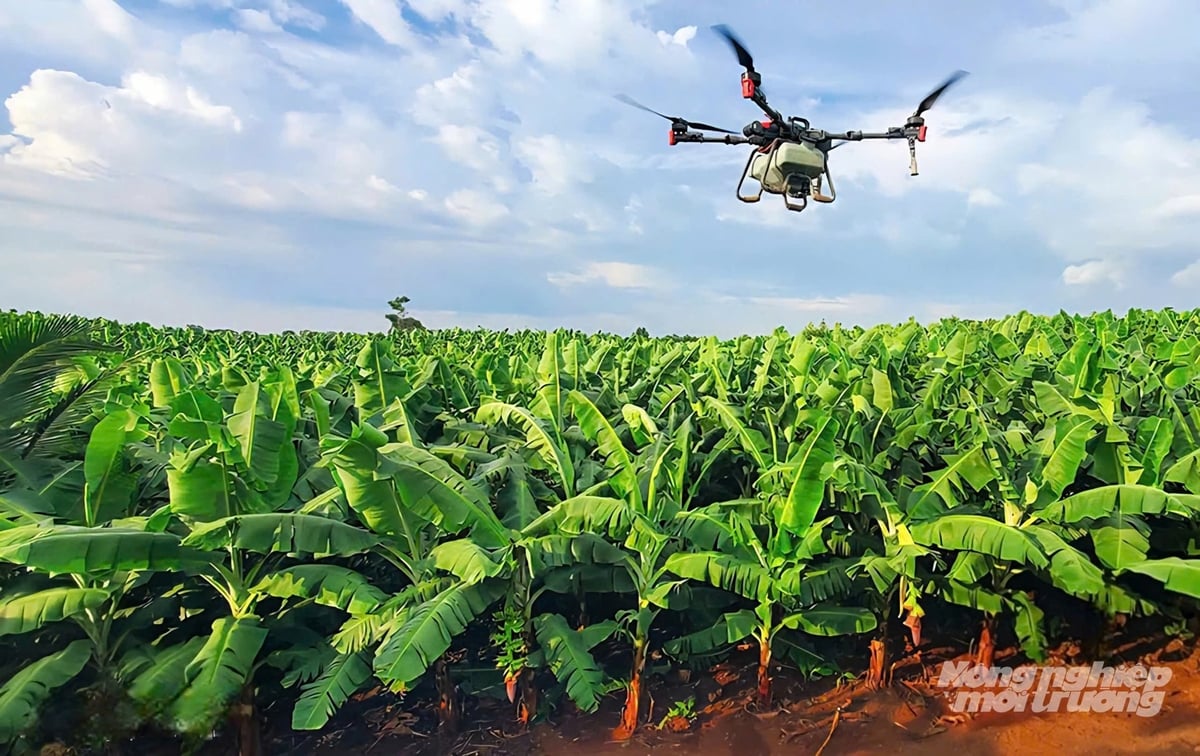
Dong Nai is a leading province in developing commodity agriculture, with bananas already exported to major markets. Photo: Minh Sang.
Assessing Dong Nai, Mr. Binh noted that the province is a pioneer in developing commodity agriculture, with bananas already exported to major markets such as China, Japan, and South Korea. The establishment of planting area codes, packing facilities, and quality control systems is helping the locality enhance its competitiveness and gradually meet international standards.
According to statistics, Dong Nai currently has more than 20,900 hectares under banana cultivation, with an annual output of over 900,000 tons, of which about 80% is exported. Bananas are grown in concentrated areas such as Bau Ham, Gia Kiem, Thanh Son, and Phu Vinh, and are present in major markets including China, Japan, South Korea, and Malaysia.
The province has 194 planting area codes covering approximately 14,000 hectares, along with 52 export-standard packing facilities. For bananas alone, there are 54 planting areas spanning more than 7,250 hectares and 37 packing facilities granted codes, meeting the technical requirements of international markets.
To ensure export standards, planting areas and packing facilities must strictly comply with regulations on plant quarantine, food safety, traceability, and production record-keeping in accordance with international standards.
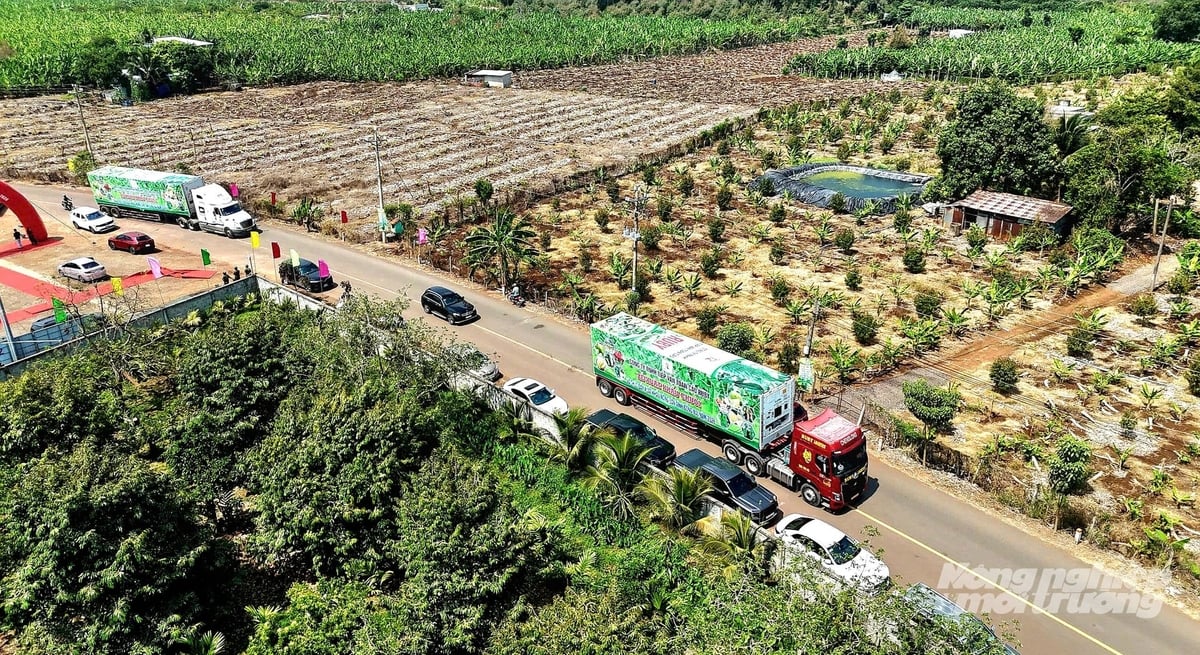
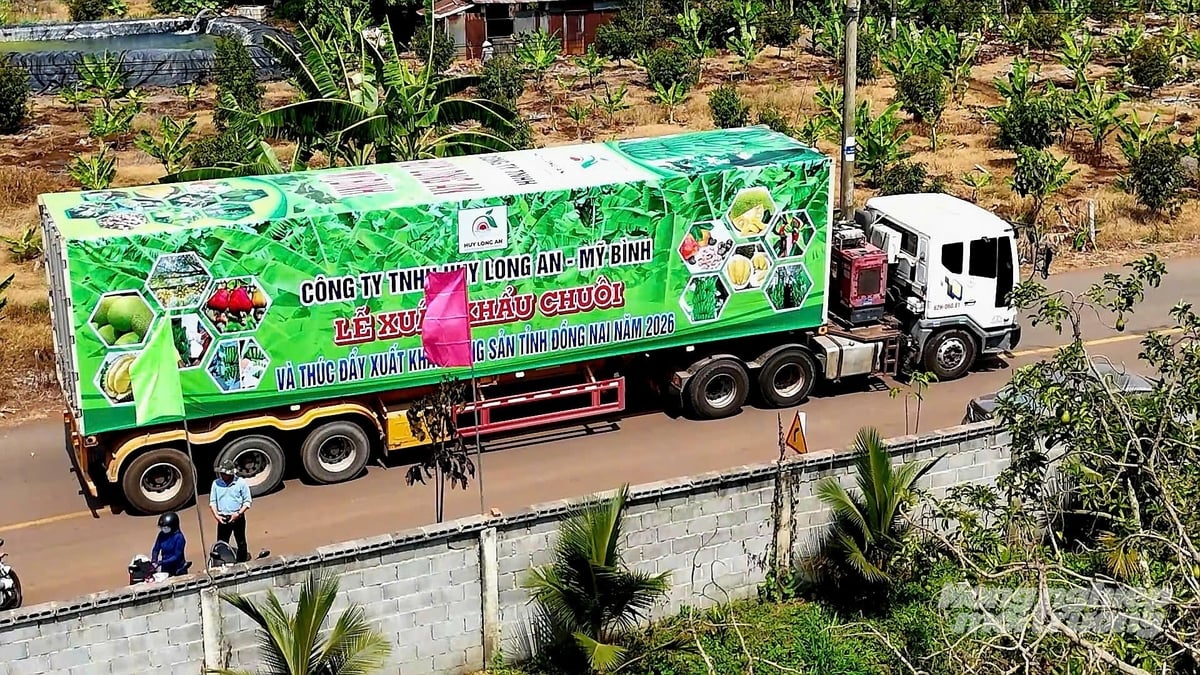
After the ceremony, 11 containers carrying 220 tons of Cavendish bananas departed for export to the markets of Japan, South Korea, and China. Photo: Minh Sang.
At the ceremony, seven enterprises exported 11 containers, equivalent to 220 tons of Cavendish bananas, to markets including Japan, South Korea, and China.
“The banana export event is not only significant for a single commodity sector but also makes an important contribution to the overall development of the agricultural sector. Opportunities will become advantages when they are well organized with market-oriented thinking and international standards,” emphasized Mr. Le Viet Binh, Deputy Chief of Office of the Ministry of Agriculture and Environment.
Agriculture News | Agri Products Price