

(VAN) From in-garden training sessions, farmers in Ho Chi Minh City are shifting from individual production to linked production, jointly standardizing techniques, improving fruit quality and stabilizing output.
No longer working individually and experimenting on their own as before, many farmers in Tay Nam ward, Ho Chi Minh City are entering a new phase with durian cultivation. This change does not begin in large conference halls or from slogans, but from training sessions held right in the orchards, where growers can observe directly, ask questions on the spot, and adjust their practices in their own gardens.
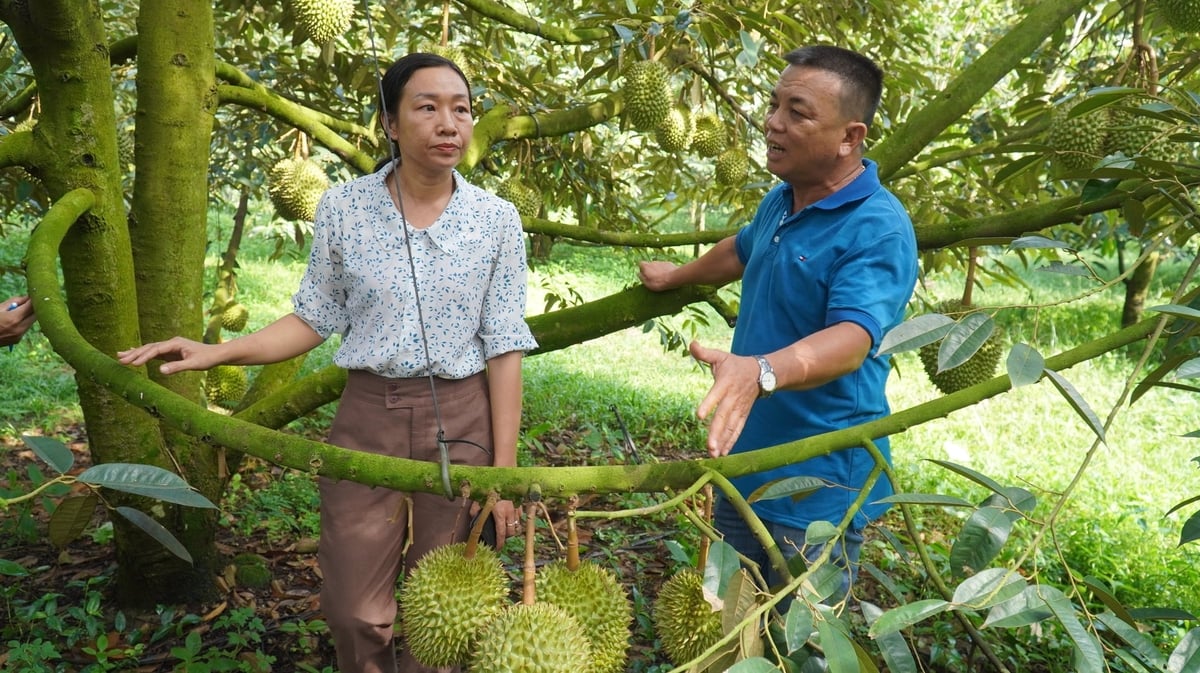
Farmers in Tay Nam ward discuss durian cultivation techniques directly in the orchard, aiming for standardized production and improved fruit quality. Photo: Tran Phi.
Under the canopies of durian trees entering the fruit development stage, conversations among farmers are no longer limited to fertilizers, pesticides, or the uncertainty of market prices. Many have started discussing cultivation processes, plant health, product quality and, more importantly, working together for long-term production. As thinking changes, practices gradually follow.
Mr. Huynh Van Long, a farmer in Tay Nam ward, said that he previously relied mainly on accumulated experience to manage his orchard. When trees showed symptoms, he handled them based on habit or by copying others. However, over time, he realized that this approach was both costly and inefficient.
“Before, I took care of trees based on intuition. When something seemed wrong, I acted immediately, but it wasn’t always correct. Since attending training sessions in the orchard, I’ve realized that sustainable farming requires understanding the tree, the soil, and each stage of development,” Mr. Long said.
According to Mr. Long, the biggest change lies not in a single technique but in rethinking the entire orchard. Irrigation, fertilization, pest monitoring and even weed management are now more carefully considered. Irrigation systems have been adjusted to reduce labor and water use while improving nutrient uptake. When farmers understand why they do what they do, they rely less on luck and feel more confident when problems arise.
“When farmers know clearly what they are doing, they feel much less worried. We no longer panic and try everything like before. When issues arise, we look at the causes instead of guessing,” he added.
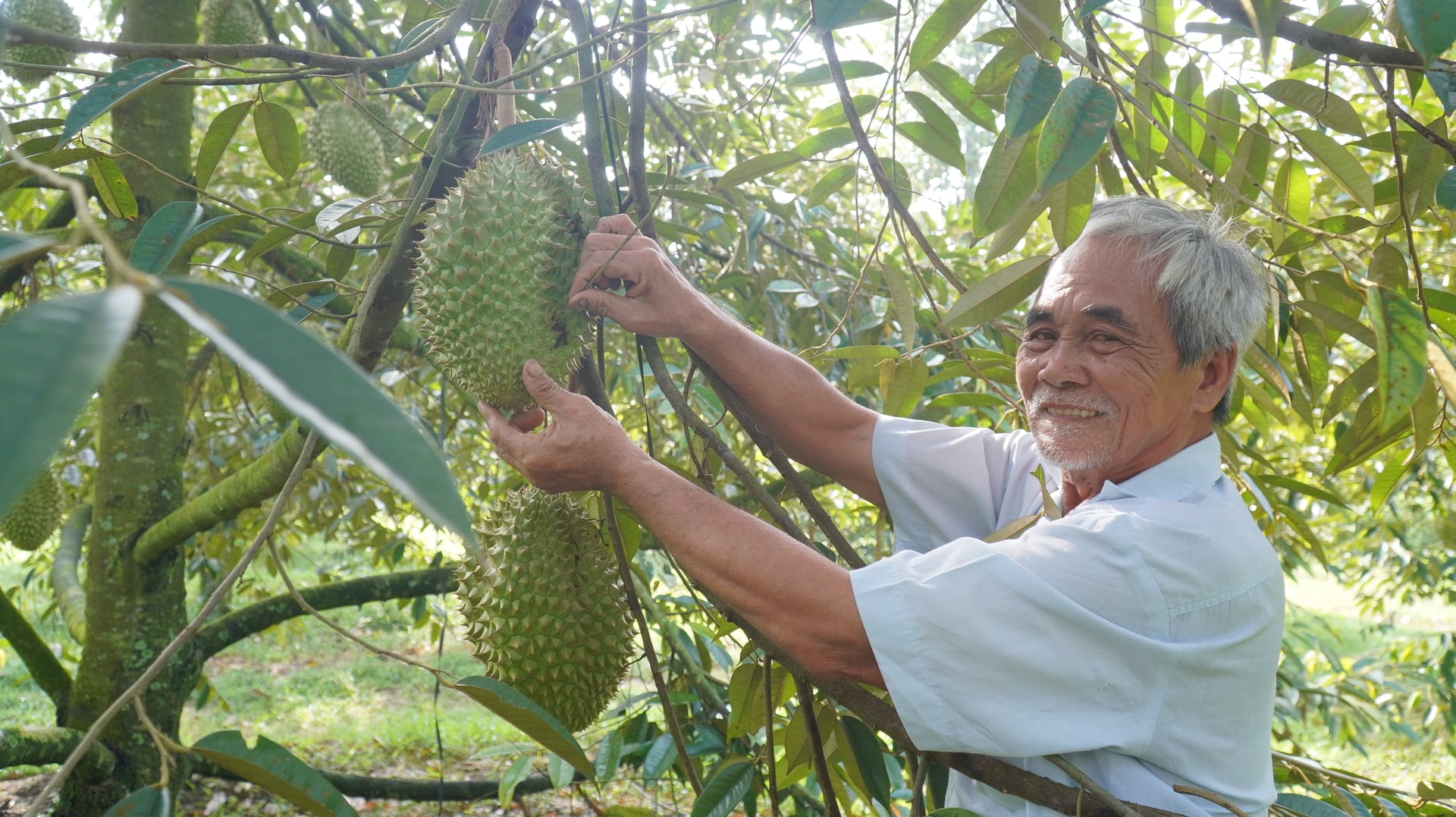
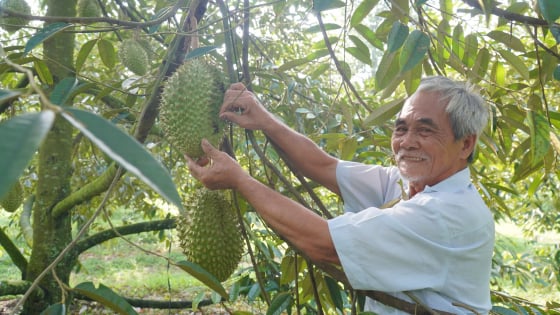
Mr. Huynh Van Long inspects his orchard, focusing on quality to stabilize output and enhance product value. Photo: Tran Phi.
Also in Tay Nam ward, Mr. Huynh Van Thang, who has 10 years of experience growing durian, believes that changes in cultivation practices are helping farmers think beyond a single harvest. Previously, many only focused on keeping the fruit until harvest. However, through learning and observation, he realized that stable productivity requires care at the roots, maintaining healthy soil and a balanced ecosystem rather than only treating visible symptoms.
“Now I think differently. For sustainable growth, the soil and roots must be healthy. If we focus on a single crop and overuse fertilizers and pesticides, or exploit trees excessively, we will bear the cost later in the form of soil degradation, lower yields, or even the loss of the orchard. Weak trees and poor soil are hard to recover in future seasons,” Mr. Thang said. Learning directly in the orchard helps farmers change their approach, increase interaction, and share experiences. New practices such as pest management, weed retention and organic fertilizers are becoming more familiar. Successful orchards become models for others to learn from.
According to Mr. Long, if farmers continue working individually, products will struggle to reach broader markets. “One person doing well is still just one person. If we want local durians to gain higher value, farmers must work together to maintain quality. Only through linkage can we form production areas and have a common voice,” he said.
Mr. Thang agreed that production linkage is not something distant. It starts with practical actions such as sharing experience, applying common processes, maintaining product credibility and thinking about market access instead of only focusing on individual farms. When farmers move in the same direction, risks decrease and production becomes easier to organize.
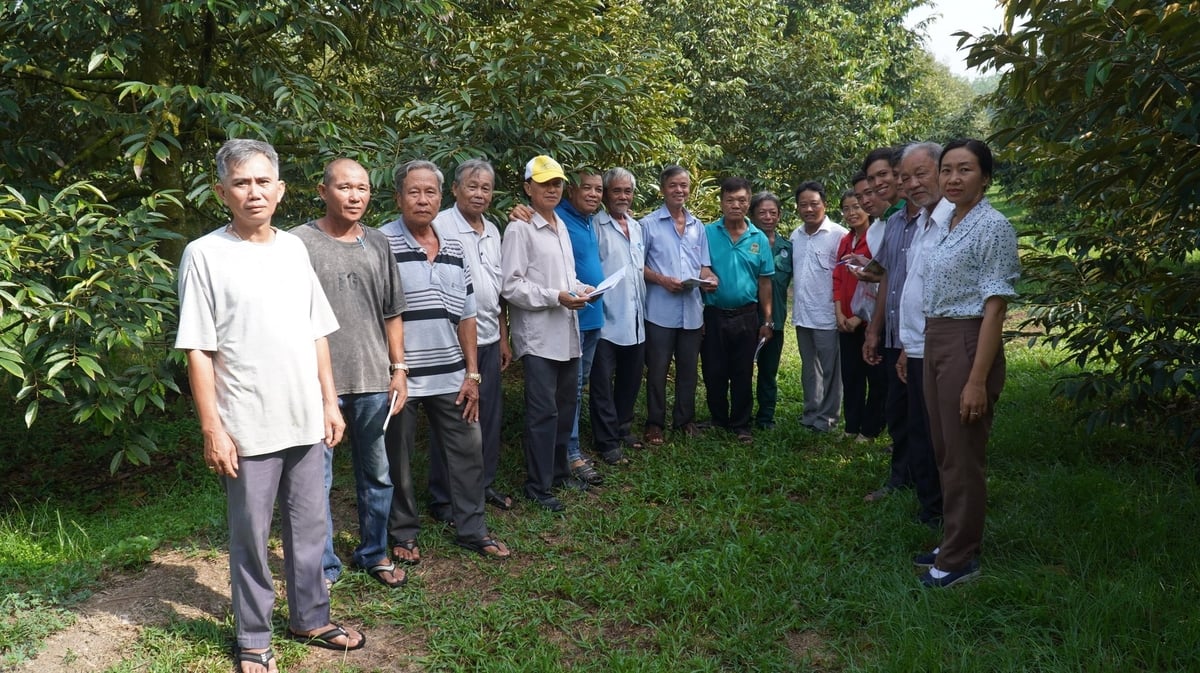
In-orchard training sessions are helping farmers change their practices, enhance knowledge sharing, and gradually build production linkages. Photo: Tran Phi.
Pham Do Bich Quyen, Deputy Head of the Ho Chi Minh City Sub-Department of Plant Production and Protection, said that to increase durian’s value, production must be organized collectively rather than individually. When farmers apply common standards and ensure consistent quality, market linkage and sustainable output become more achievable. “To enhance durian value, farmers cannot work alone but must link together, standardize practices and maintain regional quality,” she emphasized.
From the local government side, Nguyen Ngoc Phuong Lien, Chairwoman of the Tay Nam Ward People’s Committee, said the locality will focus on technical support, capital access, encouraging participation in production linkage and introducing purchasing enterprises to gradually stabilize output. According to her, when farmers follow shared processes with support from authorities, technical agencies and businesses, the durian production area can develop sustainably and increase product value.
From the reality in Tay Nam ward to the production linkage model in Phu Giao commune, it is evident that localities focusing on agricultural development, formerly part of Binh Duong province, are converging on a common direction: farmers cannot go further if they continue producing individually, but must link together, follow shared processes, maintain quality and connect to markets.
Now that these areas have been incorporated into Ho Chi Minh City following administrative consolidation, this requirement is even clearer. Production linkage is not only a solution for immediate market access but also a foundation for expanding production scale, increasing agricultural value and gradually forming more sustainable production zones in the new development space.
Agriculture News | Agri Products Price