


Editor’s note: This interview has been edited for clarity and brevity.
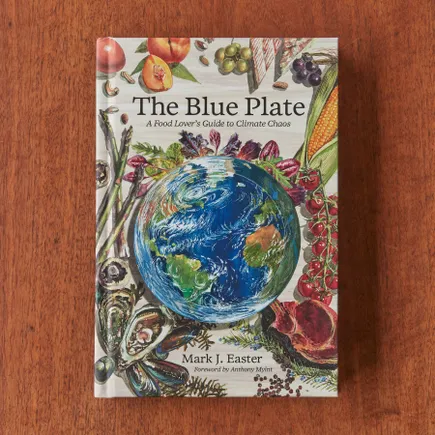
From seafood to steak and potatoes, the heart of the American meal has been pretty steadfast over the years. But we are just now truly delving into the climate impact of what brings these staples to our table. In a compelling and deeply researched book, The Blue Plate: A Food Lover’s Guide to Climate Chaos, Mark Easter, an ecologist and greenhouse gas accountant, breaks down the ecological impact of these ingredients — and many more — with passion.
Easter is a research affiliate at Colorado State University and an ecological consultant at Farm, Table & Sky Consulting. In his well-researched book, he examines the environmental impact of the soil needed to cultivate specific crops, as well as how the issues caused by fish farms overshadow the financial benefits they provide—among many other concerns that are currently on consumers’ minds.
The Blue Plate lays out the challenges in managing the carbon emissions inherent in our food systems and profiles innovative trailblazers working in the U.S., such as regenerative agriculture farmers, researchers studying changing ocean conditions driven by the climate crisis, and entrepreneurs focused on strengthening composting programs city-wide in regions such as Boulder, Colorado.
Sister publication Food Dive spoke with Easter to learn more about what surprised him as he researched and wrote The Blue Plate, why he included an entire chapter dedicated to our reservoir system and if we can truly eat our way out of this crisis.
FOOD DIVE: Why did you write a book on the carbon footprint of our food systems? Is there something about compiling all this data into a book that was motivating for you?
MARK EASTER: I and other scientists studying climate change realized quite a while back that we weren’t doing a very good job explaining the science to the public in a way that was going to be meaningful. The public are our greatest stakeholders, and we really need to bring them on board with our findings, and also what the implications are.
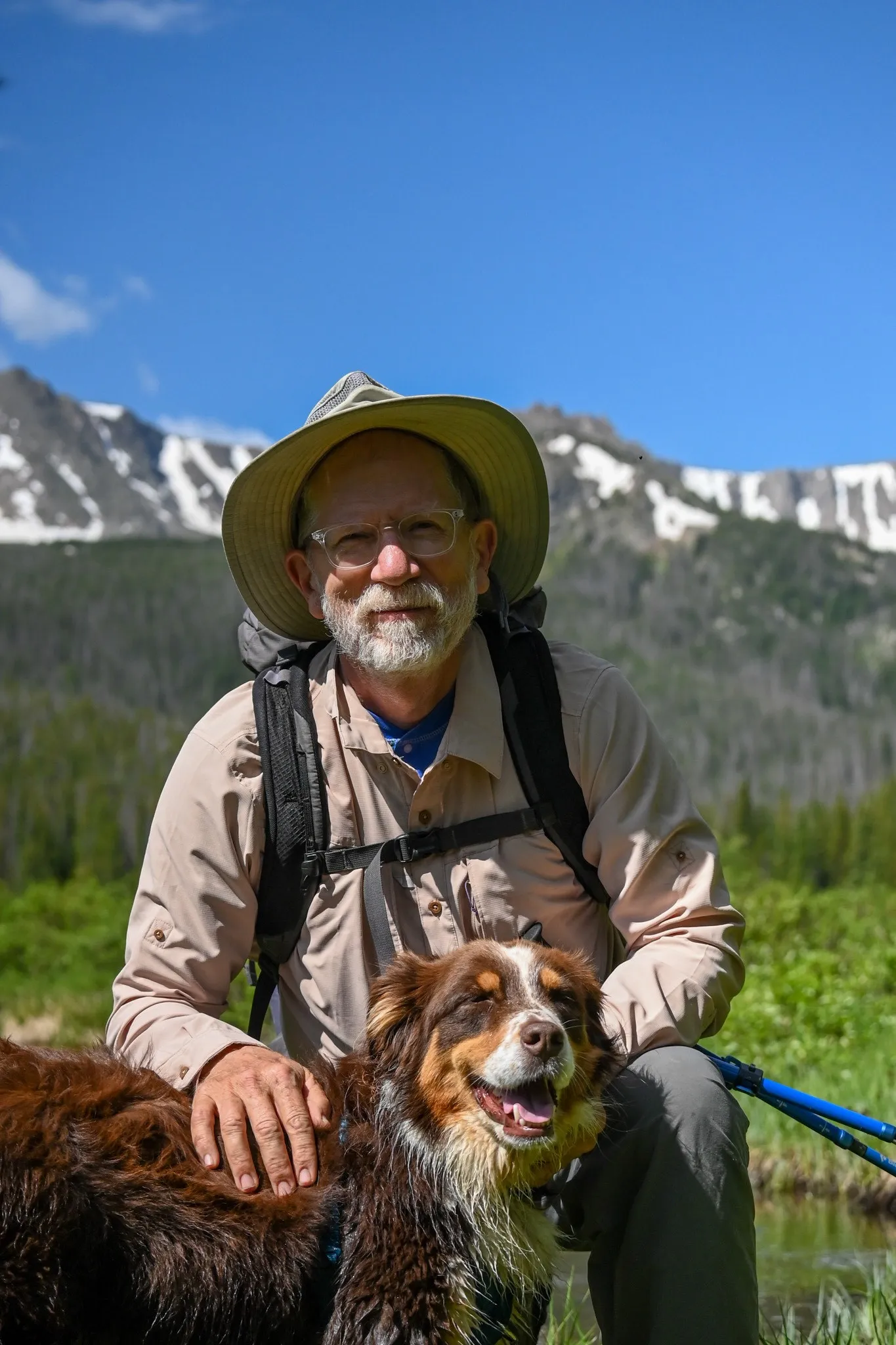
Optional Caption
Permission granted by Mark Easter
I wanted to show that we were finding that there were a lot of emissions coming from agriculture. What I found interesting was that the majority of those emissions were not coming from burning stuff but from microbes in the soil, from the guts of animals, from the depths of landfills, from lagoons filled with dairy manure, from the depths of irrigation reservoirs. And I thought that was an important and potentially compelling story to tell.
There’s a lot to take in from The Blue Table. For readers who work in food systems or policy, how would you summarize some of the key messages you want to convey to them?
I think one of the most interesting and potentially important connections I make in the book is that farmers respond to incentives. In particular, these are agriculture programs targeted to help growers transition into practices that not only help their bottom line but help them weather the ups and downs of climate variability, which is becoming more and more severe.
Whether that means cash or technical assistance, farmers can be given the chance to move to approaches such as cover crops. We consistently see that when funding is made available along with good technical assistance, the uptake is strong. Cover crops have some of the greatest promise in reversing climate emissions from the soil, and actually being able to sequester and draw down carbon from the atmosphere back into soil.
Your chapter on regenerative farming focuses on a practice that has been around for a few decades but you found some intriguing innovators in that space. Tell us more about what impressed you about the regenerative farmers you interviewed.
What I found is that when livestock are integrated back in with cover crop systems and the livestock graze down, those cover crops provide nutrients for crops that follow and also help deal with weed problems and other sorts of issues when we see. As well, organic matter increases more quickly compared to when we don’t have livestock integrated into those systems.
In addition, we find that growers don’t have to rely as much on synthetic fertilizers or other forms of amendments to try to support the crops. I think that’s one of the most interesting and exciting areas of research right now because it ties in with opportunities to potentially improve the bottom line for growers.
When you turn to look at our water systems, you bluntly call them, “river-destroying, methane-emitting reservoirs behind towering dams…Their use sets off a chain of events that bleed carbon and nitrogen into the sky at rates exceeding most other land uses. And because of this, they add a heavy carbon burden to the fruits and vegetables coming out of the lower Colorado River basin…” What compelled you to write about reservoirs?
Writing this book was still a journal of discovery for me. The understanding that reservoir systems emit a lot of greenhouse gases, particularly methane, is just starting to come to the fore, despite researchers studying it for the past three decades.
Previously, we identified the problem mostly in tropical regions. But what we’re actually finding, as more data comes in, the problems are virtually everywhere, particularly In those reservoirs where we see these toxic algae bloom. The emissions there can be 10 to a 100 times higher than they would be in unpolluted lakes and rivers. But when hydropower is integrated into these systems, they’re being described as climate solutions. In the end, what they’re actually doing is adding significant a climate burden which will be going on for decades if not centuries into the future.
You’ve been interviewed on podcasts about The Blue Table, and several hosts have been surprised about your takeaways on the low carbon footprint of shellfish. Why do you think this research has amazed so many people?
It even surprised me! As oysters, clams, mussels, and scallops grow, they’re actually taking carbon dioxide out of the atmosphere and fixing it into their shells. They are turning this greenhouse gas into rock, in a way, and it will remain rock short of us dropping these shells into vats of bubbling hot acid.
The fact they are absorbing CO2 and turning it into carbonate in these shells shocked me, even though I’ve always known that that process happened. But I never really connected it to a climate solution until I had the opportunity to talk with researchers at the Monterey Bay Aquarium. The mollusks I described in the book have one of the lowest carbon footprints of any source of animal protein: less than a pound of carbon dioxide equivalent per pound. And I think that’s extraordinary.
Emerging from your book is the question of, “Can we eat our way out of the climate crisis?” But it seems like your answer is a partial yes but we need to reframe that question. How so?
When you research like I do, it can be easy to become optimistic and maybe overly hopeful about what the role of changes in agriculture can do for us. It can do a lot but it can’t do everything.
The plain fact is that we’re burning fossil fuels at such high levels right now that there’s only so much that the Earth’s ecosystem can do at this point to try to overcome those emissions. Once we end this burning of fossil fuels, the benefits of regenerative agriculture could continue for decades into the future.