



(VAN) To achieve the USD 10 billion export turnover target, Viet Nam’s fruit and vegetable sector continues to rely on key fruits and processed products.
Promising commodities
Entering 2026, Viet Nam’s fruit and vegetable sector has set an ambitious goal of reaching USD 10 billion in export turnover. To realize this target, the sector will continue to rely on its key products as well as high-potential commodities as new markets are opened.
Durian will remain the “flagship” of Viet Nam’s fruit and vegetable sector. In 2025, durian exports hit a record USD 3.86 billion, accounting for 45% of the sector’s total export turnover. In January this year, durian exports recorded triple-digit growth (up 275%), reaching USD 117 million.
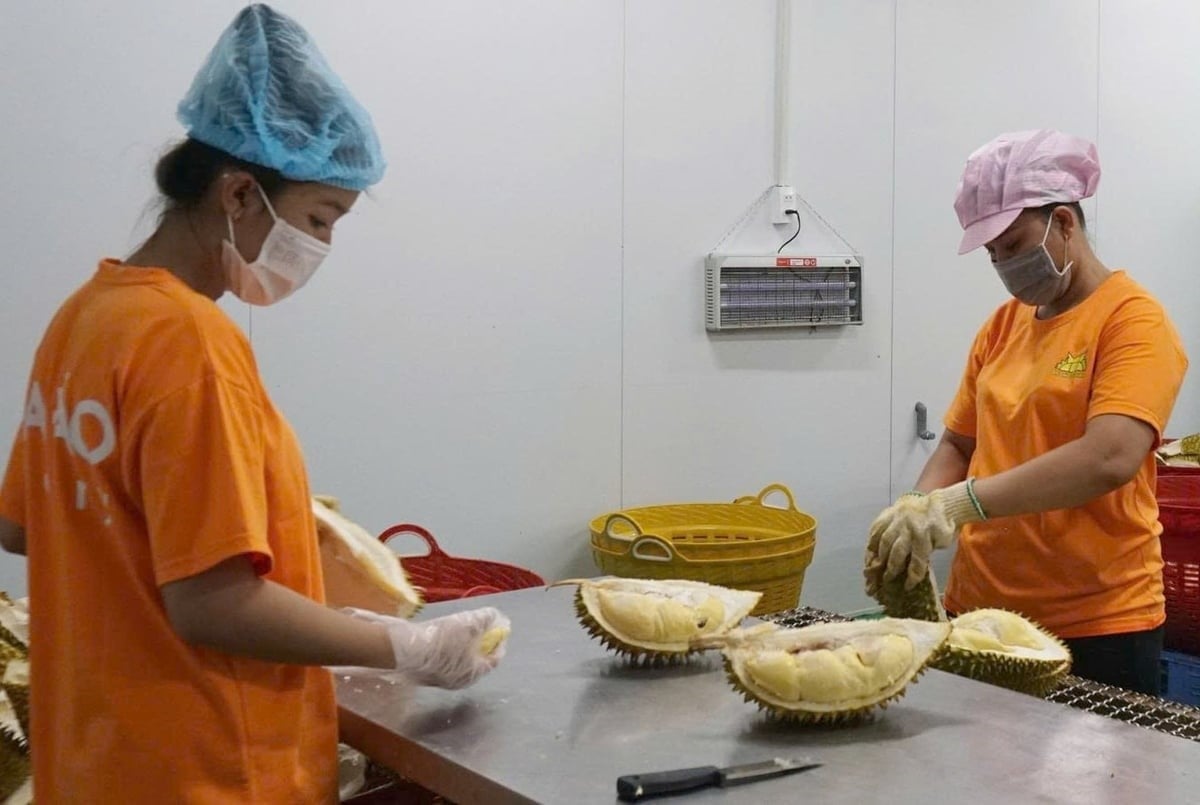
Durian segments are separated for frozen processing at Ba Dao Durian Co., Ltd. Photo: Thanh Son.
Particularly, Viet Nam has surpassed Thailand to become the largest supplier of durian (by volume) to China. Data from Chinese authorities show that the country imported 940,000 tons of Vietnamese durian in 2025, accounting for more than half of its total durian imports (1.868 million tons). In 2026, Vietnamese durian also has many favorable conditions to overtake Thailand in the Chinese market.
At present, Thailand’s durian sector is facing numerous challenges. Due to the Thailand–Cambodia border conflict, the number of skilled Cambodian workers in Thailand has declined sharply, leading to a shortage of farm labor and packing workers. The border conflict has also forced Thai durian shipments transported by road to China to be rerouted via Laos, entering Yunnan before reaching Guangdong and Guangxi, thereby significantly increasing logistics and storage costs.
In addition to road transport, Thai durian is also exported to China by sea. The Middle East conflict will significantly affect shipments along this route. According to Mr. Dang Phuc Nguyen, General Secretary of the Viet Nam Fruit and Vegetables Association (Vinafruit), a large number of refrigerated containers are currently stuck in the Middle East. This has resulted in a shortage of refrigerated containers for exports by sea from Southeast Asian countries, thereby adversely affecting Thailand’s seaborne durian exports.
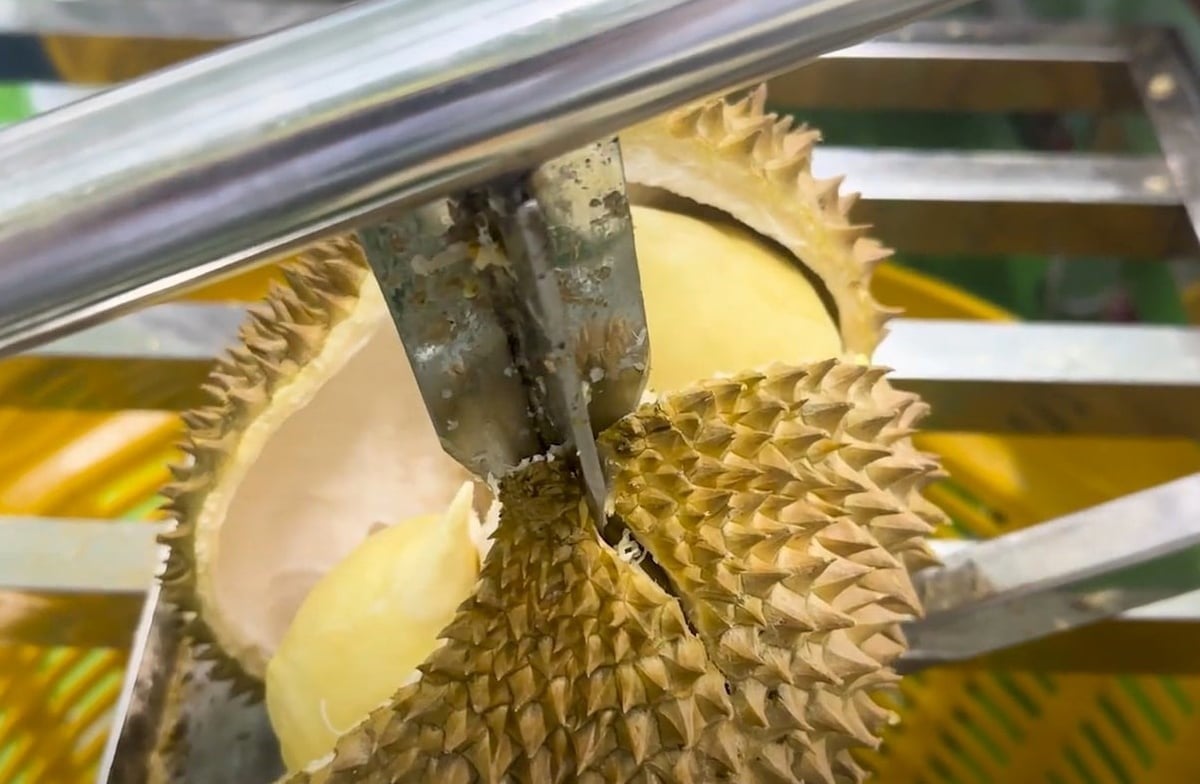
The sharp increase in the number of granted planting area codes, along with improving durian quality, will provide favorable conditions for a strong rise in Viet Nam’s durian exports to the Chinese market. Photo: Thanh Son.
Meanwhile, Viet Nam’s durian industry continues to expand its areas granted planting area codes. As of January 2026, the number of planting area codes and packing facilities approved by China has doubled compared to the same period last year, thereby boosting the supply of durian eligible for export to this market.
“Gold mine” of frozen durian
In addition to fresh durian, frozen durian is also considered a “gold mine” for Viet Nam’s fruit and vegetable sector. In 2025, frozen durian exports were estimated at around USD 600 million. Vietnamese frozen durian is currently competing on par with Thai frozen durian in the Chinese market.
Last year, China imported around 180,000 tons of frozen durian, with a value of approximately USD 1.1 billion. Of this, imports from Thailand fell by 25% in volume to 72,000 tons, worth about USD 480 million (down 26%). Meanwhile, imports from Viet Nam rose markedly to 94,000 tons, valued at USD 470 million. Malaysia also supplied 15,000 tons of frozen durian to China last year, valued at USD 160 million.
China’s demand for frozen durian is rising rapidly, with growth much stronger than that of fresh durian. In 2025, while fresh durian imports increased by nearly 20% in volume, frozen durian surged by 58%.
Amid strong demand in the Chinese market, Mr. Dang Phuc Nguyen said businesses should invest heavily in cold storage and rapid-freezing technologies (IQF, liquid nitrogen) to capture this segment while the market is still emerging.
Other key fruits
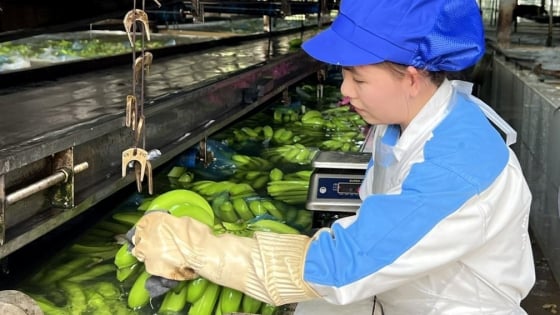
After durian, bananas are assessed to have strong potential in 2026, especially as banana shipments from Latin American countries (particularly Ecuador) to Asia are being significantly affected by the Middle East conflict. Banana exports are expected to continue growing as demand in Viet Nam’s traditional markets, such as China and Japan, continues to rise.
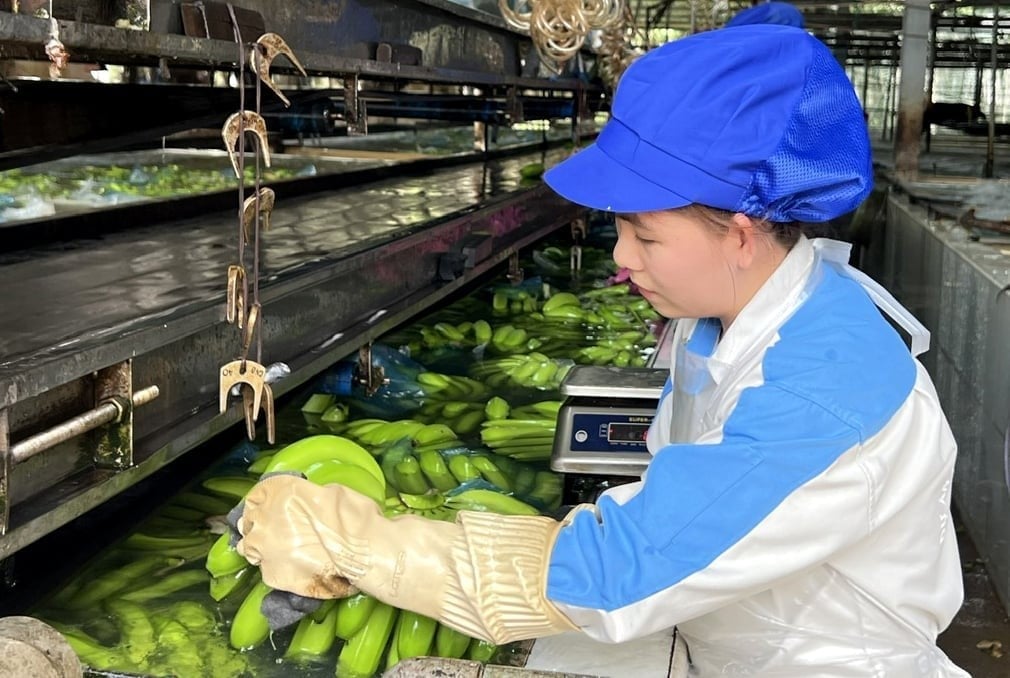
Bananas are processed prior to export packaging at Unifarm. Photo: Thanh Son.
The Middle East conflict has affected Viet Nam’s banana exports to the region, but not significantly, as this market accounts for only a small share of total export value. Conversely, the conflict has created major challenges for banana transportation from Ecuador and other Latin American countries to Asian markets such as China, Japan, and South Korea.
According to several businessmen, since the outbreak of the Middle East conflict, banana prices in Ecuador have declined due to difficulties in exports to Asian markets. This presents a favorable opportunity for Viet Nam’s banana industry to fill the gap left by Ecuadorian bananas.
Mr. Pham Quoc Liem, Chairman of the Board and CEO of U&I Agricultural Joint Stock Company (Unifarm), shared that under such favorable conditions, if quality and food safety standards continue to be well maintained, banana exports are expected to sustain growth this year.
In recent years, due to supply shortages, pineapple has attracted strong investment in raw material areas from several enterprises, notably Doveco and Nafoods. Thus, pineapple output is projected to increase sharply in 2026, creating additional opportunities to boost exports of this commodity.
The Agency of Foreign Trade under the Ministry of Industry and Trade forecasts that fruits such as dragon fruit, bananas, and mangoes will maintain stable exports to traditional markets this year. Meanwhile, fresh coconut, longan, and various herbs and spices are expected to increase their share thanks to expansion to markets such as the U.S., Japan, and the EU.
Pomelo also holds strong potential for export growth this year, as Viet Nam and China have completed technical negotiations, with only the signing of a protocol remaining to enable official exports to this market.
In addition to fresh fruits, processed fruit and vegetable products are seen as the sector’s major expectation this year, as demand continues to rise and the volume and standard of deeply processed products increasingly improve.
* $1 = VND 26,357 – Source: Vietcombank.
Agriculture News | Agri Products Price