



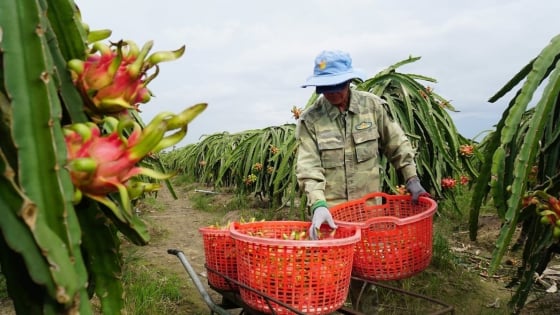
(VAN) Energy instability is driving a structural shift in the agricultural sector, from optimizing input costs and leveraging resources to proactively securing energy sources and expanding output.
Paradox of material prices
In recent years, Viet Nam’s agriculture has continuously faced shocks from input markets. In particular, as conflicts in the Middle East escalated, global fuel prices surged, sometimes rising by up to 50%, triggering a sharp increase in agricultural production costs. Fertilizers, pesticides, transportation fees, and other inputs have all soared simultaneously, creating an unprecedented “price storm.”
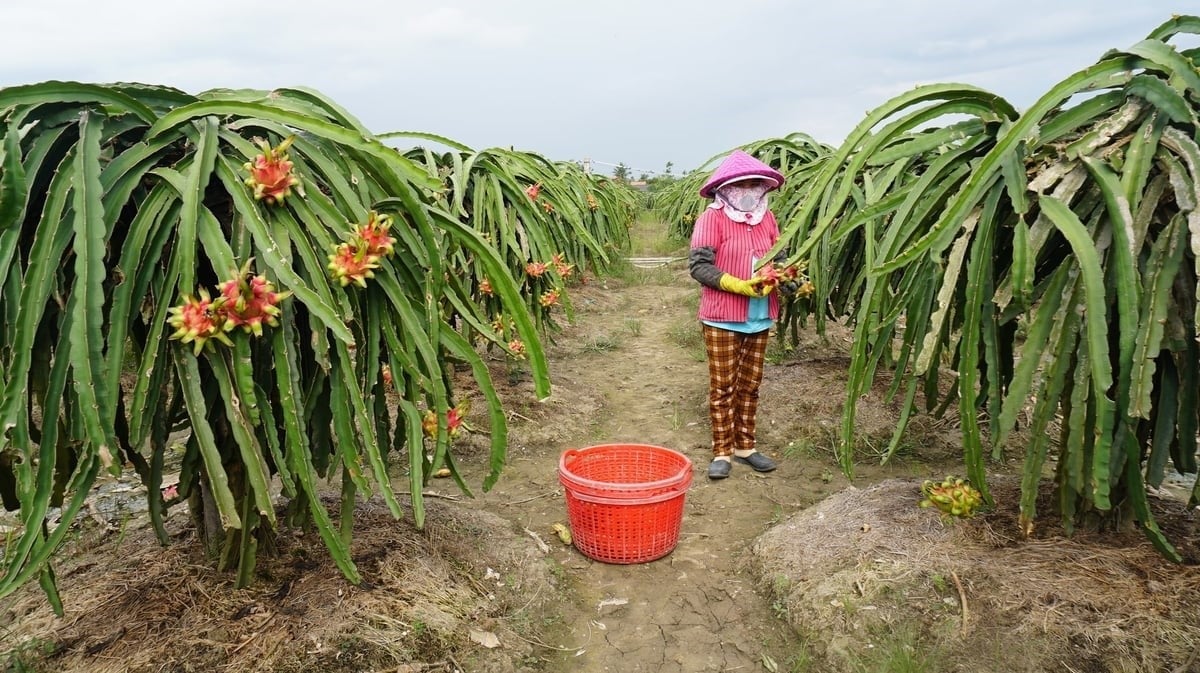
Dragon fruit, one of the key export commodities, is being clearly impacted by market shocks. Photo: Tran Trung.
Notably, while fuel prices have gradually cooled down, the overall price level of agricultural materials has declined very slowly; some items have even remained “pegged” at high levels. This “quick to rise – slow to fall” paradox is placing farmers in a passive position, leaving them at a significant disadvantage within the value chain.
Beyond affecting incomes, cost pressures are directly influencing production decisions. Many farmer households have been forced to cut back on investment, reduce fertilizer use, extend care cycles, or shift to short-term, lower-cost crops. However, the measures pose risks of declining yields and quality and may disrupt the stability of agricultural supply chains.
According to economic experts, this paradox stems from multiple interrelated factors. Foremost among them is the heavy reliance on imported raw materials and global energy prices. In addition, logistics costs and multi-layered distribution systems significantly increase material prices by the time they reach farmers.

Mr. Nguyen Quoc Trinh, Chairman of the Tay Ninh Dragon Fruit Association, shared with VAN News. Photo: Tran Trung.
Mr. Nguyen Quoc Trinh, Chairman of the Tay Ninh Dragon Fruit Association, stated that as one of the key export commodities, dragon fruit has been clearly affected by the “quick to rise – slow to fall” paradox in agricultural material prices. When fuel prices surge, the costs of electricity for lighting, fertilizers, pesticides, and transportation all rise simultaneously. However, when fuel prices cool down, these input costs decline very slowly, keeping production costs for farmers at high levels.
Meanwhile, dragon fruit purchasing prices are heavily dependent on export markets and tend to fluctuate unpredictably. This mismatch between input and output prices has remarkably declined farmers’ profits.
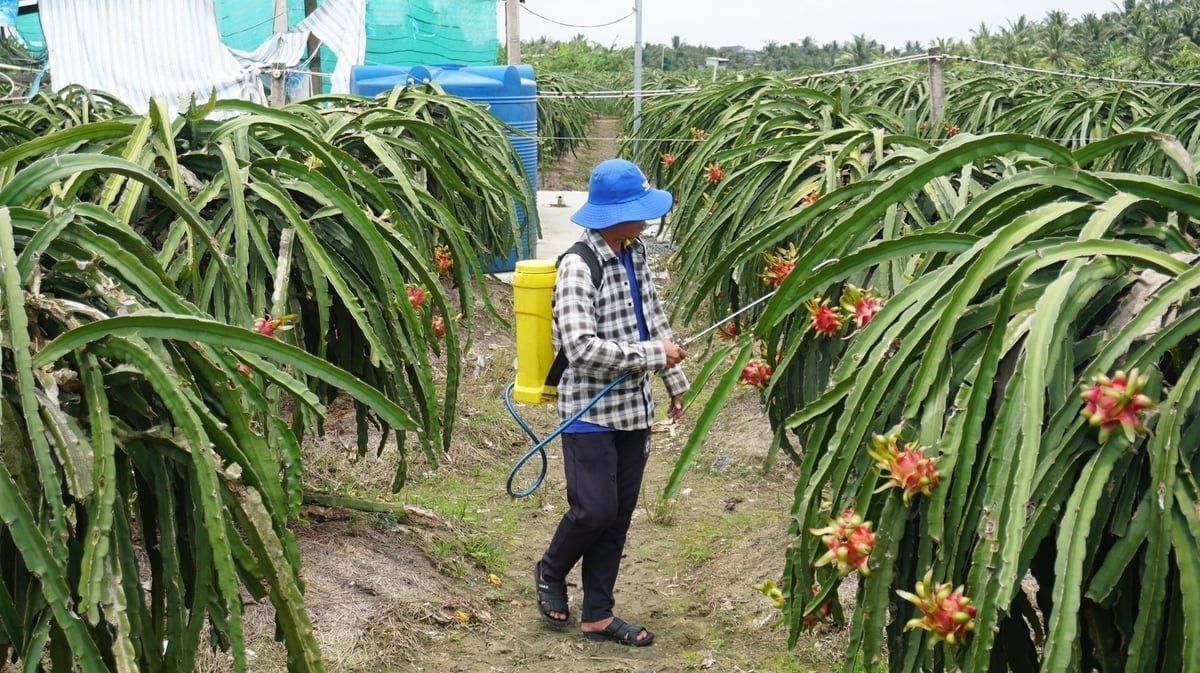
The “quick to rise – slow to fall” paradox in agricultural material prices declines production profits. Photo: Tran Trung.
Field surveys in key growing regions such as Lam Dong, Tay Ninh, and Dong Thap show that many households have had to reduce the frequency of lighting, cut back on fertilizer use, or even temporarily suspend off-season production to save costs. The consequences are not only reduced output but also impacts on quality and the ability to maintain export orders. If this situation persists, the risk of disruptions to raw material zones, a key factor in the dragon fruit value chain, is entirely possible.
Restructuring production to overcome the cost paradox
According to Mr. Nguyen Quoc Trinh, the solution for this challenge lies not merely in short-term coping measures but in a comprehensive shift in mindset, from traditional production to a self-reliant and sustainable agriculture.
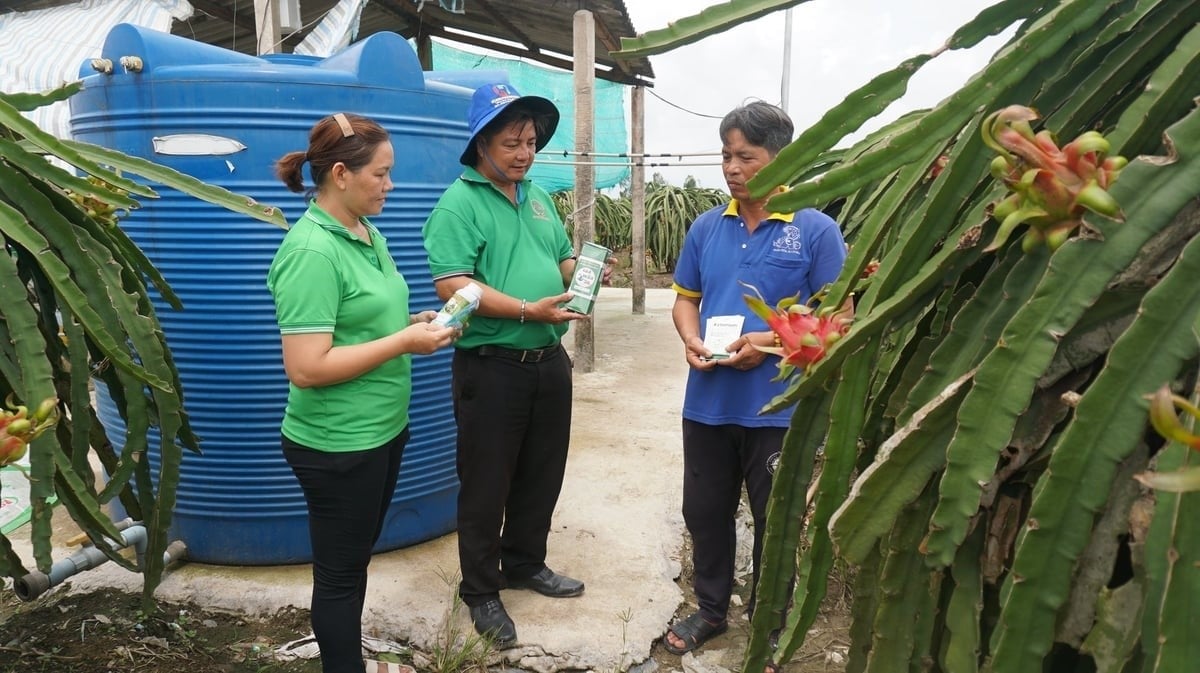
Smart fertilizer use, balanced fertilization, and circular agriculture models are considered long-term solutions to reduce dependence on fluctuations in input markets. Photo: Tran Trung.
Instead of applying fertilizers based on experience or intuition, farmers need to shift toward the “right, sufficient, balanced” principle, based on the actual needs of crops and soil fertility. This approach not only helps cut input costs by 20–30% but also helps protect soil structure, laying a foundation for long-term production.
At the same time, circular agriculture models are increasingly proving their effectiveness. Using by-products such as pruned branches and discarded fruits, combined with manure and indigenous microorganisms (IMO), to produce on-site organic fertilizers helps farmers reduce reliance on chemical fertilizers. This direction not only lowers costs but also aligns with the requirements of green agriculture and meets the standards of export markets.
In addition, electricity for lighting accounts for a large share of production costs in dragon fruit growing. Therefore, securing energy sources is considered a strategic solution. In practice, many growers have boldly invested in solar power systems integrated with automated irrigation. Although initial costs remain high, this solution significantly reduces long-term operating expenses, mitigates risks associated with energy price volatility, and enhances production management capacity in a modern direction.
From the output perspective, there is a need to gradually reduce dependence on a limited number of traditional markets. Recent geopolitical fluctuations and changes in import policies have highlighted the risks of market disruptions. Therefore, the dragon fruit industry needs to step up trade promotion and expand into potential markets such as the EU, Japan, and the U.S.
When products are standardized in terms of planting area codes, traceability, and compliance with quality standards, the value of dragon fruit will be enhanced, thereby creating a “buffer zone” that helps farmers minimize the impact of input cost shocks.
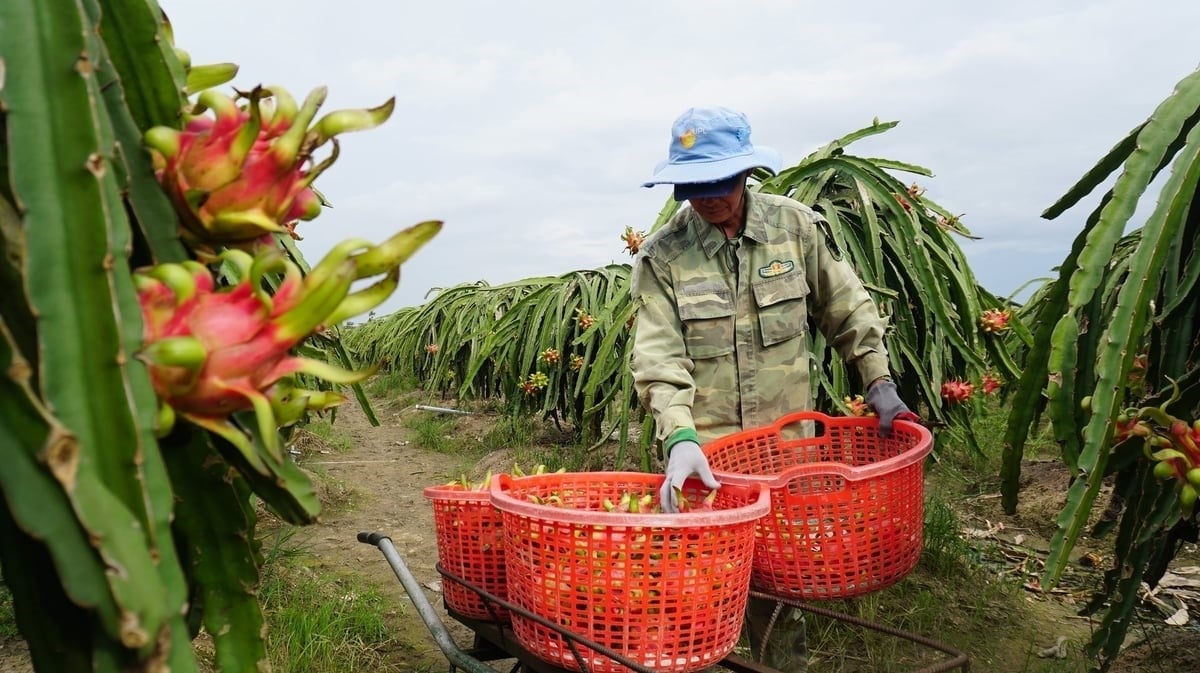
Pressure from energy prices is driving a transformation in the agricultural sector. Photo: Tran Trung.
However, according to Mr. Nguyen Quoc Trinh, efforts by farmers alone are insufficient; coordinated action by management agencies is also essential. First and foremost, it is necessary to strengthen control of the agricultural material market, ensure price transparency, and curb unreasonable “price pegging” across intermediaries. At the same time, green credit policies with preferential interest rates should be implemented to support farmers in investing in renewable energy, organic production, and circular models.
Additionally, reorganizing production toward chain linkages and developing cooperatives under a “collective purchasing – collective selling” model will help reduce costs and enhance product competitiveness.
From cutting input costs and utilizing local resources to proactively securing energy and expanding markets, these efforts are shaping a new, more flexible and sustainable pathway. In this context, farmers will no longer passively chase price fluctuations but will gradually take control of production and enhance value on their own farms.
Agriculture News | Agri Products Price