
By using this site, you agree to the Privacy Policy and Terms of Use.
Accept
Agriculture News - Mekong FarmerAgriculture News - Mekong FarmerAgriculture News - Mekong Farmer
  • Home
  • Technology
    TechnologyShow More
    Agtech Seedlings: Bonsai Robotics secures $15M to advance automated fruit harvesters
    By nhanongen
    Deere loses appeal against Agco in patent dispute over precision planting technology
    By nhanongen
    Investment in agtech startups plummeted in 2024
    By nhanongen
    Mekong Farmer to stop publishing
    By nhanongen
    Agtech Seedlings: CH4 Global to expand methane-reducing cattle feed with Mitsubishi
    By nhanongen
  • Mekong Deta
    Mekong Deta
    Show More
    Top News
    Farmers growing jicama are at risk of losing money because prices have plummeted
    07/06/2024
    Thousands of pots of Tet raspberry chrysanthemums were thrown away because of slow flowering
    13/11/2024
    Farmers growing vegetables and fruits do not use chemical fertilizers
    14/08/2025
    Latest News
    From 80 kg of dried shrimp to a revenue of 10 billion VND
    23/03/2026
    The man bred the San Tien plum variety for 230,000 VND per kg
    10/02/2026
    Gardeners threw away thousands of pots of early-blooming raspberry daisies
    22/01/2026
    Batches of dried black tiger shrimp worth millions during Tet
    19/01/2026
  • Supply Chain
    Supply ChainShow More
    Meat giant JBS breaks into the egg business
    By nhanongen
    Zeldin is confirmed as the new EPA administrator. What’s next?
    By nhanongen
    US detects rare bird flu strain H5N9 in poultry for first time
    By nhanongen
    Lend an ear: Corn-based material introduced for biodegradable packaging
    By nhanongen
    Why an independent grocer is holding the line on egg prices
    By nhanongen
  • Meat
    MeatShow More
    Cargill, Foster Farms to close turkey plants as demand wanes
    By nhanongen
    Cargill, Foster Farms to close turkey plants as demand wanes
    By nhanongen
    Smithfield raises 25% less than expected in muted IPO
    By nhanongen
    Egg prices could break more records in 2025
    By nhanongen
    USDA slow to update food safety standards for meat and poultry, watchdog finds
    By nhanongen
  • Agri Products Price
    Agri Products Price
    Update Agri Products Price: Coffee, Pepper, Rice, Durian, Jackfruit
    Show More
    Top News
    Live pig prices on 09/24/2024: Continue their upward trend
    24/09/2024
    the prevalence of high technology
    08/10/2024
    Price of Japan’s newly harvested rice surges 48% in Sep
    21/10/2024
    Latest News
    Rubber prices on April 2, 2026: Mixed fluctuations
    02/04/2026
    Coffee prices on April 1, 2026: Domestic prices drop sharply
    02/04/2026
    Rubber prices on March 27, 2026: Global prices rise sharply
    01/04/2026
    Coffee prices continue to decline
    01/04/2026
  • Markets
  • Regulations
Notification Show More
Font ResizerAa
Agriculture News - Mekong FarmerAgriculture News - Mekong Farmer
Font ResizerAa
  • Agri Products Price
  • Meat
  • Markets
  • Mekong Deta
  • Technology
  • Supply Chain
  • Categories
    • Mekong Deta
    • Markets
    • Agri Products Price
    • Meat
    • Technology
    • Supply Chain
  • More Foxiz
    • Blog Index
    • Sitemap
Follow US
Blog > Markets > Identifying bottlenecks and solutions for exports
Markets

Identifying bottlenecks and solutions for exports

nhanongen
Last updated: 02/04/2026 6:12 PM
By nhanongen
Share
7 Min Read
SHARE


Contents
Logistics “weak point”Restructuring with a long-term vision


(VAN) The Middle East conflict is not only a challenge but also an opportunity for Viet Nam’s agriculture to restructure, enhance value, and become more proactive in the global supply chain.

Logistics “weak point”

Amid fluctuations from the Middle East conflict, rising energy and logistics costs are creating unprecedented pressure on global supply chains. For Viet Nam’s agriculture and food sector, this is not only a cost issue but also a “mirror” reflecting long-standing structural weaknesses.

Regarding this issue, a reporter from VAN News spoke with Mrs. Duong Hong Loan, Director of the Institute for Viet Nam Initiatives.
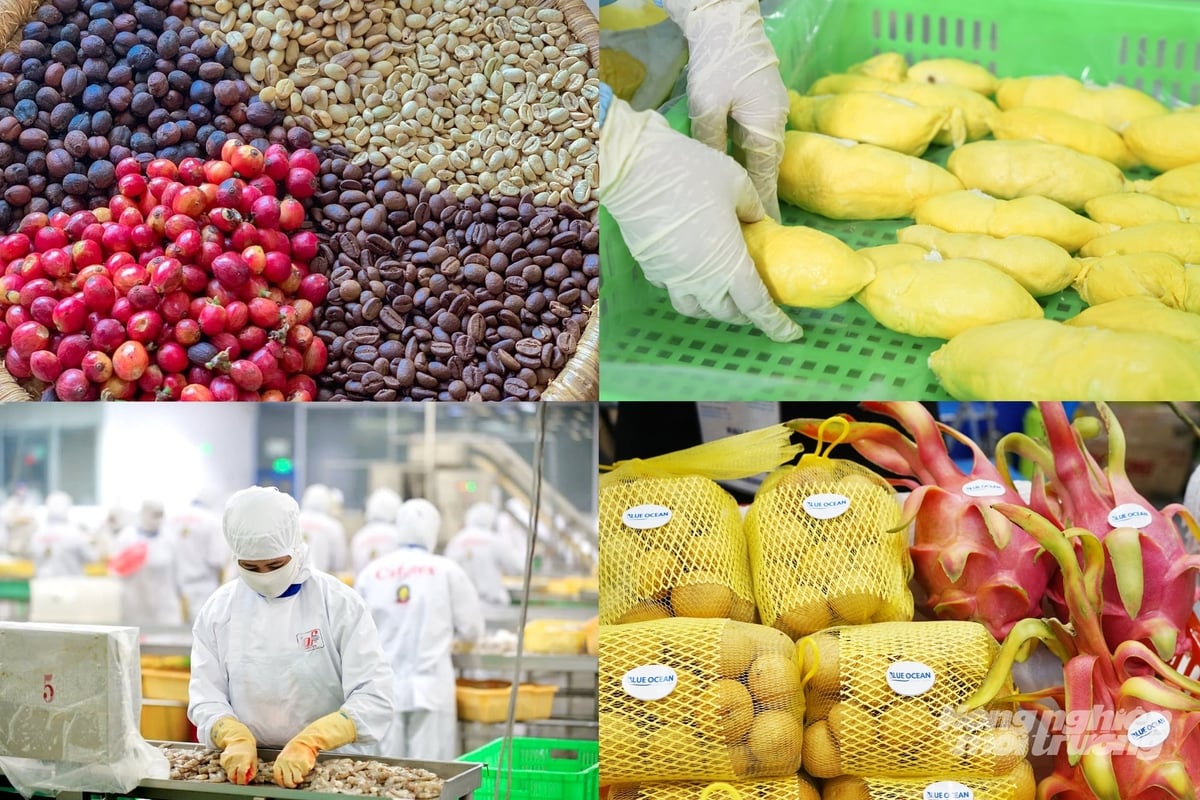
The Ministry of Agriculture and Environment sets a target for 2026 that export turnover of agriculture, forestry and fisheries will reach approximately USD 73–74 billion. Photo: Nguyen Thuy.

The Ministry of Agriculture and Environment sets a target for 2026 that export turnover of agriculture, forestry and fisheries will reach approximately USD 73–74 billion. Photo: Nguyen Thuy.

The Middle East conflict is disrupting supply chains, pushing energy and logistics prices to fluctuate strongly. From your perspective, how do you assess the level of impact of this geopolitical shock on Viet Nam’s agriculture and food sector?

The Middle East conflict is creating a clear ripple effect on Viet Nam’s agriculture and food sectors, not only in terms of costs but also on the operational structure of the entire supply chain.

First, rising energy and logistics prices directly impact production and export costs. Given that Viet Nam’s agricultural products heavily depend on international transportation, even a 15–30% increase in logistics costs can significantly “erode” business profits, especially for products such as seafood and fresh fruits.

Second, Viet Nam’s agriculture still depends heavily on imported inputs. According to international reports, more than 70% of agricultural imports are inputs for production, such as animal feed and processing materials. This pushes costs up as they are affected by both energy prices and the risk of supply chain disruptions.

Third, this shock “highlights” a structural weakness: the low-value export model, dependent on logistics and fossil fuels. Currently, about 60% of exported agricultural products remain in raw or semi-processed form, resulting in low added value and vulnerability to rising transportation costs.

Meanwhile, agriculture remains a pillar of the economy, accounting for about 11–12% of GDP, with export turnover exceeding USD 62 billion in 2024 and USD 70 billion in 2025. Therefore, any shock to energy and logistics has a significant impact. This is not only a short-term difficulty but also a warning signal that requires restructuring the entire sector.

Restructuring with a long-term vision

In three conflict scenarios (short-term, medium-term, and long-term), how should agricultural and food enterprises restructure to adapt and take advantage of FTAs and tariffs?

Enterprises need to approach according to three layers of scenarios. In the short term, they need to respond flexibly: optimize logistics and energy costs, diversify input supply sources, take advantage of FTAs to reduce taxes and expand markets. In reality, many seafood enterprises have shifted part of their orders to Japan and South Korea when shipping costs to the EU increased sharply.

In the medium term, strategic adaptation is needed. Enterprises should diversify export markets, reduce dependence on a few markets, and at the same time choose strategic markets such as the US, EU, and Japan to invest deeply. Additionally, promote deep processing to reduce reliance on logistics. For example, instead of exporting fresh fruit, it is possible to shift to frozen durian, juice or processed products to extend preservation time and increase value.

In the long term, comprehensive restructuring is needed: reduce dependence on fossil fuels, move towards renewable energy, build domestic and regional supply chains, shift from raw exports to branded, high-value exports. This is the transition from “growth by volume” to “growth by value”.

Mrs. Duong Hong Loan, Director of the Institute for Vietnam Initiative. Photo: Nguyen Thuy.

Mrs. Duong Hong Loan, Director of the Institute for Vietnam Initiative. Photo: Nguyen Thuy.

What recommendations do you have for regulatory agencies and the business community so that Viet Nam’s agriculture is not passive in the face of geopolitical shocks in the future?

At the macro level, it is necessary to invest heavily in logistics infrastructure and cold storage systems; develop clean energy for agriculture; and, at the same time, build an early warning system for global supply chain risks.

At the enterprise level, it is necessary to shift from “producing what we have” to “producing according to market demand”; invest in data, forecasting, and risk management; and strengthen value chain linkages. In reality, linkage models in the coffee and seafood sectors have proven effective in controlling quality and costs.

For the US market, what should Vietnamese enterprises focus on?

The US is a large market, but it also has very high standards. Enterprises need to standardize quality and strictly comply with food safety and traceability regulations. At the same time, they must build brands, not just stop at processing.

For example, Vietnamese coffee, if built as a brand, can increase its value many times over raw export value. In addition, it is necessary to develop products aligned with consumption trends, such as green, organic, convenient, and health-friendly foods.

In addition, as the US is restructuring the global supply chain, Viet Nam has great opportunities but must meet sufficient standards and scale.

In summary, this geopolitical shock is not only a challenge but also an opportunity for Viet Nam’s agriculture to shift from passive to proactive, from dependence to self-reliance, and from low-value to high-value in the global supply chain.

Thank you so much!

* $1 = VND 26,362 – Source: Vietcombank


Agriculture News | Agri Products Price

- Advertisement -
Share This Article
Facebook Twitter Copy Link Print

Fast Four Quiz: Precision Medicine in Cancer

How much do you know about precision medicine in cancer? Test your knowledge with this quick quiz.
Get Started
Vietnam’s rice exports to Senegal increase 30 times

(VAN) Agricultural trade relations between Viet Nam and Senegal have marked…

The US Embassy in Vietnam aims to elevate ‘fruit diplomacy’

The concept of 'fruit diplomacy' between Vietnam and the United States…

Cooperative’s organic pepper sells at VND 15 million/kg

(VAN) After efforts for certifications, Bau May pepper products are priced…

- Advertisement -

Your one-stop resource for medical news and education.

Your one-stop resource for medical news and education.
Sign Up for Free

You Might Also Like

Markets

[4] Vinh Long coconut industry toward billion-dollar exports

By nhanongen
Markets

Ly Son garlic’s journey to 5-star OCOP and international markets

By nhanongen
Markets

Fruit and veg exports target $10B: [3] Durian plantations

By nhanongen
Markets

Farmers learn to standardize techniques

By nhanongen
Facebook Twitter Youtube

Giá cả nông sản
Mekong Delta News
Agriculture News
Agri Products Price

Categories
  • Home
  • Technology
  • Mekong Deta
  • Supply Chain
  • Meat
  • Agri Products Price
  • Markets
  • Regulations
Nhà Nông Miền Tây
  • Giá cà phê hôm nay
  • Giá lúa gạo hôm nay
  • Giá mít ruột đỏ hôm nay
  • Giá mít thái hôm nay
  • Kết quả xổ số Miền Nam
  • Kết quả xổ số Ngọc Minh
  • Xổ số Ngọc Minh
  • Kết quả xổ số
  • Kết quả xổ số Kiên Giang
  • Xổ số Kiên Giang
Italy Highlights
  • Italy Highlights
  • Italy Attractions
  • Travel to Italy
  • Italy Food
  • Trip Ideas in Italy
  • Real Estate in Italy
  • Crypto News
  • Finances News
  • Investing News
  • Economic News
Architecture Concept
  • Architecture Concept
  • Interior Design
  • Landscape Design
  • Bath Products
  • Kitchen Products
  • Home Renovating
  • Architecture Project
  • Lighting Design
  • Mekong Farmer
  • Mekong News
- Advertisement -
Thị trường nông sản

© 2024 Mekong Farmer
– Agriculture News.
A member of Nhanongmientay.com

© 2024 Mekong Farmer - Agriculture News
Welcome Back!

Sign in to your account

Lost your password?