

(VAN) Farmers in Vinh Hai Commune, Khanh Hoa Province are transforming their production mindset, enabling shallots and value-added products to penetrate demanding international markets.
A turnaround on 35 hectares of VietGAP shallots
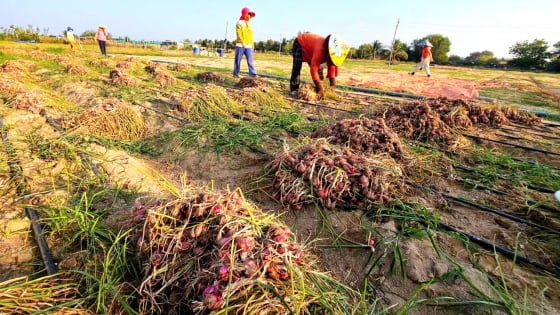
Under the intense sun typical of Viet Nam’s south-central coast, shallot fields in Vinh Hai Commune are entering peak harvest season. Along roads leading to the large-scale production area of the Nhan Hai Shallot Agricultural Cooperative, activity is in full swing. Farmers work briskly, pulling, drying, and manually processing the cropm amid a vibrant atmosphere. This is more than a bumper harvest; it marks a decisive shift from traditional farming to modern, large-scale production.
Along roads leading to the large-scale production area of the Nhan Hai Shallot Agricultural Cooperative, activity is in full swing. Photo: Kim So.
The cooperative now cultivates 35 hectares of shallots, primarily on sandy coastal soils. In one field, farmer Le Ngoc Kha from My Tuong 2 hamlet gathers freshly harvested shallots into bundles for drying. Managing five sao (0.5 hectares), Kha is among those who have fully embraced the cooperative’s production model.
“In the past, we relied heavily on experience, using fertilizers and pesticides without strict control, which raised costs and made output uncertain,” Kha said. “Since joining the cooperative, we’ve been supported with quality seeds, standardized inputs, and guaranteed purchasing.”
He added that farmers have eliminated chemical pesticides in favor of biological alternatives and adopted drip irrigation systems. All processes, from spraying to fertilization, are carefully recorded for traceability, ensuring both farmer safety and product quality.
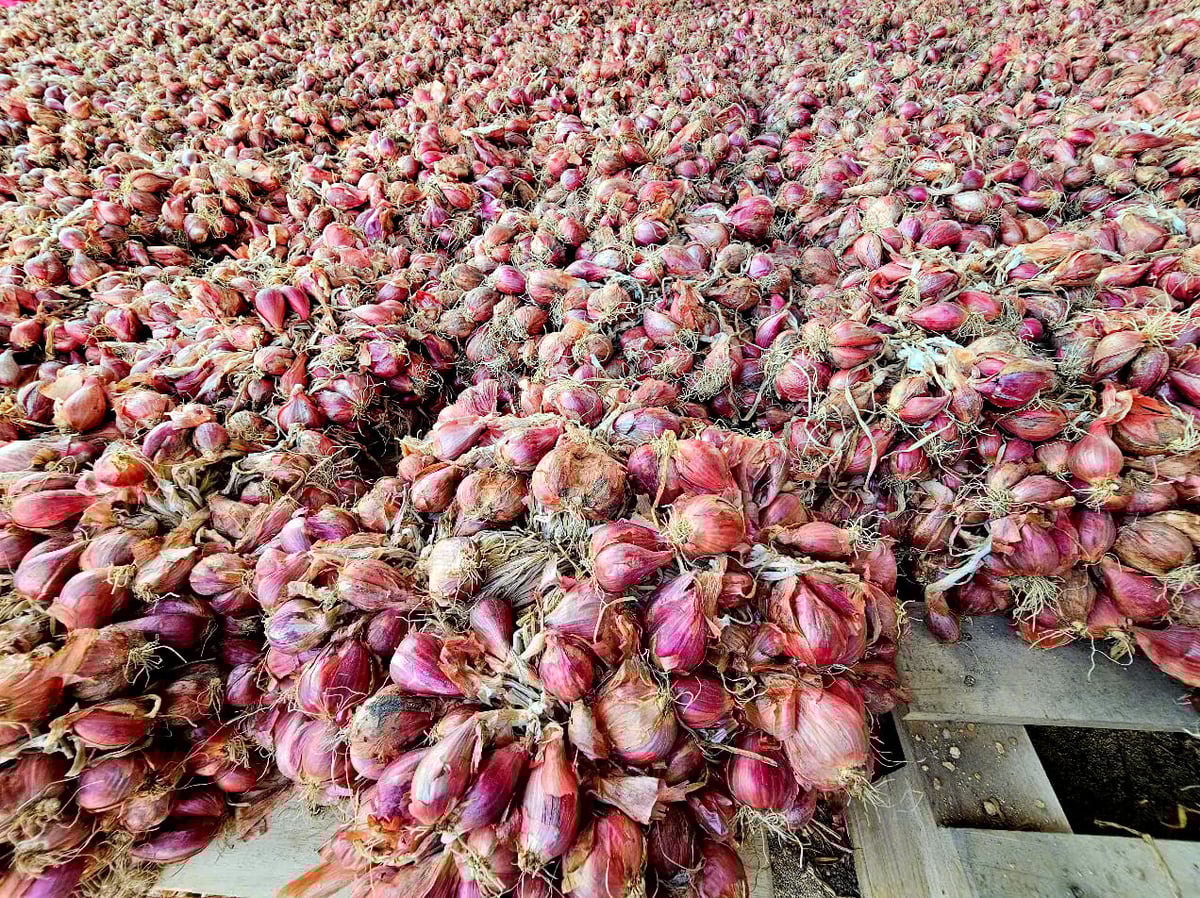
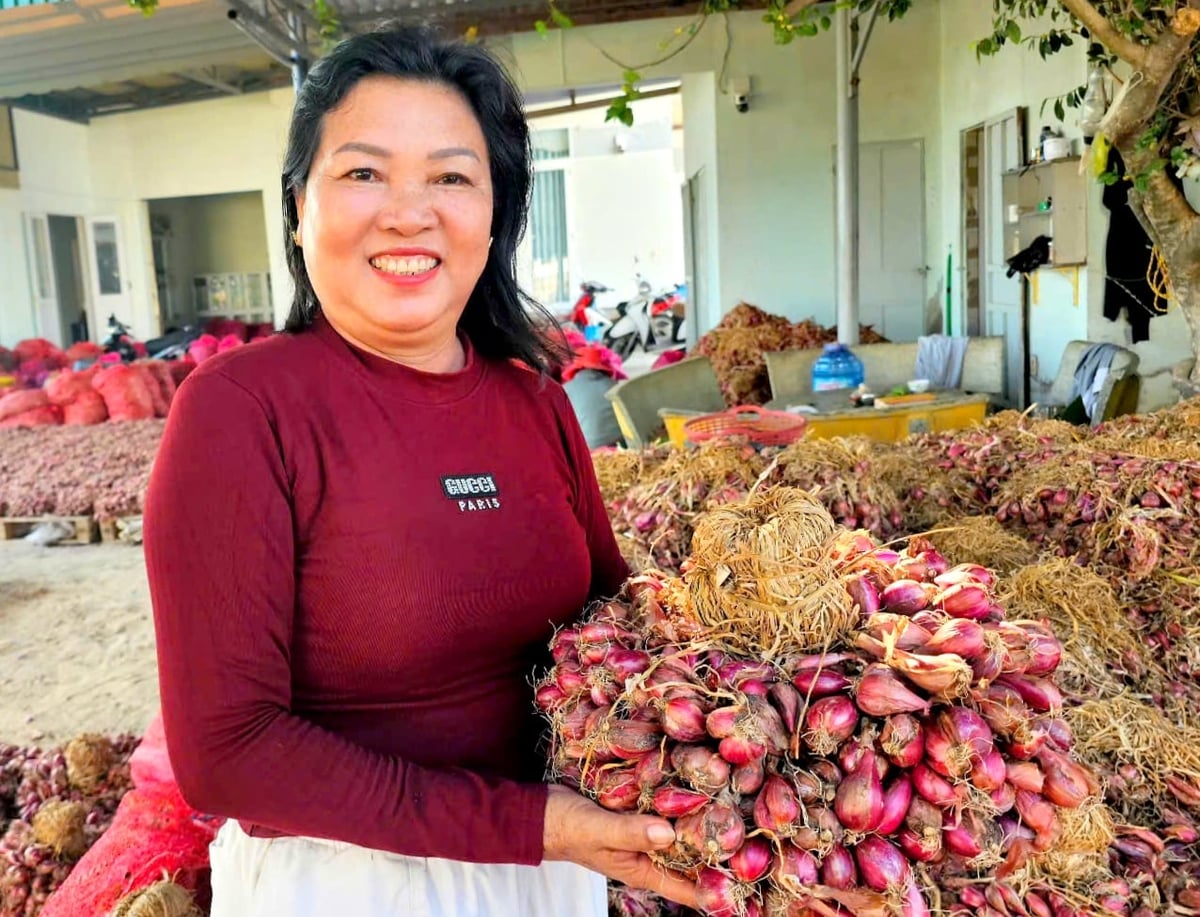
With stable yields of about 2 tons per sao, Kha earns profits of 15 – 20 million VND per sao per crop cycle of 50 – 70 days. Photo: Kim So.
With stable yields of about 2 tons per sao, Kha earns profits of 15 – 20 million VND per sao per crop cycle of 50–70 days. Encouraged by these results, he plans to expand to a full hectare of shallot cultivation.
Price stability is another key factor. The cooperative offers purchase prices averaging 30,000 – 35,000 VND per kilogram, sometimes peaking at 60,000 VND. It consistently pays 1,000 – 2,000 VND per kilogram above market rates, and at times up to 5,000 VND higher, giving farmers confidence to invest in production.
Adding value through processing and export
Behind the transformation of Nhan Hai’s shallot region is Nguyen Thi Chau, Chairwoman and Director of the cooperative. Established in August 2022, the cooperative set out to chart a new course, bringing local agricultural products to global markets through VietGAP-compliant and organic-oriented production.
A standout achievement is its dried sliced shallot product, which has been awarded a provincial four-star OCOP certification, evidence of advanced processing capacity and high product quality.
At the facility, preprocessing remains meticulous and largely manual. After being sun-dried for six to eight days, shallots are trimmed, peeled, and cleaned by hand before entering drying or packaging stages.
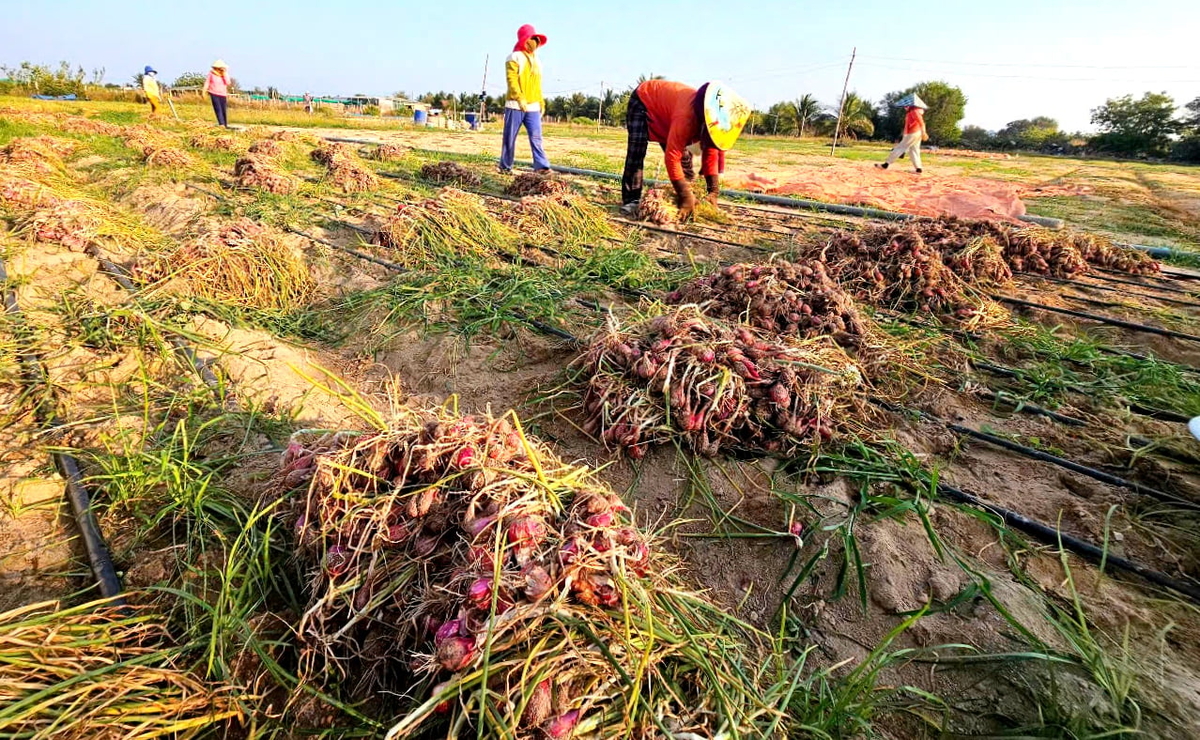
After being sun-dried for six to eight days, shallots are trimmed, peeled, and cleaned by hand before entering drying or packaging stages. Photo: Kim So.
In terms of market access, Chau said the cooperative currently works with import-export companies in Ho Chi Minh City to distribute products internationally. Japan remains the primary market for fresh shallots, with export volumes ranging from 10 to 30 tons per month. Notably, the cooperative has also successfully exported shallot seeds directly to Indonesia.
The cooperative is now targeting entry into the United States, working to complete FDA certification and phytosanitary requirements. Middle Eastern markets are also under consideration, with preparations underway to meet Halal certification standards.
The brand name “TKV” (short for “toi khat vong,” meaning “I aspire”) reflects the cooperative’s vision, promoting clean agriculture and bringing Vietnamese produce to the global stage.
Nguyen Trung Dung, Chairman of the Khanh Hoa Cooperative Alliance, described Nhan Hai as a leading high-tech agricultural model in southern Khanh Hoa. By pioneering exports to demanding markets such as Japan, Indonesia, and the United States, the cooperative has demonstrated strong governance and technological adoption. It has developed a 35-hectare certified growing area with traceability codes, achieved four-star OCOP status, and reached an annual output exceeding 10,000 tons.
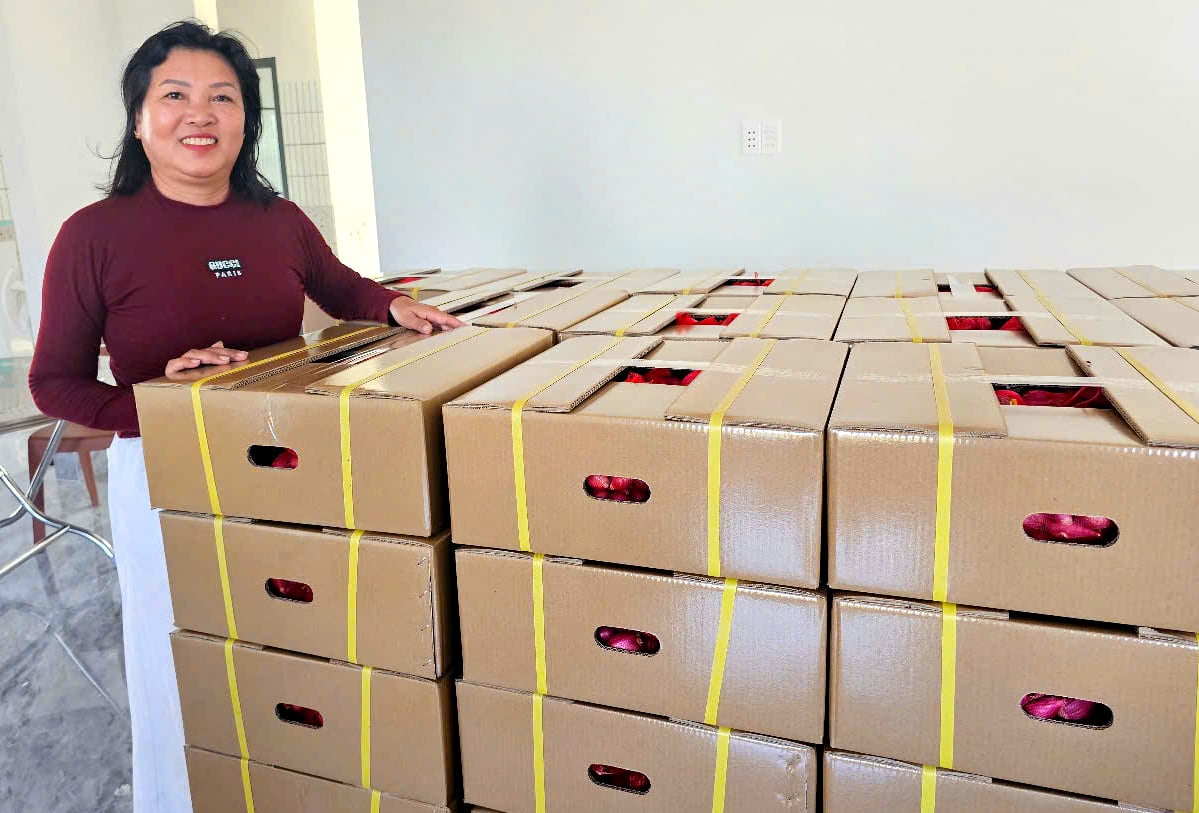
By pioneering exports to demanding markets such as Japan, Indonesia, and the United States, the cooperative has demonstrated strong governance and technological adoption. Photo: Kim So.
In recognition of its achievements, the cooperative has been named among the top 100 recipients of the 2026 “CoopStar Awards” by the Viet Nam Cooperative Alliance and will be honored by the provincial alliance on April 7.
This success underscores the vital role of collective economic models in linking government, science, and farmers, creating sustainable value and elevating Vietnamese agricultural products on the global stage.
The transformation of Nhan Hai shallot production reflects a broader shift toward organized, market-oriented agriculture. By adopting VietGAP standards, biological inputs, and drip irrigation, farmers have improved both product quality and environmental sustainability. The cooperative model ensures stable output through input support and guaranteed purchasing prices, reducing risks for growers. At the same time, investment in processing has enabled the creation of higher-value products such as dried shallots, meeting export standards.
$ 1 = VND 26,335 – Source: Vietcombank.
Agriculture News | Agri Products Price