



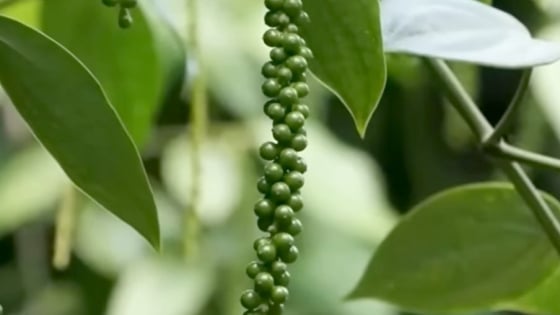
(VAN) Pepper prices in Viet Nam’s Central Highlands have fallen sharply since tensions escalated in the Middle East, but are expected to recover on the back of a steep drop in output.
Before the conflict, farmgate pepper prices in the Central Highlands hovered near VND 150,000 per kilogram. Since then, prices have trended downward, at one point slipping to VND 135,000 – 136,000 per kilogram, the lowest level since July 2025, before stabilizing in early April at around VND 138,000 – 139,000.
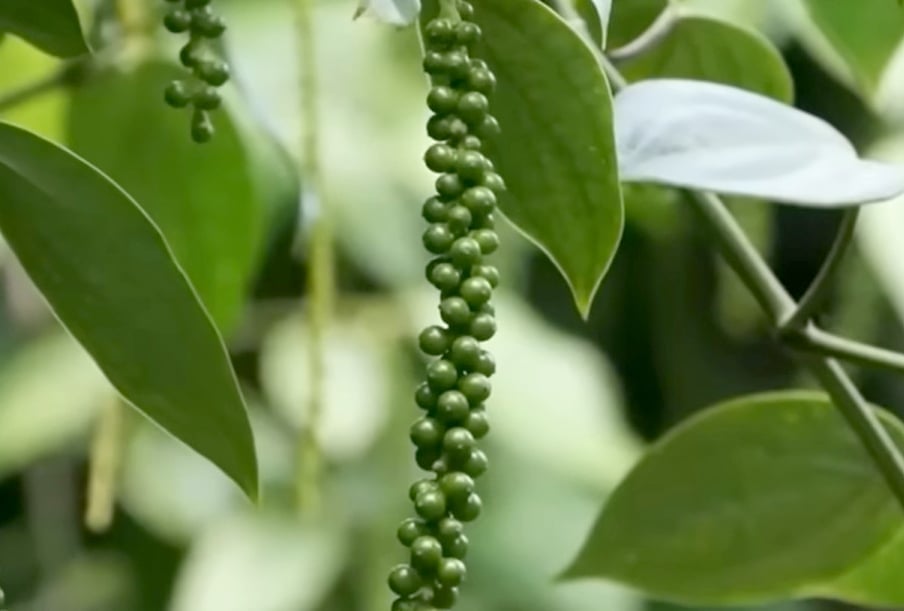
Vietnam’s pepper prices are expected to recover as output declines sharply. Photo: Son Trang.
The decline has been driven primarily by disruptions linked to the Middle East, a key export destination for Vietnamese pepper, particularly the UAE. According to the Viet Nam Pepper and Spice Association, exports to the UAE reached more than 22,000 tons in 2025, accounting for about 9% of Viet Nam’s total pepper shipments.
As the conflict disrupted trade flows, Vietnamese pepper shipments to the UAE and other regional markets were temporarily stalled. Exports to the U.S. and EU also faced headwinds, as freight rates surged and transit times lengthened, with vessels rerouted around the Cape of Good Hope. These factors weighed on both consumption and prices in the Central Highlands.
Amid the uncertainty, many businesses scaled back procurement or adopted a wait-and-see approach, while farmers entered the peak harvest season. At the same time, rising fuel costs pushed up production and living expenses, forcing many growers to sell larger volumes immediately after harvest rather than stockpile, as in previous years. The lack of active buying from enterprises further contributed to the price drop.
However, the downturn may be short-lived as supply tightens due to falling output in key growing areas.
Hoang Phuoc Binh, a major pepper farmer in Chu Se district of Gia Lai Province, said this year’s crop has been hit by poor yields across Chu Se and other major producing areas such as Dak Lak and Dak Nong (now part of Lam Dong), with production down significantly from the previous season. Overall output could decline by as much as 30%.
Meanwhile, the Viet Nam Pepper and Spice Association estimates that Viet Nam’s 2026 pepper output will fall by 15-20% year-on-year.
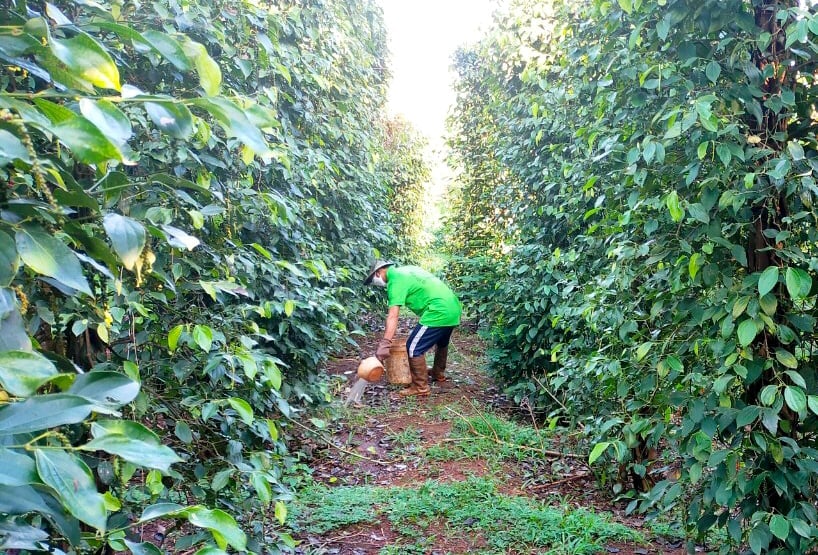
Pepper farmers in Gia Lai Province tend to their plantations. Photo: Son Trang.
The supply squeeze is already evident. Since early this year, businesses have ramped up imports to offset domestic shortages. In the first two months alone, Viet Nam imported 10,888 tons of pepper worth $61.3 million, up 129.4% in volume and 128.8% in value compared to the same period in 2025. Imports mainly came from Cambodia, Indonesia and Brazil.
Exports, despite disruptions, have maintained solid growth. According to Viet Nam Customs, pepper exports in the first half of March reached 12,613 tons, up 47% year-on-year. From January 1 to March 15, total exports hit 48,192 tons, nearly 35% higher than the same period last year.
Global demand is also expected to strengthen, particularly from the United States and other major markets. A report by Future Market Insights forecasts steady growth in U.S. pepper demand between 2026 and 2036, with black pepper consumption projected to expand at a compound annual growth rate of 4-4.2%, driven by strong usage in processed foods and households, as well as a preference for natural, health-oriented products.
Even if global prices rise due to tightening supply, U.S. demand is expected to remain resilient given pepper’s status as an essential spice.
Data from the United States International Trade Commission shows that in January, while U.S. imports from Indonesia and India declined, imports from Viet Nam still edged up 0.6% in volume and 5.1% in value compared to the same month in 2025.
Viet Nam has remained the world’s leading exporter of pepper for more than a decade, accounting for roughly 35-40% of global output and over 50% of international trade, according to the Viet Nam Pepper and Spice Association and the International Pepper Community. The country’s main growing areas are concentrated in the Central Highlands and parts of the Southeast, where favorable soil and climate conditions support large-scale cultivation.
Pepper is a key export crop, generating billions of dollars in revenue annually and providing livelihoods for hundreds of thousands of farming households. However, the sector has faced cyclical volatility in both prices and output. After a period of rapid expansion in the 2010s, oversupply led to a prolonged price slump between 2018 and 2022, prompting many farmers to scale back production or switch to other crops.
In recent years, the industry has shifted toward sustainability and quality improvement. Authorities and exporters have promoted traceability, reduced chemical use, and compliance with stricter standards in major markets such as the U.S. and EU.
Globally, demand for pepper continues to grow steadily, driven by the food processing industry and changing consumer preferences. The Food and Agriculture Organization notes that spices remain an essential commodity, with relatively inelastic demand despite price fluctuations.
* $1 = VND 26,361. Source: Vietcombank.
Agriculture News | Agri Products Price