

(VAN) Recognized by IFOAM International, the VOAA organic standard helps standardize production, enhance transparency, and strengthen trust among customers.
The organic standard recognized by IFOAM International
On March 27-28 in Hanoi, the Viet Nam Organic Agriculture Association (VOAA) organized a training course on the VOAA organic standard to introduce and guide the application of the basic standard – TCCS 01:2024/VOAA – to its members, as well as organizations and individuals interested in organic agriculture.
The TCCS 01:2024/VOAA organic standard was developed based on the Viet Nam PGS organic standard. It was drafted by the VOAA Standards Committee following the decision to establish the drafting board on December 18, 2020; issued by VOAA under Decision No. 18/2024/QĐ-HHNNHCVN on April 17, 2024; and assessed and recognized by IFOAM International as a member of the IFOAM family of standards in May 2025.
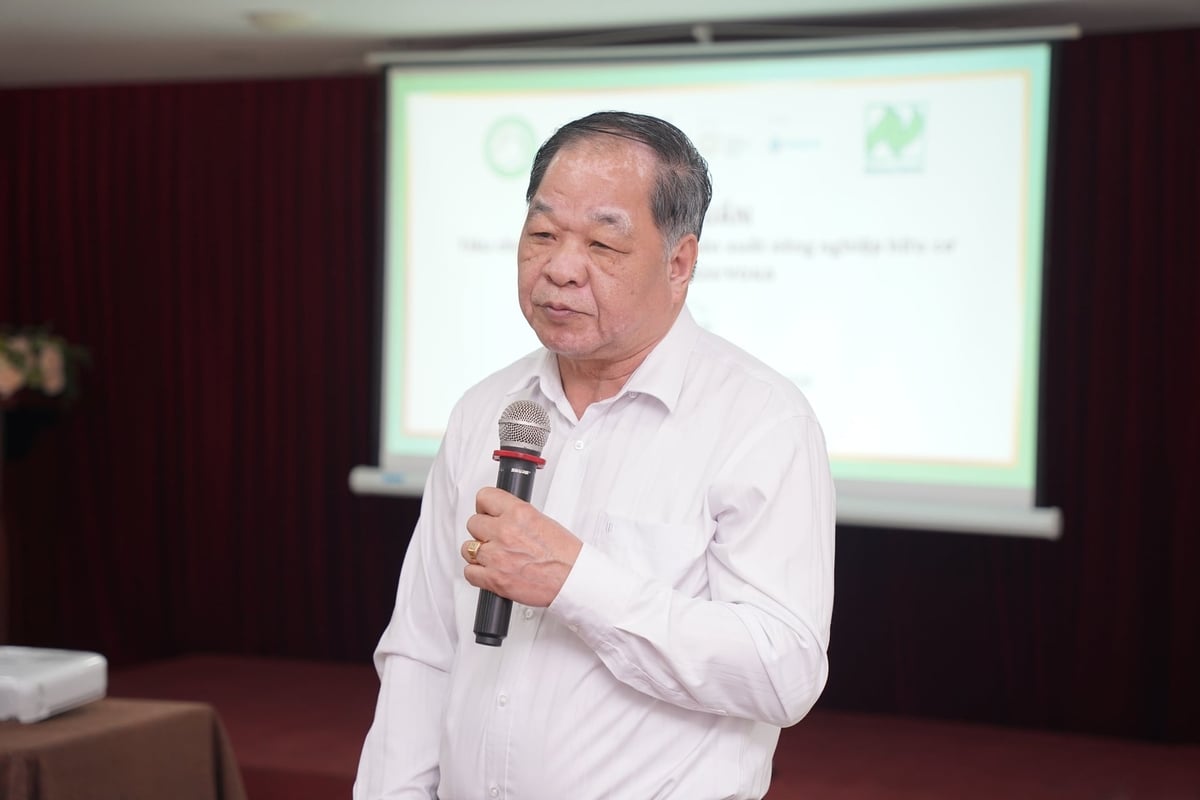
DSc. Ha Phuc Mich, Chairman of VOAA, said that the association’s development of its own standard had been nurtured for many years, stemming from the need for a practical tool that producers, cooperatives, and businesses could adopt to ensure transparency in production. Photo: Hong Tham.
The standard set consists of 10 sections spanning 60 pages, covering general management, organic crop production, wild product harvesting, mushroom and microgreen cultivation, organic livestock farming, organic beekeeping, processing and handling, social fairness, inputs for organic production, and guidance on evaluating inputs, additives, and processing aids.
Notably, the standard is built on the Viet Nam PGS foundation that had previously been recognized by IFOAM, while adding several fields still lacking in practical production, such as wild harvesting, microgreens, mushrooms, beekeeping, and the evaluation of production inputs.
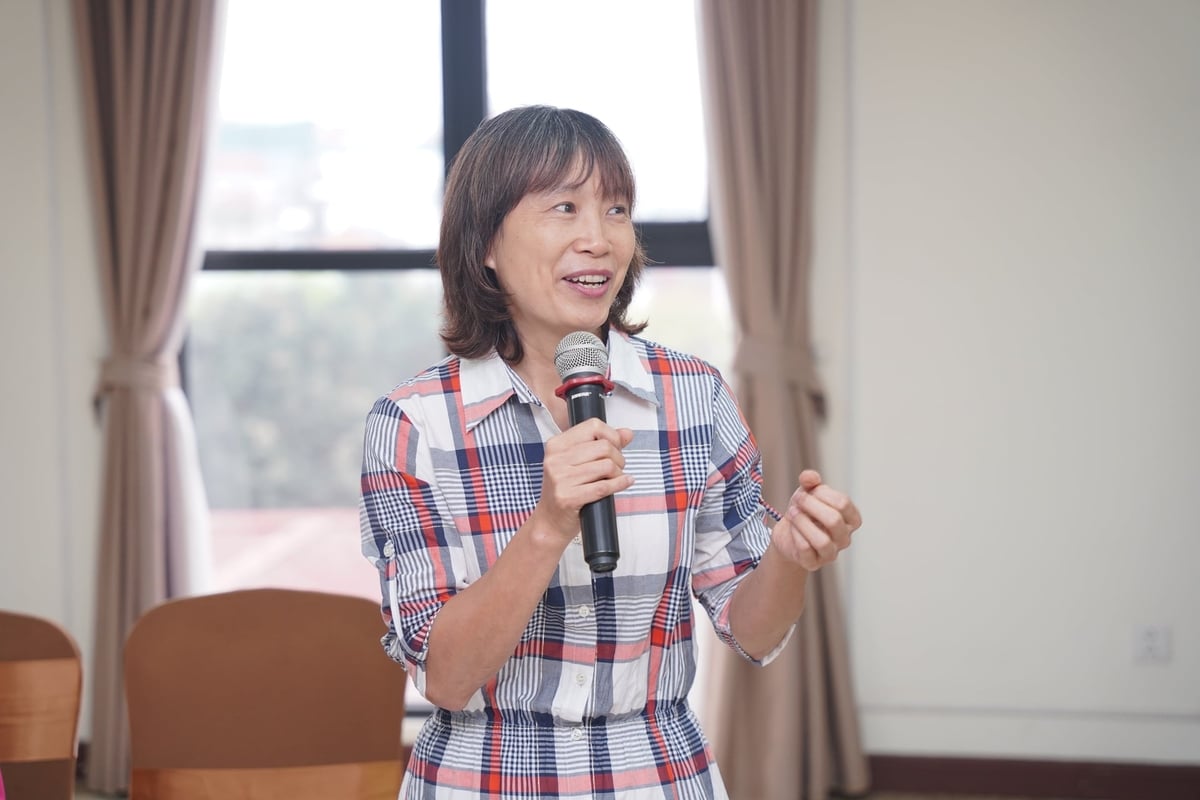
Dang Thi Thuy, Project Manager of the KVP project and representative of the German organic association Naturland in Viet Nam, believes that VOAA’s issuance of its own standard is a remarkable milestone. Photo: Hong Tham.
In his opening remarks, Ha Phuc Mich said the development of the association’s standard had been envisioned for many years, driven by the need for a practical tool that producers, cooperatives, and businesses could adopt to make their production processes transparent.
According to the VOAA chairman, a key point of this set of standards is that it has been recognized by IFOAM International, creating additional advantages for organizations and individuals who adopt it into their production processes, and helping to build trust with the market.
Dang Thi Thuy, Project Manager of the KVP project and representative of Naturland in Viet Nam, assessed that VOAA issuing its own standard is a notable milestone. It helps strengthen support services for members and provides a reliable reference for consumers to recognize products on the market.
“Natural” products are not the same as “organic” products
At the training session held on the morning of March 27, Tu Thi Tuyet Nhung, a member of the VOAA Standing Committee, said that organic agriculture should not be understood simply as “not using chemicals,” but rather as a production system that maintains the health of soil, ecosystems, and people.
The four principles of “Health, Ecology, Fairness, and Care” form the foundation for developing organic production standards. To obtain organic certification, producers must meet these standards throughout the production process. “The VOAA organic standard is a ‘yardstick’ for transparency. Without standards, anyone could claim their production as organic,” Nhung said.
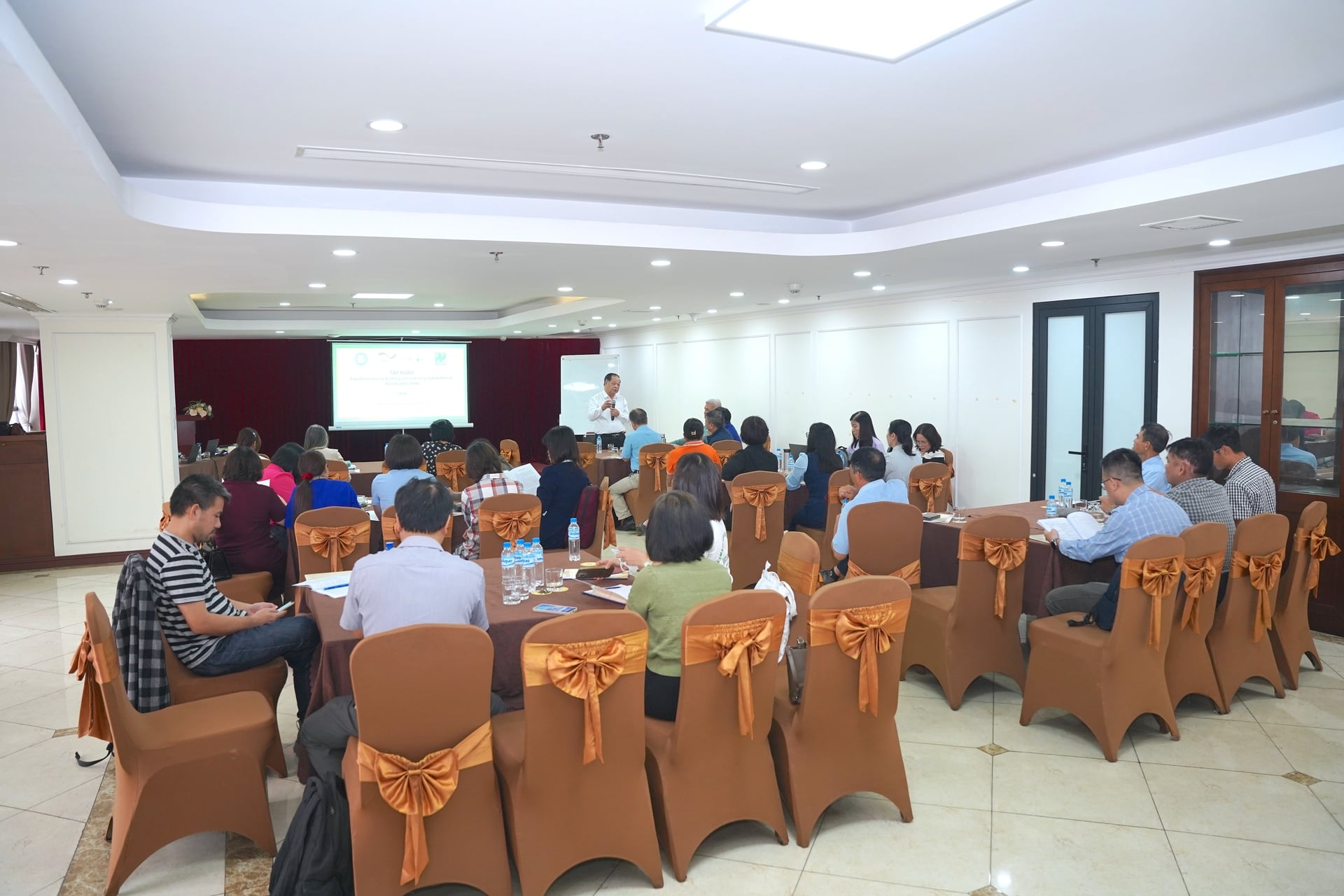
Overview of the VOAA Organic Standard Training course, introducing and guiding the application of TCCS 01:2024/VOAA to members, organizations, and individuals interested in organic agriculture.Photo: Hong Tham.
Bui Khanh Tung, Deputy Director of the Center for Organic Agriculture Development Support (CODAS), highlighted a common confusion in the market today: products labeled “natural” are not necessarily “organic.” From his perspective, organic products result from a managed system with standards, monitoring, and traceable records, not simply products promoted using general marketing terms.
He also noted that one of the biggest bottlenecks in the market today is consumer trust. Too many terms, such as “clean vegetables,” “safe vegetables,” “VietGAP,” and “organic,” coexist in the market but are not always explained transparently.
Managing pests through healthy ecosystems, soil, and biodiversity
In the afternoon session, the training moved deeper into the structure of the VOAA standard set. Participants explored the detailed contents of the standard, key notes, and differences in the VOAA standard, the significance of its recognition by IFOAM, and the benefits of using the VOAA standard label.
According to Nhung, the VOAA standard does not replace the National Standard but instead helps specify and expand requirements to better suit the conditions of organic production for members and domestic producers.
Regarding general management, the VOAA organic standard sets key requirements such as converting the entire production facility to organic management; prohibiting parallel production of the same crop or livestock under both organic and conventional methods; banning the burning of crop residues; prohibiting inputs derived from genetically modified organisms; and requiring full documentation of input origins, quantities used, and sales transactions.
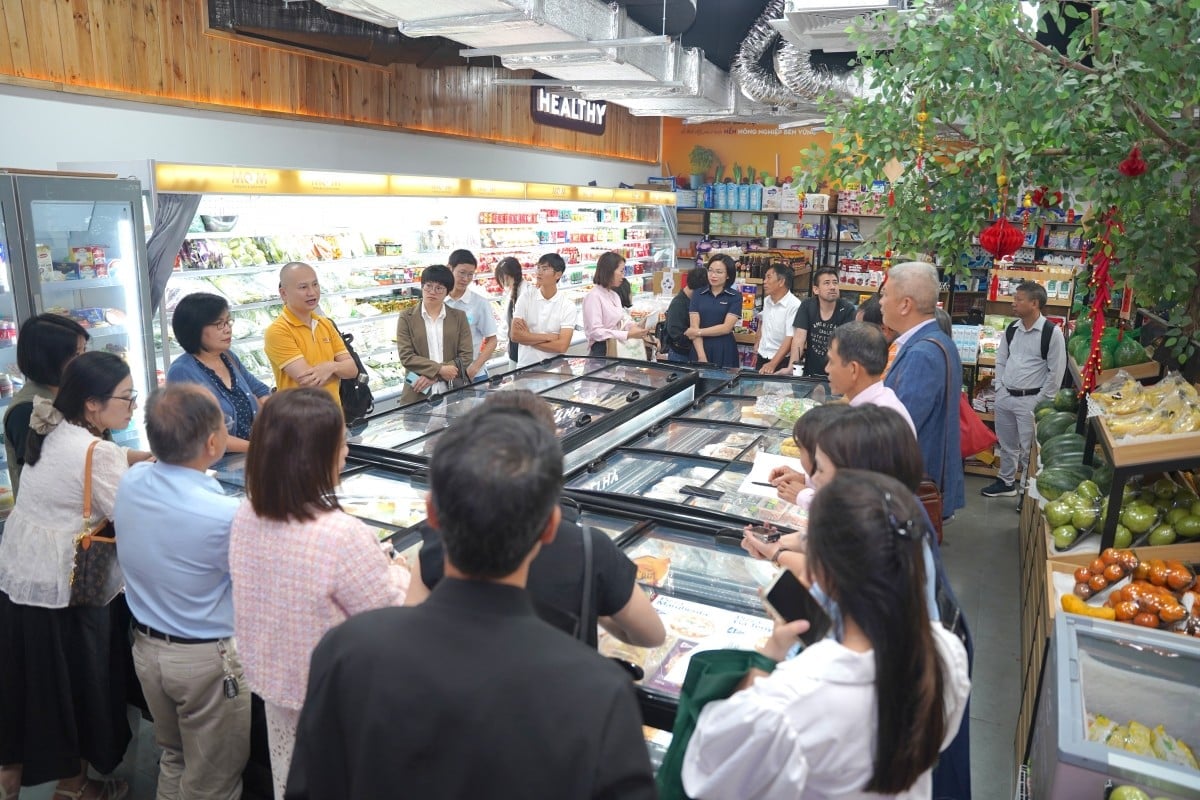
Participants of the VOAA Organic Standard Training course visit and examine labels and certifications at the Moom – Organic & Safe Food store in Xuan Dinh ward, Hanoi. Photo: Hong Tham.
One topic that generated lively discussion among participants was pest management. Nguyen Van Phi from Bao Tien Longan Cooperative raised concerns about pest pressure and the limitations of biological pesticides in real production.
In response, lecturers emphasized that organic production thinking does not aim to “eliminate” pests at all costs, but rather to manage them by building healthy ecosystems, fertile soils, vigorous plants, and high biodiversity to increase natural enemies and reduce pest pressure.
This approach aligns with the VOAA standard, which requires production systems to apply integrated biological, cultivation, and preventive measures before considering external inputs.
Nguyen Thi Hoa, representing the Trade and Processing Cooperative of Agro-Forestry Products, requested a list of fertilizers and biological pesticides that are compatible with the standard.
Addressing this, lecturer Tu Thi Tuyet Nhung explained that the VOAA organic standard clearly states that inputs used in organic agriculture must be checked and evaluated to ensure compliance. Inputs not listed or not yet approved must be reviewed and permitted by VOAA or an authorized body before being used.
A key issue emphasized during the training was product declaration and labeling. Tu Thi Tuyet Nhung said that any farmer can apply the standard and declare that their production follows the VOAA organic standard. Once officially recognized as being in the conversion phase, they may declare their production as “under organic conversion.” Only when the production process has been fully assessed as compliant with the standard can the product be labeled as organic and carry the VOAA standard mark.
Agriculture News | Agri Products Price