



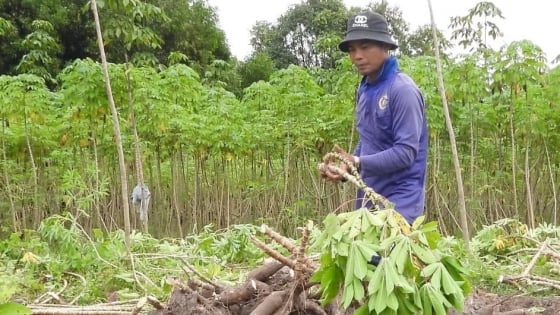
(VAN) Fresh cassava prices in key growing regions have risen significantly. Prices of cassava starch and dried cassava chips for export have also increased.
Cassava prices in Viet Nam’s key production regions have increased significantly in the early months of this year compared to the beginning of 2025.
Mr Nguyen Hong Cam, a cassava farmer in Tan Chau commune, Tay Ninh province, said that purchasing prices vary depending on the company. In early April, some companies were buying cassava with 30% starch content at VND 3,500/kg, while others were purchasing fresh cassava at around VND 3,000-3,100/kg.
Overall, current prices are much higher than they were a year ago. Specifically, in April 2025, cassava with 30% starch content was only purchased at around VND 2,000/kg.
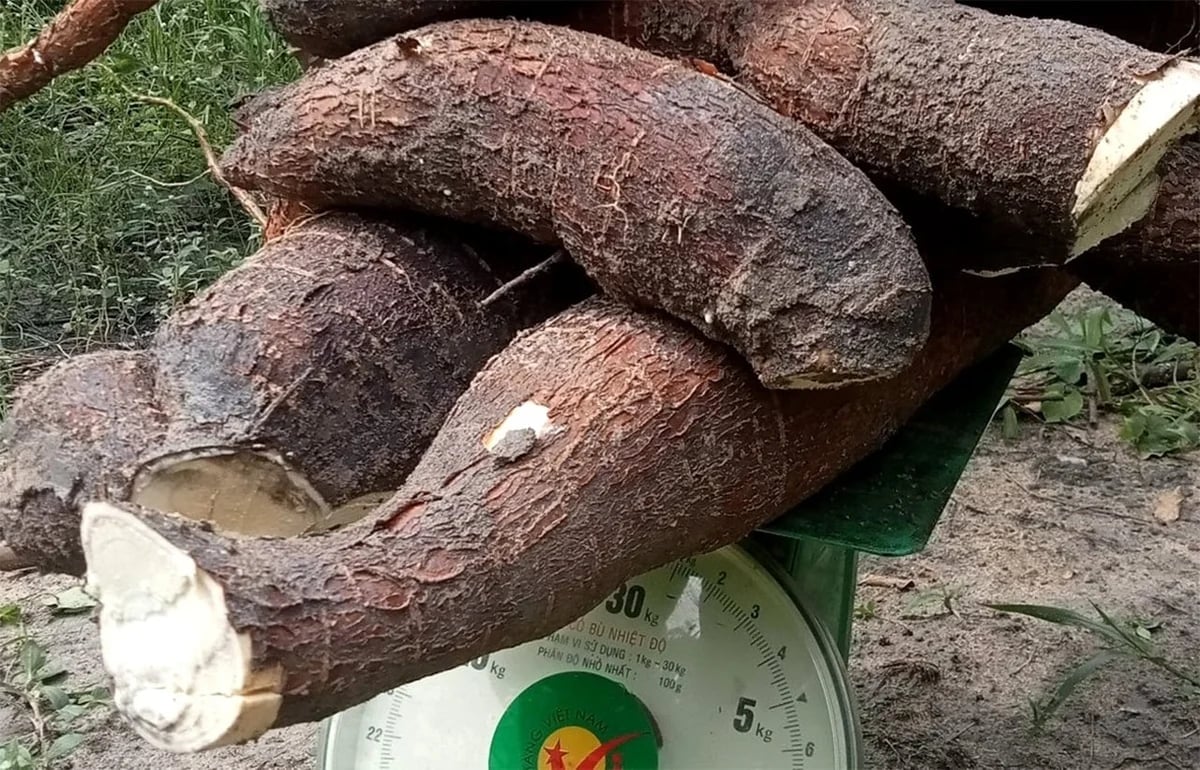
Fresh cassava prices in Vietnam have surged in recent months due to a sharp decline in supply. Photo: Son Trang.
Not only in Tay Ninh, but cassava prices across all key growing regions have also risen sharply compared to the same period in 2025.
According to the Viet Nam Cassava Association, as of April 6, cassava prices (with a 30% starch content) in Dak Lak ranged from VND 3,000 to 3,498/kg, in Quang Ngai from VND 3,099 to 3,300/kg, and in Gia Lai from VND 3,399 to 3,549/kg. These levels are significantly higher than those in early April 2025 (Dak Lak VND 1,800-1,998/kg, Gia Lai VND 1,800-1,950/kg).
In northern Viet Nam, bulk cassava prices in early April ranged from VND 2,400-2,700/kg, about VND 1,050/kg higher than the VND 1,350-1,650/kg recorded in early April last year.
Along with fresh cassava prices, export prices have also increased significantly compared to a year ago. On April 6, cassava starch export prices at ports in Ho Chi Minh City (FOB) ranged from $520–540/ton, up $145–155/ton compared to early April 2025.
On the same date, in Quy Nhon, export prices for dried cassava chips (FOB) were $315/ton to South Korea and $260/ton to China, up $55-65/ton year-on-year.
Why have cassava prices risen so sharply this year? According to Mr Nguyen Hong Cam, low prices last year discouraged many farmers, prompting them to switch to other crops. This has led to a severe shortage of raw cassava for processing plants, with some factories now nearly out of supply. As a result, companies are raising purchase prices to encourage farmers to return to cassava cultivation in 2026.
Meanwhile, cassava mosaic disease remains a major challenge in key growing areas. Although some new disease-resistant cassava varieties have been introduced for large-scale cultivation, they are not yet sufficient to fully offset the overall yield decline caused by the disease.
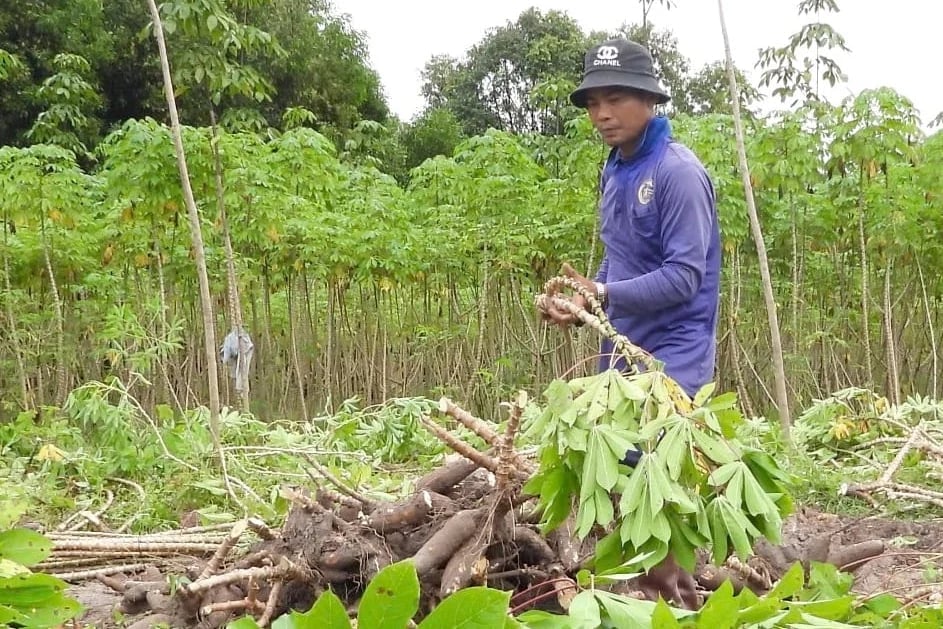
Farmers harvesting cassava in Tay Ninh. Photo: Son Trang.
To compensate for the domestic supply shortage, many companies increased imports of fresh cassava from Cambodia at the beginning of the year. However, imports dropped sharply in March 2026 as Cambodia’s harvest season ended, further tightening domestic supply.
According to the Import-Export Department under the Ministry of Industry and Trade, many cassava processing plants are expected to face severe raw material shortages and may have to halt production earlier than usual. Despite the tight domestic supply, Viet Nam’s cassava and cassava product exports have recorded strong growth in value.
From the beginning of the year to March 15, Viet Nam exported 1 million tons of cassava and cassava products, worth $359 million, up 11% in volume and 18% in value compared to the same period in 2025. Of this, cassava exports alone reached 389 thousand tons, worth $86 million, up 45% in volume and 66% in value.
The Agency of Foreign Trade (MOIT) forecasts that cassava prices will likely remain high in April due to the near depletion of domestic fresh cassava supply. Exporters are expected to rely mainly on existing inventories of cassava chips and starch to fulfill contracts with Chinese partners.
Not only in Viet Nam but also in Thailand, cassava prices are rising due to limited supply. According to the Viet Nam Cassava Association, Thai cassava chip prices have been rising steadily, bringing export prices in both Viet Nam and Thailand to similar highs.
With low inventory levels of cassava chips in both countries, prices are expected to remain elevated throughout 2026.
The domestic cassava chip market is also becoming more active, as feed producers increase usage to replace imported corn and wheat, which are currently more expensive due to rising logistics costs linked to higher fuel prices (imported corn is about VND 2,000/kg more expensive than cassava chips).
$ 1 = VND 26,360 (Source: Vietcombank).
Agriculture News | Agri Products Price