

(VAN) Viet Nam’s wood export strategy has entered a phase of rapid expansion, yet the industry is increasingly bumping against clear ecological and spatial limits.
Export turnover hits 17.2 billion USD in 2025
Starting from a modest 61 million USD in 1996, Viet Nam’s wood export turnover surpassed 1.154 billion USD in 2004 and reached 3.4 billion USD by 2010. The sector hit 6.9 billion USD in 2015 and broke the 10-billion-USD mark in 2019. After peaking at 15.8 billion USD in 2022, exports dipped to 13.5 billion USD in 2023 before rebounding to 16.28 billion USD in 2024 and establishing a new record of 17.2 billion USD in 2025.
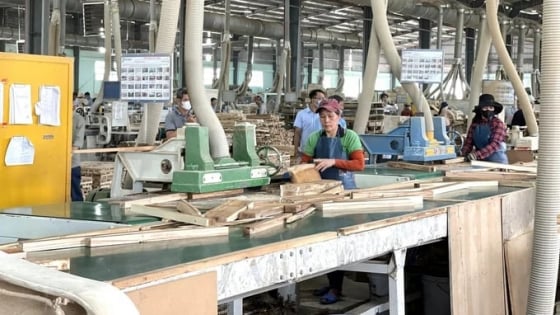
The growth trajectory of Viet Nam’s wood and forest products sector reflects a high-speed industrialization journey characterized by a shift toward large-scale production structures. Wood processing enterprises have demonstrated high adaptability to global trade fluctuations. The United States remains the largest buyer, accounting for approximately 55% of total export value. Together with Japan and China, these three markets consume nearly 80% of the industry’s total turnover. Furniture contributed 11.7 billion USD in 2025, maintaining its role as the primary pillar for value addition. Meanwhile, wood pellets surged nearly 50% in 2025, propelling Vietnam to the position of the world’s second-largest exporter of biomass for energy.
Foreign Direct Investment (FDI) and integration through new-generation Free Trade Agreements (FTAs) have driven the standardization of production processes. This includes upgrades in panel pressing technology, wood drying, surface treatment, and optimized port logistics. The processing industry is gradually shifting its focus from semi-processed wood to complete product design, proprietary brand development, and integrated electronic traceability to meet the supply chain requirements of developed markets.
Viet Nam’s wood exports enter high-growth era amid constraints.
Facing ecological and spatial limits
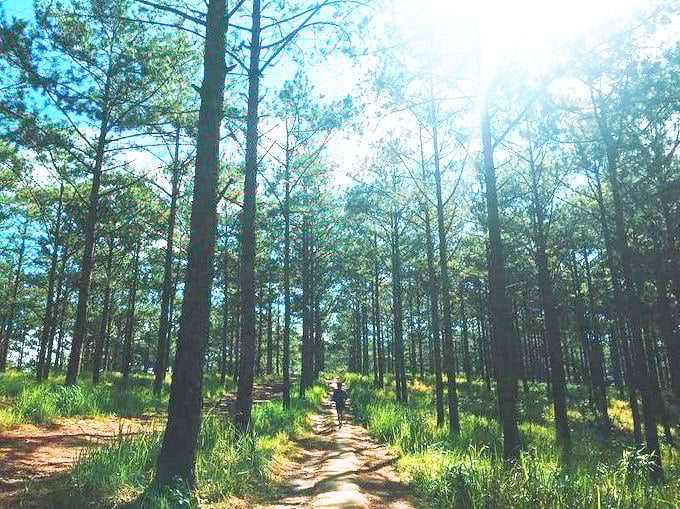
Despite reaching the 17.2 billion USD milestone, the industry’s underlying structure reveals significant constraints. The total natural land area remains stable at around 33.2 million hectares, but unused land plummeted from 2.15 million hectares in 2014 to just 954,951 hectares in 2024. With the territorial reserve nearly exhausted, expanding new forest areas horizontally has become largely unfeasible. National forest area reached 14.87 million hectares in 2024, with a coverage rate of 42.0%. Natural forests decreased slightly while plantation forests grew to 4.74 million hectares.
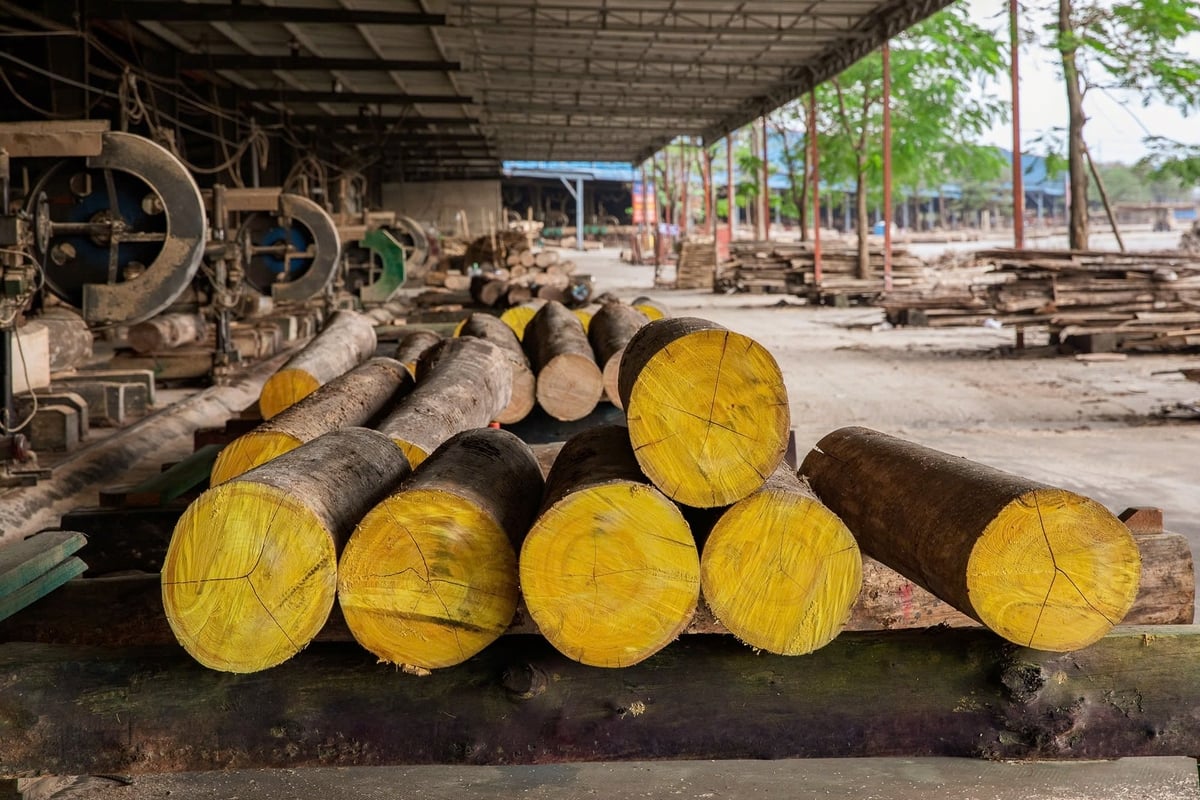
This structure reflects a priority for short-term commercial biomass supply. The 5-to-7-year harvest cycle for acacia and eucalyptus generates quick cash flow for households but degrades soil quality and limits long-term carbon sequestration. Ecological economic model reports estimate a biocapacity deficit of -220% for the 2024-2025 period, implying that resource consumption is far outstripping regenerative capacity. Pressure from international environmental standards necessitates legal origin traceability, sustainable forest management certifications, and supply chain transparency.
Viet Nam’s wood export strategy has entered a phase of rapid expansion.
Domestic harvested timber volume reached nearly 23.97 million cubic meters in 2024. The fragmented structure of millions of smallholder foresters provides an abundant supply but complicates quality standardization. The Northern Midlands and Mountains remain the harvesting hub, yielding 6.58 million cubic meters in 2024. However, the direct economic value from production forests stands at 758 USD/ha, which is significantly lower than competing crops like coffee or aquaculture. The total domestic value of raw timber reflects a wide gap compared to the 17.2 billion USD export turnover, suggesting that a large portion of revenue is derived from processing using imported raw materials.
Roadmap to sustainable forestry by 2030
To reach the 25-billion-USD target by 2030, the industry must extend planting cycles to produce large-diameter timber and increase raw material localization. National Forestry Planning for 2021-2030 sets an export goal of 20 billion USD by 2025 and 25 billion USD by 2030, while maintaining a stable forest coverage rate of 42% to 43%. All institutional forest owners must meet sustainable management standards by 2030, with at least 1 million hectares holding FSC or PEFC certification.
The sector is mandated to reduce its reliance on imports and transition from small-timber forests to large-timber forests with cycles of 10 to 15 years. Longer growth periods increase reserves and enhance carbon storage while providing the sawn timber necessary for furniture production. The strategy aims to double the income per unit of plantation area by 2030. Automation, AI, and electronic traceability are becoming mandatory requirements for all operators.
Viet Nam faces significant headwinds in international trade, particularly from the U.S.
Viet Nam faces significant headwinds in international trade, particularly from the U.S., which consumes over half of its exports. Anti-dumping and countervailing duty investigations launched in May 2025 target hardwood plywood and vanities, with over 130 Vietnamese companies facing high alleged dumping margins. Potential additional tariffs under Sections 122, 232, or 301 could further erode price competitiveness. Meanwhile, European regulations like the EUDR and CBAM are forcing the industry to verify deforestation-free origins and drastically reduce carbon emissions by 2030. Diversifying markets toward the Middle East, India, and ASEAN via the RCEP will be essential for long-term resilience.
Author: Assoc. Prof. Dr. Nguyen Dinh Tho
The Institute of Strategy and Policy for Agriculture and Environment (ISPAE)/ Translated by Linh Linh