

(VAN) In the context of integration, An Giang is focusing on enhancing the value of the Tac Cau pineapple sector through production linkages and market expansion, aiming for sustainable exports.
Unlocking potential from local advantages
As part of its strategy to develop a modern, sustainable agriculture, An Giang province is placing high expectations on elevating its signature local products. Among them, Tac Cau pineapple, a crop long associated with Binh An commune, has been identified as a promising commodity for export.

The An Giang Department of Agriculture and Environment held a working session with the Viet Nam Fruit and Vegetables Association to discuss orientations for cooperation in developing the Tac Cau pineapple sector. Photo: Le Hoang Vu.
Currently, An Giang province has approximately 9,103 ha of pineapple, accounting for 21.19% of the total fruit tree area. Of this, 8,864 ha are under harvest, while the newly planted area reaches around 239 ha annually. The province’s average yield is estimated at about 13.8 tons/ha.
The An Giang Department of Agriculture and Environment has recently held a working session with the Viet Nam Fruit and Vegetables Association to discuss orientations for cooperation in developing this sector. The meeting not only opened up new directions for Tac Cau pineapple but also demonstrated the parties’ determination to build a sustainable value chain and strengthen competitiveness in export markets.
According to Mr. Tran Thanh Hiep, Tac Cau pineapple has been established and developed steadily over many years and is well adapted to the soil and climate conditions in Binh An commune. In addition to delivering high economic value, this crop is cultivated under a multi-layer ecological farming model, often intercropped with coconut and areca palm, helping diversify income sources and reduce risks for farmer households.
Notably, local pineapple production still holds considerable room for development. At present, average yields under smallholder conditions range from 10 to 14 tons/ha. However, if advanced farming practices such as VietGAP are adopted, yields could exceed 21 tons/ha, with over 90% of the fruits being type 1 quality. This underscores the significant potential to enhance product value through technical improvements and cultivation management.
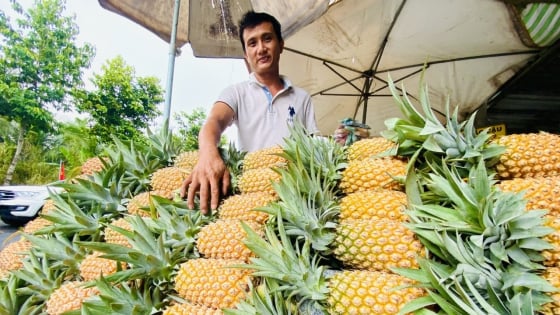
Currently, An Giang province has approximately 9,103 ha of pineapple, accounting for 21.19% of the total fruit tree area. Photo: Le Hoang Vu.
Mr. Hiep also emphasized that linkages with enterprises and industry organizations would help shift Tac Cau pineapple from small-scale production to large-scale operations, facilitating deeper integration into global value chains. This is an essential step as requirements for quality, traceability, and food safety standards become more stringent.
Building linkages: Key to elevating the value of Tac Cau pineapple
Mr. Nguyen Thanh Luan, Chairman of the Binh An Commune People’s Committee, An Giang province, said the locality is determined to reorganize production to establish closer linkages among farmers, cooperatives, and enterprises. This is a key factor in forming concentrated raw material areas that meet export requirements.
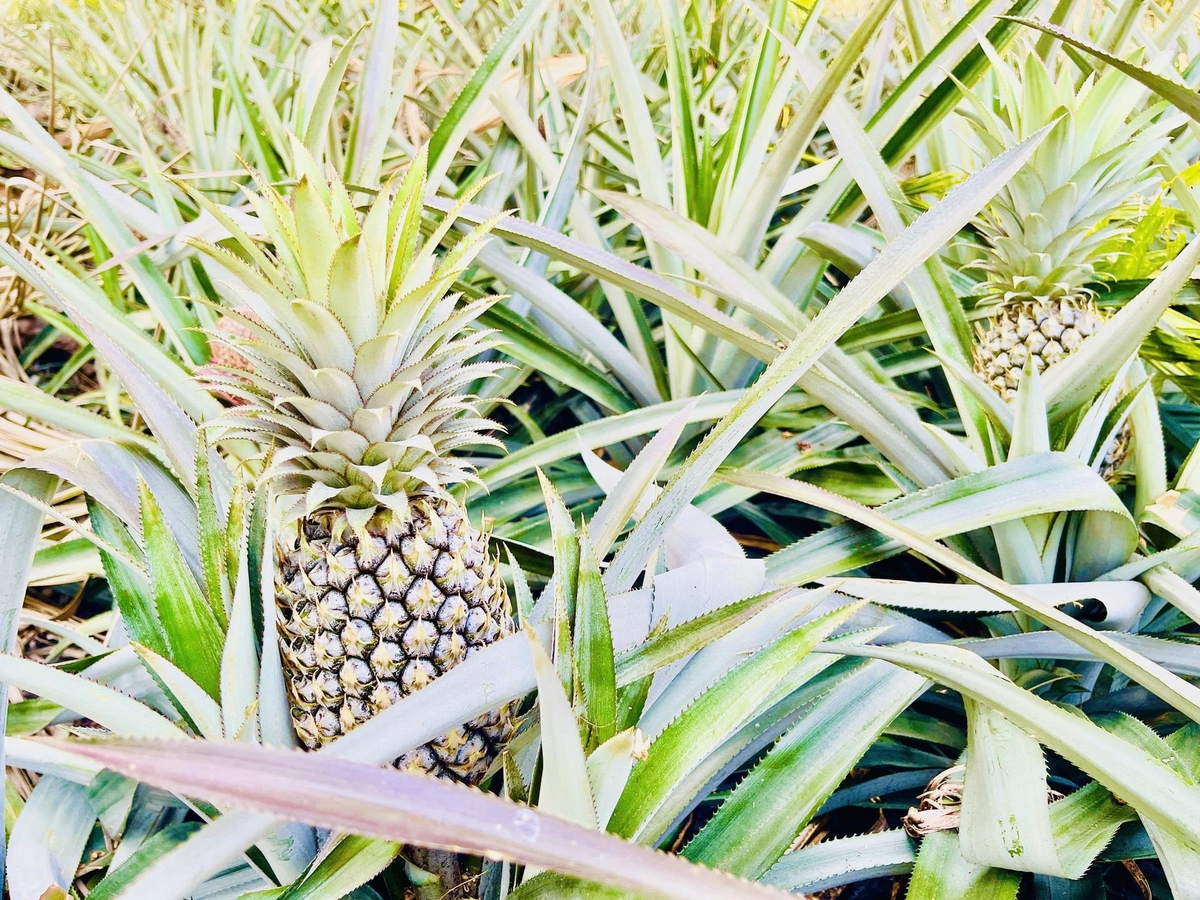
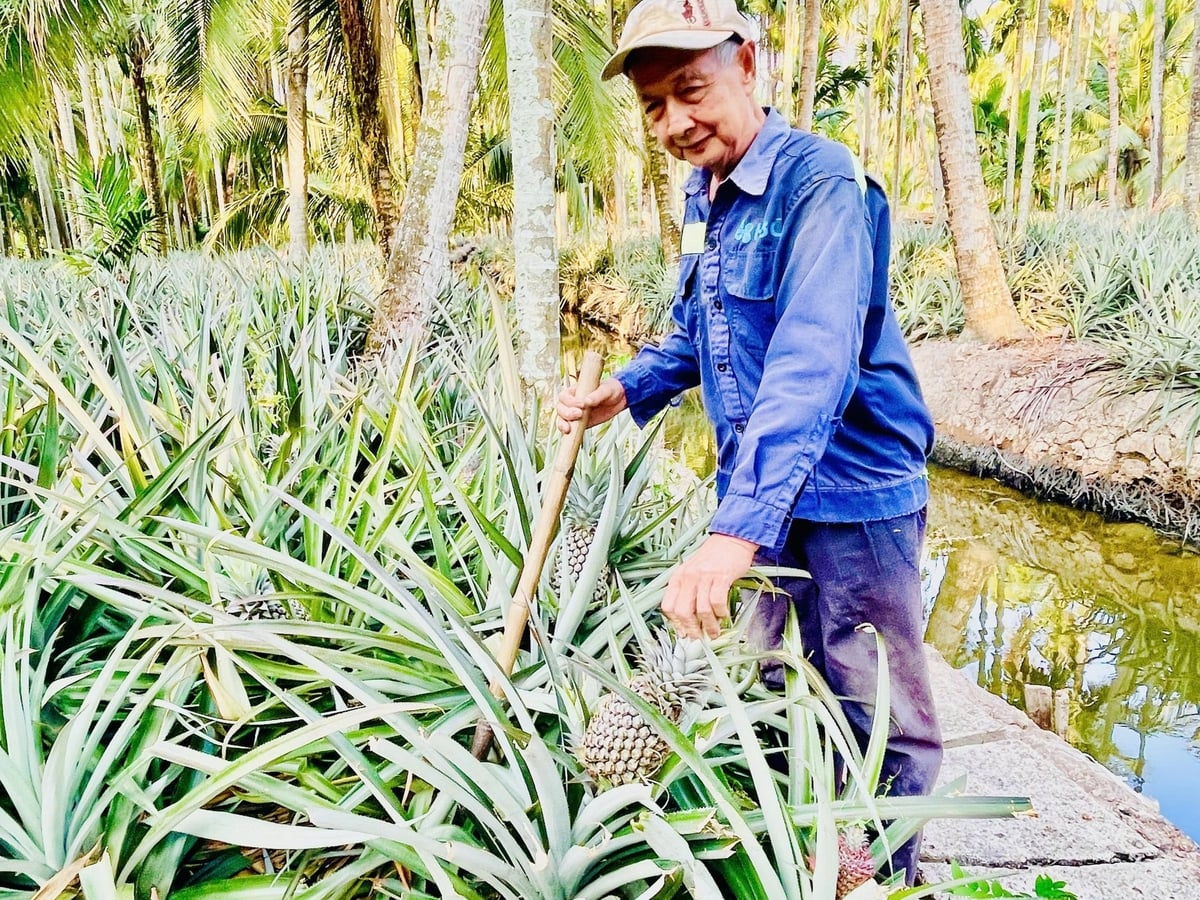
At present, the average pineapple yield under smallholder production conditions reaches around 10–14 tons/ha. Photo: Le Hoang Vu.
According to Mr. Luan, the commune government will create favorable conditions for investors and enterprises through mechanisms, infrastructure, and technical support, while promoting production area planning, the application of science and technology, and digital transformation in agriculture. These solutions aim to improve productivity, quality, and product consistency, which are critical to retaining businesses and expanding markets.
From a business perspective, Ms. Le Hoang Phuong Yen noted that workshops and connection activities between localities and enterprises deliver practical value. Through such platforms, enterprises can gain a clear understanding of production conditions while providing feedback to help farmers improve techniques and move toward export standards.
Ms. Yen emphasized that the most important factor for businesses is a stable supply of raw materials in both volume and quality. When raw material areas meet the strict standards of markets such as Japan and Europe, enterprises are ready to sign long-term off-take contracts at prices higher than the market level. This not only secures output for farmers but also helps businesses build credibility with international partners.
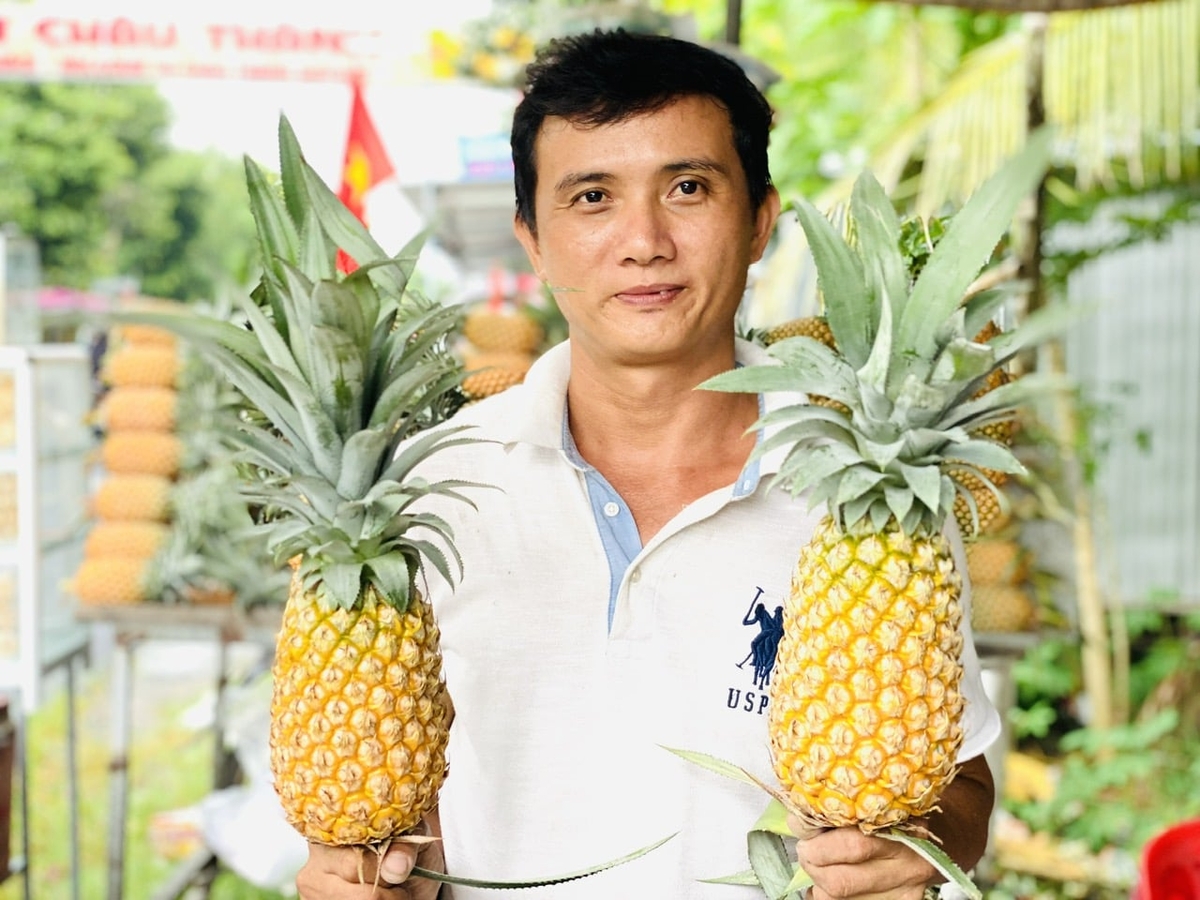
Currently, An Giang is focusing on enhancing the value of the Tac Cau pineapple sector through production linkages and market expansion, aiming for sustainable exports. Photo: Le Hoang Vu.
In addition, deep processing of pineapple products is regarded as an inevitable direction. According to Ms. Yen, processed products must comply with market standards, thereby creating distinct market segments and meeting diverse demands of export markets. However, to produce high-quality processed goods, input materials must meet the highest standards.
Representing the Viet Nam Fruit and Vegetables Association, Mr. Nguyen Thanh Binh said Viet Nam’s fruit and vegetable sector is experiencing impressive growth, with export turnover in 2025 exceeding USD 8.5 billion. This presents a major opportunity for specialty products such as Tac Cau pineapple to further penetrate international markets.
The association pledged to support the locality in trade promotion, connect domestic and international enterprises, and provide market information to guide production. However, Mr. Binh also noted that producers must strictly comply with safety standards, particularly regarding pesticide residues.
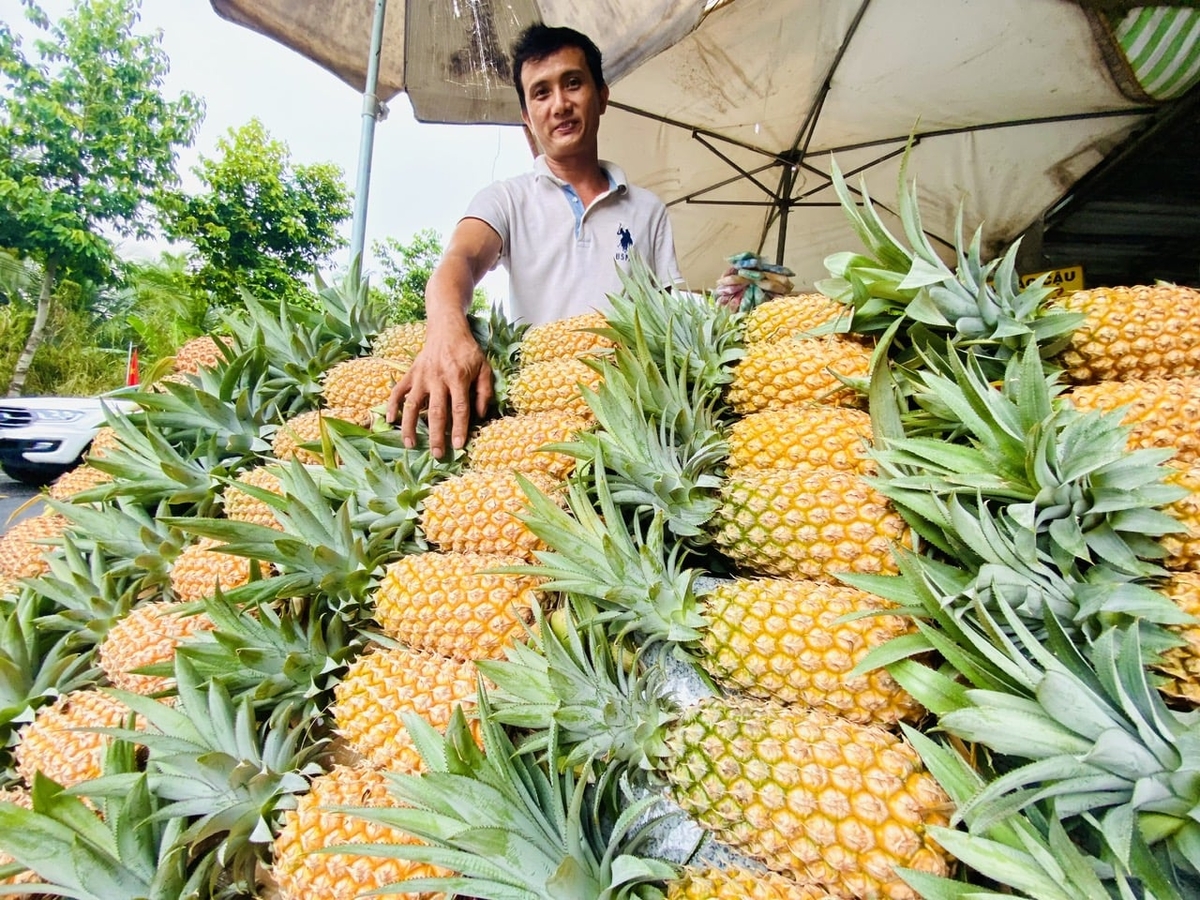
Tac Cau pineapple, a crop long associated with Binh An commune, has been identified as one of the potential commodities for export. Photo: Le Hoang Vu.
The meeting reached consensus on many key contents, including building sustainable linkage chains from production to consumption; improving quality and diversifying products; promoting deep processing; and expanding export markets.
With the concerted involvement of authorities, associations, and businesses, the Tac Cau pineapple sector in An Giang is expected to achieve strong growth in the coming period. Beyond increasing farmers’ incomes, this commodity also aims to establish its own brand, thereby affirming the position of Vietnamese agricultural products in the global market.
In Binh An commune alone, pineapple growing covers approximately 1,764 ha, forming a concentrated production zone. Smallholder farming sizes are relatively uniform, averaging about 1.75 ha/household, with households cultivating 1–2 ha accounting for a relatively high proportion (around 40%). This indicates a medium-scale production structure that is favorable for the application of technical advances but still fragmented, posing challenges for organizing large-scale linkages.
In terms of varieties, 100% of the area is planted with the locally sourced Queen pineapple (Tac Cau pineapple), propagated by farmers themselves or exchanged within the community. This variety is well adapted to local ecological conditions, offers good quality, and is favored by the market.
Agriculture News | Agri Products Price