
By using this site, you agree to the Privacy Policy and Terms of Use.
Accept
Agriculture News - Mekong FarmerAgriculture News - Mekong FarmerAgriculture News - Mekong Farmer
  • Home
  • Technology
    TechnologyShow More
    Agtech Seedlings: Bonsai Robotics secures $15M to advance automated fruit harvesters
    By nhanongen
    Deere loses appeal against Agco in patent dispute over precision planting technology
    By nhanongen
    Investment in agtech startups plummeted in 2024
    By nhanongen
    Mekong Farmer to stop publishing
    By nhanongen
    Agtech Seedlings: CH4 Global to expand methane-reducing cattle feed with Mitsubishi
    By nhanongen
  • Mekong Deta
    Mekong Deta
    Show More
    Top News
    Farmers growing jicama are at risk of losing money because prices have plummeted
    07/06/2024
    Thousands of pots of Tet raspberry chrysanthemums were thrown away because of slow flowering
    13/11/2024
    Farmers growing vegetables and fruits do not use chemical fertilizers
    14/08/2025
    Latest News
    From 80 kg of dried shrimp to a revenue of 10 billion VND
    23/03/2026
    The man bred the San Tien plum variety for 230,000 VND per kg
    10/02/2026
    Gardeners threw away thousands of pots of early-blooming raspberry daisies
    22/01/2026
    Batches of dried black tiger shrimp worth millions during Tet
    19/01/2026
  • Supply Chain
    Supply ChainShow More
    Meat giant JBS breaks into the egg business
    By nhanongen
    Zeldin is confirmed as the new EPA administrator. What’s next?
    By nhanongen
    US detects rare bird flu strain H5N9 in poultry for first time
    By nhanongen
    Lend an ear: Corn-based material introduced for biodegradable packaging
    By nhanongen
    Why an independent grocer is holding the line on egg prices
    By nhanongen
  • Meat
    MeatShow More
    Cargill, Foster Farms to close turkey plants as demand wanes
    By nhanongen
    Cargill, Foster Farms to close turkey plants as demand wanes
    By nhanongen
    Smithfield raises 25% less than expected in muted IPO
    By nhanongen
    Egg prices could break more records in 2025
    By nhanongen
    USDA slow to update food safety standards for meat and poultry, watchdog finds
    By nhanongen
  • Agri Products Price
    Agri Products Price
    Update Agri Products Price: Coffee, Pepper, Rice, Durian, Jackfruit
    Show More
    Top News
    Live pig prices on 09/24/2024: Continue their upward trend
    24/09/2024
    the prevalence of high technology
    08/10/2024
    Price of Japan’s newly harvested rice surges 48% in Sep
    21/10/2024
    Latest News
    Coffee prices on April 17, 2026: Continue to rise sharply
    18/04/2026
    Coffee prices on April 15, 2026: Surge sharpl
    15/04/2026
    Sweet potato prices plunge sharply during peak harvest season
    13/04/2026
    Rubber prices on April 13, 2026: Mixed fluctuations
    13/04/2026
  • Markets
  • Regulations
Notification Show More
Font ResizerAa
Agriculture News - Mekong FarmerAgriculture News - Mekong Farmer
Font ResizerAa
  • Agri Products Price
  • Meat
  • Markets
  • Mekong Deta
  • Technology
  • Supply Chain
  • Categories
    • Mekong Deta
    • Markets
    • Agri Products Price
    • Meat
    • Technology
    • Supply Chain
  • More Foxiz
    • Blog Index
    • Sitemap
Follow US
Blog > Technology > Digital agriculture: How IoT, digital twins and AI are shaping the future of farming
Technology

Digital agriculture: How IoT, digital twins and AI are shaping the future of farming

nhanongen
Last updated: 21/10/2024 4:51 PM
By nhanongen
Share
7 Min Read
SHARE


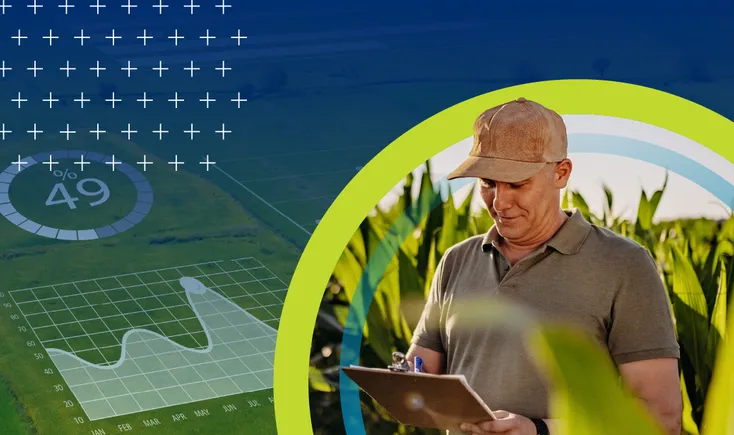
With challenges like rising production costs, labor shortages, a focus on sustainability, and climate change, agriculture needs scalable, innovative solutions. According to the United States Department of Agriculture (USDA), digital agriculture, including digital twins and generative AI, may have a  significant role to play in addressing these challenges…

It’s a rapidly growing industry with exciting capabilities. For example, the market size for AI in agriculture in the U.S. is projected to increase from $1.7 billion in 2023 to $4.7 billion by 2028.

Vivian Tai, Director of Innovation with GS1 US, a not-for-profit global standards organization, believes the swift advancement and adoption of Internet of Things (IoT) sensors and related technologies have created fertile ground for this kind of explosive growth. “Now, there are sensors that monitor, in real time, everything from soil conditions, water consumption, and animal health to pest activity, equipment malfunctions, and weather patterns,” she says. Agronomists and farmers can now have access to an unprecedented amount of digital data about real-world farms.

What this means is that digital data points that represent physical objects on the farm create a digital twin. According to Tai, “By having a whole new set of data points and digital representation of physical objects on the farm, we can create robust digital twins. When a farmer can leverage globally unique identification to assets and locations, they can reap the benefits of digital twins for day-to-day decision making.” Digital twins provide detailed, real-time simulations of farm environments that let researchers explore scenarios and evaluate their performance, cost, and other sustainability metrics on virtual systems.

They let farmers experiment with and fine-tune strategies on a virtual simulation before changing actual farm environments or animals. As a result, this can help farmers mitigate risk, save money, and ultimately grow their business.

For example, Union Farms, a leading pork producer in Nebraska, uses GS1 Standards to connect aspects of the physical world with their digital twins. They use the Global Trade Item Number® (GTIN®) to identify each of its pigs and the Global Location Number (GLN) to pinpoint their locations. GTINs can also be used to identify a specific crop, with the GLN being used to locate the field where the crop grows.

These digital data points allow a farm’s products to be tracked at every point from farm to table. “Another benefit is the ability to collect metrics on how farming operations use and impact water, energy, land, and air. This can ultimately provide a deeper understanding of sustainability and environmental impact,” says Tai.

To accomplish this, Union Farms uses IoT sensors that leverage GS1’s Electronic Product Code Information Services (EPCIS) standard, which creates and shares visibility event data, to monitor its feed crops and animals. Sensors measure details such as water usage, soil moisture content, and fertilizers used to monitor carbon sequestration practices and achieve the farm’s goal of carbon neutrality. By earning carbon credits, the farm makes more profit per acre.

Similarly, in Brazil, EPCIS is used in an effort to meet zero deforestation in Brazilian cattle supply chains. About 50% of the agricultural products exported from Brazil to the European Union (EU), especially beef and soy, are linked to deforestation and forest degradation. As a result, an EU law was enacted requiring companies selling products in the EU to prove their products are deforestation-free. According to the European Commission, the law says that companies must “collect precise geographical information on the farmland where the commodities that they source have been grown so that these commodities can be checked for compliance.”

In response to this law, a Brazilian national protocol for the sustainable production and traceability of beef and leather was produced. The framework uses EPCIS to ensure visibility and share data along the entire supply chain from Brazil to the EU. Two EPCIS concepts are key: Critical Tracking Events (CTEs) define the events an object undergoes during its lifecycle, and Key Data Elements (KDEs) determine the data collected at each CTE and its format.

With data available from IoT sensors, tracking events, and digital twins, as well as datasets like historical weather patterns or soil conditions, a massive, potentially overwhelming amount of data is available to create simulations and provide predictive analytics. According to Tai, this is where Generative AI (GenAI), another significant trend in digital agriculture, can offer groundbreaking innovation. “By analyzing these massive datasets, Gen AI can help farmers make more informed predictions and decisions as well as mitigate risks, such as pests, disease, and weather,” she says. GenAI can help farmers optimize their use of resources and gain higher yields, creating a more resilient food system while limiting their environmental impact.

What’s significant about GS1 Standards for captured data is that they help you identify, understand, and use the information in a way that is globally understood.

Tai says having real-time insights and data-driven decisions is only valuable when everyone who is receiving data understands what it means. “If you don’t start out using standards, that can become a point of friction, where different parties using different systems have to spend huge amounts of effort to use the data.”

Innovations like digital twins and GenAI can help farmers tackle some significant challenges. Digitizing the farm ecosystem and tracking critical events can unlock new capabilities to understand and use historical and current data to mitigate risk, become more resilient, and enhance sustainability. However, AI tools and emerging technologies are only as accurate as the data you plug into them. To make the most of these capabilities requires a common language, like those offered by GS1 Standards, to identify, capture, and share critical information about the farm that works across different technologies. 


Agriculture News | Agri Products Price

Share This Article
Facebook Twitter Copy Link Print

Fast Four Quiz: Precision Medicine in Cancer

How much do you know about precision medicine in cancer? Test your knowledge with this quick quiz.
Get Started
Fruit and vegetable exports reach USD 1.53 billion in Q1

(VAN) Vietnam’s fruit and vegetable exports in March and Q1 2026…

The US Embassy in Vietnam aims to elevate ‘fruit diplomacy’

The concept of 'fruit diplomacy' between Vietnam and the United States…

Cooperative’s organic pepper sells at VND 15 million/kg

(VAN) After efforts for certifications, Bau May pepper products are priced…

- Advertisement -

Your one-stop resource for medical news and education.

Your one-stop resource for medical news and education.
Sign Up for Free

You Might Also Like

Technology

Agtech Seedlings: Bonsai Robotics secures $15M to advance automated fruit harvesters

By nhanongen
Technology

Deere loses appeal against Agco in patent dispute over precision planting technology

By nhanongen
Technology

Investment in agtech startups plummeted in 2024

By nhanongen
Technology

Mekong Farmer to stop publishing

By nhanongen
Facebook Twitter Youtube

Giá cả nông sản
Mekong Delta News
Agriculture News
Agri Products Price

Categories
  • Home
  • Technology
  • Mekong Deta
  • Supply Chain
  • Meat
  • Agri Products Price
  • Markets
  • Regulations
Nhà Nông Miền Tây
  • Giá cà phê hôm nay
  • Giá lúa gạo hôm nay
  • Giá mít ruột đỏ hôm nay
  • Giá mít thái hôm nay
  • Kết quả xổ số Miền Nam
  • Kết quả xổ số Ngọc Minh
  • Xổ số Ngọc Minh
  • Kết quả xổ số
  • Kết quả xổ số Kiên Giang
  • Xổ số Kiên Giang
Italy Highlights
  • Italy Highlights
  • Italy Attractions
  • Travel to Italy
  • Italy Food
  • Trip Ideas in Italy
  • Real Estate in Italy
  • Crypto News
  • Finances News
  • Investing News
  • Economic News
Architecture Concept
  • Architecture Concept
  • Interior Design
  • Landscape Design
  • Bath Products
  • Kitchen Products
  • Home Renovating
  • Architecture Project
  • Lighting Design
  • Mekong Farmer
  • Mekong News
- Advertisement -
Thị trường nông sản

© 2024 Mekong Farmer
– Agriculture News.
A member of Nhanongmientay.com

© 2024 Mekong Farmer - Agriculture News
Welcome Back!

Sign in to your account

Lost your password?