

(VAN) Vietnam’s fruit and vegetable exports in March and Q1 2026 continued to post strong growth, becoming the brightest spot among agro-forestry-fishery export groups.
According to statistics from the Viet Nam Department of Customs, fruit and vegetable export turnover in March 2026 reached USD 532.21 million, up 51.6% compared to February 2026 and 11.5% higher than last year’s March. Overall, in Q1 2026, export turnover reached USD 1.53 billion, an increase of 31.4% considering the same period in 2025.
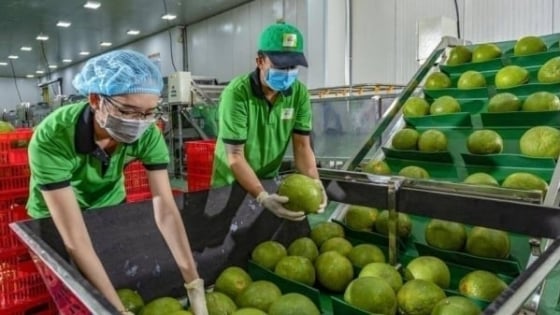
In Q1 2026, Vietnam’s fruit and vegetable export turnover reached USD 1.53 billion, up 31.4 in comparison to the same period last year. Photo: NNMT.
The export market structure for Viet Nam’s fruit and vegetables in March and Q1 2026 shows that China remains the key market, although other markets are showing clear divergence. Exports to many potential markets, such as the United States, South Korea, Malaysia, Germany, and the Netherlands, recorded strong growth, reflecting effective efforts by Vietnamese enterprises to diversify markets.
It is forecast that in Q2 2026, Viet Nam’s fruit and vegetable exports will continue to grow positively as new protocols for frozen fruits and fresh coconuts are implemented smoothly, particularly when many specialty fruits enter their main harvest season (lychee, mango, and main-season durian).
Recently, at Kim Thanh Ben Tre Factory (Phu Ngai Hamlet, Giao Long Commune, Vinh Long), the Vinh Long Provincial People’s Committee, in coordination with Vina T&T Group, organized a ceremony to export the first batch of Vietnamese pomelos from Vinh Long to the Australian market. This was among the first shipments of pomelos exported to Australia (on April 13, another enterprise also completed the procedures and exported its first pomelo batch from Dong Thap to Australia).
Following the gobal trend of deeper integration and market expansion for agricultural products, the official export of fresh pomelos to Australia, one of the world’s most demanding markets, marks a milestone. Beyond commercial value, the event reflects Vietnam’s capacity for quality control and its ability to meet high technical standards.
During the state visit of General Secretary and President To Lam in Beijing (China), the Ministers of the Vietnam Ministry of Agriculture and Environment and the General Administration of Customs of China (GACC) officially signed a protocol on phytosanitary requirements for pomelos and lemons exported from Vietnam to China.
The protocol is the result of a technical negotiation process that began in 2019 between the two countries’ specialized agencies in plant quarantine and protection. This achievement demonstrates close coordination in harmonizing technical standards and highlights a trend toward deeper cooperation, transparency, and compliance with international practices.
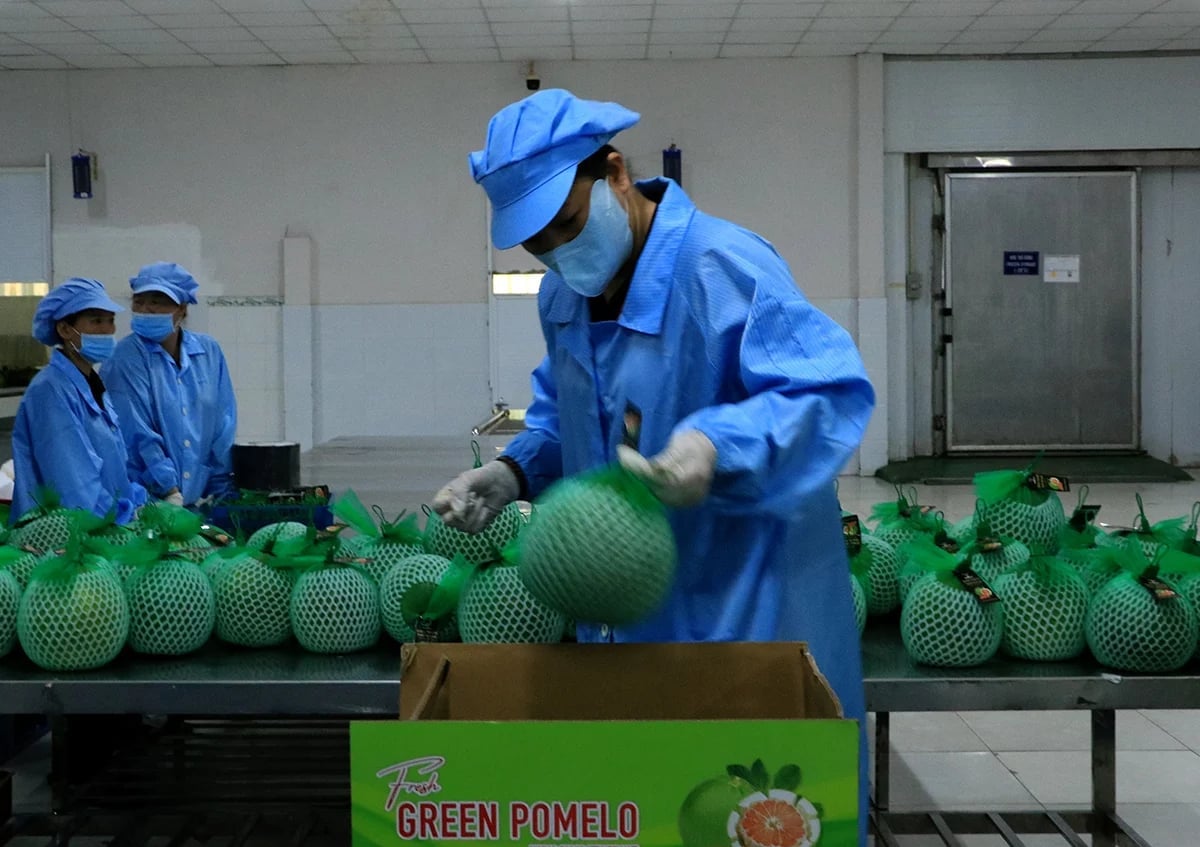
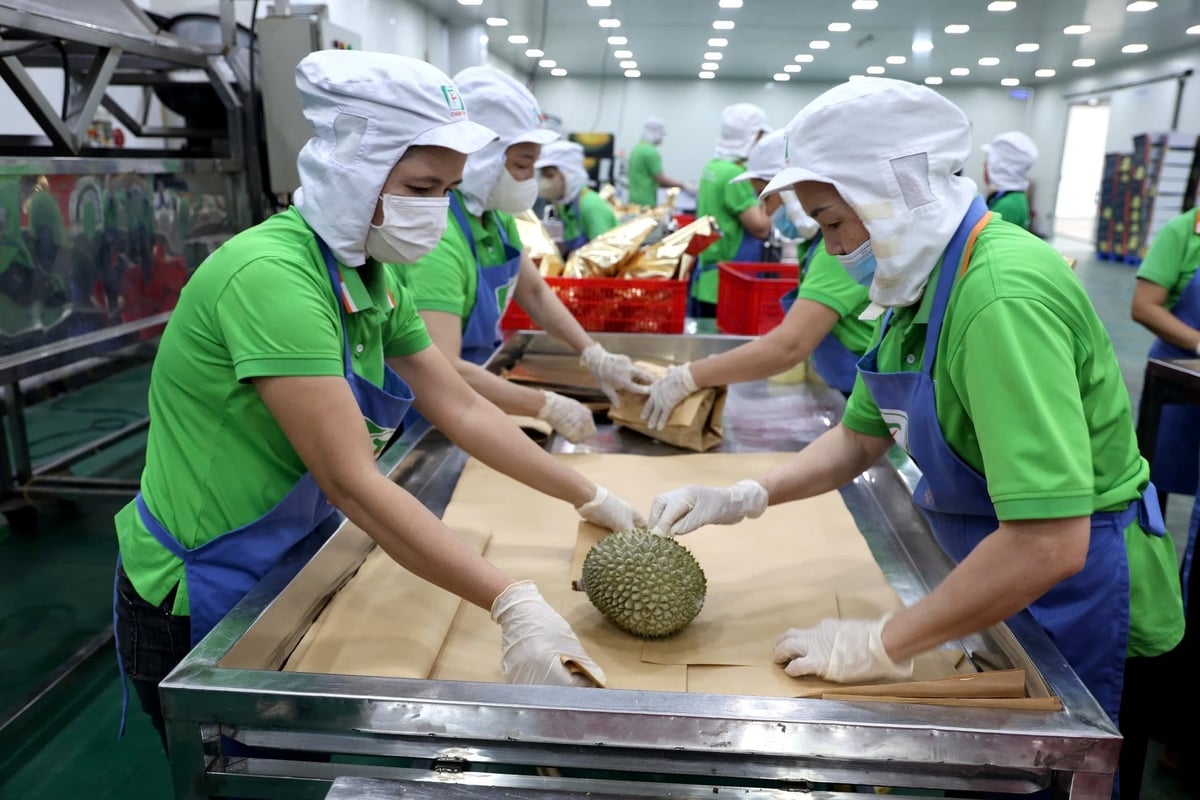
Vietnam’s fruit and vegetable exports are not only maintaining growth momentum but also steadily asserting their position on the global agricultural map. Photo: Thanh Son.
Vietnam currently has approximately 106,000 hectares of pomelo cultivation, placing it among countries with large-scale production globally, with many concentrated production zones. In addition to traditional growing areas, pomelo and lemon acreage have expanded in recent years across localities such as Hanoi, Phu Tho, Tuyen Quang, Vinh Long, Dong Nai, and Dong Thap. The introduction of specialty pomelo varieties such as Dien, Phuc Trach, Doan Hung, Nam Roi, and Da Xanh. Thanks to high productivity, good quality, and market suitability, pomelo and lemon cultivation have contributed to improving economic efficiency for farmers.
As China remains a major consumption market with increasing fruit import demand, pomelos and lemons are considered to have significant growth potential. The signing of the protocol not only expands market access but also helps complete the legal framework for official exports, thereby increasing added value and income for producers.
This also serves as a driving force to restructure the sector toward standardization, strengthen traceability, and improve quality control – key factors for deeper integration of Vietnamese agricultural products into global value chains.
The Ministry of Agriculture and Environment will coordinate with localities, associations, and businesses to conduct training, standardize growing areas, and intensify inspection of packing facilities to ensure full compliance with regulations. This is not only a step toward building a stable market in China but also opens opportunities for other potential Vietnamese agricultural products in international markets.
From positive signals in markets, policies, and production capacity, fruit and vegetable exports are not only maintaining growth momentum but also gradually strengthening their position on the global agricultural map, moving toward more sustainable, high-value, and deeper integration in the future.
Agriculture News | Agri Products Price