



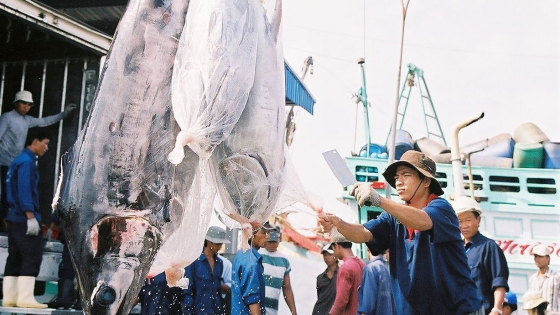
(VAN) ‘Right now, the biggest challenge is the sharp rise in fuel prices, which is pushing up a wide range of other costs,’ said Nguyen Van Dao, chairman and chief executive officer of Godaco Seafood.
The Middle East: A promising market for Vietnamese seafood
The Viet Nam Association of Seafood Exporters and Producers (VASEP) says the Middle East has emerged in recent years as one of the fastest-growing markets for Vietnamese seafood exports. According to customs statistics, Viet Nam’s seafood exports to the region increased from about USD 197.7 million in 2020 to more than USD 401.1 million in 2025.
Among product categories, pangasius remains the largest export to the Middle East, reaching nearly USD176 million in 2025, up significantly from about USD79 million in 2020.
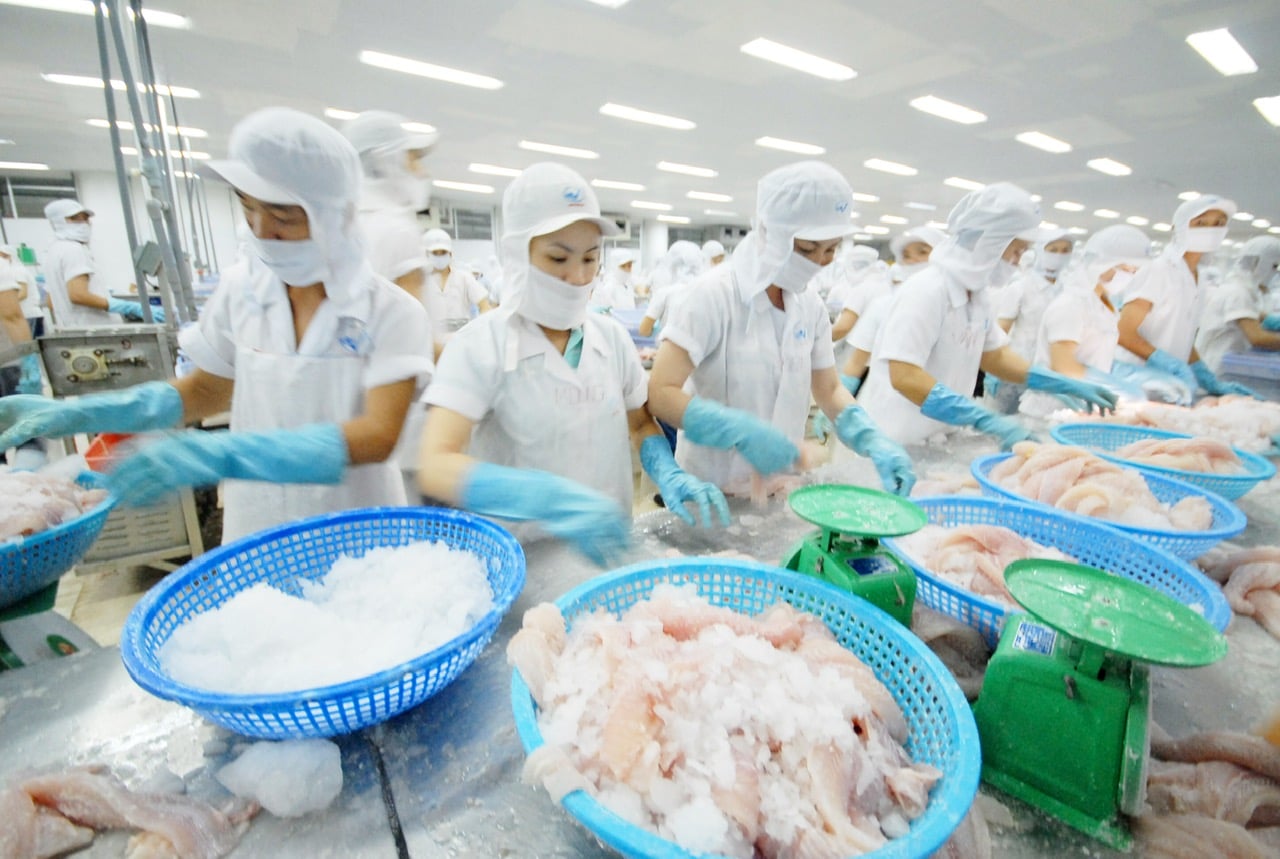
Among Vietnam’s seafood exports, pangasius is currently the largest product shipped to the Middle East. Photo: HT.
Tuna is also a major product in the region, with export value reaching about USD 94.4 million in 2025, while shrimp exports totaled more than USD 54 million.
In addition, marine fish, squid, octopus, mollusks and other seafood products are gradually expanding their market share across Middle Eastern markets. This underscores the region’s role not only as a promising consumer market but also as an important part of Viet Nam’s strategy to diversify export destinations.
For that reason, geopolitical instability in the Middle East is drawing particular attention from the business community, especially given the risk that disruptions could spill over into global trade and logistics.
Concerns logistics costs could surge as during COVID-19
Military tensions in the Middle East since late February 2026 have raised concerns about potential disruptions to global trade. The region lies along key maritime routes, particularly the Strait of Hormuz and shipping corridors linked to the Suez Canal, both of which play critical roles in global flows of goods and energy. Any disruption along these routes could trigger significant fluctuations in freight costs, energy prices and international supply chains.
In a recent report submitted to the Agency of Foreign Trade under the Ministry of Industry and Trade, VASEP highlighted four major impacts of the Middle East conflict on Viet Nam’s seafood exports.
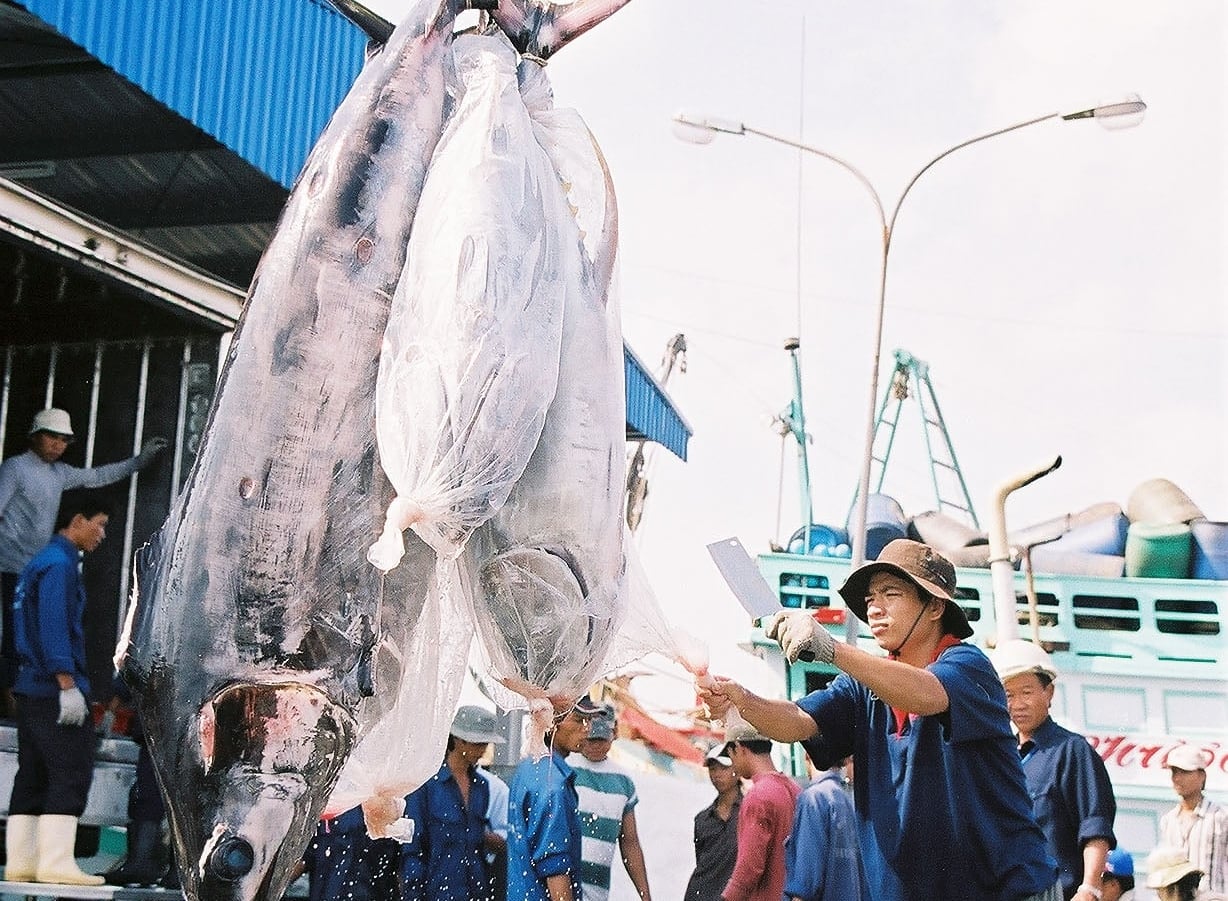
With fuel prices rising and transportation costs increasing, businesses expect seafood raw material prices to climb in the near future. Photo: Hong Tham.
First, logistics and shipping disruptions. Businesses report that the conflict is beginning to affect the international logistics system, particularly maritime transport. Some shipping routes have been diverted, extending delivery times, while certain carriers have suspended or canceled services on specific routes.
Second, rising freight and input costs. Companies say logistics costs are already trending upward and fear that if the situation continues, costs could surge to levels similar to those during the COVID-19 period, when freight rates rose several times above normal. Some shipping lines have announced surcharges of USD 2,000–USD 4,000 per refrigerated container, along with additional risk or fuel surcharges. Meanwhile, rising global oil prices are placing pressure on fuel costs, transportation expenses and other production inputs.
Third, export market impacts. Major export markets such as the United States, Japan, Northern Europe and Western Europe have not yet experienced significant direct impacts beyond higher shipping costs. However, shipments to Middle Eastern or Southern European markets are encountering logistical difficulties, and in some cases, deliveries have been temporarily suspended.
Fourth, impacts on raw materials and production. With fuel and transportation costs increasing, businesses expect seafood raw material prices to rise as well due to higher costs of fishing, aquaculture and transport. This could place pressure on production efficiency and weaken exporters’ competitiveness.
Fuel prices seen as the biggest challenge
Speaking with VAN News, Nguyen Van Dao, chairman and CEO of Godaco Seafood, a major exporter of pangasius, clams and other seafood products, said companies are already facing mounting challenges.
Dao noted that the Middle East currently accounts for only 5–10 percent of Godaco’s export structure, meaning transport costs to the region have not yet become a major concern. However, some shipping routes through the Middle East have been affected by the conflict, driving up transportation costs.
“But the biggest challenge right now is the continuous increase in fuel prices, which is driving up a wide range of other costs,” Dao said. “When fuel prices rise, nearly every sector is affected, including seafood.”
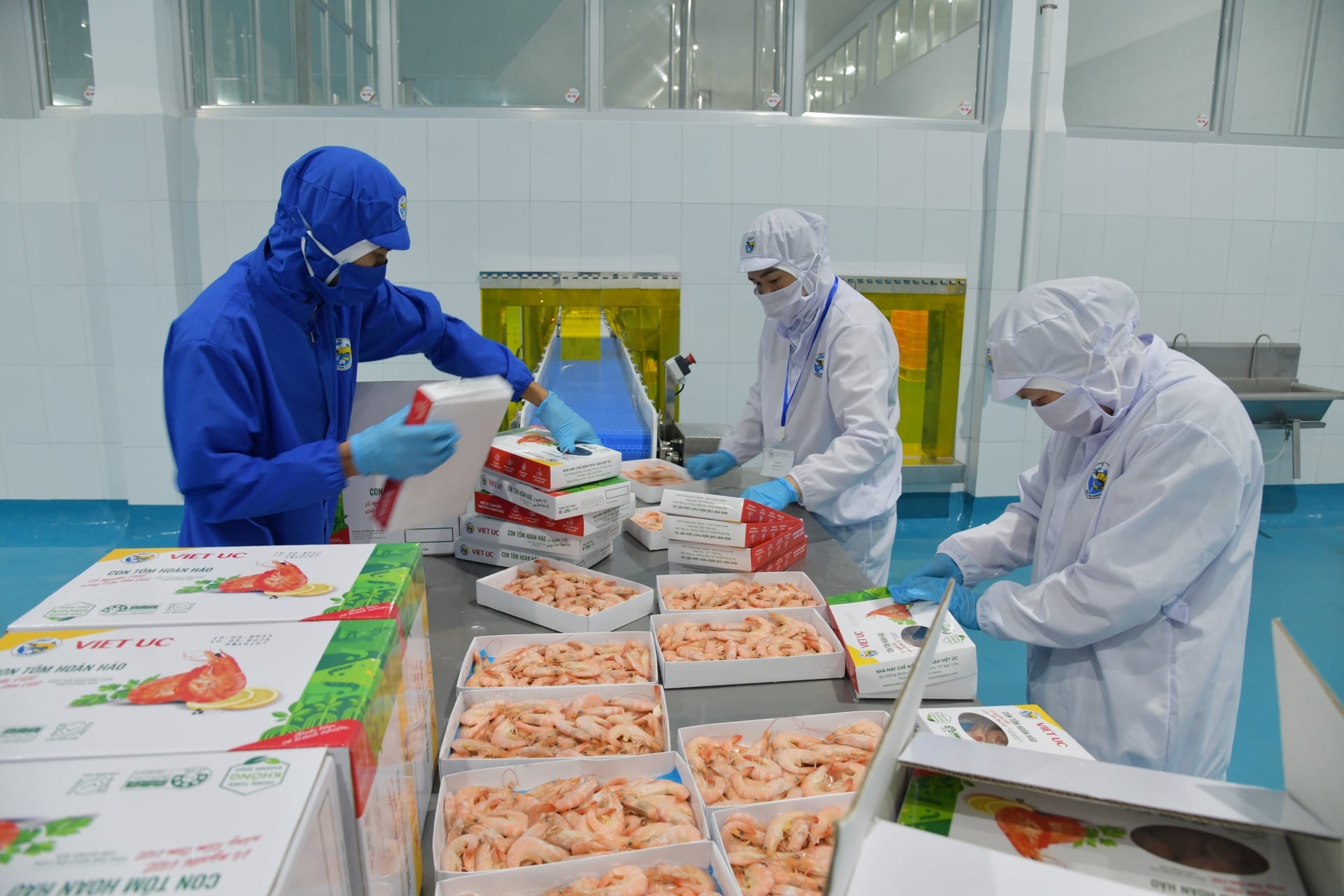
If the conflict persists, shipping costs, fuel prices, and global supply chains could continue to fluctuate sharply, affecting the competitiveness of exporting companies. Photo: Hong Tham.
According to the latest price adjustment by the Ministry of Industry and Trade and the Ministry of Finance, effective 11:45 p.m. on March 10, the retail price of RON 95-III gasoline, the most commonly used fuel, rose 2,073 VND per liter to 29,120 VND.Similarly, E5 RON 92 increased by 1,344 VND, reaching 26,570 VND per liter.
Prices of petroleum products (except kerosene) rose by 478 to 3,380 VND per liter or kilogram, depending on the product. Diesel and mazut increased to 30,717 VND per liter and 24,707 VND per kilogram, respectively, while kerosene fell 2,706 VND to 32,385 VND per liter.
Ho Quoc Luc, chairman of Sao Ta Foods Joint Stock Company, also said the industry will inevitably feel the effects.
“There will certainly be some impacts, such as rising logistics costs, higher freight rates and weaker consumer demand,” Luc said.
In light of these risks, VASEP has recommended that the Ministry of Industry and Trade and other relevant agencies consider several measures, including closely monitoring developments in the Middle East conflict and its impact on international shipping, while providing timely information and warnings to exporters.
The association also proposed evaluating support measures for businesses if logistics and fuel costs rise sharply, particularly if the conflict lasts for one month, three months, six months or longer.
Other recommendations include strengthening cooperation with shipping lines and international logistics partners to maintain stable export transport routes, and considering policies to support production and logistics costs to ease the burden on businesses as fuel prices rise.
VASEP also emphasized the need to step up trade promotion activities and diversify export markets to reduce reliance on high-risk geopolitical regions.
For exporters themselves, the association stressed the importance of closely monitoring geopolitical developments and changes in global logistics conditions. Companies are encouraged to maintain regular communication with import partners and shipping lines to adjust delivery plans as needed and to consider alternative transport options to minimize risks.
At present, many companies believe the impact on Vietnam’s seafood exports remains relatively limited and largely confined to logistics issues. However, if the conflict persists, shipping costs, fuel prices and global supply chains could continue to fluctuate sharply, potentially affecting the competitiveness of seafood exporters.
In an increasingly volatile global market, closely tracking developments and flexibly adjusting logistics and market strategies will be critical for seafood companies seeking to minimize risks and maintain stable export operations.
$ 1 = VND 26.275 – Source: Vietcombank.
Agriculture News | Agri Products Price