




(VAN) Pistachios, durian, and coconut were among the bright spots in Viet Nam’s fruit and vegetable exports in January 2026.
According to data from the Department of Viet Nam Customs, the country’s fruit and vegetable exports in January 2026 reached over USD 644 million, up 72.9% compared to January 2025. The product structure continued to show a strong shift from traditional fresh products toward higher-value processed products.
Pistachios recorded the highest export value in January 2026. Although export turnover in January 2026 declined by 22.7% from December 2025, it still surged 413.4% from the same period in 2025, reaching USD 137.92 million and accounting for 21.4% of total export value.
Durian remained a bright spot in Viet Nam’s fruit and vegetable exports at the beginning of 2026. The expansion of growing area codes and the protocol on frozen durian exports to China served as key growth drivers.
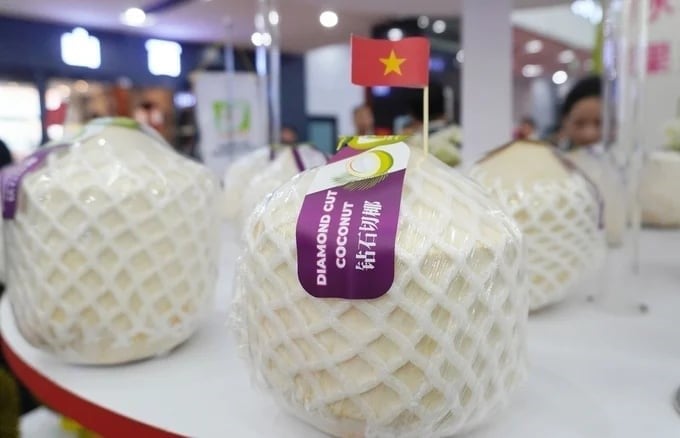
Coconut ranked third among the Top 10, with export turnover of nearly USD 53.9 million in January 2026. Photo: Hong Tham.
According to preliminary statistics from the Department of Viet Nam Customs, exports of all types of durian reached USD 117.22 million in January 2026, down 44% compared to December 2025 but still up 274.8% over the same period in 2025. As of January 2026, the number of growing area codes and packing facilities approved by China had doubled compared to the same period last year, helping to ease supply flows.
In addition, Viet Nam holds an advantage in off-season durian production (from November of the previous year to March of the following year), while competitors such as Thailand and Malaysia have yet to enter their main harvest season, creating a competitive advantage in the international market in January. At this pace, durian exports in the first quarter of 2026 could soon reach USD 1 billion, provided customs clearance at Northern border gates remains favorable.
Coconut exports in January 2026 reached USD 53.9 million, up 7.3% from December 2025 and 32.9% from the same period in 2025, making it one of the few items showing growth on both a monthly and annual basis.
Dragon fruit exports in January 2026 reached USD 48.5 million, up 19.6% compared to December 2025 but down 17% compared to the same period in 2025. This reflects the high base effect of the previous year.
Jackfruit recorded USD 33.7 million, down 15% from December 2025 but up 27.3% from January 2025. Mango exports reached USD 31.8 million, slightly up 1.2% from December 2025 but down 2.2% from January 2025.
Banana exports reached USD 31.1 million, down 7% from December 2025 and 0.9% from January 2025. Almond exports stood at USD 24.6 million, down 23.4% from December 2025 but up 109.3% from the same period in 2025.
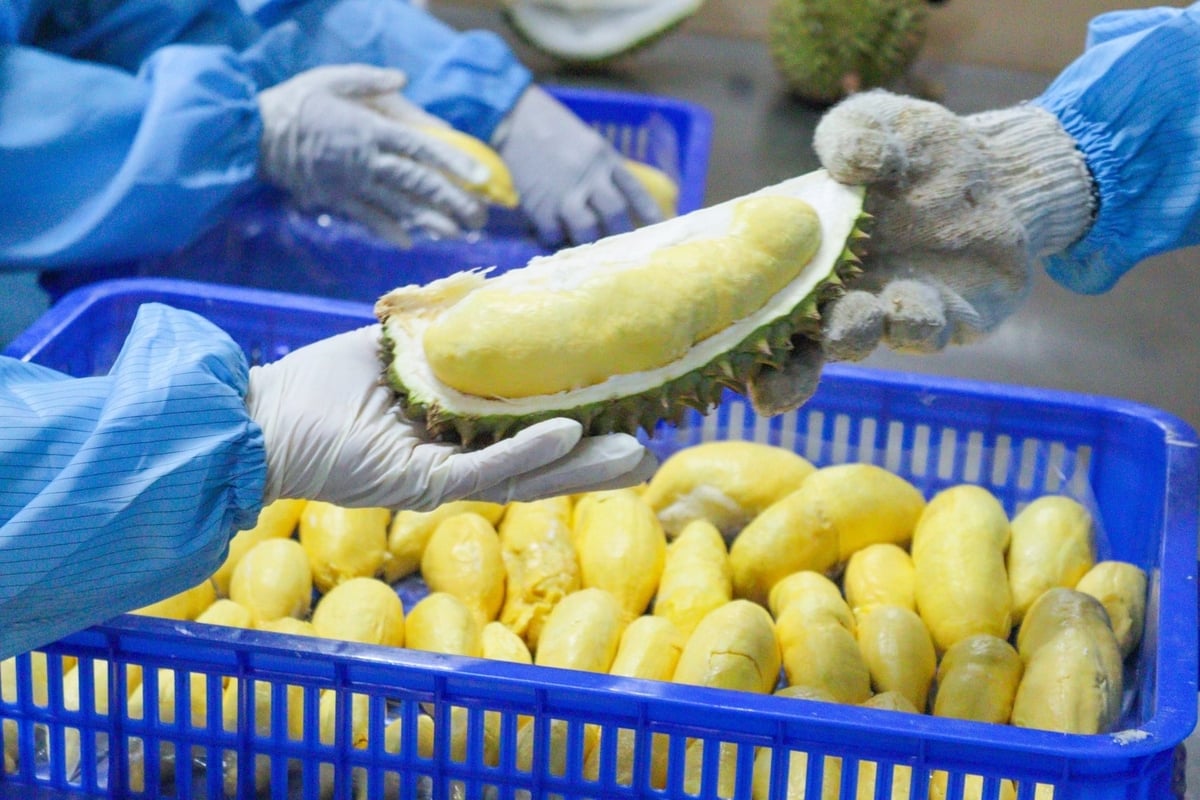
Durian remained a bright spot in Viet Nam’s fruit and vegetable exports at the beginning of 2026. Photo: TL.
Chili exports reached USD 12 million, marking the strongest month-on-month growth at 52.2% compared to December 2025 and rising 78.1% compared to January 2025. Passion fruit exports reached USD 11.7 million, down 37.3% from December 2025 but still up 28.1% from January 2025.
Overall, fruit and vegetable exports in January 2026 reflected a seasonal decline compared to December 2025, while the growth trend over the same period in 2025 remained clearly evident across most product categories.
Notably, the strong surge in pistachios and durian is reshaping the export value structure, while traditional products such as dragon fruit, banana, and mango are facing greater competitive pressure. This indicates that the fruit and vegetable sector is shifting toward higher added value and product diversification. However, it remains essential to consolidate markets, stabilize outputs, and enhance processing capacity to sustain growth momentum in the coming months of 2026.
Viet Nam’s fruit and vegetable exports in February 2026 continued the impressive growth momentum seen since the beginning of the year, building on the success of 2025. According to the Department of Viet Nam Customs, cumulative export turnover from the start of the year to February 15, 2026, reached more than USD 875 million, up 67.2% compared to the same period in 2025, reinforcing the goal of achieving a new record high.
Nevertheless, enterprises must pay attention to new regulations on phytosanitary measures and pesticide residue limits, particularly in the EU and Chinese markets, in order to maintain sustainable growth momentum.
Agriculture News | Agri Products Price