

(VAN) Despite its manufacturing advantages, Viet Nam continues to face major barriers in accessing the halal market due to weaknesses in certification systems, supply chain integration and international trust.
Halal must be viewed as an ecosystem
In recent years, Hanoi Xanh Cooperative has emerged as one of the few Vietnamese models that have proactively approached the halal market in a systematic manner. Beyond cooperating with certification bodies to implement halal-compliant production, the cooperative has also acted as a bridge, helping other cooperatives build brands and access international markets.

Ba Thi Nguyet Thu, Chairwoman of Hanoi Xanh Cooperative. Photo: Bao Thang.
This approach differs significantly from the past, when many businesses primarily exported through intermediaries or focused only on traditional markets. The launch of the HalalViet Promotion and Experience Center marks the latest step in Hanoi Xanh’s efforts to enter the halal market.
The center functions not only as a product showcase but also as a platform for international business matchmaking, trade events, training, and consulting for enterprises. “Halal should be viewed as an ecosystem rather than a standalone certification,” said Ba Thi Nguyet Thu, chairwoman of Hanoi Xanh Cooperative. She emphasized that HalalViet is positioned as a link within a broader value chain spanning raw materials, production, standards, trade, and branding.
Yet within the broader context of global halal trade, the challenge goes far beyond increasing the number of trade promotion centers or e-commerce platforms. The core issue lies in the gap between Viet Nam’s potential and its actual capacity to participate effectively in the market.
According to analyses presented at the conference “Halal Economy: A Driver of Sustainable Development,” the gap no longer lies in production capacity.
For years, halal has commonly been viewed as a technical “passport,” in which businesses only needed to meet a set of standards to gain market access. However, Turkish Ambassador to Viet Nam Korhan Kemik argued that halal is in fact a comprehensive quality assurance system covering the entire value chain “from farm to table,” with strict requirements on traceability, hygiene, ethical production and supply chain integrity.
Under this framework, a halal product is not merely a commodity but a guarantee of an entire system that consumers trust at every stage of the product’s production.
“The halal economy is fundamentally an economy of trust,” the ambassador said. Beyond meeting technical standards, market access ultimately depends on the credibility of certification systems, oversight mechanisms, and international recognition.
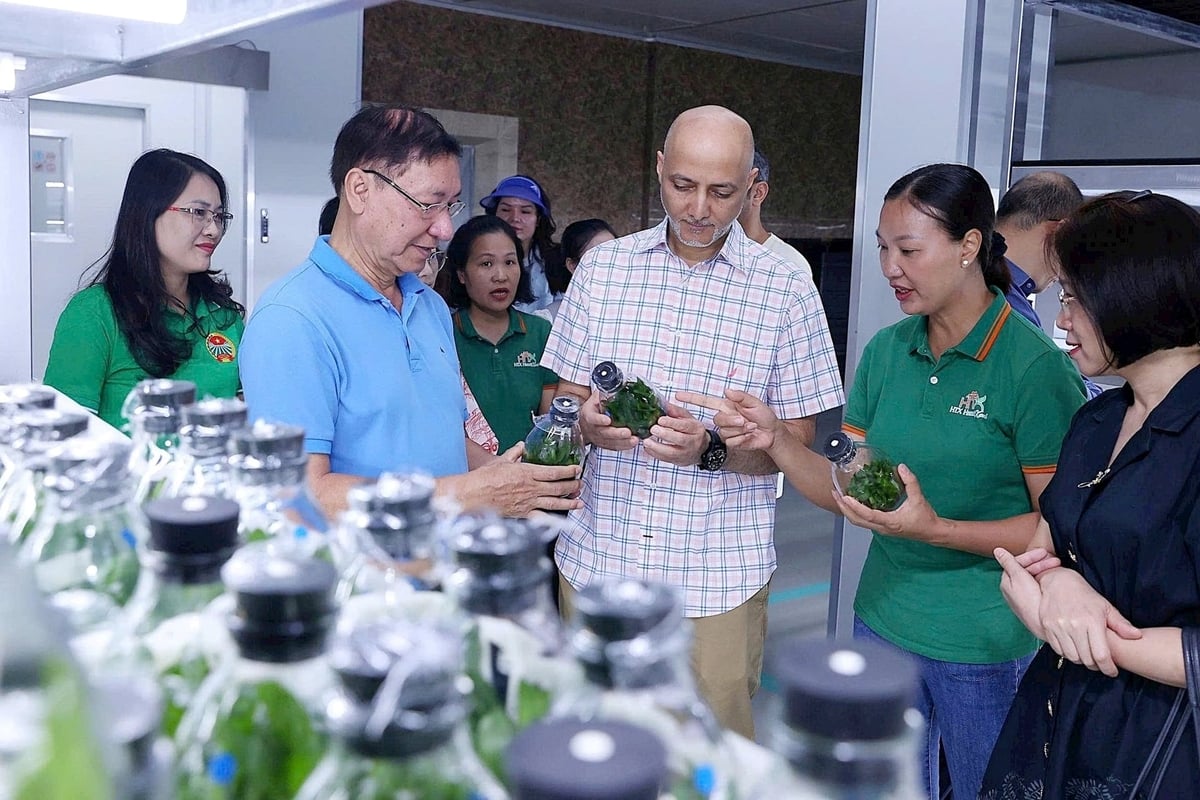
A delegation from the UAE Embassy in Viet Nam visits an agricultural processing line at Hanoi Xanh Cooperative. Photo: An Lac.
Fragmented standards across countries, coupled with the lack of mutual recognition agreements, are increasingly becoming major obstacles to global halal trade. In that context, simply meeting technical requirements is not enough for businesses to secure market access without corresponding institutional support and a functioning ecosystem.
Viet Nam’s own figures illustrate the scale of the challenge. Associate Professor Dinh Cong Hoang of the Institute for South Asian, West Asian and African Studies estimated that Viet Nam’s halal export potential could reach approximately $34 billion. Yet actual exports to halal markets, particularly in the Middle East and Africa, currently stand at only around $800 million annually – less than 2.5% of the country’s estimated potential, despite Viet Nam being one of the world’s leading agricultural exporters.
According to Hoang, the bottlenecks lie deeper within the system. Viet Nam’s domestic halal certification system has yet to gain broad recognition in key markets, while mutual recognition agreements remain limited. Traceability capabilities and supply chain controls are also inconsistent, particularly in sectors requiring strict separation standards.
The number of halal-certified enterprises remains small relative to the size of the economy, weakening the formation of integrated supply chains and collective branding. Even products that are inherently compatible with halal standards struggle to access markets effectively without certification and robust supply chain oversight systems.
Deeper integration into international frameworks
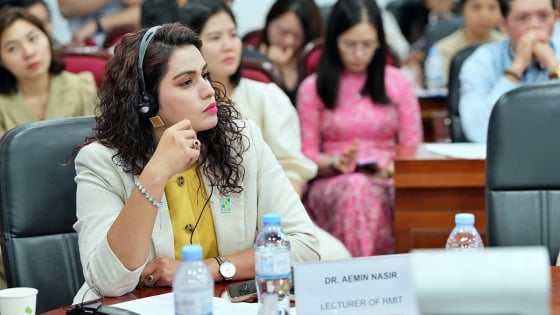
As halal continues to evolve beyond a conventional standard, it is increasingly associated with responsible consumption, transparency and sustainable development. From this perspective, Dr. Aemin Nasir of RMIT University Viet Nam argued that halal is no longer simply a “market entry requirement” but a broader value system in which products must simultaneously meet standards for quality, ethical production and environmental impact.
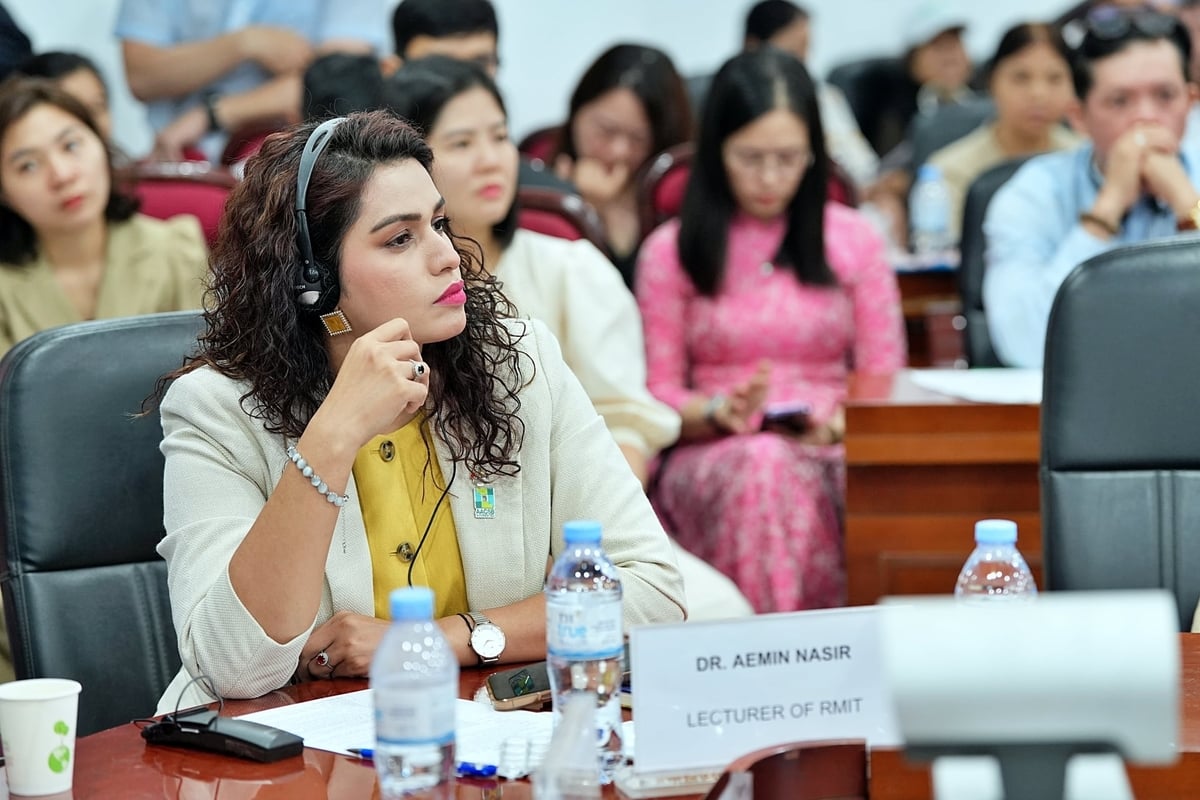
Dr. Aemin Nasir of RMIT University Vietnam. Photo: Bao Thang.
Building a halal ecosystem, he said, cannot stop at certification or trade promotion. Instead, it must be understood as a comprehensive restructuring of the entire value chain. From raw material regions and manufacturing processes to inspection systems, logistics and trade, all components must operate under a unified standard with full traceability and control mechanisms.
Without any one of these links, the “halal trust” that forms the foundation of the market cannot be fully established.
From that perspective, Dr. Nasir argued that Viet Nam’s halal certification system needs to be upgraded to international standards and gradually integrated into mutual recognition frameworks, rather than operating as isolated “standard islands.”
Financial institutions and support programs for business transformation will also play a critical role, as the costs of meeting halal standards remain a significant burden, especially for small and medium-sized enterprises.
Within this context, private sector initiatives such as Hanoi Xanh Cooperative can be viewed as early experiments aimed at narrowing market connectivity gaps. However, such models face substantial challenges in scaling up without broader coordination and institutional support.
While countries such as Malaysia, Indonesia and Thailand have already developed relatively complete halal ecosystems, Viet Nam’s challenge is no longer about how quickly individual businesses can move. The real question is whether the country’s broader system possesses sufficient standards, integration and trust to collectively build a competitive halal ecosystem from the raw material stage onward.
Agriculture News | Agri Products Price