

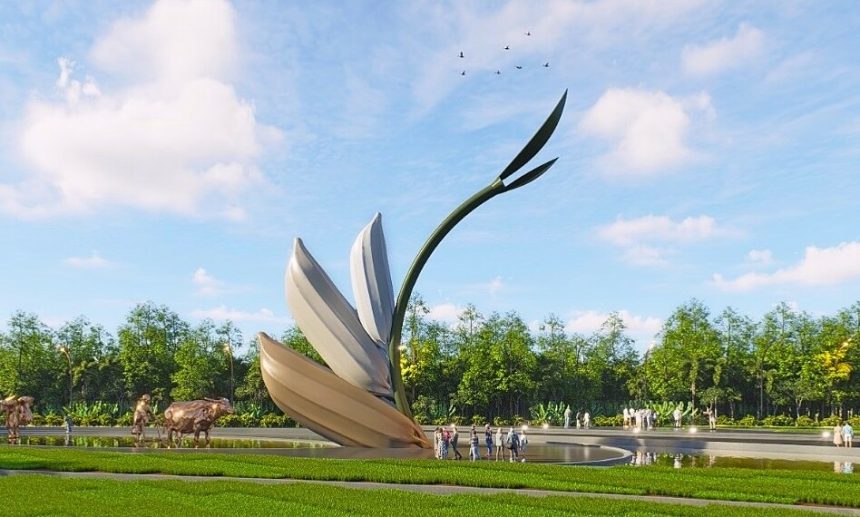
Ca Mau built a 24 m high symbol of three rice grains and established the Water Rice Museum, aiming to create a cultural and tourist highlight, on April 25.
The symbol honoring wet rice is located in Vinh Loi commune, near Highway 1. The project was designed by the group of architects Vuong Hoang Le, 24 m high, of which the cluster of three rice grains is 18 m high, with a total investment of about 20 billion VND, mainly from socialized sources.
The symbol of three rice seeds symbolizes the stages of growth: lactation, ripening and germination, demonstrating the continuity and vitality of wet rice civilization. The linked shapes create an arc shape, evoking the image of a stork’s wings in a rice field.
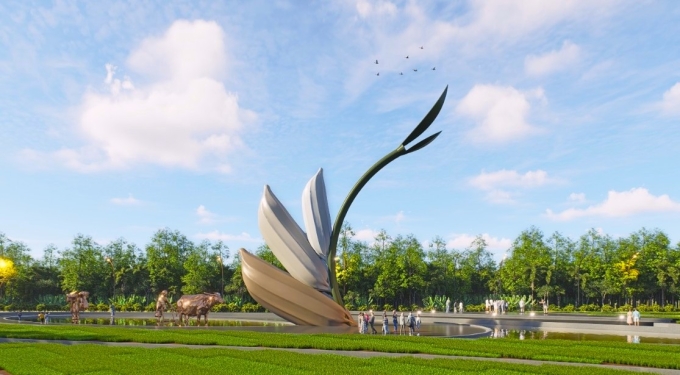
Design of the symbol of three rice grains expected to be built in Vinh Loi commune, Ca Mau. Image: Department of Culture, Sports and Tourism of Ca Mau province
This area is expected to display OCOP products, specialty rice, agricultural tools, and agricultural fine arts and photography; connecting relics and cultural sites in the area to form a “heritage route”.
The wet rice museum is designed according to the model of “museum of memories associated with experience”, recreating the process of land reclamation, the life cycle of rice plants, agricultural tools from traditional to modern, along with the Southern village space and the production ecosystem of saline and brackish lands.
The project is located at the old headquarters of the People’s Committee of Bac Lieu province, combining the display of artifacts with experiential activities such as rice transplanting, rice milling, and rice pounding. Data will also be digitized to form a digital museum. The province’s content orientation does not overlap with museums in the Mekong Delta region, focusing on portraying the adaptability of people in the “saltwater and sour fields” region.
The project is expected to be completed by the end of 2028, implemented in the form of completing each item and putting it into operation.
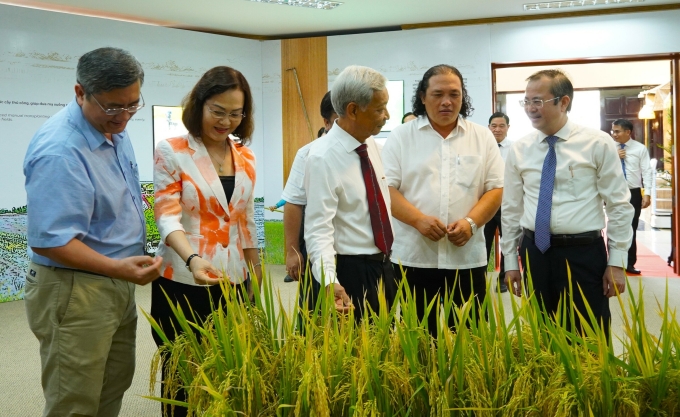
Provincial leaders and former leaders visit the exhibition area at the provincial wet rice museum. Image: Cheers Ly
Mr. Ngo Vu Thang, Vice Chairman of Ca Mau Provincial People’s Committee, said that the construction of the museum and symbol aims to concretize the cultural development orientation associated with tourism, while contributing to preserving agricultural memories in a modern context.
Cheers Ly