

(VAN) Despite a projected sharp decline in lychee output due to adverse weather, Hai Phong still aims to export 50% of its total yield to traditional markets in 2026.
“Lower output but value remains strong”
A delegation from the Plant Production and Protection Department (under Ministry of Agriculture and Environment) recently conducted field inspections to assess preparations for harvesting and marketing lychee in key growing areas of Thanh Ha Commune and surrounding regions. This is a critical period as early-season lychee begins to enter the initial ripening stage, gearing up for the largest export campaign of the year.
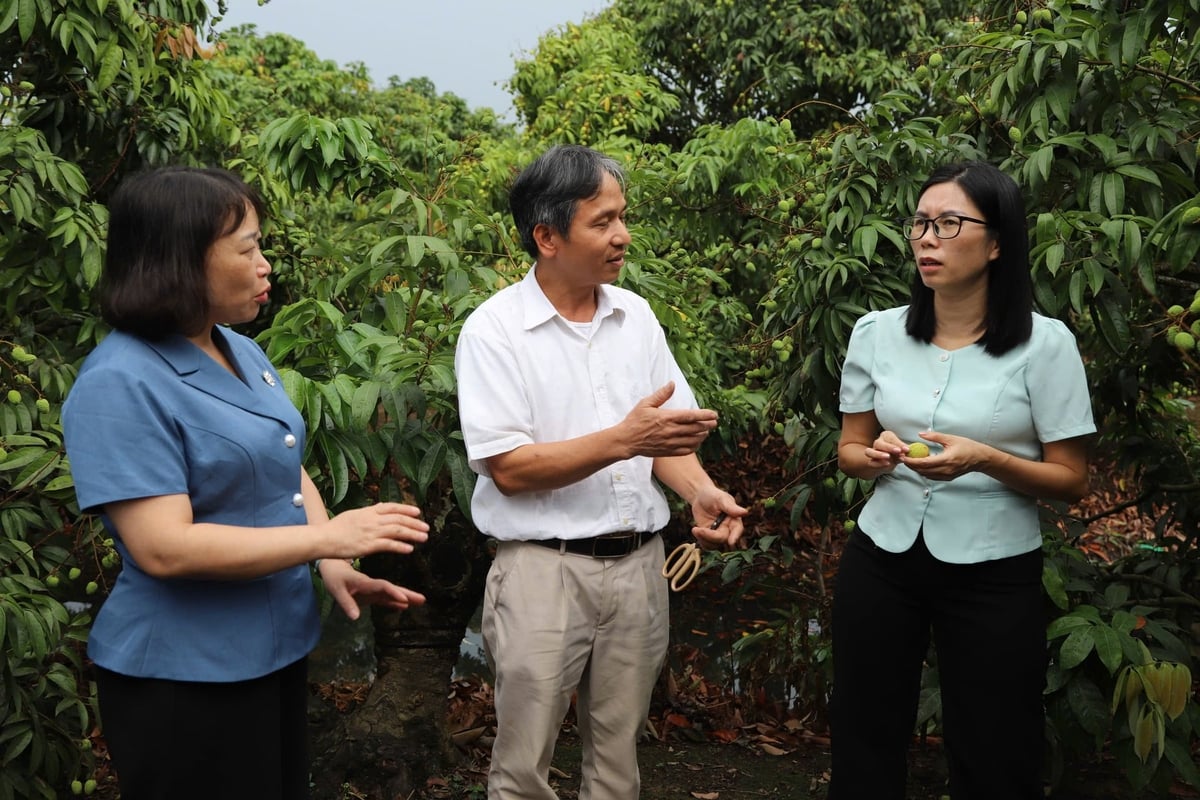
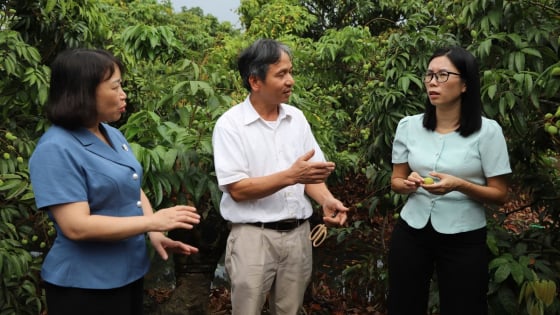
Ms. Nguyen Thi Thu Huong, Deputy Director General of the Plant Production and Protection Department (right), and Ms. Luong Thi Kiem, Deputy Director of the Hai Phong Department of Agriculture and Environment, inspect production conditions at a lychee orchard for export in Thanh Ha Commune. Photo: Hoang Phong.
Reporting to the delegation, Ms. Luong Thi Kiem, Deputy Director of the Hai Phong Department of Agriculture and Environment, said that the 2026 crop season is facing many weather-related challenges. Specifically, the city currently has about 9,350 hectares of lychee, concentrated in areas such as Ha Dong, Thanh Ha, Ha Nam, Nam Thanh Mien, and An Truong…
“Due to a warmer winter and higher temperatures, lychee trees did not have sufficient chilling time for flower bud differentiation. The flowering rate of early-season lychee is lower than in previous years, while the main crop has been the most severely affected,” she added.
This year’s output is estimated at only around 55,000 tons, a significant drop compared to more than 71,000 tons last year. Of this, early-season lychee accounts for the larger share at 35,000 tons (harvested from May 1 to May 25), while the main crop is expected to reach only about 20,000 tons (harvested from early June).
At pink lychee orchards in Thanh Ha Commune, by late April, the fruits have begun to change color, though the density on branches is noticeably lower. “Last year, every branch was heavily laden with fruit; this year it’s only about 50-60% of that. However, thanks to careful cultivation following technical guidance, the fruits this year are evenly sized, visually appealing, and expected to be sweeter,” said Mr. Pham Van Thanh, head of Production Team No. 10 in Thanh Ha Commune.
According to Mr. Thanh, harvesting pressure and logistics for the early-season crop are expected to begin from May 1, peaking between May 10 and May 25. Immediately afterward, the main crop will follow from early June. The back-to-back harvests within a short period will create significant market pressure over roughly two months.
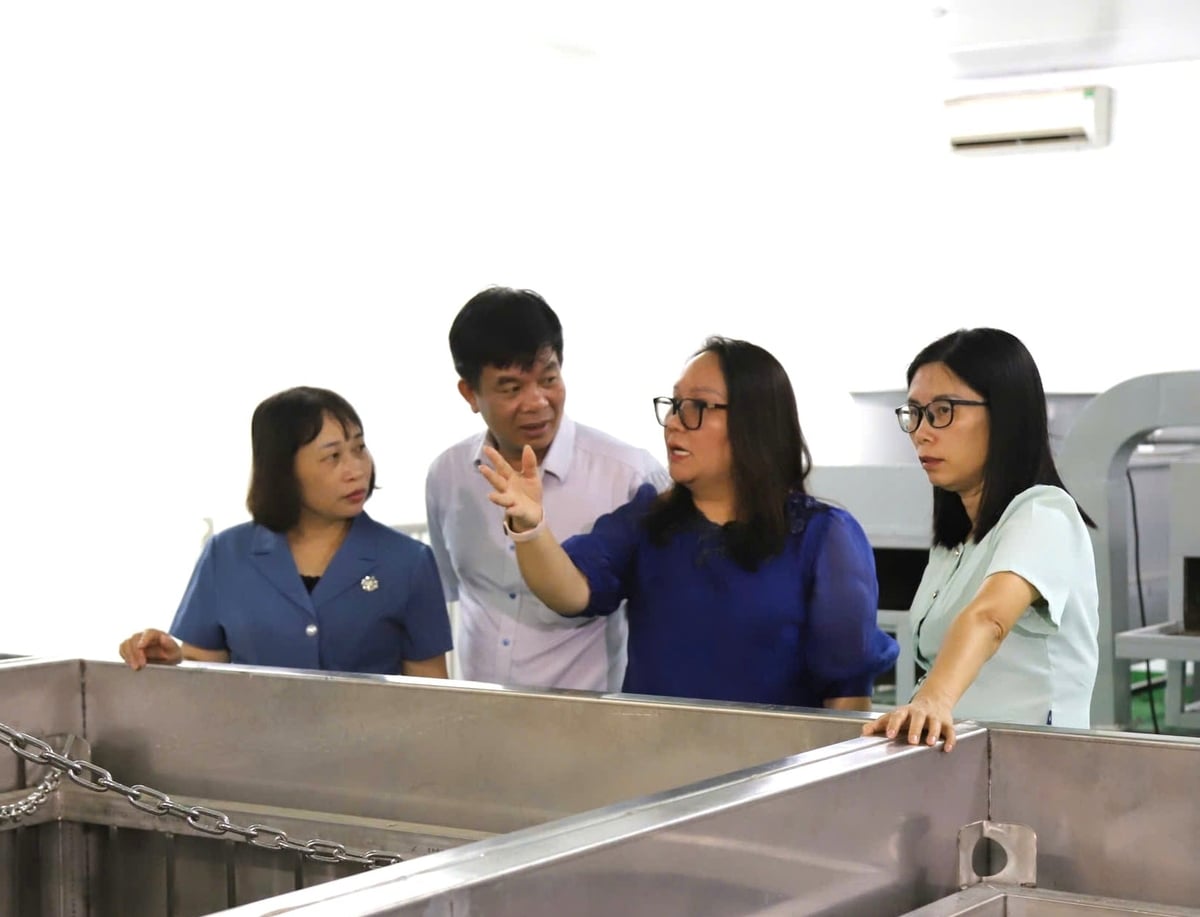
The delegation inspected preparations for the 2026 lychee season at a purchasing and exporting company with a branch in Thanh Ha Commune. Photo: Hoang Phong.
Hai Phong currently has seven packing facilities with a combined capacity of 650 tons/ day, which remains modest during peak harvest periods. The city is actively supporting businesses to invest in post-harvest preservation technologies and pre-processing and packaging systems to extend shelf life, ease immediate market pressure, and increase product value.
Tightening control over growing area codes to address market challenges
Across Hai Phong, a total of 198 export-oriented growing area codes have been granted for demanding markets. Among them, China remains the traditional market, accounting for 40% of output (around 22,000 tons), while about 10% (over 5,000 tons) is directed toward high-end markets such as Japan, the United States, Australia, and the EU.
A new feature of this season is the implementation of Decree No. 38/2026/ND-CP on the management of growing area codes and packing facilities. Accordingly, management has now been clearly decentralized down to the commune level to strengthen oversight. To support this goal, Hai Phong has maintained 12 GlobalGAP-certified growing areas and 81 VietGAP-certified areas, covering a total of more than 1,045 hectares. These certifications serve as “passports” for lychee to enter major supermarket chains and international markets.
Major companies such as Red Dragon Fruit Co., Ltd. and Ameii Vietnam have proactively signed contracts early. Ameii is expected to export around 600 tons (to Japan and the United States), while Red Dragon aims for 300 tons to markets including Australia, Japan, and Southeast Asia.
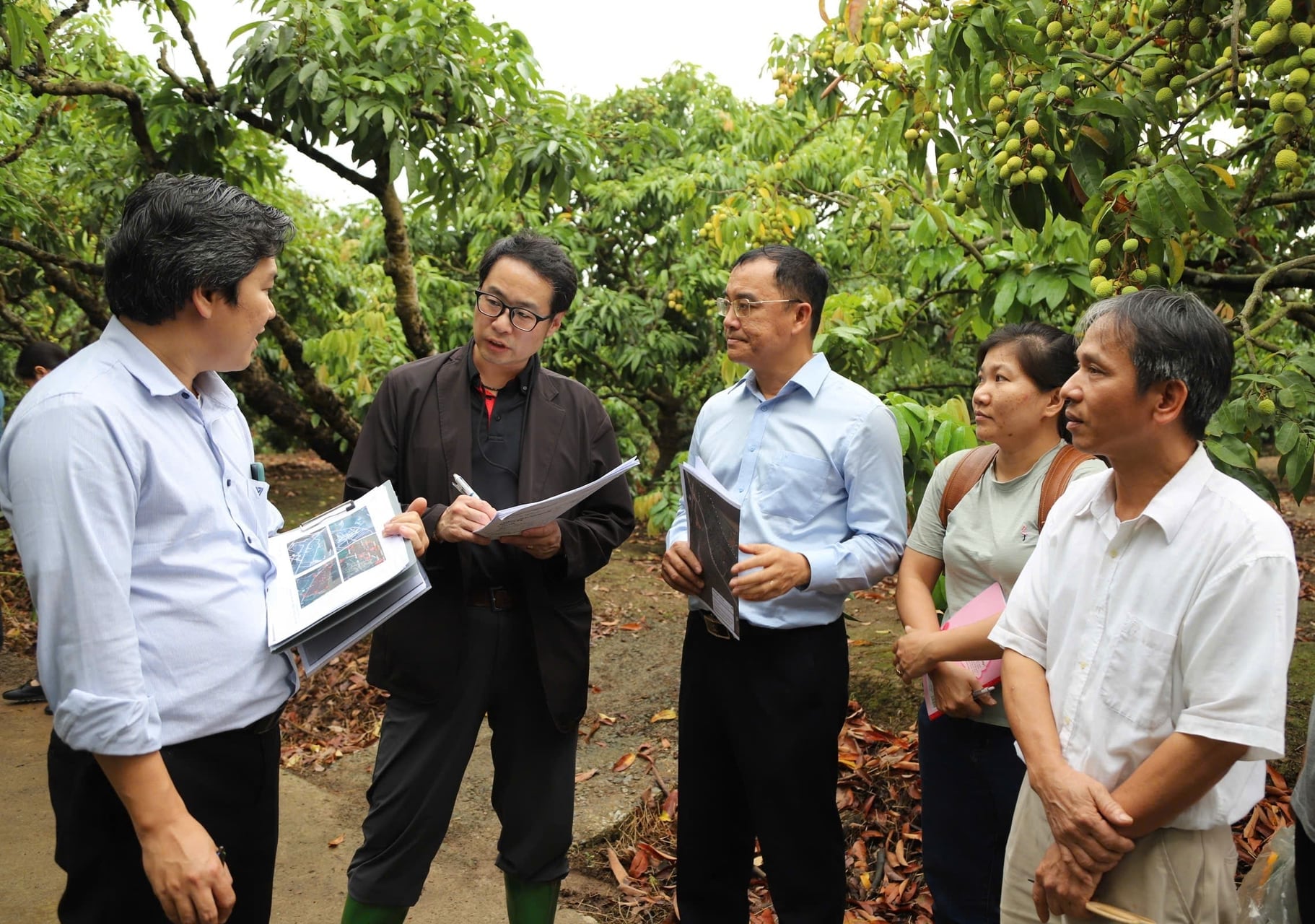
Japanese partners visited lychee orchards to inspect the raw material areas and production conditions before procurement. Photo: Hoang Phong.
However, the biggest challenge at present remains logistics costs. Ongoing conflicts in some parts of the world have driven up ocean freight rates, putting pressure on the export price of lychee. In addition, each market (Japan, the United States, the EU) has its own regulations on maximum residue limits (MRLs) for crop protection chemicals, requiring extremely strict monitoring from the orchard stage through to packing facilities.
Ms. Luong Thi Kiem, Deputy Director of the Hai Phong Department of Agriculture and Environment, said that the locality has provided training to more than 50 crop protection product dealers in key growing areas, requiring them to commit to supplying only products permitted by importing countries. “We consider these dealers as an extended arm of the regulatory authorities. If a growing area is found to contain prohibited residues, not only farmers but also the supplying dealers must be held accountable,” she emphasized.
In addition to exports, the domestic market of over 100 million people continues to be identified as a key pillar. The Hai Phong Department of Industry and Trade stated that plans are in place to connect lychee products with major supermarket chains such as Go!, WinMart, Co.op Mart, as well as e-commerce platforms.
“We cannot rely solely on exports; the domestic market also imposes high standards for food safety,” a representative of the department noted.
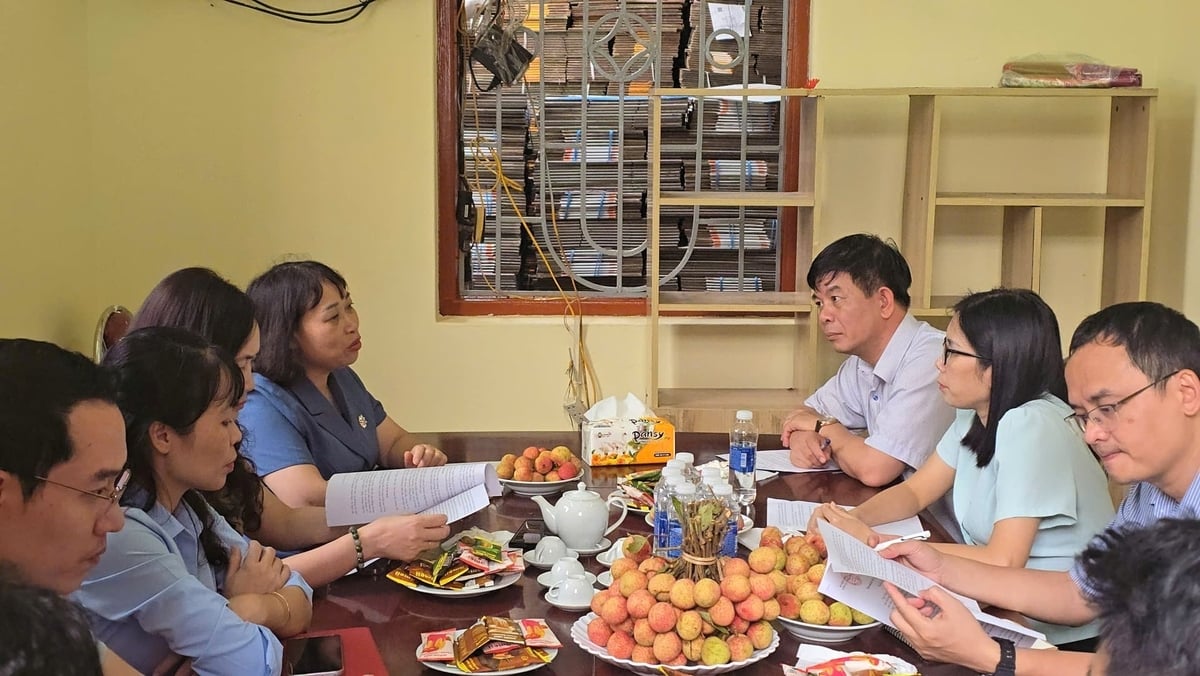
A working delegation met with representatives of the Hai Phong Department of Agriculture and Environment, relevant agencies, and local authorities after conducting field inspections of production conditions. Photo: Hoang Phong.
Sharing after the inspection and working session, Ms. Nguyen Thi Thu Huong, Deputy Director General of the Plant Production and Protection Department, noted that although the overall output decline is a common situation across northern provinces, the quality of Hai Phong lychee remains stable.
She urged the locality not to be complacent, as the time until peak harvest is now very short, about 10 days for early-season lychee and just over a month for the main crop. Close monitoring of late-season pests and diseases, along with ensuring proper pre-harvest intervals for crop protection chemicals, is critical to maintaining the reputation of Vietnamese lychee in export markets.
“This year’s guiding principle is that while output may decline, we are determined not to reduce farmers’ income. It is essential to protect to the fullest extent the areas that have already set fruit, strictly control pests and diseases, and ensure that every harvested lychee meets the highest standards,” Ms. Huong emphasized.
Estimated fresh lychee export volumes of selected companies targeting high-end markets in Hai Phong in 2026:
Red Dragon Fruit Co., Ltd. is expected to export 300 tons, including 110 tons to Australia, 70 tons to Japan, 20 tons to the United States, and the remaining approximately 100 tons to markets such as Malaysia, Singapore, and Hong Kong.
Ameii Vietnam Joint Stock Company is projected to export 600 tons, including 70 tons to Japan, 100 tons to the United States, and about 200 tons to the EU and other markets.
Dragon Berry Company is expected to export 500 tons of lychee to markets such as the United States, Japan, and Australia.
Agriculture News | Agri Products Price