

Ca MauFrom the ineffective shrimp farming land, Ms. Tran Phuong Thao renovated to grow high-tech grapes and tomatoes, earning more than one billion VND each year.
In a land familiar with shrimp and crabs in Ben Go hamlet, Ho Thi Ky commune, Thao’s vineyard, cherry tomatoes and sweet peppers are green and bear fruit all year round. The model also attracts thousands of visitors to visit and experience fruit picking.
Previously, her family lived on extensive shrimp and crab farming, with an unstable income. “If you want to get better, you have to change. You can’t depend on shrimp forever,” she said.
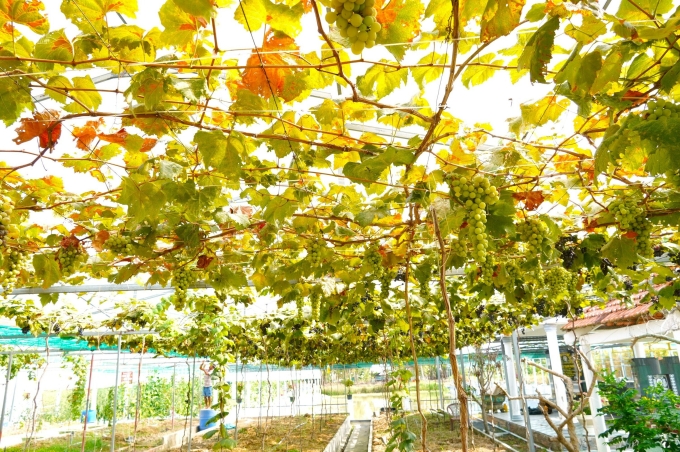
Ms. Thao’s vineyard has many highly effective varieties. Image: Cheers Ly
In 2019, after a period of research, she and her husband experimented with growing grapes. Having no experience, they went to Ninh Thuan many times to learn techniques and choose breeds. In the first generation, she planted 50 Japanese pink finger grapes and red grapes.
The biggest difficulty is improving saline alum soil. She applied lime to reduce alum, built a mound about 30 cm high, let the soil rest, and continuously watered and rinsed before sowing.
Initially, due to lack of capital, the grape trellis was made of bamboo. After six months, the tree bore fruit but in the rain, the quality was not high, the first crop only yielded about 150 kg. Not discouraged, she invested in a roof, switched to an iron frame, and installed a watering system to control water and reduce care.
A year later, she expanded to 1,000 more trees, switching to high-value varieties such as candy grapes and peonies. Currently, the garden has about 500 candied grapes, the rest are peonies and fingers. Each year, more than a ton of grapes are harvested, selling for 200,000-300,000 VND per kilogram. She proactively treats the tree to produce fruit during holidays and Tet to increase its value.
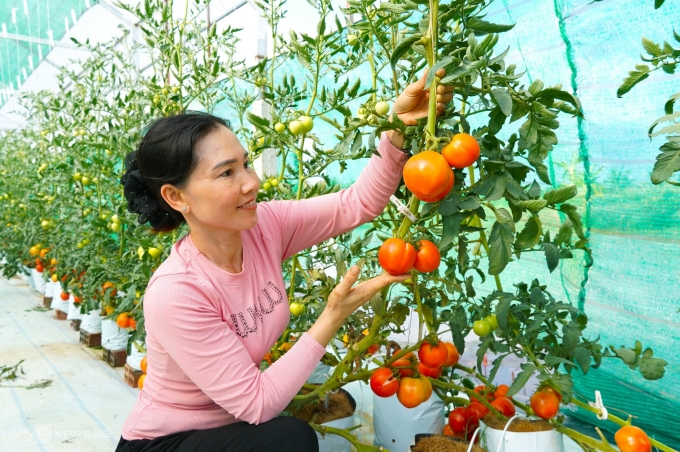
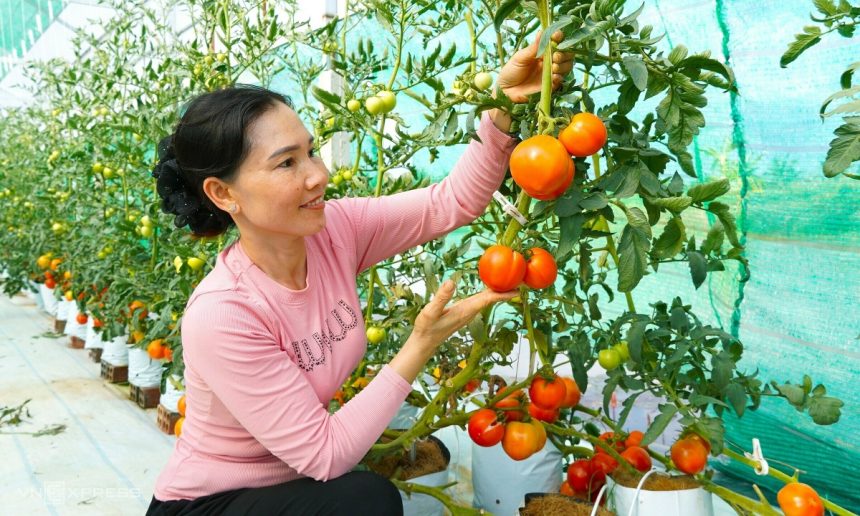
The vining tomato varieties that Ms. Thao tested had high yields. Image: Cheers Ly
Two years ago, she continued to grow cherry tomatoes – a plant that has difficulty adapting to hot climates. After many trips to Da Lat to learn, she brought the seeds back to try planting and installed sun-cutting nets to reduce heat.
Initially the yield was low, so she switched to importing seeds and growing them herself so the plants could adapt better. Currently, each tree produces 5-7 kg of fruit per crop. The garden has about 800 trees, expected to increase to 1,000 trees. The selling price is 100,000-120,000 VND per kg, many times there is not enough supply.
To maintain fertility, she divided the garden into several areas and rotated crops according to seasons. In addition to grapes and tomatoes, the family also grows melons and sweet peppers, targeting retail customers and experiential tourism.
When the model stabilized, she opened the door to welcome visitors and picked fruit on the spot. Every year the garden welcomes thousands of visitors. Combined with online sales, revenue reaches more than one billion VND, profit is about 50%. Most of it has been reinvested in upgrading greenhouses, irrigation systems, and new varieties.
It is expected that in the next year, revenue can double when expanding the area. The family currently has more than 2 hectares of land and plans to develop high-tech agriculture.
According to Ms. Thao, saline alum soil, if properly improved, will still be highly effective. “The important thing is to understand the soil, choose suitable varieties and be persistent,” she said, hoping to bring new experiences to local people.
Mr. Tran Quoc Toan, Chairman of Ho Thi Ky Commune People’s Committee, assessed that the model is a suitable direction for the policy of converting production. From land that is difficult to cultivate, this method opens up new development directions for local agriculture.
Cheers Ly