


(VAN) The EU is tightening environmental and sustainability standards, making the greening of supply regions an inevitable path for Vietnamese seafood.
Growing strong but not yet sustainable
The EU is currently one of Vietnam’s four largest seafood import markets. Thanks to the Vietnam–EU Free Trade Agreement (EVFTA), trade between the two sides has steadily expanded. However, this also means the EU enforces a series of strict standards on food hygiene, disease safety, labeling, and, notably, “greening” requirements across the entire supply chain.
Vietnamese seafood has been exported to 170 countries, with export turnover reaching USD 10 billion in 2024, up 12.7% from the previous year. Shrimp, pangasius, and tuna remain the three main products. In the EU specifically, the market consistently ranked among the largest during 2017–2022, but pressure has intensified as the number of warnings doubled in 2024 alone. The IUU yellow card has yet to be lifted, and concerns over environmental impact and sustainable development continue to weigh heavily.
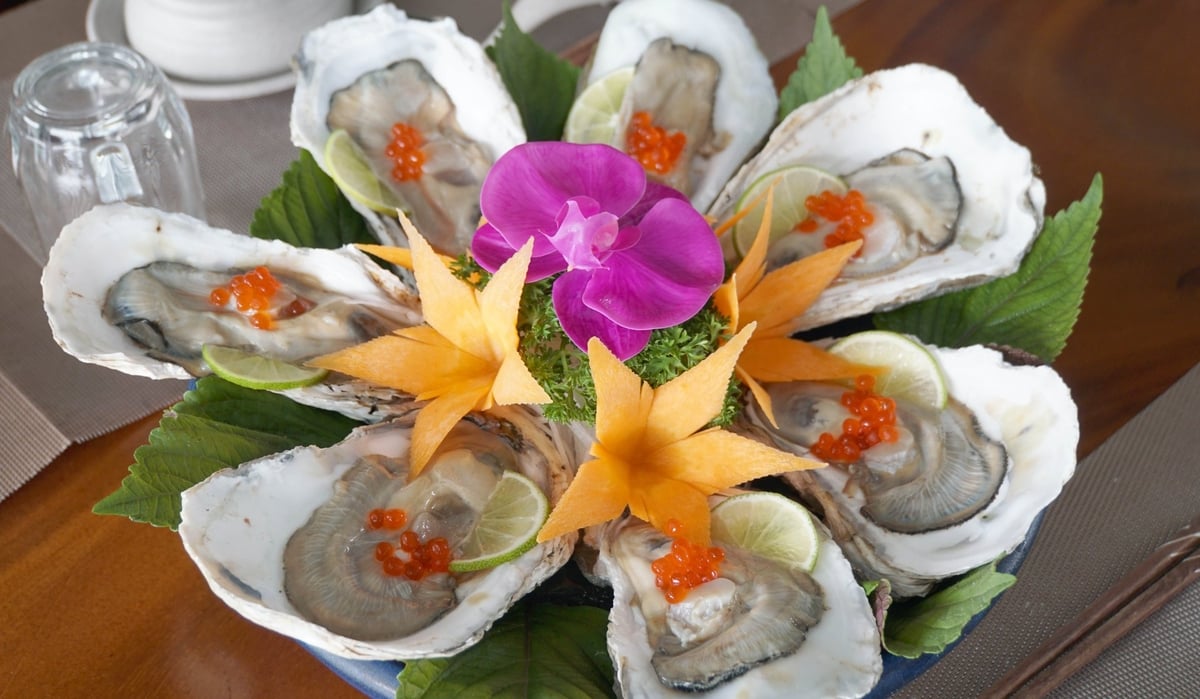
Bivalve mollusks associated with “green” production are a potential export product for the EU market. Photo: Le Binh.
This situation raises a clear requirement: without transitioning to green standards, Vietnamese seafood risks losing its competitive advantage in a market full of potential.
In recent years, many localities and businesses have begun adapting. Soc Trang leads the country with over 1,100 hectares of shrimp farms certified under VietGAP, ASC, GlobalGAP, and BAP; several high-tech shrimp farms have achieved yields of 35 tons per hectare. Ca Mau has strongly developed the shrimp-forest model, with more than 19,000 hectares certified under international standards such as Naturland, EU Organic, and Selva Shrimp. Kien Giang has approved a 5,500-hectare sustainable development project with a total capital of over VND 620 billion.
These models not only help meet EU standards but also create opportunities for a circular economy, by-product recycling, greenhouse gas reduction, and enhancing the value of Vietnam’s seafood brand.
Bottlenecks to address
Despite progress, green transformation still faces many barriers. Only 8.2% of brackish shrimp farms have been assigned identification codes. Many factories and cooperatives do not strictly treat wastewater or manage waste. Distribution chains rely heavily on middlemen, limiting quality control, while packaging and storage remain below EU standards.
Additionally, overfishing and the use of prohibited gear continue, depleting coastal seafood resources. Management capacity among fishermen and aquaculture farmers remains low, and they have yet to perceive international market pressures fully. Limited capital and technology further slow investment in green models.
According to Dr. Phan Tuan Anh from the Center for Economics, Southern Institute of Social Sciences, for Vietnamese seafood to truly conquer the EU market, multiple measures must be implemented simultaneously. The government’s role is crucial: issuing consistent and practical regulations and standards, enhancing inspections, providing financial and technological support, and training skilled personnel.
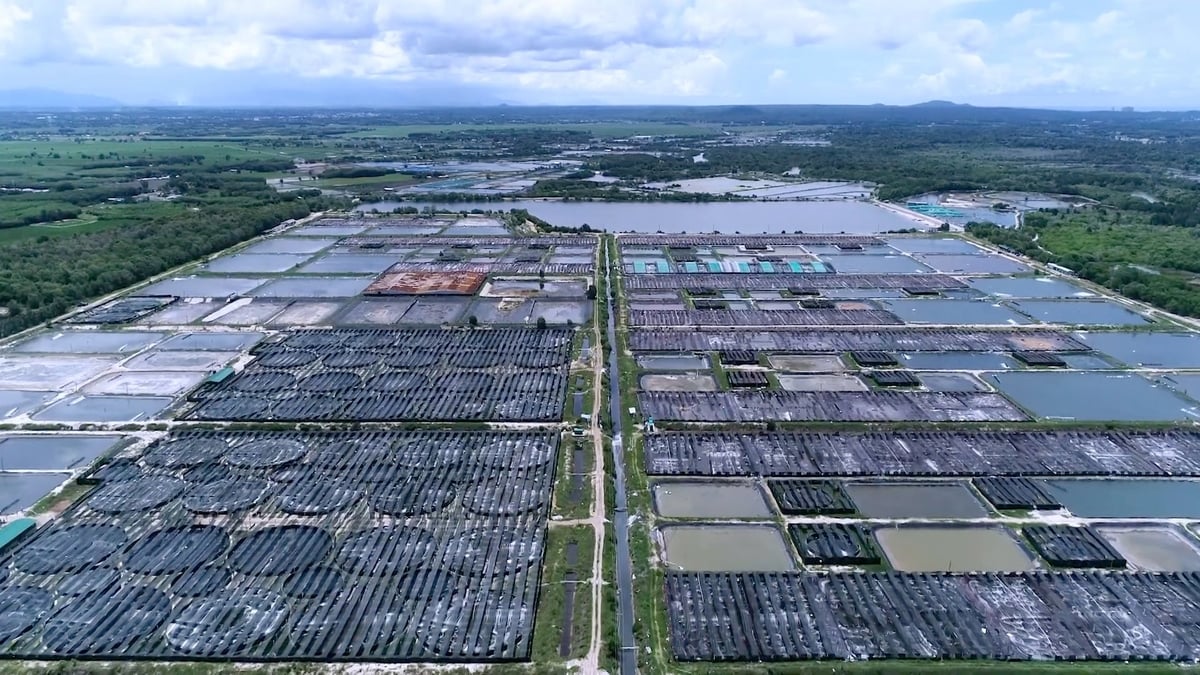
The 300-hectare clean shrimp farming model in the Ba Ria–Vung Tau area of Ho Chi Minh City serves as a flagship example of sustainable development and environmental protection. Photo: Le Binh.
Businesses and industry associations also need to proactively link production and processing chains, build their own distribution systems, participate in international certifications, and reduce dependence on middlemen. It is equally important to raise awareness among fishermen and aquaculture farmers about the benefits and methods of adopting green practices.
“Vietnam also needs to focus on researching and applying circular aquaculture technologies, waste treatment, and by-product recycling in order to optimize production and meet EU standards,” said Dr. Phan Tuan Anh.
Promoting green transformation in supply regions is not only a prerequisite for lifting the IUU yellow card and complying with EU standards, but also a way for Vietnamese seafood to enhance value, build a national brand, and achieve sustainable development.
As many experts affirm, going green is no longer an option; it has become the only path for Vietnamese seafood to maintain and strengthen its position within the global supply chain. As many experts emphasize, going green is no longer optional; it has become the only viable path for Vietnamese seafood to maintain and enhance its position in the increasingly competitive and sustainability-focused global supply chain.
It is a critical strategy for increasing product value, strengthening the national seafood brand, and supporting sustainable economic growth. Equally important is raising awareness among fishermen and aquaculture farmers about the benefits and practical methods of adopting green practices, from sustainable feed and water management to responsible harvesting techniques.
Agriculture News | Agri Products Price