



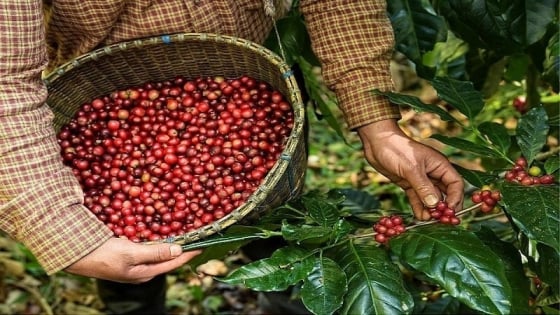
(VAN) Japan is one of the largest and most stable coffee-consuming markets in Asia, with demand remaining steady over many years.
According to data from the Japan Customs, in January 2026, Japan imported 30.7 thousand tons of coffee, worth $ 222.3 million, up 4% in volume and 33.3% in value compared to January 2025.
In the first month of 2026, Japan’s average coffee import price reached $ 7,229/ton, up 28.2% year-on-year. Import prices from most major suppliers increased, while the average import price from Viet Nam decreased by 12.5% to $ 4,697/ton.
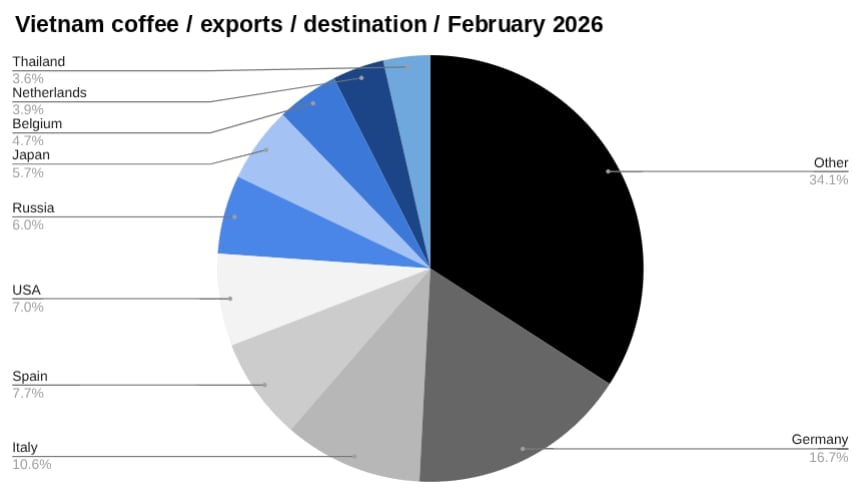
Vietnam’s exports of coffee in February 2026, US$m. Source: the-shiv.com.
In January 2026, Japan imported coffee from 38 countries and territories. Imports from Viet Nam and Tanzania declined, while imports from Brazil, Colombia, and Peru increased.
Brazil was the largest coffee supplier to Japan in January 2026, with 13.6 thousand tons, worth $ 103.3 million, up 19.2% in volume and 83.6% in value year-on-year. Its market share rose from 38.48% to 44.09%.
Viet Nam was the second-largest coffee supplier to Japan, with 9.1 thousand tons, worth $ 42.7 million, down 2.8% in volume and 14.9% in value compared to January 2025. Viet Nam’s market share decreased from 31.61% to 29.56%.
Colombia ranked third, exporting 3.2 thousand tons worth $ 29 million, up 48.8% in volume and 107.2% in value. Its market share increased from 7.28% to 10.41%.
Japan remains a large and stable coffee-consuming market in Asia. According to the All Japan Coffee Association, about 74.3% of the population drinks coffee regularly, with total consumption reaching approximately 397.3 thousand tons in 2025.
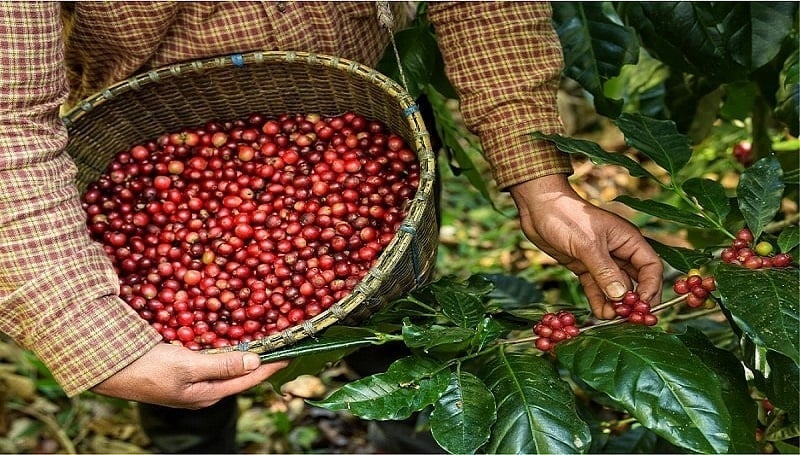
Vietnam was the second-largest coffee supplier to Japan in the first month of 2026, exporting 9.1 thousand tons worth $42.7 million. Photo: Illustration.
In the coming years, coffee demand in Japan is expected to grow steadily. Forecasts suggest consumption may reach 473 thousand tons by 2028, with an average annual growth rate of around 0.3%, and about 480 thousand tons by 2030.
Alongside stable market size, consumption trends are shifting toward convenient coffee products, high-quality coffee, and specialty coffee, while demand for decaffeinated coffee is also increasing as consumers pay more attention to health.
Despite a slight decline in market share, Japan remains a high-potential market for Vietnamese coffee thanks to its large and stable consumption. Viet Nam’s competitive pricing helps maintain its position as a key supplier, while also opening opportunities to boost exports of processed, convenient, and high-quality coffee products aligned with new consumer trends
Agriculture News | Agri Products Price