




(VAN) The most notable highlight in Viet Nam’s shrimp export product structure in the first two months of 2026 is the breakthrough of the lobster segment.
The shrimp sector’s growth axis is shifting
According to the Viet Nam Association of Seafood Exporters and Producers (VASEP), shrimp exports in February reached approximately USD 310 million, up 17% compared to the same period last year. Cumulatively, in the first two months of the year, shrimp export turnover reached USD 690 million, increasing by 20%.
Compared with the 22% rate recorded in January, growth momentum in February slowed, clearly reflecting seasonal factors, as the Lunar New Year holiday partially disrupted processing and delivery activities. Nevertheless, the nearly 20% increase in the first two months indicates that Viet Nam’s shrimp orders show a more positive trend compared to the same period last year.

Viet Nam’s shrimp exports in the first two months of 2026 reached USD 690 million, up 20% compared to the same period last year. Photo: HT.
China remained the leading importer of Viet Nam’s shrimp, with export turnover in the first two months reaching USD 298 million, a 61% surge compared to the same period last year. Including both China and Hong Kong, total export turnover amounted to USD 309 million, increasing by 58% and accounting for 45% of the country’s total shrimp export value.
In contrast, the U.S. market recorded a downward trend, with export turnover reaching only nearly USD 60 million, down 22% from the same period. Exports to Japan reached USD 70 million, up slightly by 1%, while South Korea reached USD 41 million, down 14%. Meanwhile, the EU continued to be a bright spot, with two-month export turnover reaching USD 77 million, up 28%.
In terms of cumulative scale, the EU, Japan, the U.S., and South Korea follow China. This indicates that the growth axis of the shrimp sector in early 2026 is shifting more clearly toward China and the EU, while the U.S., Japan, and South Korea remain more cautious.
Lobster emerges as a new growth driver
A notable highlight in Viet Nam’s shrimp export product structure in the first two months of the year is the strong growth of the lobster segment. Export turnover for this category reached USD 259 million, up 65% from the same period in 2025. Of this, green lobster accounted for USD 206 million, increasing by 32% from the same period last year. Ornate spiny lobster reached nearly USD 1.3 million, up 43%, while other lobster categories reached USD 52 million, soaring by 6,138%.
Meanwhile, whiteleg shrimp remained the key export item, generating USD 341.5 million and accounting for 49.5% of total shrimp export turnover, with a modest 4.5% increase. Black tiger shrimp reached USD 44.6 million, up 13%. Overall, the shrimp sector’s growth rate of nearly 20% in early 2026 is no longer driven primarily by whiteleg shrimp as in previous years but has seen significant contributions from the lobster segment and other shrimp categories such as freshwater prawns (+142%), giant freshwater prawns (+199%), and green tiger prawns (+466%).
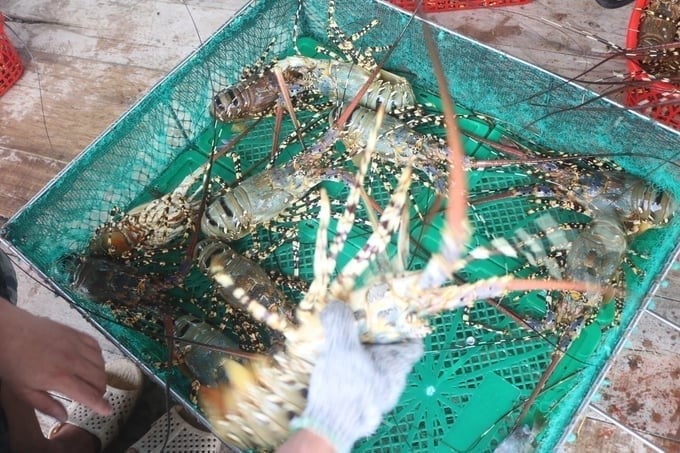
A notable highlight in Viet Nam’s shrimp product structure for export in the first two months of the year is the strong breakthrough of the lobster segment. Photo: VAN.
The sharp increase in lobster exports also helps explain the spike in shipments to China. This market is a major consumer of live, high-value seafood products, particularly in the period before and after the Lunar New Year. As demand in this market recovers strongly, lobster is emerging as a new growth driver, complementing the traditional role of whiteleg shrimp.
The overall picture in the first two months of 2026 shows that Viet Nam’s shrimp exports have maintained their growth momentum, but the growth structure has undergone notable changes. China has clearly become the leading market, and the EU continues to maintain a positive pace, while the U.S. is still facing multiple challenges. From a product perspective, lobster has emerged as a particularly important growth factor, while whiteleg shrimp remains the foundation but is no longer the sole driver.
In March, when production and delivery activities return to normal after the Lunar New Year holiday, shrimp exports may recover in terms of transaction pace. However, strong growth will not be easy to sustain, as the U.S. market continues to face pressure from anti-dumping duties, additional import tariffs, and increasingly strict technical control requirements. In this context, the sector’s ability to maintain growth will largely depend on effectively capitalizing on demand in China, stabilizing market share in the EU, and leveraging the advantages of value-added and high-value product segments such as lobster within the export structure.
Agriculture News | Agri Products Price