



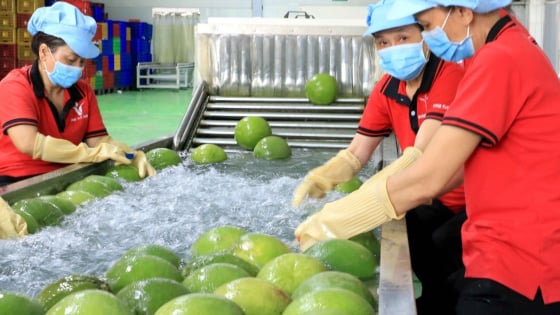
(VAN) The global pomelo market is currently valued at billions of USD and continues to grow, presenting significant opportunities for Vietnamese pomelo in the coming period.
Following Australia’s official market opening to Vietnamese pomelo, the signing of a protocol between Viet Nam and China on phytosanitary requirements for exported pomelo and lemon continues to open up significant opportunities for Vietnamese pomelo in the global market.
Prior to the first shipments of pomelo from Vinh Long and Dong Thap to Australia on April 13, Vietnamese pomelo had already been exported to various markets, including demanding ones such as the U.S., South Korea, and New Zealand. Pomelo export turnover has grown rapidly in recent years, reaching nearly USD 73 million in 2025.
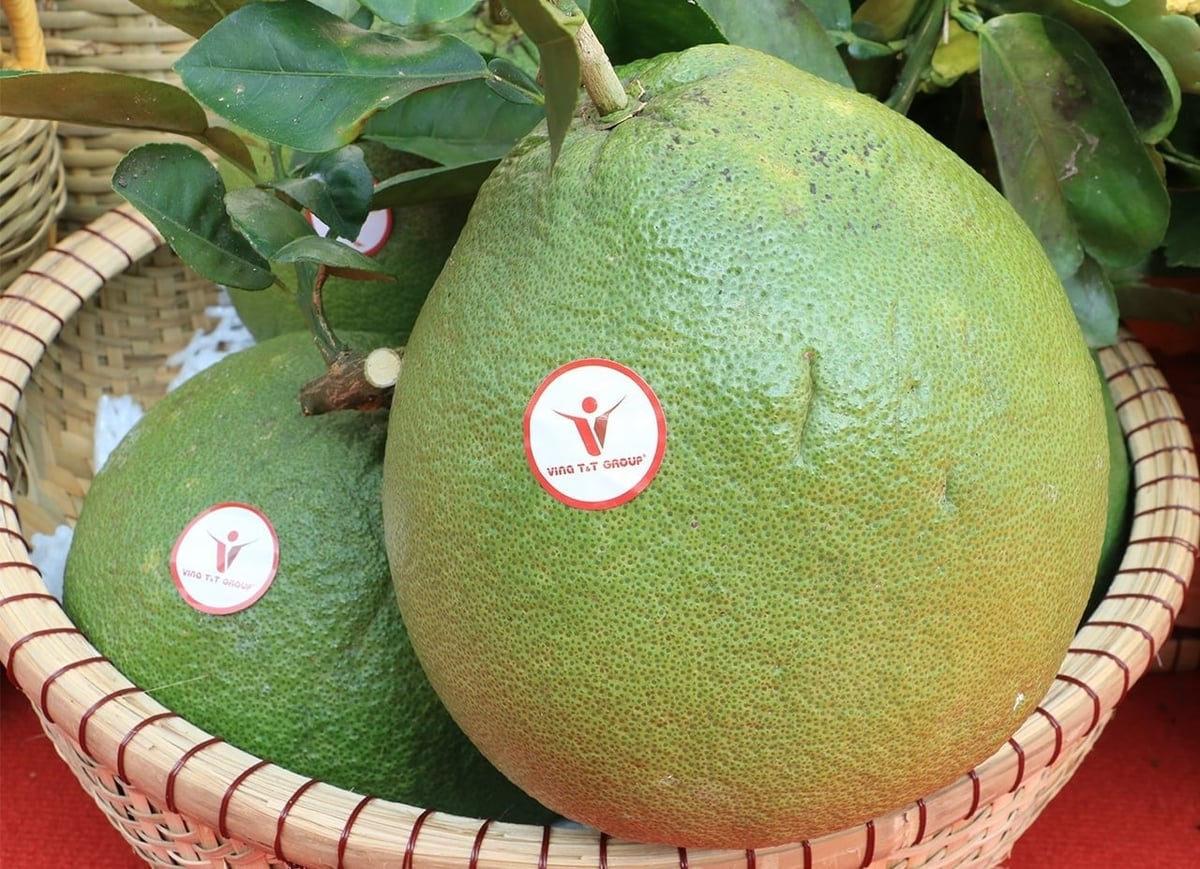
Green-skinned pomelo of Vina T&T Group, the company that carried out one of the first pomelo shipments to Australia on April 13. Photo: Thanh Son.
Viet Nam still holds substantial potential to boost pomelo exports, particularly for varieties already favored in international markets such as green-skinned pomelo.
Mr. Chau Van Hoa, Vice Chairman of the Vinh Long Provincial People’s Committee, said the province currently has a total pomelo growing area of 18,535 hectares, of which approximately 13,800 hectares are dedicated to green-skinned pomelo. In recent years, Vinh Long’s green-skinned pomelo has been exported to many markets worldwide. With such acreage, the province still has large room to expand pomelo exports.
Opportunities for Vietnamese pomelo exports are expected to continue expanding in 2026, as Viet Nam and China have signed a protocol on phytosanitary requirements for exported pomelo and lemon. Under this Protocol, Vietnamese pomelo is now permitted for official export to the Chinese market.
China is a major pomelo producer. According to DataM Intelligence, the country’s total pomelo output reached nearly 5.3 million tons in 2021. Despite its large production, China continues to increase pomelo imports to meet rising consumer demand.
Data from China Customs shows that in the first 11 months of 2025, China imported nearly 110,000 tons of pomelo worth approximately USD 114 million, up 24% in volume and 20% in value compared to the same period in 2024. Among suppliers, China mainly imported pomelo from Laos (47,000 tons), South Africa (35,000 tons), and Thailand (23,000 tons).
Notably, China is increasing imports from geographically closer markets with lower logistics costs and greater delivery flexibility, while reducing imports from distant sources. In the first 11 months of 2025, while imports from South Africa and Egypt declined, China increased imports from neighboring markets such as Laos (up 72% in volume from the same period in 2024), Taiwan (up 107%), and Thailand (up 7.1%). This signals a positive outlook for Vietnamese pomelo to enter and gradually expand its market share in China following official export approval.
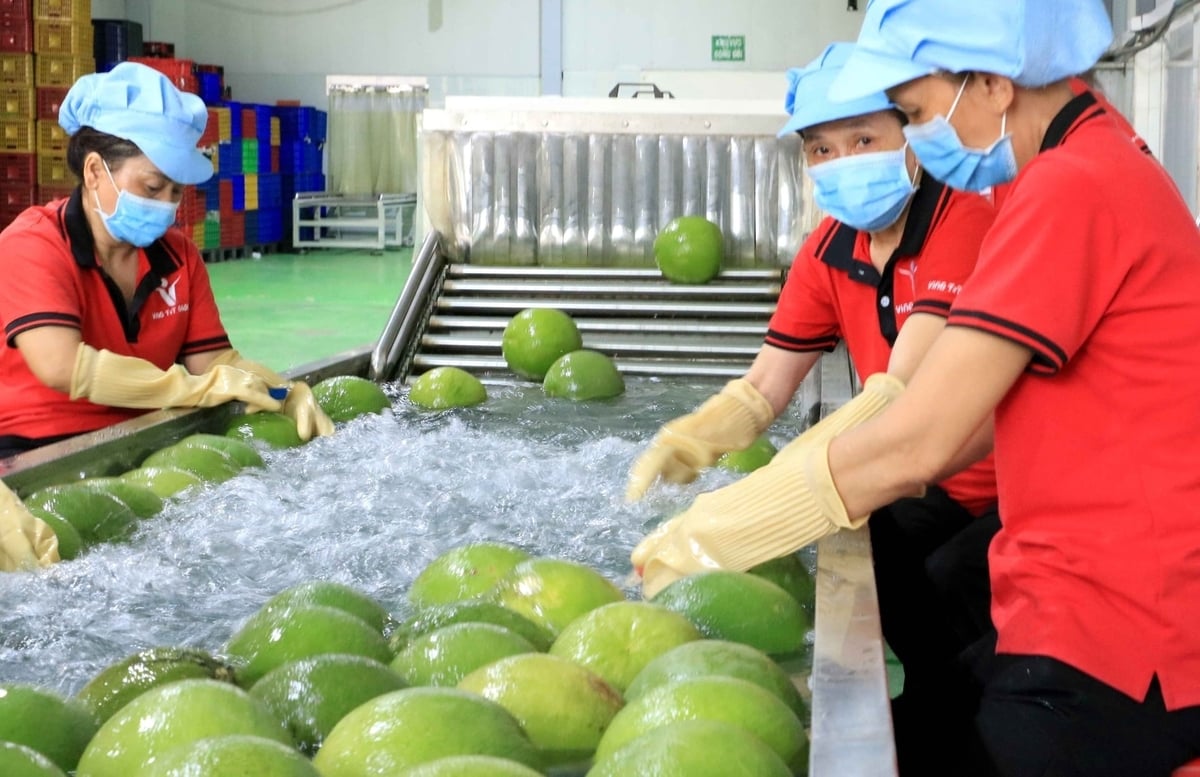
Workers wash pomelos at the Vina T&T Group factory in Vinh Long province. Photo: Thanh Son.
Global demand for pomelo is on the rise. According to DataM Intelligence, the global pomelo market reached USD 3.02 billion in 2025 and is projected to reach USD 4.2 billion by 2033, growing at a CAGR of 5.1% during the 2026-2033 forecast period.
Increasing consumer interest in health and healthy lifestyles is driving global demand for pomelo. Its high vitamin C content, antioxidants, and fiber make it particularly appealing to those seeking nutritious, immunity-boosting foods.
It can be said that the global pomelo market is wide open for Vietnamese enterprises. Notably, many Vietnamese pomelo exporters are focusing on competing in international markets through quality rather than price.
Mr. Nguyen Dinh Tung, Chairman and CEO of Vina T&T Group, noted that during peak season, China’s yellow-skinned pomelo is widely available in international markets. However, Viet Nam’s green-skinned pomelo remains highly competitive and well-received by consumers despite its much higher price.
On April 15 in Beijing, within the framework of the state visit to China by General Secretary and President To Lam, Minister of Agriculture and Environment Trinh Viet Hung and Director General of the General Administration of Customs of China (GACC) Sun Meijun signed a Protocol on phytosanitary requirements for the export of pomelo and lime. According to the Protocol, all cultivation areas and packing facilities for lemons and pomelos exported to China must be registered with the Ministry of Agriculture and Environment and approved by both the Ministry and GACC.
The Asia-Pacific region, particularly countries such as Thailand, Viet Nam, Indonesia, China, and Malaysia, serves as a major hub for pomelo production, thanks to extensive cultivation areas, cultural significance, and consumer preferences.
Agriculture News | Agri Products Price