

(VAN) Vinh Long aims to have 2,500 ha of durian granted planting area codes by 2030, meeting requirements for export to international markets.
Vinh Long currently has more than 8,100 ha of durian, largely concentrated in the fertile areas along the Tien River and Hau River. With an annual output of over 62,000 tons, durian is a key income-generating crop for thousands of households. However, as official export channels expand, the durian sector is facing a major turning point.
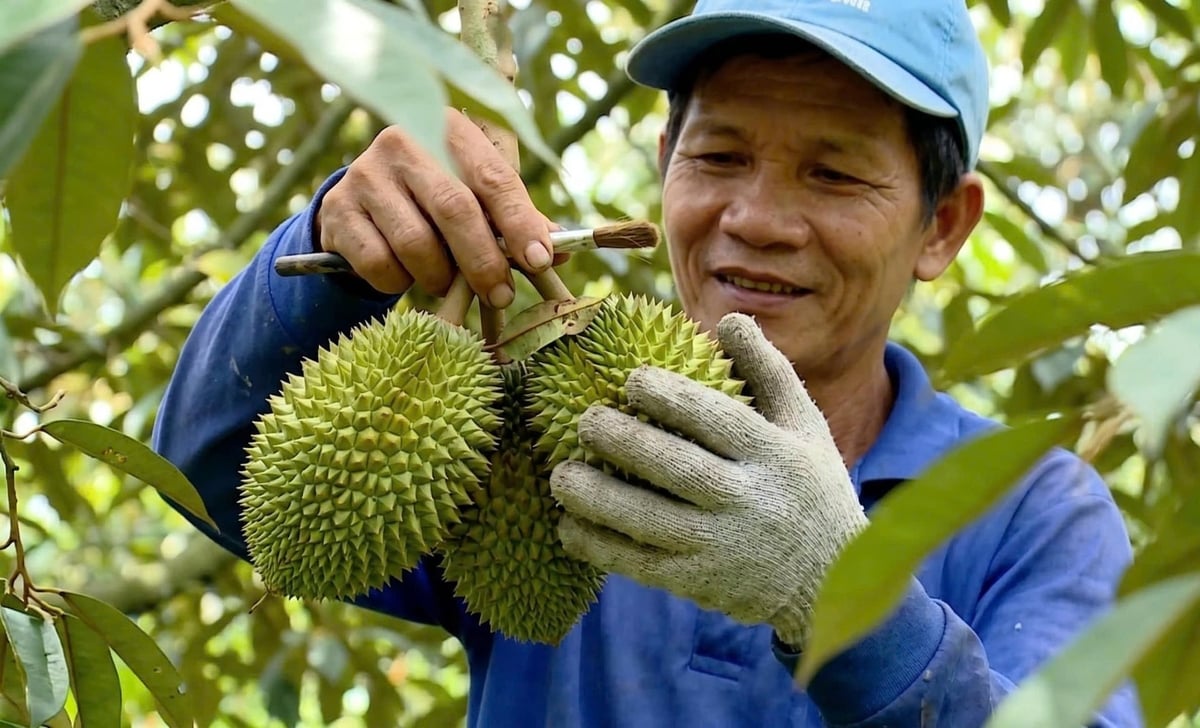
Farmers care for and select durian fruits in the orchard to ensure quality prior to harvest. Photo: Ho Thao.
According to Mr. Le Van Dung, Deputy Director of the Vinh Long Department of Agriculture and Environment, the biggest barrier for durian is no longer productivity but transparency. International partners, particularly China, impose extremely strict controls on pesticide residues, heavy metals, and traceability. Standardization from the ground up is no longer an option but the only path to maintaining competitiveness.
“Foreign buyers do not only purchase fruit, but they also inspect the entire production process. A single non-compliant sample can damage the reputation of an entire growing area, even leading to export suspension and significant losses,” Mr. Dung shared.
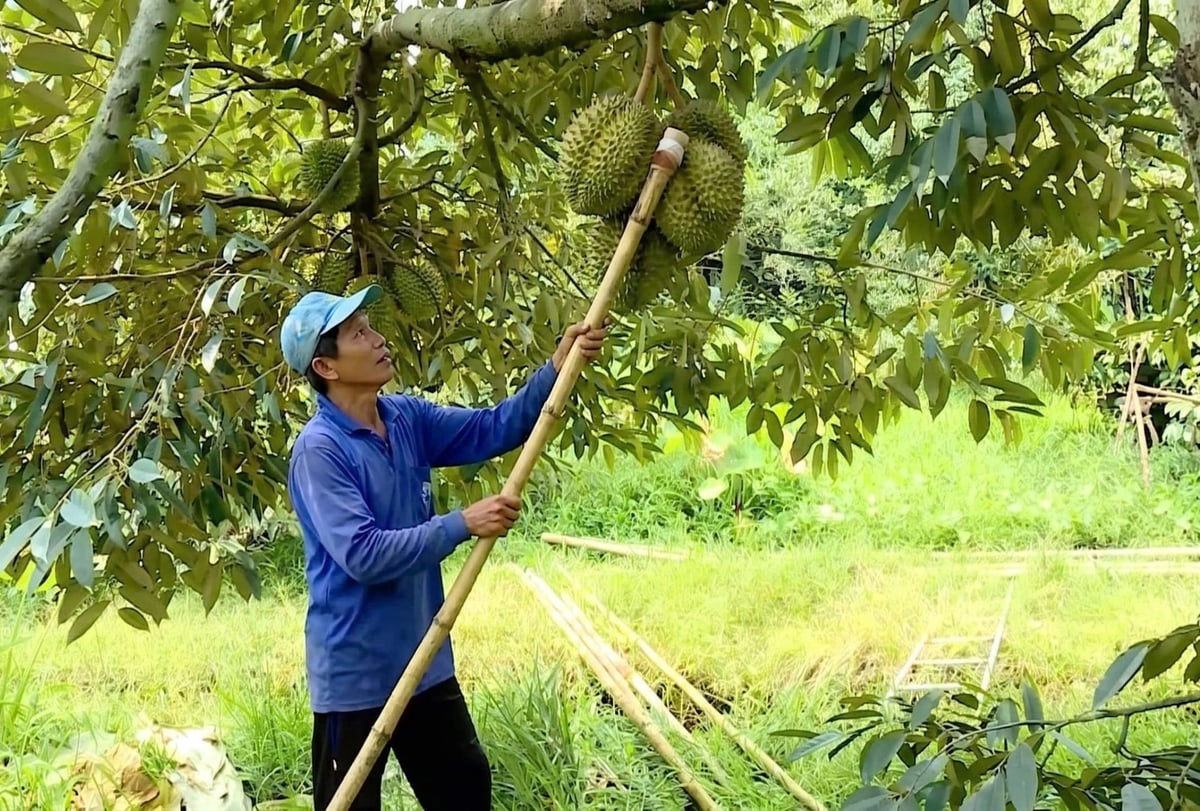
Farmers use support poles to prop up durian branches, preventing cracking or breakage under heavy fruit loads or strong winds. Photo: Ho Thao.
In addition to market pressures, climate change is putting growers into a challenging situation. In the downstream areas of the Tien River, durian is highly sensitive to salinity; once salinity exceeds 0.5‰, trees may suffer leaf burn, sap exudation, and decline. Facing dual pressures from import standards and saltwater intrusion, many growers have begun digitizing their production processes to adapt.
In Tra On commune, instead of manual irrigation, Mr. Nguyen Van Hung has invested in an automated drip irrigation and spraying system for his 1-ha durian orchard. Controlling the system via smartphone, Mr. Hung said that the technology enables him to proactively respond to saltwater intrusion.
“The water-saving irrigation system reduces water use by up to 70% compared to traditional flooding irrigation methods. This benefit is extremely critical as freshwater becomes increasingly scarce. Moreover, mist spraying ensures even coverage on leaf surfaces, helping improve pest and disease control and reduce the number of spray applications per crop, thereby lowering input costs,” Mr. Hung shared.
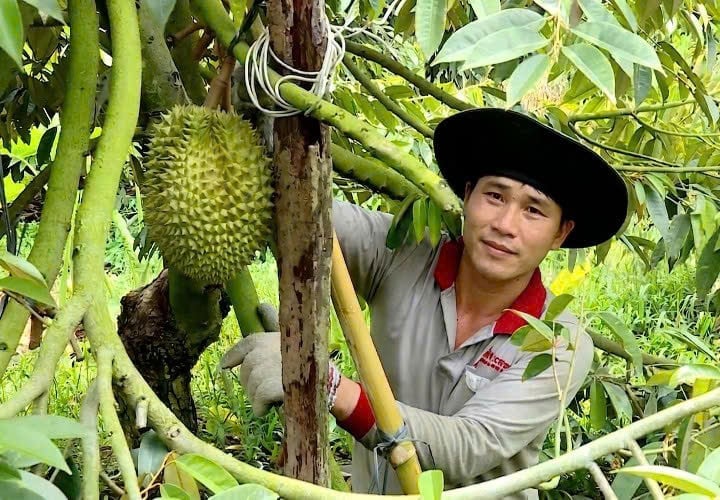
Durian growers inspect fruits in the orchard, gradually adopting safe cultivation processes to meet export requirements. Photo: Ho Thao.
However, the most significant change lies in record-keeping practices. To meet standards on planting area codes, Mr. Hung must update an electronic farming log daily. All fertilizers and pesticide products used must be on the approved list. According to Mr. Hung, while compliance is demanding at first, products with QR codes for traceability are purchased by enterprises at stable prices, eliminating the previous situation of market gluts.
The Vinh Long Department of Agriculture and Environment stated that to achieve the target of standardizing 2,500 ha of durian by 2030, the province will not expand the cultivation area massively regardless of soil conditions. Instead, the province will focus on reorganizing concentrated growing areas, prioritizing zones with closed irrigation systems capable of controlling salinity and storing freshwater. Technologies such as automated salinity monitoring sensors and QR code-based traceability systems are being widely deployed across key production areas.
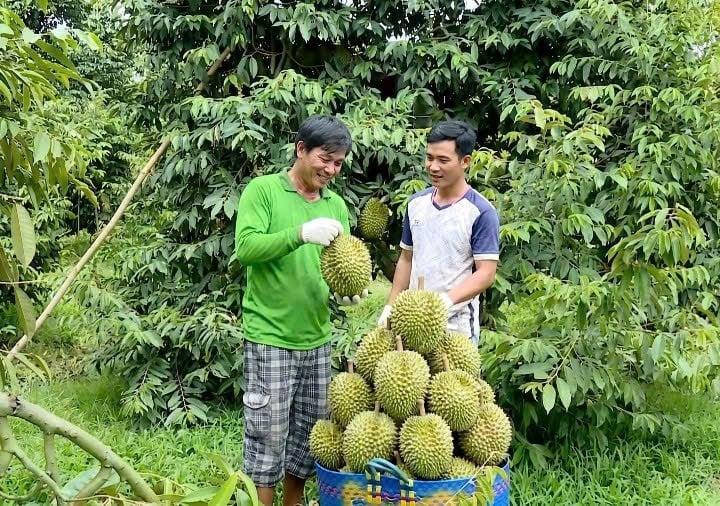
Farmers harvest durians in the orchard, selecting high-quality fruits for the market. Photo: Ho Thao.
Mr. Le Van Dung, Deputy Director of the Vinh Long Department of Agriculture and Environment, affirmed that each planting area code granted is not only a necessary condition for customs clearance but also Vinh Long farmers’ commitment to quality and responsibility to domestic and international consumers.
After just three years of official export to China, durian has risen to become a billion-dollar commodity in Viet Nam’s agricultural sector. In 2025, durian export turnover reached USD 3.86 billion, up more than 20% from the previous year and accounting for nearly half of the total export value of the fruit and vegetable sector. This marks an impressive milestone, affirming the growing importance of durian in the country’s agricultural export structure.
However, behind the overheated growth momentum lie a range of risks related to quality, traceability, and sustainability. This underscores the urgent need to reorient the durian sector in Viet Nam in general and in Vinh Long in particular toward standardizing growing areas, strengthening chain linkages, and improving product quality.
Agriculture News | Agri Products Price