

(VAN) Turkey offers strong potential for Vietnamese agricultural and food exports, provided businesses meet Halal standards and manage risks effectively.
On July 21, the Trade Promotion Agency under the Ministry of Industry and Trade held a seminar in Ha Noi titled “Opportunities and Challenges for Market Development in Turkish Market,” focusing on agricultural products, seafood, processed foods, and beverages.
Held in both in-person and online formats, the seminar attracted around 150 participants, including representatives of government agencies, the Viet Nam Trade Office in Turkey, trade promotion organizations, industry associations, businesses, cooperatives, and other stakeholders interested in the Turkish market.
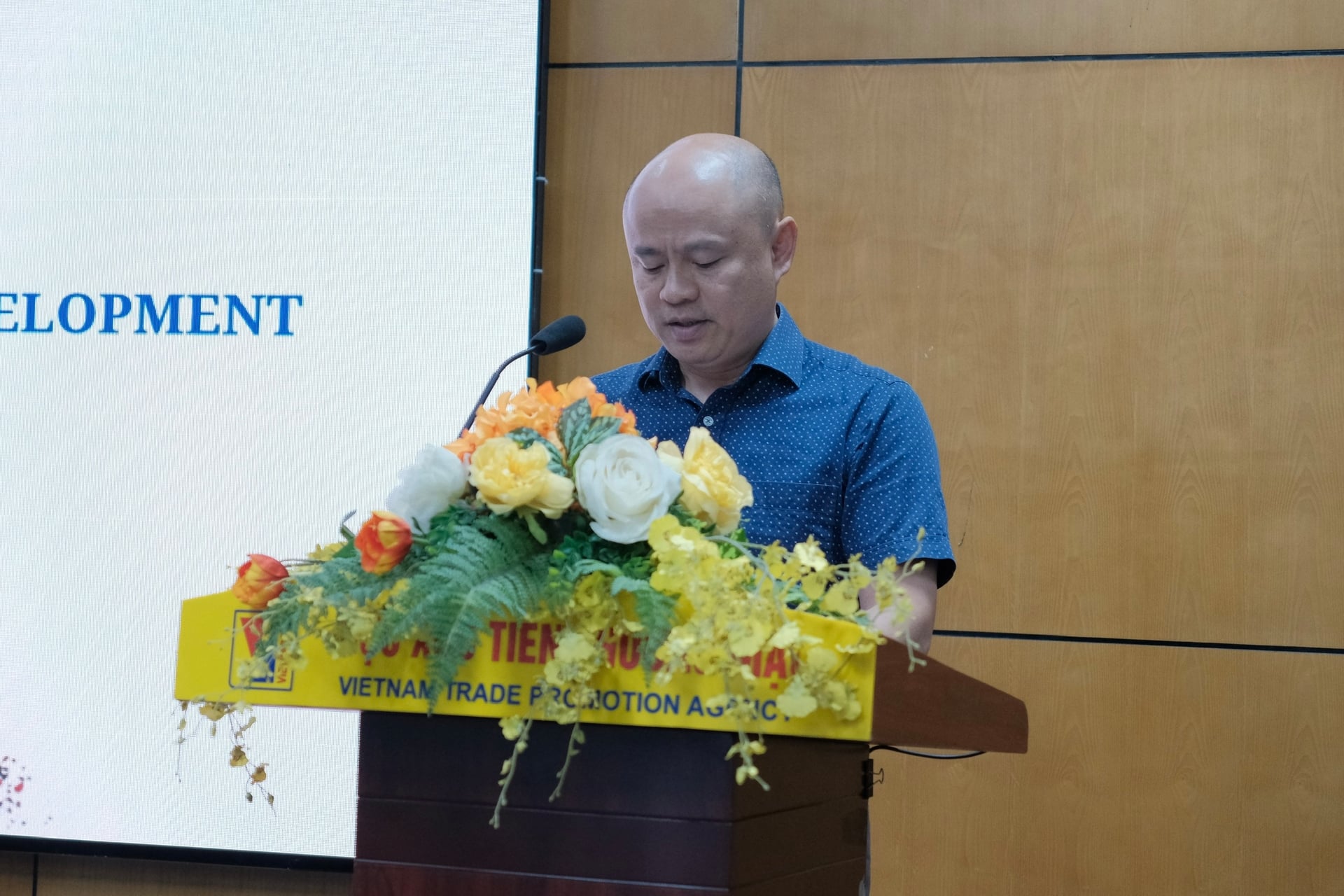
Ta Manh Cuong, Director of the Center for Trade and Investment Promotion Support under the Trade Promotion Agency, delivers the opening remarks at the seminar. Photo: Thanh Trang.
In his opening remarks, Ta Manh Cuong, Director of the Center for Trade and Investment Promotion Support under the Trade Promotion Agency, said Turkey is emerging as a strategic destination, serving as a gateway connecting Asia, Europe, and Africa.
In the first half of 2026, two-way trade between Viet Nam and Turkey reached USD 1.39 billion, with Viet Nam’s exports rising 32% year-on-year. According to Cuong, these figures highlight substantial opportunities for Vietnamese products, particularly agricultural products, food, and beverages.
A large market with rising cost pressures
Providing an overview of the market, Nguyen Viet Hang, Trade Counsellor and Head of the Viet Nam Trade Office in Turkey, said the country has a population of approximately 86.1 million and occupies a strategic location at the crossroads of Asia, Europe, and Africa.
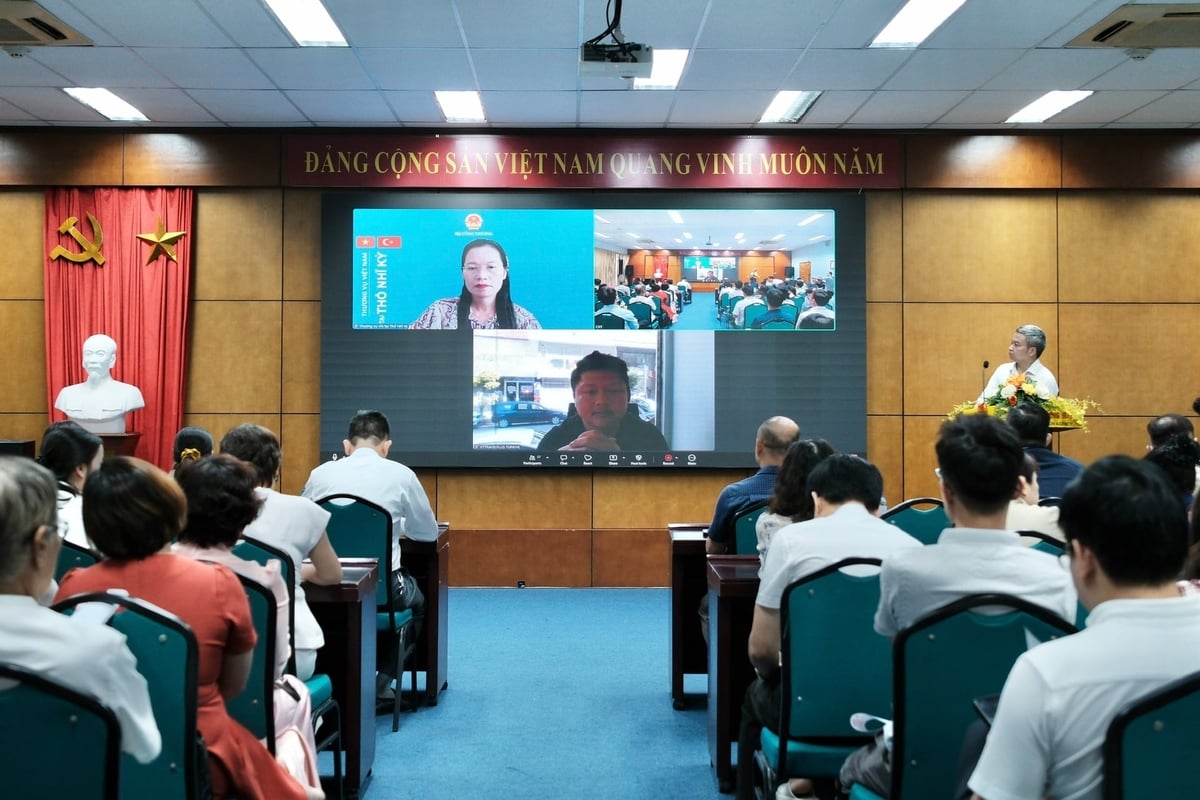
Nguyen Viet Hang, Trade Counsellor and Head of the Viet Nam Trade Office in Turkey, delivers her presentation online at the seminar. Photo: Thanh Trang.
In 2025, Turkey’s food and beverage imports reached approximately USD 26.3 billion, up 18.76% from the previous year. Five product categories, animal feed, vegetable oils, sugar and cocoa products, nuts, and coffee, tea, and spices, accounted for more than half of the country’s total food import value.
However, businesses operating in the Turkish market continue to face significant challenges, including high inflation, the depreciation of the Turkish lira, elevated borrowing costs, and longer payment collection periods. As a result, importers have become increasingly price-sensitive, with a preference for raw materials, semi-processed products, and goods that can be processed and packaged domestically.
Consumer preferences are also evolving, with growing demand for locally produced goods, convenience foods, natural products with minimal additives, and environmentally sustainable packaging.
For Viet Nam, cashew nuts currently account for around 76.1% of Turkey’s import market. However, this advantage is coming under pressure as Turkish companies increasingly import raw cashew nuts from Côte d’Ivoire for domestic processing. Meanwhile, Vietnamese products such as green coffee beans, rice, tea, and seafood still hold relatively modest market shares, presenting opportunities for further expansion if businesses target the right market segments.
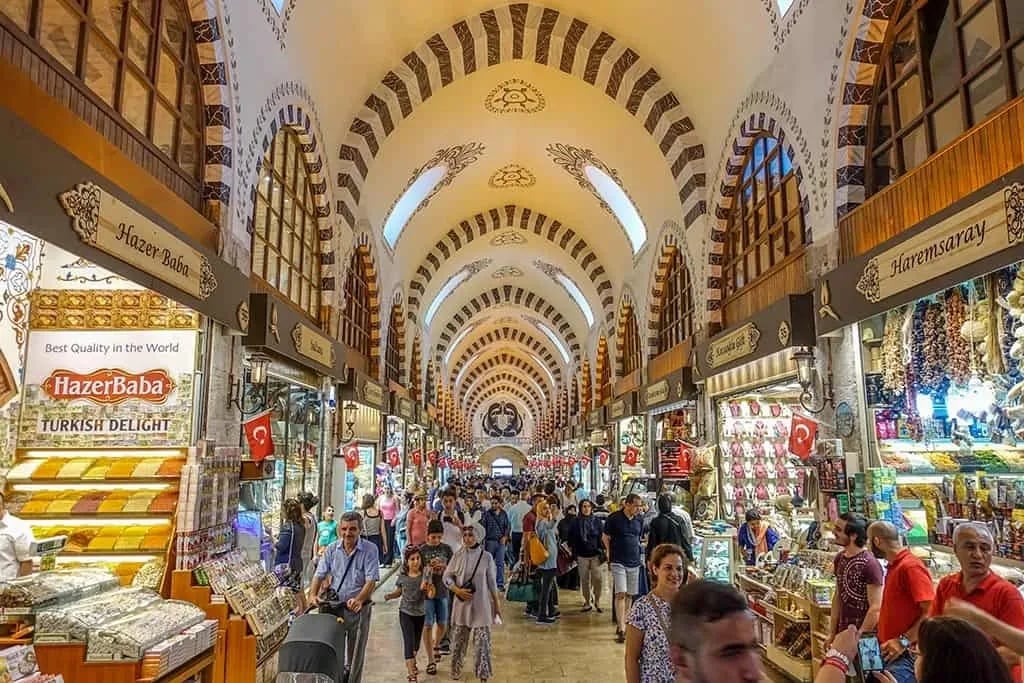
Turkey’s strategic geoeconomic position and its connectivity to Europe, the Middle East, and Central Asia are making it an increasingly promising market for Vietnamese businesses. Photo: Illustration.
Opportunities driven by complementary economies
According to Associate Professor Dinh Cong Hoang of the Viet Nam Academy of Social Sciences, the production structures of Viet Nam and Turkey are highly complementary. While Turkey has strengths in wheat, olive oil, hazelnuts, and temperate fruits, Viet Nam holds competitive advantages in coffee, pepper, cashew nuts, fragrant rice, spices, and tropical fruits.
The seafood sector also offers considerable growth potential. As Turkey aims to increase its seafood exports to USD 3 billion by 2028, demand for imported raw materials is expected to rise. Vietnamese products such as pangasius, shrimp, tuna, squid, and octopus could gain greater access to the market through retail chains, the HORECA (hotel, restaurant, and catering) sector, and e-commerce channels.
Sharing practical experience, Ba Thi Nguyet Thu, Director of Ha Noi Xanh Cooperative and CEO of HalalViet, said Turkey is a promising market, but businesses should not expect large orders immediately. To succeed, companies must be patient in building trust, understand local consumer culture, and fully comply with the requirements of the Halal market.
“Building a brand in the Halal market takes time. Businesses need confidence and long-term commitment – it is not a market that delivers immediate results,” Thu said.
She noted that companies should take a comprehensive approach, from selecting suitable products and identifying target market segments to obtaining Halal certification, preparing export documentation, developing multilingual packaging, finding reliable partners, and conducting pilot shipments. In this process, Halal certification is more than a regulatory requirement – it serves as a “passport” that builds credibility with importers.
Drawing on her experience at international trade fairs, Thu added that prominently displaying certifications at exhibition booths, providing product samples for buyers to experience firsthand, and investing in packaging in English or the local language can significantly improve businesses’ chances of attracting potential customers.
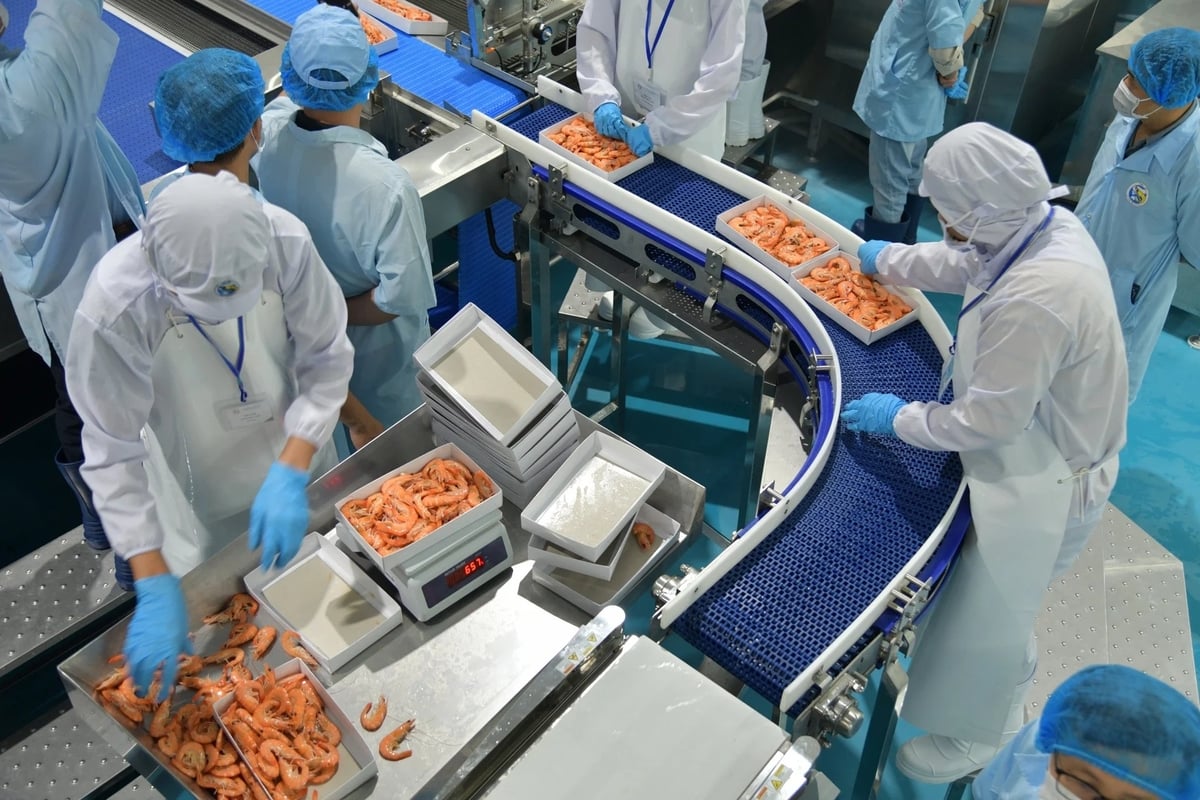
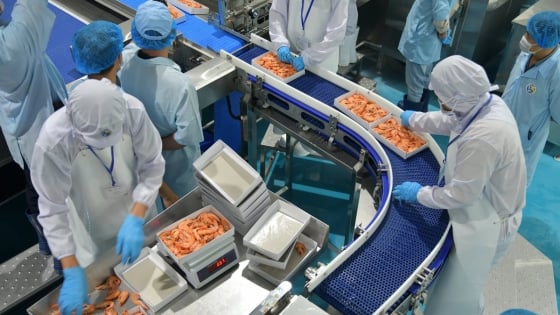
Vietnamese seafood still has significant export potential as Turkey targets seafood exports of USD 3 billion by 2028. Photo: Hong Tham.
Thu also noted that small and medium-sized enterprises (SMEs) and cooperatives have ample opportunities to enter the Turkish market by proactively forming partnerships, sharing resources, and building collaborative business ecosystems. However, to enhance their competitiveness, businesses need to make thorough preparations, including obtaining Halal certification, complying with the TROIS system for certain product categories, and meeting requirements on food safety, pesticide and antibiotic residue limits, labeling, and product traceability.
From a financial perspective, Vu Thi Thuy Linh, CFA, Director of FX Business Development at MSB Bank, pointed out that exporters typically face five major risks: counterparty risk, payment risk, exchange rate fluctuations, interest rate volatility, and shortages of working capital. She advised businesses to conduct thorough due diligence on buyers, select appropriate payment methods, draft robust contracts, and proactively use risk management tools such as forward contracts, foreign exchange swaps, payment insurance, and purchase order financing to stabilize revenue and protect profit margins.
In her closing remarks, Nguyen Thi Thu Thuy, Deputy Director of the Center for Trade and Investment Promotion Support, emphasized that the Trade Promotion Agency will continue supporting businesses by providing market intelligence, facilitating business matchmaking, and organizing trade promotion activities. These efforts aim to help Vietnamese products expand their presence in the Turkish market and other countries across the region.
Agriculture News | Agri Products Price