

(VAN) Grasping high purchasing power from China, Dong Nai is focusing on standardizing strategic fruit zones and boosting deep processing for export.
In 2025, Viet Nam’s fruit and vegetable export turnover to China reached USD 5.5 billion, accounting for 64% of the total fruit and vegetable export turnover. Consequently, Viet Nam rose to become the second-largest supplier of fruits and vegetables to this market with an over 22.5% market share. In the context of China’s fruit imports exceeding the USD 18.9 billion mark, agricultural trade is a major bright spot. Grasping this room for growth, Dong Nai, despite being an industrial city, is rising to affirm its top position nationwide in exporting industrial crops and fruit trees, Dong Nai Newspaper reported.
Currently, the total fruit tree area in Dong Nai reaches nearly 104,000 hectares. Instead of rampant development, the province is positioning and focusing on specialty crops with significant export advantages.
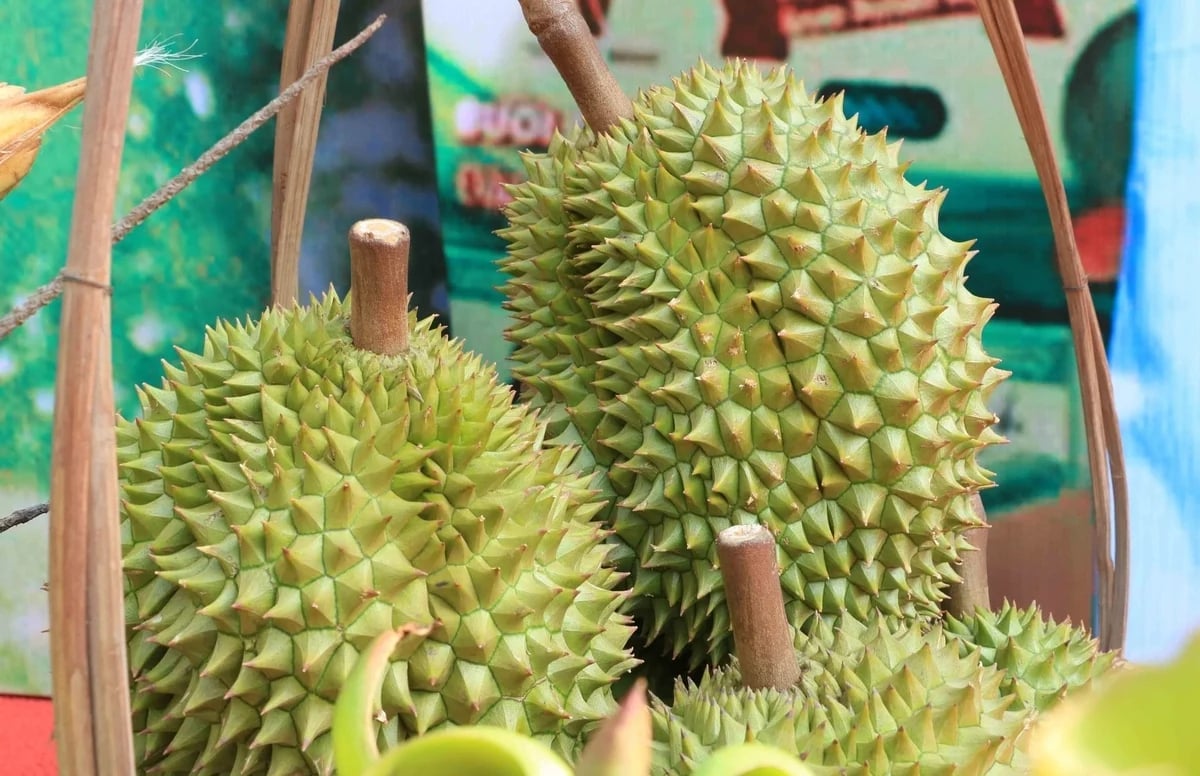
High-quality fresh durian – the ‘Star’ of Viet Nam’s agricultural exports to the Chinese market. Photo: Thanh Son.
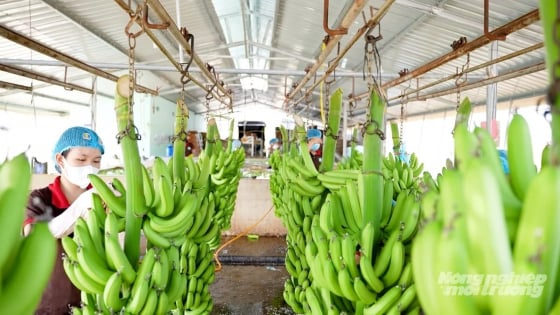
Durian is currently a top-tier fruit tree in terms of profit. Dong Nai is rapidly increasing the area of this crop with over 23,000 hectares and an output of nearly 250,000 tons. Alongside this, Dong Nai prides itself on being the locality with the largest tissue-culture banana planting area in the country, with about 21,000 hectares and an output of over 900,000 tons/year.
Besides durian and bananas, pomelos and mangoes are also identified as key crops. With nearly 11,000 hectares of pomelos (an output of nearly 163,000 tons/year), this is one of the large-scale pomelo production areas in the Southern region. Mango trees bring high economic efficiency, with a total area of nearly 12,000 hectares and many specialty varieties such as Hoa Loc sand mango, Australian mango variety, and Taiwanese mango variety.
To conquer the billion-population market, enterprises, cooperatives, and farmers are increasingly concerned with standardizing planting areas towards large-scale commodity production, and standardizing packaging facilities and traceability.
For banana trees alone, the province has so far established 54 planting area codes covering nearly 7,300 hectares and 37 export packaging facility codes. Despite rising input costs and competitive pressure, many enterprises still boldly invest in expanding their scale because Vietnamese fruits are increasingly highly evaluated for quality.
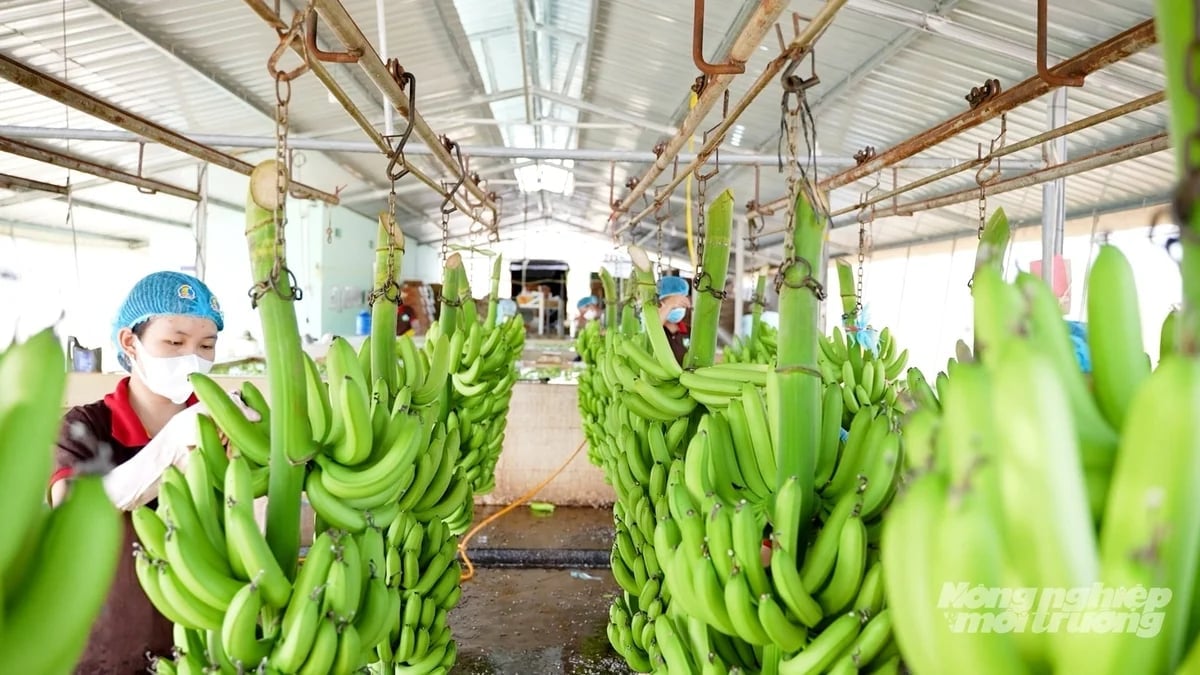
Dong Nai is actively standardizing specialized fruit planting areas towards large-scale production to meet export standards. Photo: Minh Sang.
To build a sustainable supply chain, apart from fresh fruits, Dong Nai also has the advantage of attracting many deep processing enterprises for agricultural products. Mr. Dinh Cao Khue, Vice Chairman of the Viet Nam Fruit and Vegetable Association, commented: In the coming years, the largest room for growth belongs to deep-processed products. Chinese enterprises have a huge demand for importing concentrated fruit juices, juices, frozen fruits and vegetables, and canned goods. This is a market segment with high added value and stable consumption year-round as it is less dependent on seasons.
Agriculture News | Agri Products Price