

(VAN) Following a period of rapid boom, durian industry is entering a ‘sifting’ phase as risks escalate, necessitating a strategic restructuring to ensure more stable and sustainable development.
According to entrepreneur Ngo Tuong Vy, CEO of Chanh Thu Fruit Import-Export Group Joint Stock Company, opportunities remain substantial as global demand for durian, particularly in Asia, continues to grow rapidly and expand across multiple segments, from fresh consumption to processing.
Viet Nam holds advantages in natural conditions, enabling extended harvest seasons and flexible supply. At the same time, the legal framework supporting official export channels has helped the sector develop more transparently.
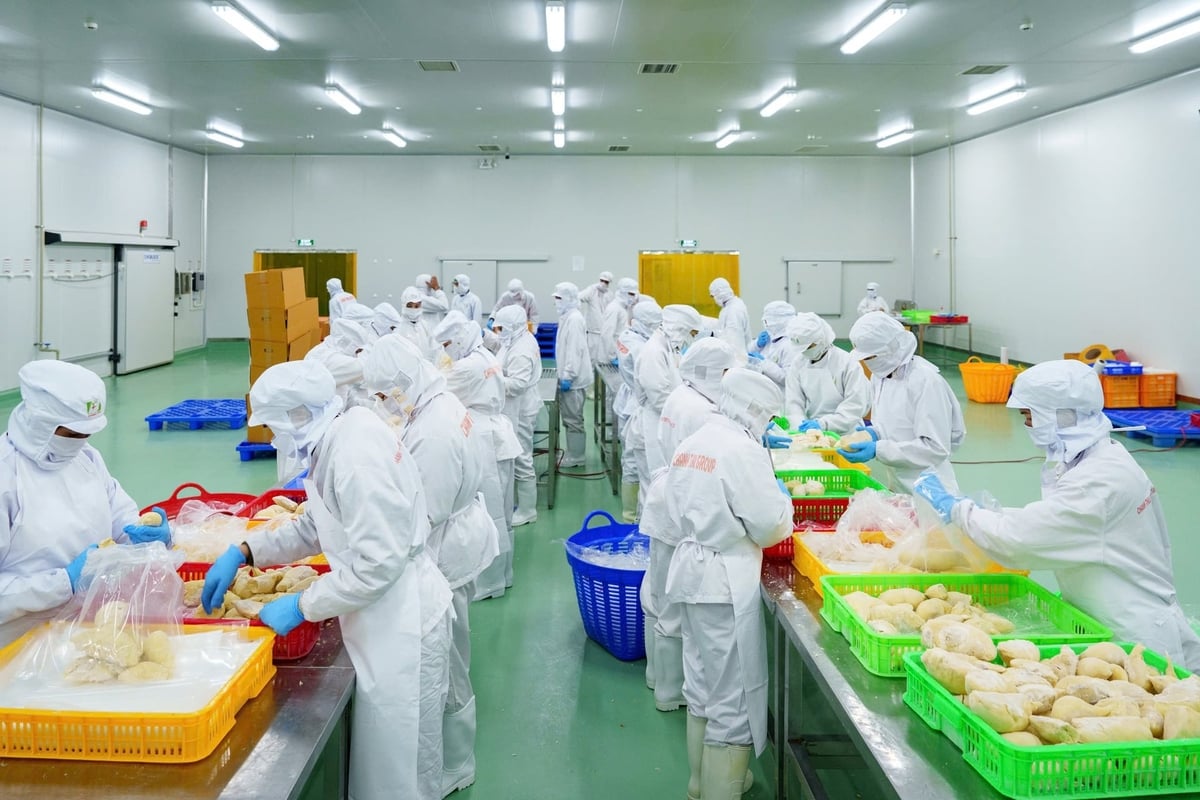
Opportunities remain substantial as global demand for durian, particularly in Asia, continues to grow rapidly and expand across multiple segments, from fresh consumption to processing. Photo: Minh Dam.
Notably, there remains significant room for growth in processed products as consumer trends shift toward convenience and higher value-added offerings.
However, these opportunities are not evenly distributed. As market standards tighten, only enterprises and growing areas that meet the requirements will be able to maintain their positions.
Risks are emerging along three main dimensions.
First, the rapid expansion of cultivation areas. Unplanned and spontaneous expansion risks creating supply-demand imbalances and putting pressure on quality.
Second, the management of planting area codes and packing facilities. Without strict oversight, improper use could affect the entire sector, not just individual businesses.
Third, inconsistent quality due to weak production linkages, making it difficult to control farming processes and ensure traceability.

“Rapid growth, if not properly controlled, will no longer be an advantage but instead become a bottleneck for the sector itself,” said entrepreneur Ngo Tuong Vy, CEO of Chanh Thu Company Limited. Photo: Minh Dam.
In addition, international competitive pressure is intensifying, not only in terms of price but also in quality and consistency.
In export activities, enterprises also face a range of operational challenges. Technical standards change frequently, requiring synchronized updates across the entire value chain. Logistics remain unstable and costly, directly affecting product quality.
Notably, the greatest challenge lies in maintaining consistency across raw material areas, especially with the participation of numerous farmers with varying levels of compliance.
According to Chanh Thu CEO, one of the major bottlenecks at present is the lack of a national-scale agricultural data system. This is a critical foundation for both regulators and enterprises to accurately grasp the status of growing areas, thereby informing planning, development orientation, and policymaking in the short, medium, and long term, as well as serving as a basis for recommendations and sectoral infrastructure investment.
From a policy perspective, businesses suggest a more appropriate approach is needed in the development and implementation of regulations related to traceability data management, cultivation area planning, as well as payment and taxation requirements in the agricultural sector.
Policies should be designed based on production realities, ensuring feasibility in a context where agriculture remains fragmented and small-scale.
Implementation should follow a suitable roadmap, balancing market standardization requirements with the capacity of enterprises and producers, in order to avoid disruptions to the supply chain.
At the same time, management should be combined with support for transformation, with the State playing a facilitating role, providing guidance and accompanying enterprises and farmers in gradually improving their compliance capacity.
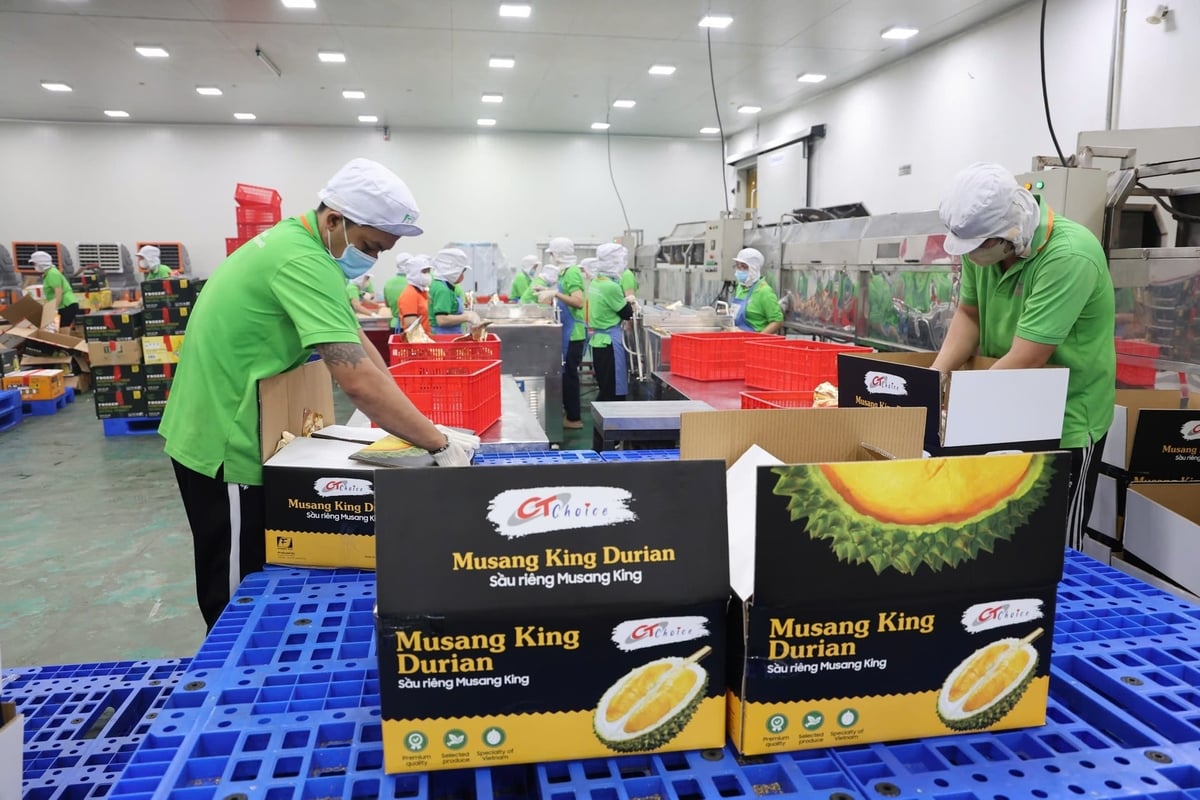
Investment in logistics, cold storage, and deep processing remains crucial to enhancing the competitiveness of the durian sector. Photo: Minh Dam.
In the initial phase, the application of administrative measures should be carefully considered, avoiding rigid approaches that could increase compliance costs and undermine development incentives.
This approach aims to ensure a dual objective: establishing market discipline while maintaining and promoting business growth, thereby enabling the sector to operate efficiently and sustainably in the long term.
In this context, Chanh Thu expects that over the next 3–5 years it can work alongside local authorities and farmers to gradually build an industry-wide data system. This would involve strengthening support for cooperatives, cooperative groups, and farmers in registering planting area codes; organizing training on new regulations; and committing to offtake or market support, helping farmers feel secure in production while progressively improving compliance capacity.
At the same time, investment in logistics, cold storage, and deep processing remains a key factor in enhancing competitiveness.
The next phase will not simply be about growth, but about consolidation. Those unable to upgrade in time will gradually see their participation in the market diminished.
As risks increase, what will be the decisive factor for businesses and the sector to remain resilient?
Following a period of rapid expansion, the durian industry is now revealing multiple bottlenecks, including uncontrolled area expansion, inconsistent quality, and weak management of planting area codes. Meanwhile, tightening market standards mean that risks are no longer isolated but can spread across the entire sector. The challenge is no longer just maintaining output, but ensuring quality control, data transparency, and restructuring the value chain toward sustainability.
Agriculture News | Agri Products Price