



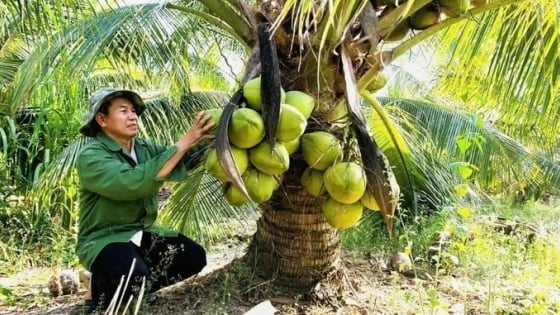
(VAN) Exports are rising sharply thanks to demand. However, booming orders are causing domestic prices to fluctuate, creating opportunities and challenges.
Vietnamese coconuts join the “billion-dollar club”
Viet Nam’s coconut industry is experiencing its strongest growth period in many years. According to data from the Viet Nam Customs Department, coconut export turnover in 2025 exceeded $ 533 million, up more than 36% compared to the previous year. Including processed products such as canned coconut water, coconut oil, desiccated coconut, and coconut-based cosmetics, the industry’s total value reached approximately $1.15 billion.
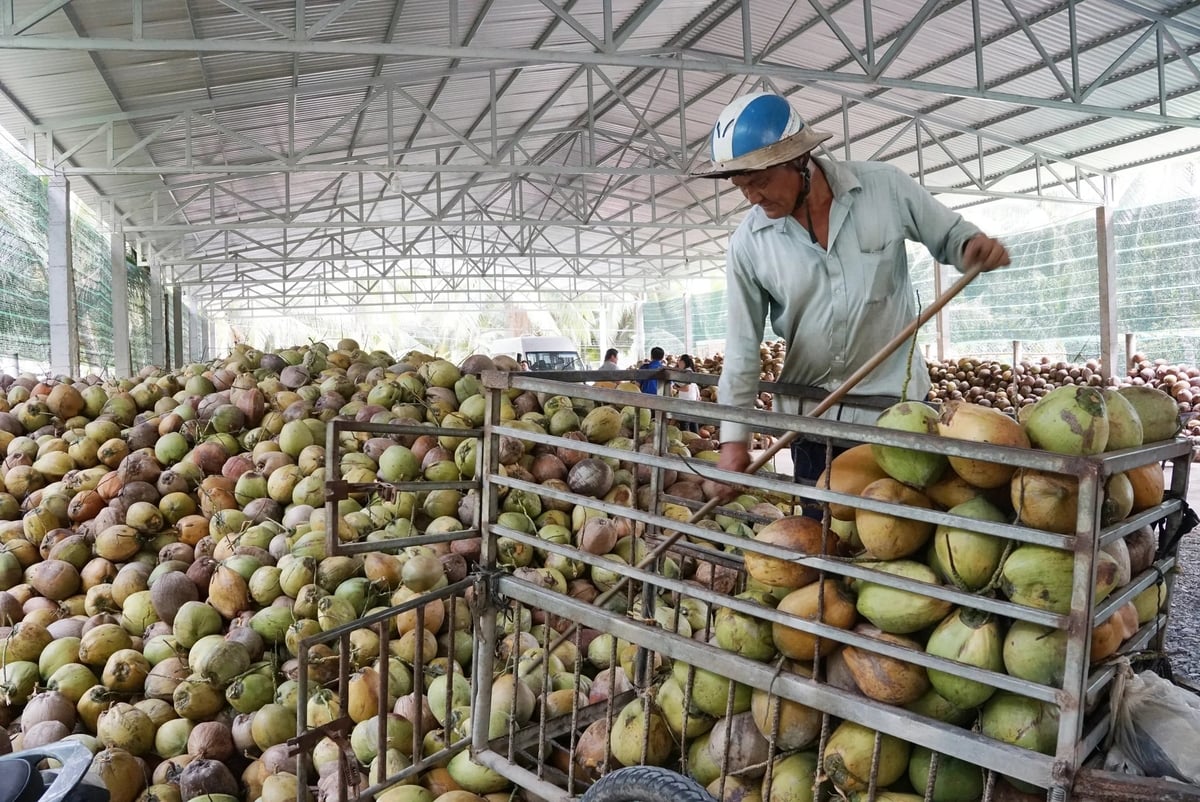
After remaining at low levels for a long period, fresh coconut prices have now doubled or even tripled. Photo: VAN.
This result has made Viet Nam the world’s third-largest exporter of coconuts and coconut products, behind only Philippines and Indonesia. This marks significant progress compared to previous years, when coconuts were mainly exported as raw materials with low added value.
Entering the first quarter of 2026, the growth trend has continued. While Viet Nam’s fruit and vegetable exports rose by more than 31%, coconuts remained one of the key contributors. Fresh coconut exports alone generated around $ 65 million, up 26% year-on-year, indicating that global demand remains strong.
This breakthrough comes not only from market demand but also from the industry’s restructuring. The standardization of raw material areas, product diversification, and quality improvements have enabled Vietnamese coconuts to meet increasingly strict import standards.
The United States and China drive demand, expanding growth potential
In the export market landscape, the United States and China have emerged as the two most important growth drivers.
The U.S. currently accounts for nearly 26% of Viet Nam’s total coconut export turnover. Demand there has surged thanks to growing consumer preferences for healthy, low-sugar, and naturally sourced products. Products such as canned coconut water, organic coconut water, and coconut-based beverages are becoming increasingly popular in retail systems and the beverage industry.
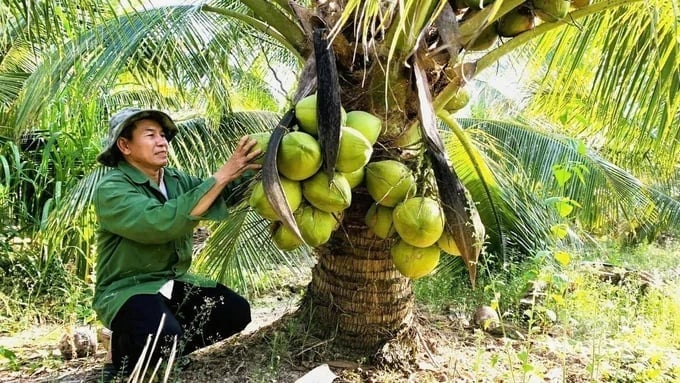
Coconuts from Ben Tre are facing many opportunities to expand export markets. Photo: Nguyen Khang/VAN.
Many domestic businesses reported that orders from U.S. supermarket chains and beverage manufacturers continue to rise in 2026, especially in the premium segment. This shows that the growth potential for Vietnamese coconuts in this market remains substantial.
At the same time, China has become a new “growth engine” after officially opening its market to Vietnamese fresh coconuts through official trade channels starting in August 2024. China consumes around 4 billion coconuts annually, including approximately 2.6 billion fresh coconuts.
With advantages such as proximity, low logistics costs, and fast transit times, Vietnamese coconuts have rapidly gained market share in the billion-consumer market. Many businesses believe that demand from China will continue to increase strongly in the coming years, especially as import standards become more standardized.
In Ben Tre, Viet Nam’s “coconut capital”, local authorities are proactively preparing for official export opportunities. The province currently has more than 78,000 hectares of coconut plantations, with green drinking coconuts accounting for over 20% of the area. Ben Tre has established six concentrated production zones, five of which meet organic standards.
The province currently has 32 cooperative groups and 28 cooperatives participating in supply-chain partnerships with businesses, creating an important foundation for meeting traceability and product quality requirements. Organic coconut cultivation has reached nearly 17,846 hectares, accounting for around 22.9% of the total area, reflecting the industry’s push toward sustainable production.
Domestic prices surge, bringing both opportunities and challenges
While exports are growing strongly, the domestic market is also experiencing significant fluctuations. Fresh coconut prices, after remaining low for a long period, have risen sharply during the first months of 2026.
In major raw material regions such as Vinh Long, farm-gate fresh coconut prices now range from VND 80,000-100,000 per dozen (12 coconuts), and at times have reached VND 110,000-120,000 per dozen. Compared to the beginning of the year, prices have doubled or tripled.
The price surge has quickly spread to retail markets. In Ho Chi Minh City, fresh coconut prices commonly range from VND 15,000-20,000 per fruit, up by VND 3,000-5,000 compared to earlier levels. Demand has risen sharply during the hot season and holiday periods, with purchasing volumes sometimes tripling normal levels.
The price increase is driven not only by domestic demand but also by export growth. As international orders surge, part of the supply is prioritized for overseas markets, reducing domestic availability. In addition, weather conditions such as drought have affected yields, further increasing pressure on prices.
Higher coconut prices have brought clear benefits to farmers. With average incomes of around VND 100-150 million per hectare annually, many farmers have started expanding coconut cultivation areas and switching from less efficient crops. Confidence in the coconut industry is gradually being restored.
However, experts warn that rapid growth also carries risks. Sharp price fluctuations may affect market stability, while linkages between businesses and farmers remain limited. In addition, meeting international standards for quality and sustainable production remains a major challenge for many localities.
In the long term, to remain competitive, the coconut industry needs to continue developing standardized raw-material areas, expanding organic production, and investing in deep processing. Currently, more than 60% of dried coconut output is processed into value-added products, including coconut milk, coconut oil, coconut milk powder, and activated carbon. This will serve as an important foundation for Viet Nam’s coconut industry to increase value, reduce dependence on raw exports, and achieve sustainable growth amid an increasingly volatile global market.
$ 1 = VND 26,387 – Source: Vietcombank.
Agriculture News | Agri Products Price