

(VAN) Durian prices have dropped sharply, shrinking farmers’ profits. However, growers who partner with enterprises are maintaining stable selling prices.
These days, durian harvesting is bustling in many localities of Can Tho. However, contrary to farmers’ expectations, durian prices are falling to low levels, leaving many growers in a situation of “high yields but little joy.”
In Truong Long commune, many durian orchards are producing good yields, averaging around 17-18 tons/ha, but purchase prices are not matching expectations. Traders are currently buying durian at only VND 32,000-35,000/kg, with some areas dropping to just VND 28,000-32,000/kg, significantly lower than the same period last year.
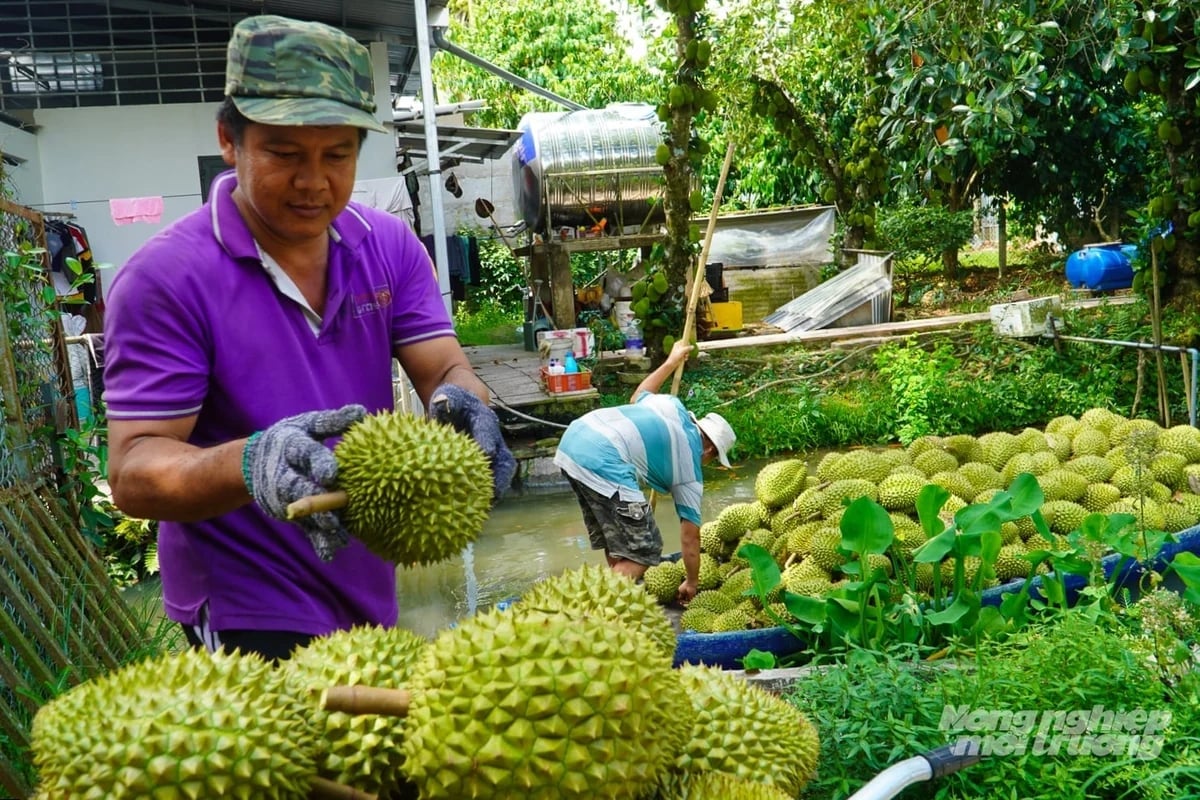
After the administrative merger, Can Tho City has more than 100,300 hectares of fruit trees. Durian ranks second in cultivation area after jackfruit, with nearly 14,500 hectares. Photo: Kim Anh.
Ms. Nguyen Thi Nga’s family in Truong Khuong A hamlet (Truong Long commune) owns 200 Ri6 durian trees that have produced stable yields for the past five years. This season, traders already made the “first cut” harvest (selecting the oldest and most mature fruits first), collecting 18 tons of durian. However, most purchases were made through bulk buying at VND 32,000/kg. To recover some profit, she collects fallen fruits or those rejected by traders and sells them directly to passing customers at VND 25,000/kg.
Not far away, the 110 durian trees owned by Mr. Tran Thong Lanh’s family are expected to be harvested in about half a month, but traders are offering only around VND 28,000-32,000/kg.
According to Mr. Lanh, at such prices, profits are extremely low and mainly only compensate for months of orchard care. For households that have to hire labor, the risk of losses is very high. He added that one reason profits are shrinking is the “bulk sweep” purchasing method used by traders. Although fruits are actually classified by quality, with Grade A durian reaching VND 50,000/kg and Grade B around VND 28,000-33,000/kg at major warehouses, most products purchased directly from orchards are lumped together as Grade B.
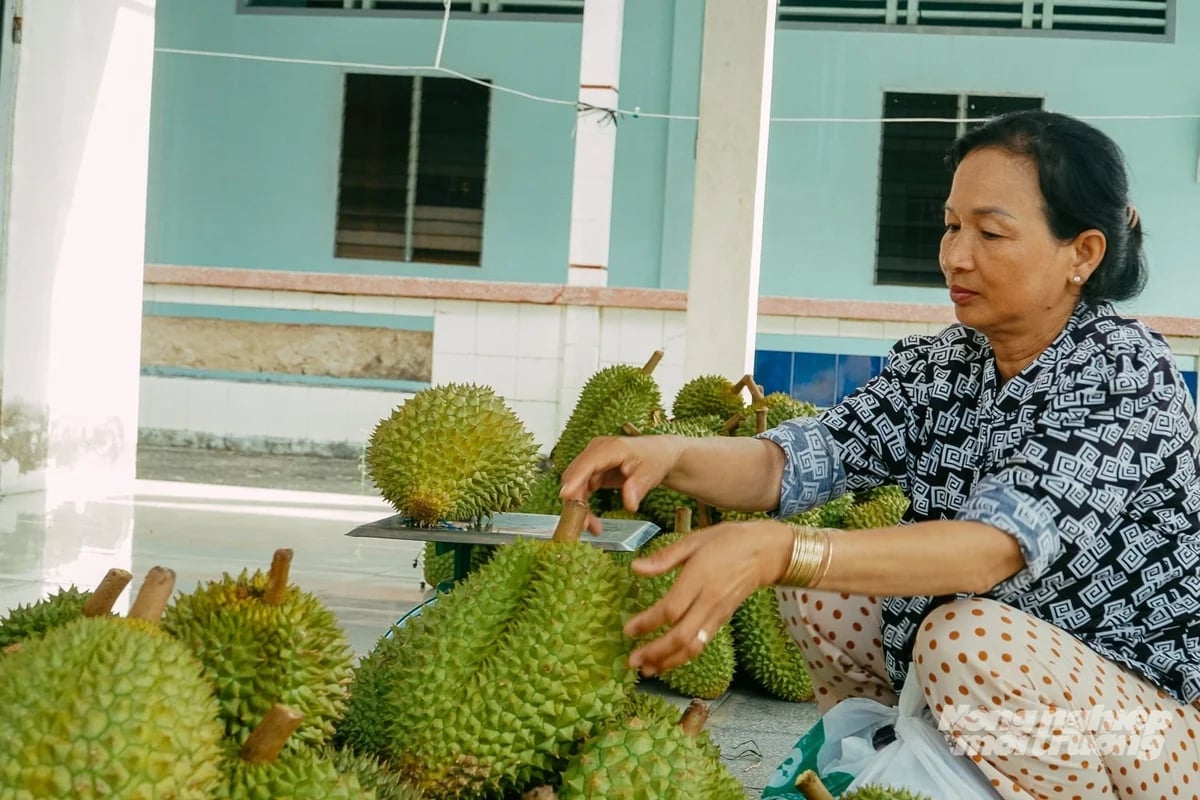
Many farmers are retail-selling rejected durians at low prices directly in their orchards to earn additional income. Photo: Kim Anh.
Besides falling selling prices, input costs this season have also increased sharply, creating heavy pressure on growers. Mr. Nguyen Van Viet in Truong Tay hamlet (Truong Thanh commune) said his orchard is expected to produce 6-7 tons this season. However, unstable weather reduced flowering rates, requiring repeated treatment, increasing costs, and prolonging harvest time.
While production costs last year were only around VND 15,000/kg, they have now risen to approximately VND 25,000-30,000/kg due to higher fertilizer, pesticide, and labor costs. Meanwhile, durian prices are only around VND 30,000-32,000/kg, leaving farmers with minimal profits or even losses.
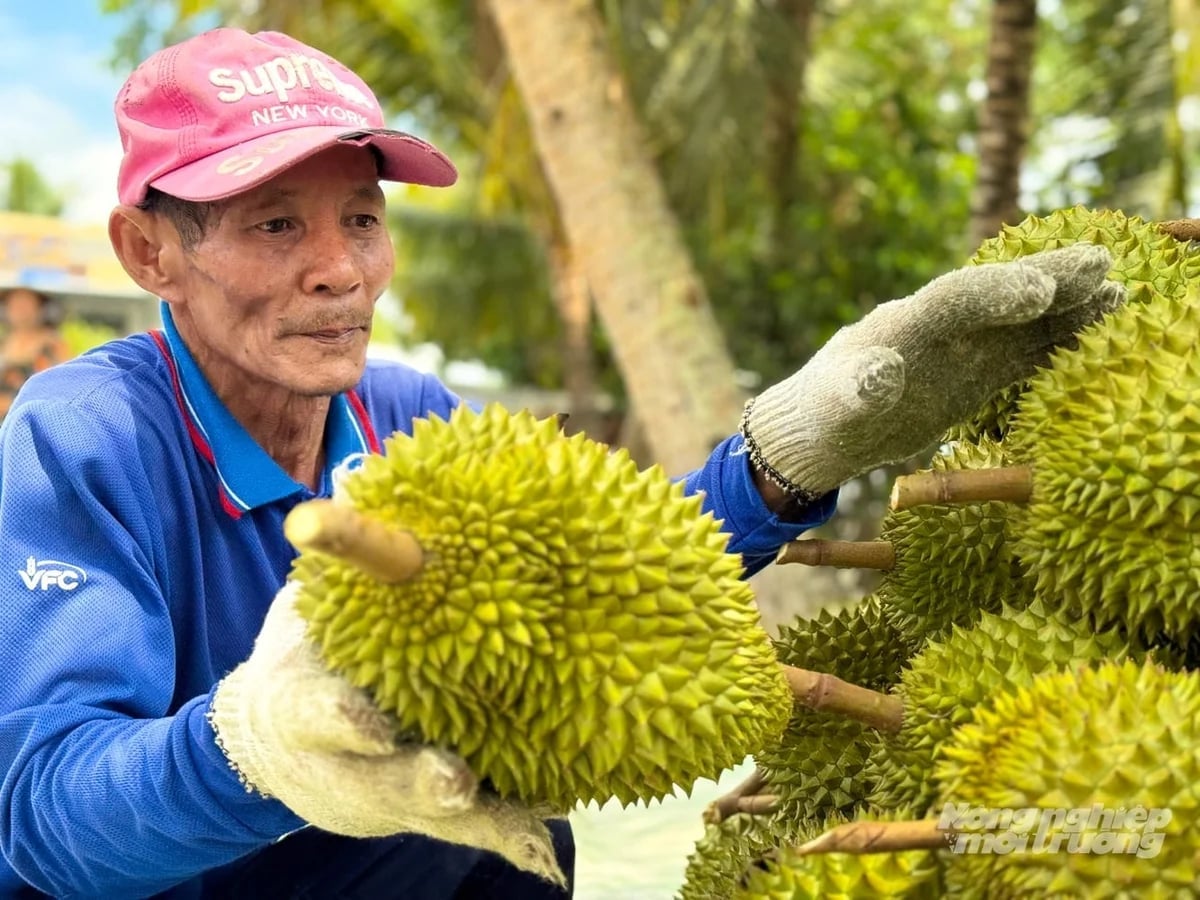
Durian prices at orchards currently range from VND 28,000-33,000/kg. Photo: Kim Anh.
Similarly, Mr. Nguyen Van Tai in Truong Thanh commune said durian prices last year reached as high as VND 51,000/kg, but now stand at only around VND 35,000/kg. Notably, many farmers are facing a paradox: despite proactively inducing early flowering to catch higher market prices, they still ended up facing sharp price declines. The reason is believed to be a surge in supply coinciding with harvest seasons in other localities and additional foreign supply, causing market congestion.
However, farmers participating in cooperatives or linked with purchasing enterprises are in a somewhat more comfortable situation. Mr. Tran Van Chien, Director of the Truong Khuong A Fruit Orchard Cooperative (Truong Long commune), said the cooperative currently has more than 20 households linked with enterprises, with total output exceeding 200 tons.
Thanks to pre-signed purchase contracts, durian prices remain stable at around VND 35,000–43,000/kg, helping farmers avoid price suppression.
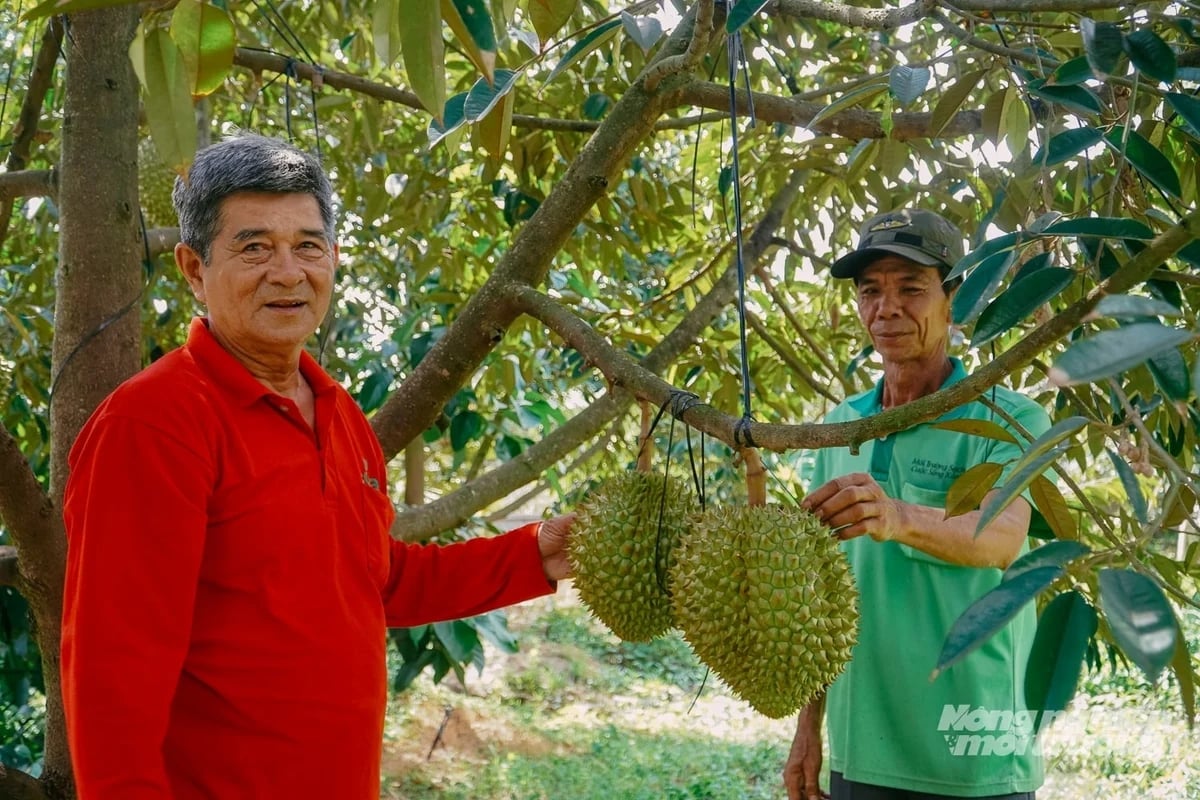
Thanks to enterprise linkages, durian prices at orchards belonging to the Truong Khuong A Fruit Orchard Cooperative remain high and stable. Photo: Kim Anh.
In addition, members are guided through standardized production processes to improve quality and reduce costs. About 15 days before harvest, the cooperative collects samples to test for pesticide residues and heavy metals such as cadmium to ensure safety standards.
During production, experts from Can Tho University also support the cooperative by guiding farmers on identifying input materials that may leave heavy metal residues, such as improving drainage systems, using organic fertilizers, and strictly controlling agricultural inputs. This allows orchard owners to intervene and adjust production methods promptly.
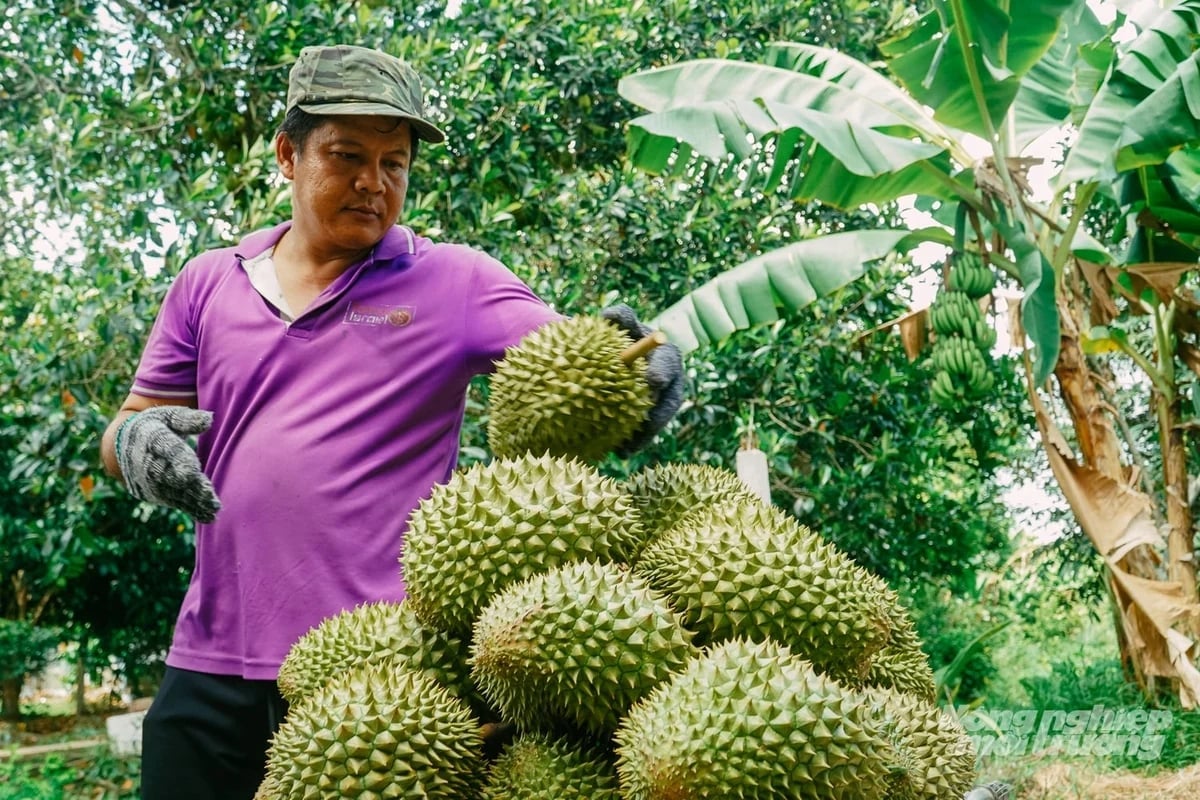
Despite carefully planning off-season flowering to capture better market prices, many farmers remain disappointed by the sharp decline in durian prices. Photo: Kim Anh.
Thanks to effective process management, production costs for members of the Truong Khuong A Fruit Orchard Cooperative range from only VND 17,000-20,000/kg, lower than the general average among farmers in Truong Long commune. This helps them remain profitable despite the sharp drop in selling prices.
According to Mr. Chien, the cooperative is recalculating solutions for off-season flowering to avoid concentrating output at the same time as other regions, thereby reducing price pressure.
This reality highlights the urgent need for farmers to change their production mindset, from focusing on product quality and standards, controlling inputs, to participating in linkage chains, so they can proactively manage durian prices and maintain profits amid market fluctuations.
$ 1 = VND 26,368 – Source: Vietcombank.
Agriculture News | Agri Products Price