

(VAN) After many years of agricultural restructuring, Gia Lai is gradually affirming its role as a major agricultural commodity production region domestically.
The People’s Committee of Gia Lai has issued a Crop Development Plan for the 2026–2030 period, with an orientation toward 2035 across the province. The plan is expected to create momentum for the agricultural sector to develop in a modern, green, and sustainable direction.
Building concentrated raw material zones
In recent years, Gia Lai’s crop cultivation sector has maintained stable growth, gradually shifting from small-scale production to concentrated commodity production linked with processing and exports. With nearly 977,000 hectares of agricultural land, most of it fertile basalt red soil, the province has developed many specialized cultivation areas for key crops such as coffee, pepper, rubber, durian, bananas, and passion fruit.
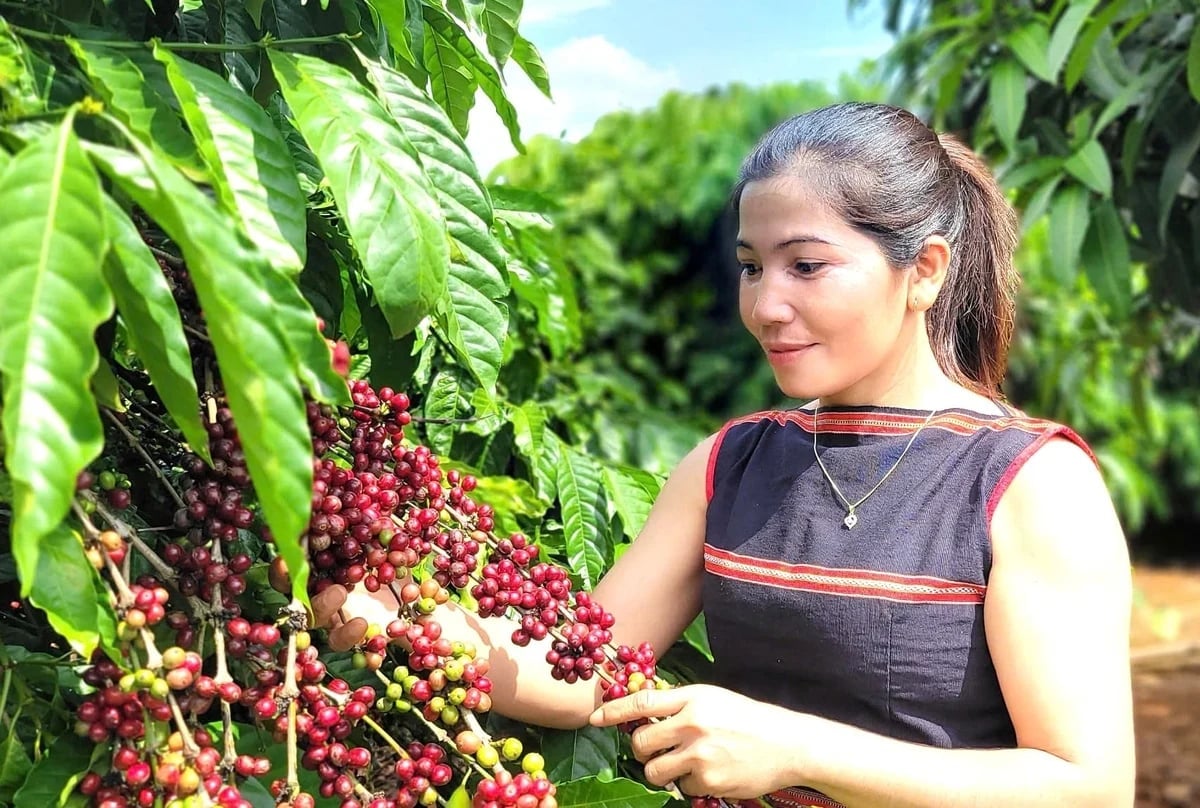
Coffee is Gia Lai province’s key crop, covering more than 109,000 hectares. Photo: Tuan Anh.
During the 2021-2025 period, the province established nine raw material zones for key crops while maintaining and expanding 217 production-linked supply chains associated with agricultural product consumption. Many large enterprises have engaged in production linkages, invested in pre- and post-processing, and expanded export markets, creating momentum for sustainable agricultural development.
Several agricultural products from Gia Lai have gradually made their mark on international markets. Vietnam’s first batch of passion fruit exported to European Union countries under the EVFTA originated from Gia Lai. LOPANG BANANA products are now distributed in 81 supermarkets in South Korea, while coffee, pepper, and durian have entered demanding markets such as the EU, the United States, Japan, and South Korea.
Mr. Tran Xuan Khai, Director of Gia Lai’s Crop Production and Plant Protection Sub-Department, said the province continues to maintain large cultivation areas for major crops, including nearly 109,000 hectares of coffee, over 86,000 hectares of rubber, more than 83,000 hectares of cassava, and nearly 52,000 hectares of sugarcane. Meanwhile, fruit crops such as durian, bananas, and passion fruit are expanding rapidly, creating stable raw material supplies for processing and exports.
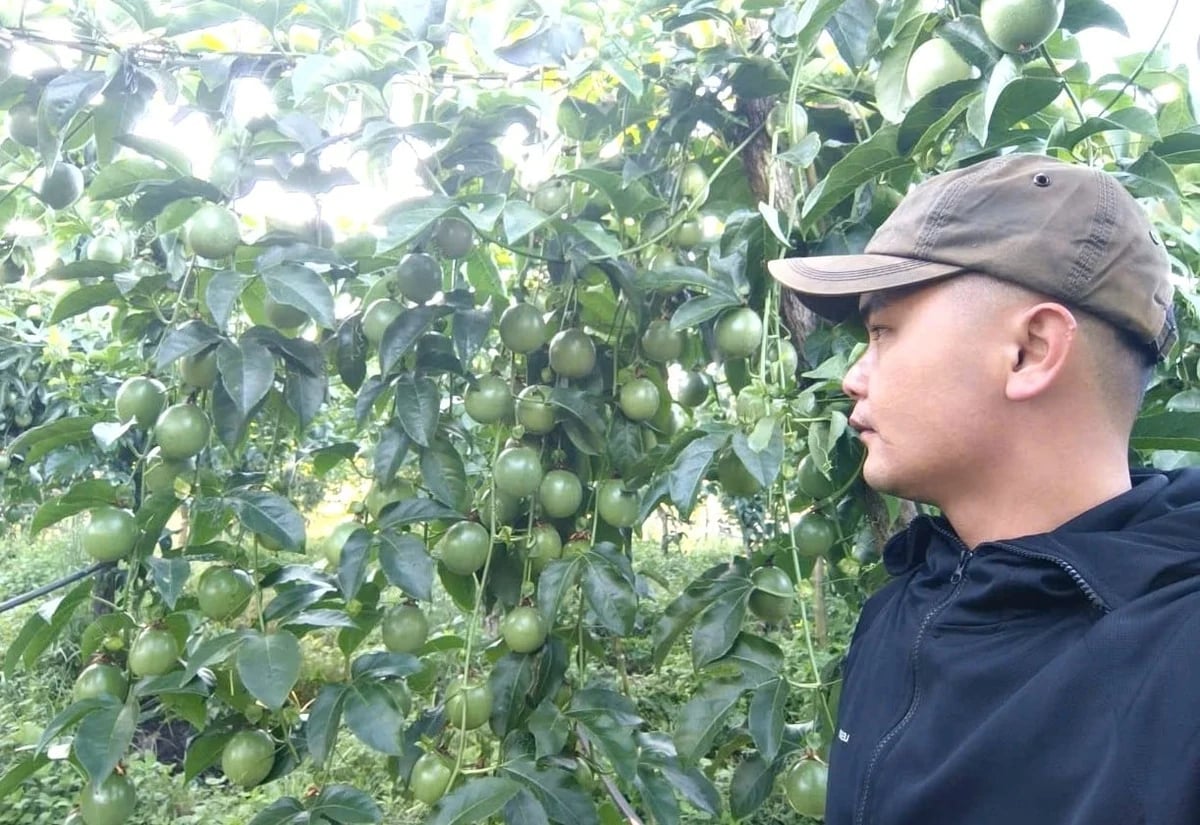
Passion fruit cultivation areas continue to expand. Photo: Tuan Anh.
At the same time, the issuance of growing area codes and traceability systems is being accelerated. Many durian, banana, and passion fruit growing areas have already received official codes for formal export channels, helping improve the competitiveness of Gia Lai’s agricultural products in international markets.
However, according to Mr. Khai, the province’s crop cultivation sector still faces significant challenges, including fragmented production, insufficiently sustainable supply-chain linkages, and low rates of deep processing. Specifically, around 60% of coffee is still exported as raw beans, while pepper is mainly exported in whole-grain form, resulting in added value that does not fully match the province’s potential.
Toward modern, high-value agriculture
By 2030, Gia Lai aims to develop its crop cultivation sector in a modern, green, and high-value direction. The province targets average annual growth in crop production value of 2.2–2.5%, while value-added growth in crop-processing industries is expected to exceed 10% per year. Total production value for the sector is projected to surpass VND 40.2 trillion.
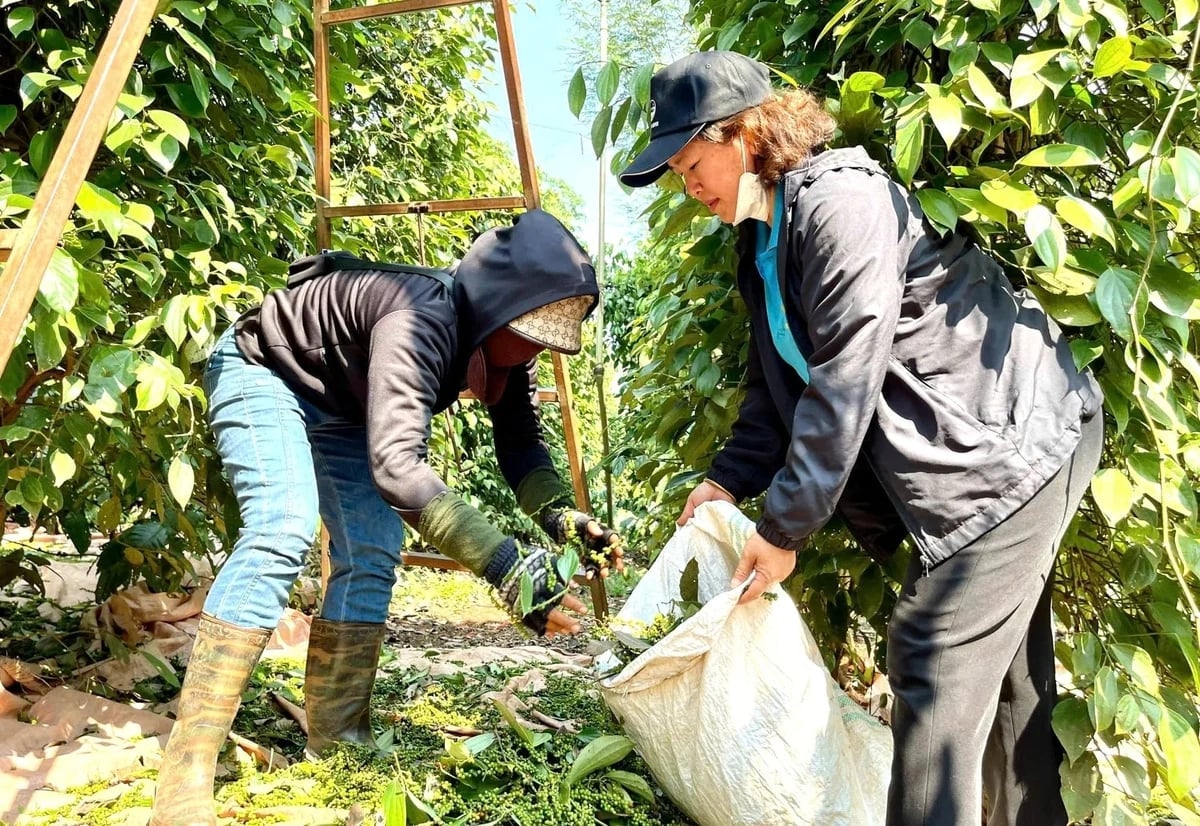
Pepper is increasingly affirming its role as a key crop in the cultivation sector. Photo: Tuan Anh.
The province will also accelerate production restructuring by converting around 26,710 hectares of low-efficiency crops into higher-value crops better suited to climate change adaptation and market demand. This includes converting 3,790 hectares of rice land, 7,660 hectares of sugarcane, 7,745 hectares of cassava, 4,020 hectares of cashew, and 3,495 hectares of other crops.
One major focus is the development of 3-5 large-scale raw material zones connected with supply chains and deep processing by enterprises. Specifically, coffee linkage areas are expected to exceed 81,000 hectares out of a total 110,000 hectares; durian linkage areas are targeted at 8,600 hectares out of 10,000 hectares; and passion fruit linkage areas are projected to reach nearly 5,000 hectares out of 10,000 hectares.
A notable new point in Gia Lai’s 2026-2030 crop development plan is the province’s clear identification of the “leading role” of individual enterprises in building raw material zones and developing agricultural value chains. Instead of scattered partnerships, the province is proactively selecting capable enterprises and assigning specific targets to businesses with strong financial capacity, markets, and deep-processing capabilities.
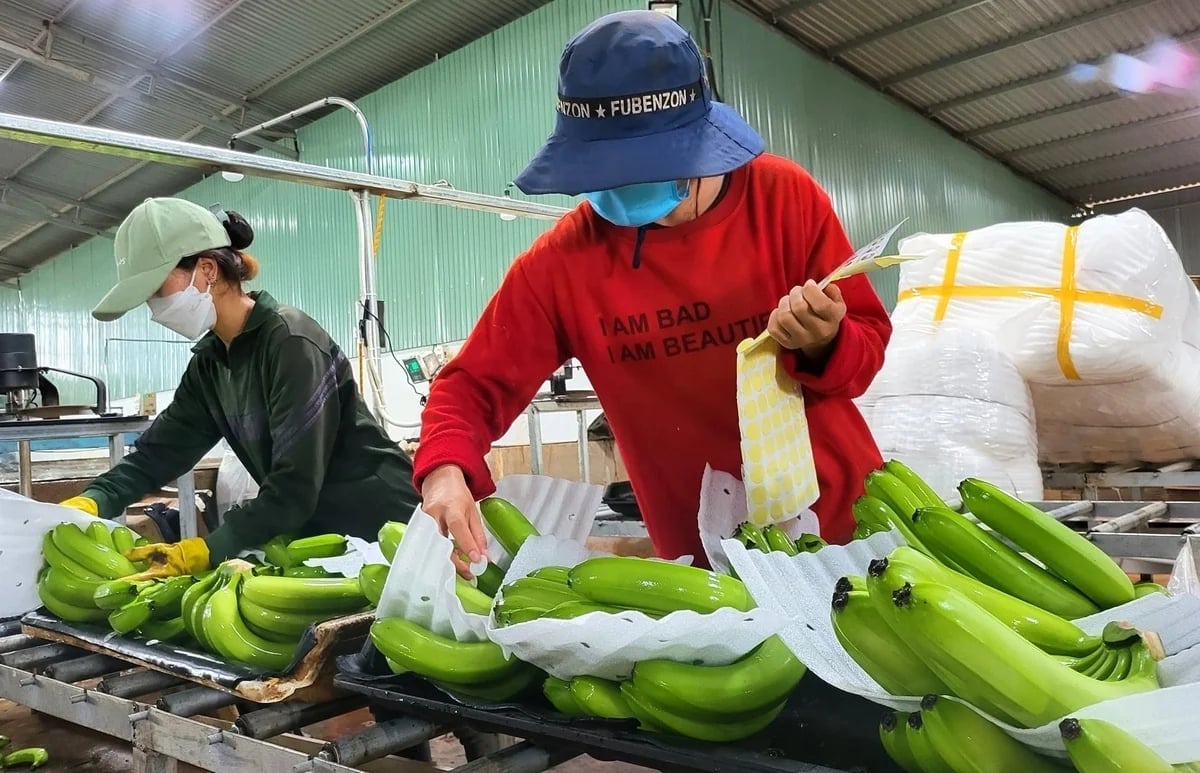
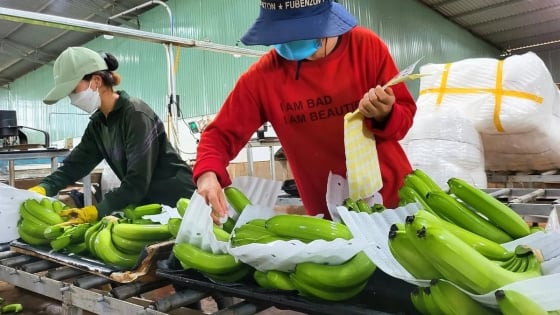
Banana products are now present in many countries around the world. Photo: Tuan Anh.
Accordingly, Vinh Hiep Co., Ltd. is expected to develop around 24,000 hectares of linked coffee-growing areas. Nafoods Tay Nguyen Joint Stock Company will oversee around 10,000 hectares of coffee while also developing an additional 1,500 hectares of durian and 200 hectares of passion fruit. THAGRICO Highlands Fruit One Member Co., Ltd. has been assigned to develop approximately 1,000 hectares of linked durian cultivation, alongside many other enterprises participating in the expansion of export-standard raw material zones.
Beyond simply purchasing agricultural products, enterprises participating in the supply chain are required to commit to investing in processing facilities, cold storage, logistics, traceability systems, and stable purchasing agreements with farmers.
Gia Lai Vice Chairman Mr. Duong Mah Tiep expressed hope that by 2035, Gia Lai’s crop cultivation sector will rank among the leading agricultural regions in the Central Highlands, the South Central Coast, and across Vietnam. Crop products are expected to meet international standards, with widespread adoption of high-tech agriculture, organic farming, food safety practices, and environmentally friendly production methods.
$ 1 = VND 26,367 – Source: Vietcombank.
Agriculture News | Agri Products Price