



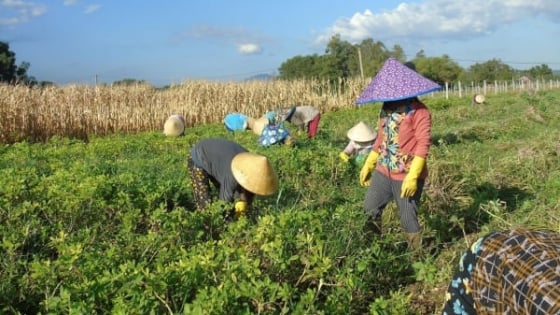
(VAN) Gia Lai farmers can sell off-season peanuts at higher prices while proactively securing quality seed for next year’s winter-spring crop.
A crop that transformed farmers’ livelihoods
Peanuts are one of Gia Lai province’s key annual crops, covering approximately 12,000 hectares across communes such as Binh Hiep, Binh Khe, Hoa Hoi, Phu Cat, Hoi Son, Phu My, and Phu My Dong. Peanut cultivation expanded rapidly nearly a decade ago, particularly in the eastern part of the province. The completion of the Van Phong irrigation canal system revitalized sandy farmland in the communes of Binh Hiep, Binh Khe, Hoa Hoi, and Hoi Son.
Before the Van Phong irrigation system was built, most upland fields were planted with cassava, which yielded low returns due to poor soils and severe water shortages. Once irrigation became available, intensive peanut cultivation models introduced by the provincial Agricultural Extension Center turned previously unproductive land into highly profitable farmland, prompting farmers to rapidly expand peanut production.
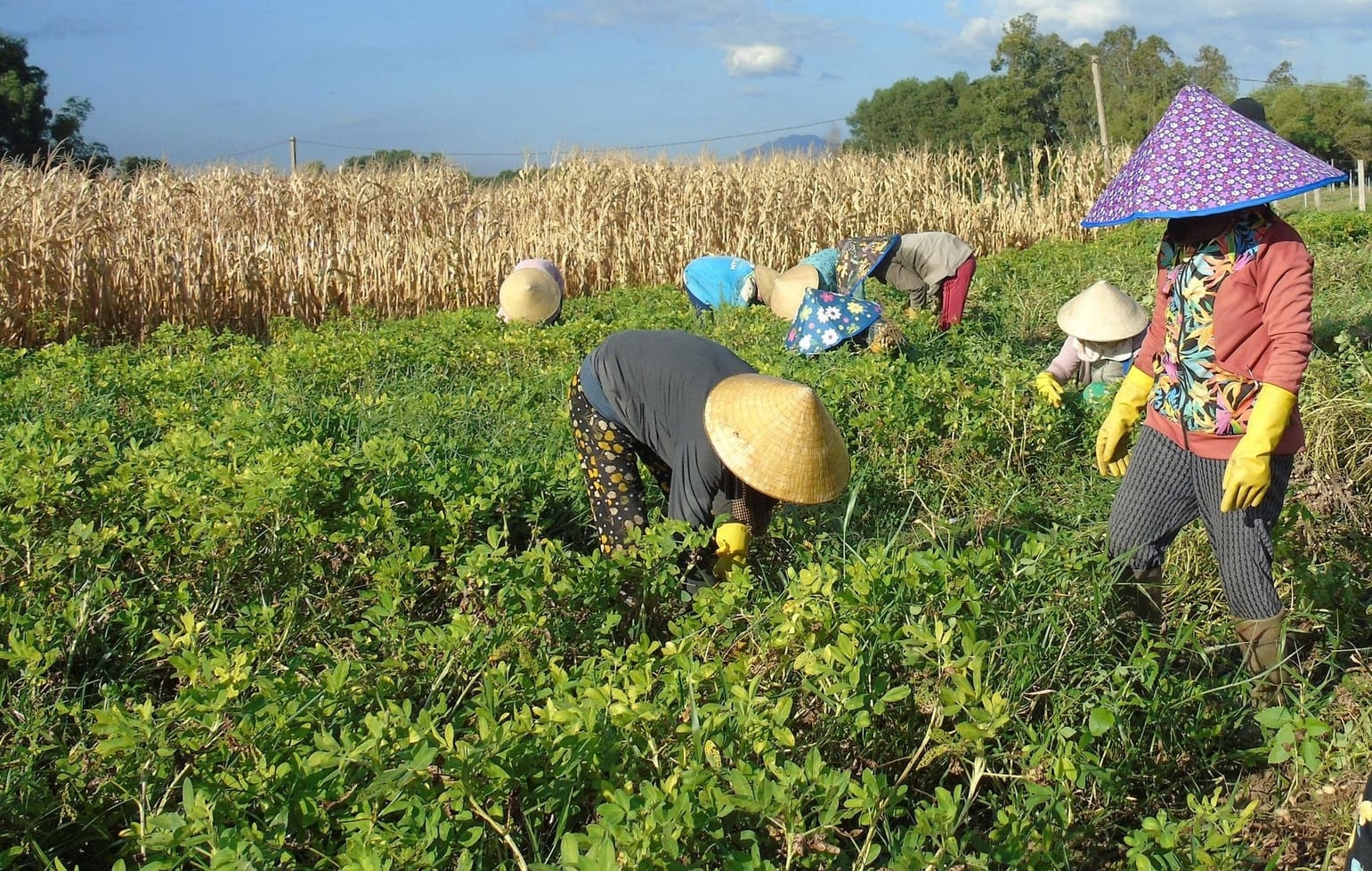
Peanuts are one of Gia Lai’s major annual crops, transforming the livelihoods of many farming households. Photo: V.D.T.
“Binh Hiep now has more than 1,400 hectares of specialized peanut cultivation land and is moving towards value chain development and deep processing. Thanks to reliable irrigation and production techniques transferred by the provincial Agricultural Extension Center, peanut yields have increased to 4.1 tons per hectare,” said Phan Tieng Tan, Head of the Economic Division of Binh Hiep commune.
In the past, local farmers relied on flood irrigation, which wasted water, caused waterlogging, and reduced yields. The Agricultural Extension Center therefore introduced intensive peanut cultivation models. Today, almost all peanut-growing areas in Gia Lai use sprinkler irrigation, saving water and making production more resilient to climate change.
“We have also transferred cultivation techniques covering sowing, crop management, and fertilizer application. Previously, farmers simply applied compound NPK fertilizer, resulting in nutrient imbalances. Now they understand when peanuts require potassium or sodium and can apply the right fertilizer at the right stage and rate, significantly improving both yield and quality,” said Huynh Viet Hung, Director of the Gia Lai Agricultural Extension Center.
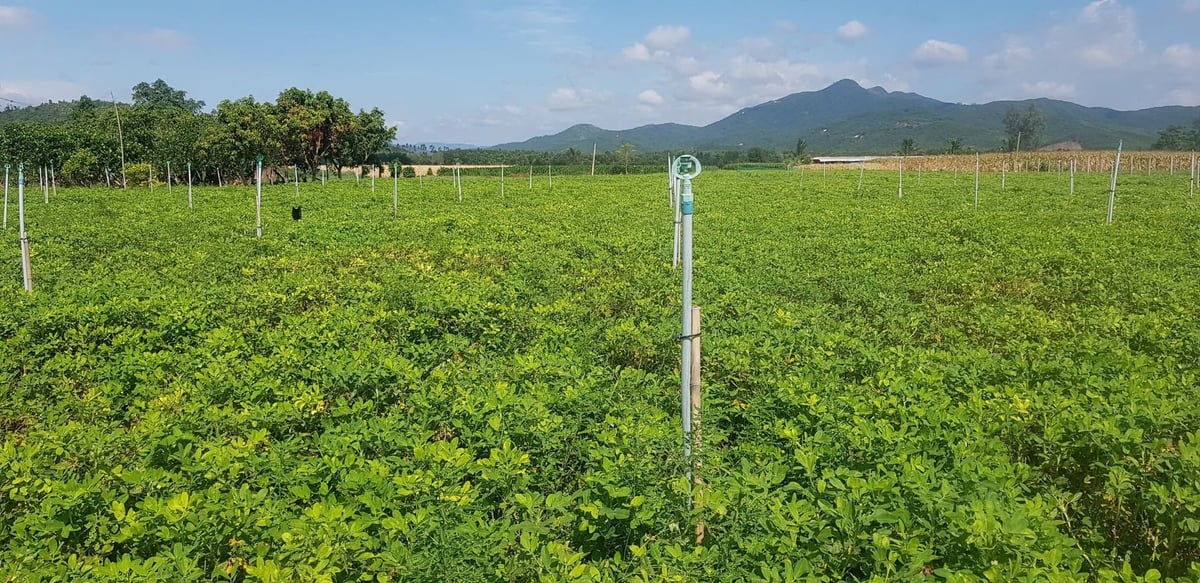
Nearly 100% of Gia Lai’s peanut fields are now irrigated using sprinkler systems to conserve water. Photo: V.D.T.
According to Le Ha An, Chairman of the Binh Hiep Commune People’s Committee, the commune’s vast peanut areas have attracted an advanced peanut cultivation and processing project by Truong Thanh High-Tech Agriculture Joint Stock Company. Land clearance has already been approved, and compensation payments are underway. The commune will continue supporting the investor in completing land lease procedures so construction can begin before July 30 this year.
Off-season peanuts deliver higher profits
Previously, farmers in eastern Gia Lai grew peanuts only during the winter-spring season because weather conditions were more favorable. Growing peanuts during the summer-autumn crop was considered too risky due to water shortages early in the season and flooding once the rainy season began. After the Van Phong canal system brought irrigation water to these areas, the provincial Agricultural Extension Center encouraged farmers to adopt off-season peanut production.
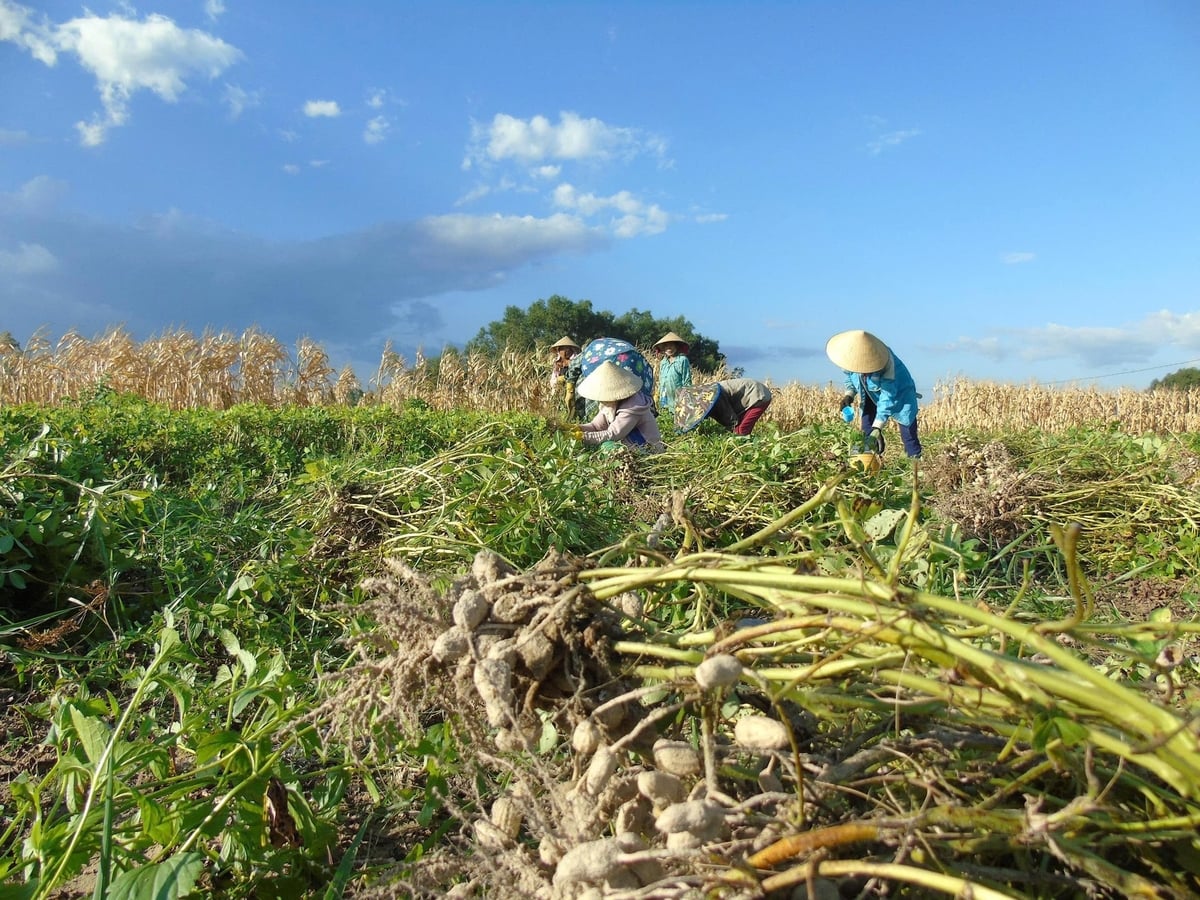
Summer-autumn peanut cultivation can procure yields no less than the main season. Photo: V.D.T.
“At first, farmers were reluctant to grow summer-autumn peanuts because they believed off-season cultivation would produce small pods and low yields. However, once the demonstration models proved that yields matched those of the main season, farmers realized the many advantages. Off-season peanuts command much higher prices because fewer people grow them. Later, many farmers even began planting an additional autumn-winter crop. Peanuts harvested during the summer-autumn and autumn-winter seasons can also be kept as seed for next year’s winter-spring crop,” Director Hung said.
Today, farmers in eastern Gia Lai actively invest in off-season peanut production because of its high profitability. In Binh Hiep commune alone, nearly 244 hectares were planted during the 2026 summer-autumn season, with many farmers planning another autumn-winter crop immediately afterward.
Duong Van Minh, a farmer who has many years of experience growing peanuts in Binh Hiep, said summer-autumn production is more demanding than winter-spring cultivation because hot weather makes the crop more susceptible to pests and diseases. However, careful management from the beginning of the season keeps fields healthy.
“Summer-autumn peanuts are commonly affected by thrips and red spider mites. We simply inspect the fields regularly, and if black spots appear beneath the leaves, we spray immediately to control the problem,” he said.
According to Tran Dinh Tho, Director of Thuong Giang Agricultural Cooperative in Binh Khe commune, peanut production has expanded rapidly since the Thuong Son irrigation canal became operational. During the 2025–2026 winter-spring season, cooperative members cultivated 150 hectares, achieving an average yield of four tons per hectare.
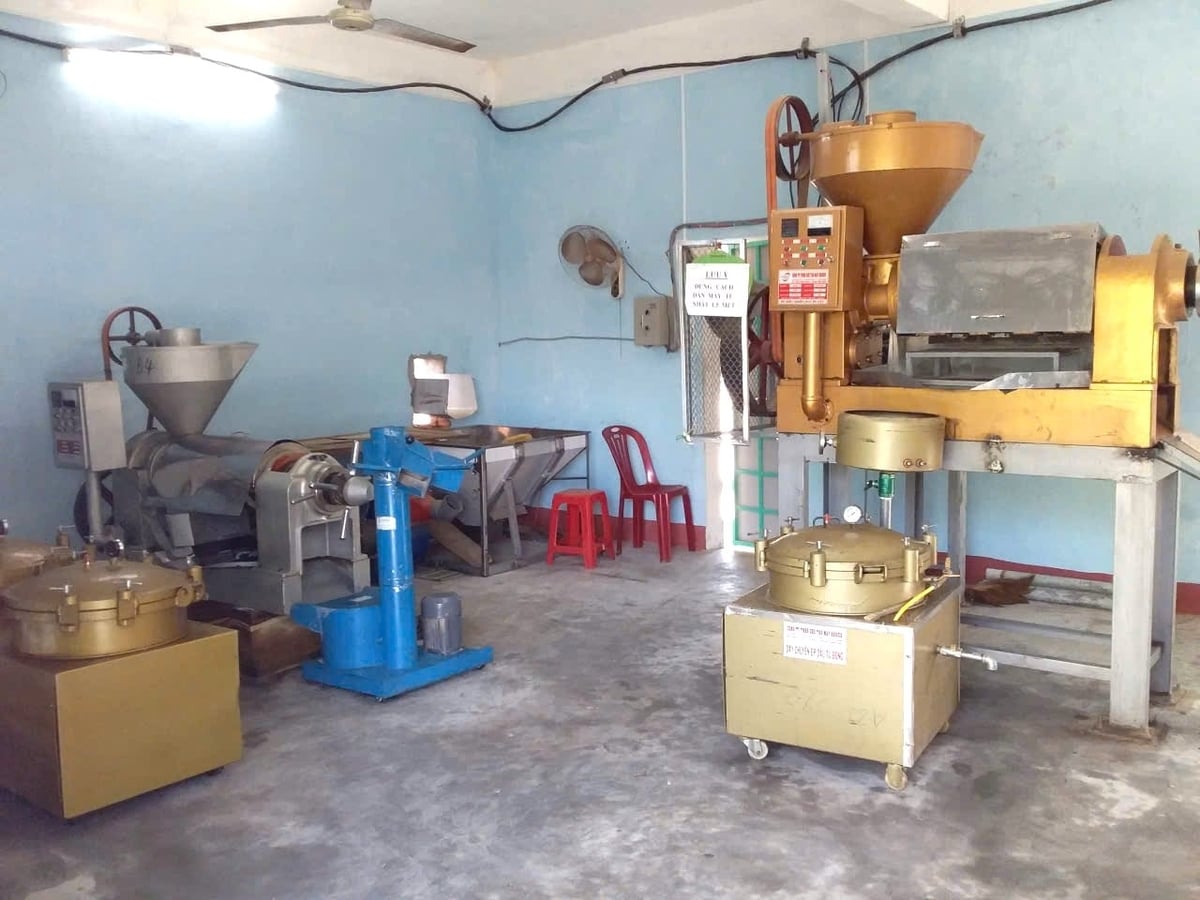
The automated peanut oil processing line at Thuong Giang Agricultural Cooperative in Binh Khe commune, Gia Lai. Photo: V.D.T.
“Commercial dried peanuts sold for VND 30,000 per kilogram during the last winter-spring crop, generating high profits. Many farmers thus continued planting the more challenging autumn crop. The cooperative currently purchases peanuts produced under VietGAP standards from five hectares of farmland to manufacture OCOP-certified peanut oil,” Tho said.
According to Ho Quang Thach, Deputy Head of the Extension Division at the Gia Lai Agricultural Extension Center, farmers in eastern Gia Lai previously depended on seed peanuts supplied from western Gia Lai because harvest times in the two regions are staggered. Peanuts in western Gia Lai are harvested around November and December each year, allowing traders to supply seed for the winter-spring season in the east.
To become self-sufficient in seed production, farmers in eastern Gia Lai now grow improved peanut varieties during the summer-autumn and autumn-winter seasons, producing seed for nearly 12,000 hectares of winter-spring peanut farming area the following year.
As it is time for the rainy season, autumn-winter peanuts can only be cultivated successfully in higher-elevation areas such as Binh Hiep commune. Low-lying rice fields and converted paddy land are unsuitable because of flooding. Off-season peanuts typically sell at a price 15-20% higher than winter-spring peanuts and, in some years, up to 30%. Seed peanuts command even higher prices.
“Average peanut yields in eastern Gia Lai now reach 4.1 tons per hectare. With farmers’ current level of technical expertise, off-season peanuts can achieve yields comparable to the main crop whenever irrigation is sufficient. Peanut prices once reached VND 30,000 per kilogram but have since eased to around VND 22,000-23,000 per kilogram. Even at those prices, farmers still earn substantial profits. Seed peanuts currently sell for VND 50,000-60,000 per kilogram, more than double the price of commercial peanuts,” Deputy Head Thach said.
$ 1 = VND 26,520 – Source: Vietcombank.
Agriculture News | Agri Products Price