




(VAN) Vietnam’s rice sector has undergone a major transformation from mass production of medium- and low-grade rice to high-grade, fragrant varieties. This shift has helped Vietnamese rice secure a stronger position in the global market.
Restructuring production toward high-quality and fragrant varieties
In recent years, Vietnam’s rice production has moved decisively toward high-quality white rice, fragrant Jasmine, ST24, ST25, glutinous rice, and Japonica rice, all of which now account for a growing share of both export volume and revenue.
This transformation has enabled Vietnamese rice to strengthen its global market presence and maintain an average export price consistently higher than the global benchmark. In August 2025, while the international rice price averaged around USD 400/ton, Vietnam’s average export price soared to USD 514/ton.
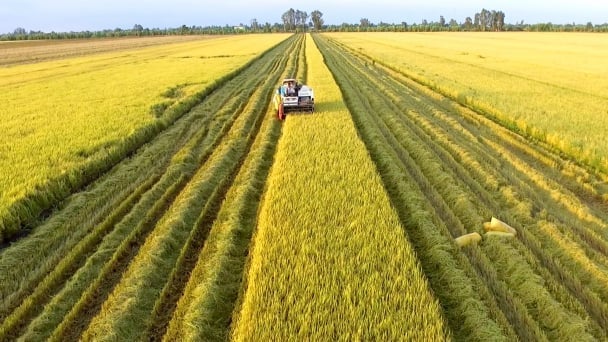
The Mekong Delta has shifted from fragmented, small-scale cultivation to large, uniform fields that meet market demand. Photo: Son Trang.
According to Mr. Le Thanh Tung, Deputy Director General of the Department of Crop Production and Vice Chairman of the Vietnam Rice Sector Association (VIETRISA), this achievement is the result of long-term collaboration between management agencies, local governments, and export enterprises. By listening to exporters and scaling up the most competitive varieties, the Mekong Delta, the nation’s rice hub, has shifted from fragmented, small-scale cultivation to large, uniform fields that meet market demand.
“When the national breeding program was first launched, we had many agencies researching and developing high-quality varieties. But the real breakthrough came when we started listening closely to export enterprises, reviewing their annual reports, and analyzing which varieties had strong potential. This allowed us to reorganize production and focus on the most competitive varieties,” explained the leader of the Department of Crop Production.
From fragmentation to standardization
Two decades ago, the Mekong Delta sometimes had up to 250 rice varieties grown simultaneously, making quality control a challenge for exporters. In response, production management agencies and local governments promoted one-variety fields (planting a single variety as requested by enterprises), advanced fields, and technical fields, gradually scaling up the most promising varieties based on enterprise demand.
“When enterprises reported that a certain variety had strong market performance, we scaled up its production. This information channel became extremely important. We learned that research and breeding are important, but organizing production to meet market needs is even more crucial,” said Mr. Tung.

Mr. Le Thanh Tung, Deputy Director General of the Department of Crop Production and Vice Chairman of the Vietnam Rice Sector Association. Photo: VAN.
As a result, certain varieties have been scaled up from as little as 1,000 hectares to as much as 1 million hectares in a single year. This represents a tremendous effort in production organization and local-level direction, as well as careful attention to information from domestic buyers and export enterprises.
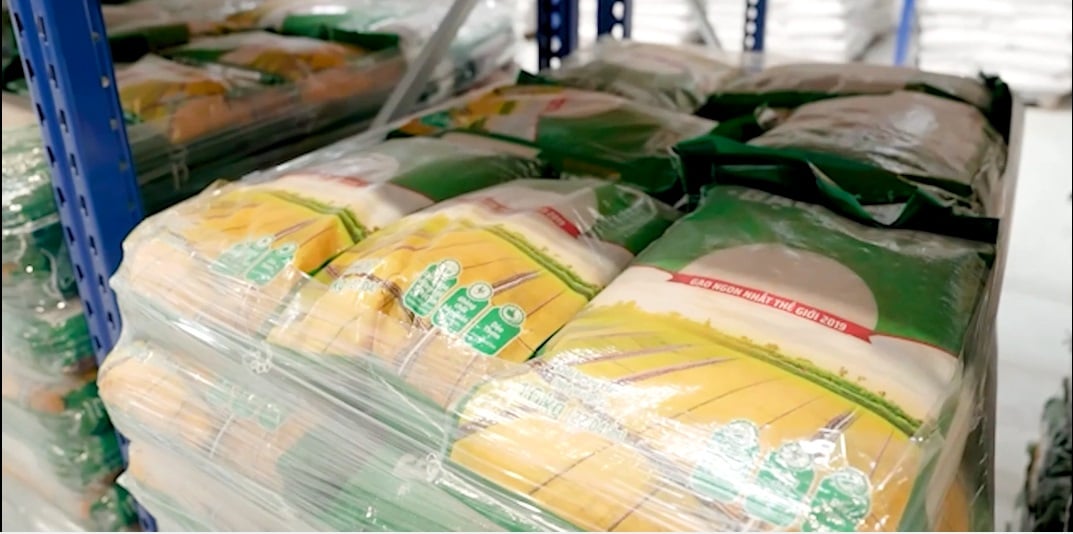
ST25 rice won the World’s Best Rice award in 2019. Photo: VAN.
Breakthrough varieties conquering international markets
Aligning production with market requirements has ensured that what farmers grow is sellable, securing their incomes and helping Vietnam’s rice sector build a strong foothold in international markets. However, this success came despite fierce competition from major exporters such as India, Thailand, the U.S., and other Asian countries.
According to Mr. Do Ha Nam, Chairman of the Vietnam Food Association, in the past, Vietnam rarely won major tenders, especially in markets like the Philippines, which used to be Thailand’s exclusive domain.
“The turning point came when we created OM and DT varieties that are similar to Jasmine and Japonica developed by other countries but offer higher yields and shorter growing cycles while keeping production costs low. These varieties have given us a significant advantage in both quality and price. As a result, Vietnam now accounts for 45% of the Philippines’ rice imports. This success has created momentum to expand into other markets such as Africa, Malaysia, and Indonesia,” Mr. Nam noted.
Notably, although African consumers previously favored Jasmine rice, OM and DT varieties have since won their preference, driving export growth that nearly doubled compared to the same period last year. Farmers’ incomes have improved dramatically, with rice prices rising from VND 3,000/kg in the past to as high as VND 8,000–9,000/kg today.

Mr. Do Ha Nam, Chairman of the Vietnam Food Association. Photo: VAN.
Another breakthrough variety is the ST rice line, particularly ST25, which won first prize at an international competition. Its popularity has created a surge of demand for ST25 rice, pushing its retail prices in Vietnam above global levels. Wholesale prices are around USD 1,000/ton, while retail prices reach USD 1,500/ton, even higher than that in China, where the price remains under USD 1,000/ton.
ST25 has also become a symbol of pride among overseas Vietnamese communities across Europe, the U.S., Canada, and Australia, many of whom have switched from Thai rice to Vietnamese varieties. Businesses in China, Hong Kong, and other markets are actively seeking a supply of ST25. This shows that when we create a distinctive product that meets demand, it is not just about providing a delicious meal, but it sometimes carries a sense of love for the homeland.
Agriculture News | Agri Products Price