

(VAN) Kaffee Campus 2026, organized by the German Roasters Association, brought together Vietnamese companies including Phuc Sinh, Dung Loi, and Don Elephant.
Held amid a global coffee market increasingly focused on sustainability and traceability, Kaffee Campus 2026 has become a key meeting point for Europe’s coffee industry. Beyond product showcases, the event serves as a specialized B2B platform that brings together hundreds of experts, roasters, and major importers across Europe.
At the Viet Nam pavilion, organized by the Viet Nam Trade Office in Germany, companies including Phuc Sinh Corporation, Dung Loi, and Don Elephant introduced a range of high-quality coffee products, attracting strong interest from international partners. These businesses are promoting climate-resilient production models while embracing the “clean label” trend to meet the growing expectations of German consumers.
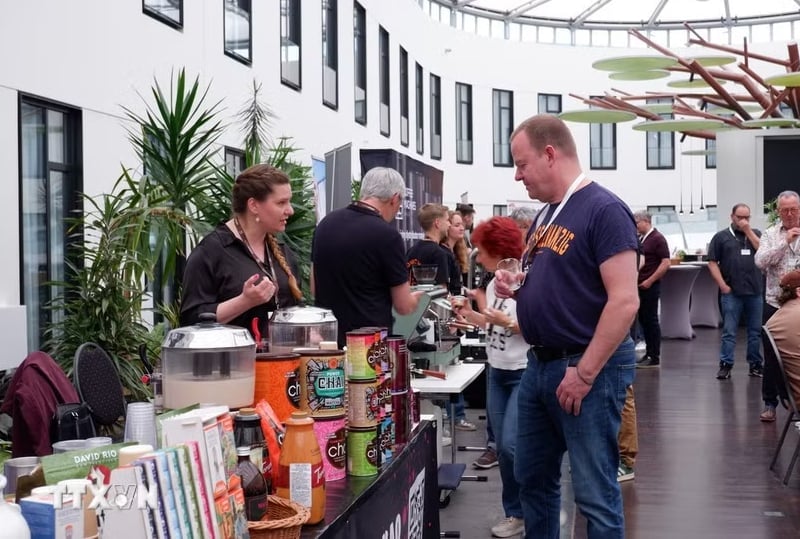
Event space at Kaffee Campus 2026. Photo: TTXVN.
Kaffee Campus 2026 also highlights a clear shift in Viet Nam’s coffee sector, from a supplier of raw materials to a producer of specialty coffee and branded roasted products.
According to Mr. Christian Kallenbrunnen, Marketing Representative of the German Roasters Association, German companies are increasingly sourcing directly from producing countries like Viet Nam, especially high-quality green coffee, to create distinctive flavors for the consumer market.
Germany remains Europe’s largest importer of green coffee, with annual revenue of nearly €20 billion. On average, each German consumes about 167 liters of coffee per year. With around 2,500 active roasters, the market offers strong potential for Vietnamese exporters.
Industry insiders note that Germany is gradually shifting from Arabica to high-quality Robusta, as Arabica supply is increasingly affected by climate change. This presents a significant opportunity for Viet Nam, which has a strong advantage in Robusta production.
Despite being the second-largest supplier to Germany, with export turnover reaching $1.22 billion in 2025, most Vietnamese coffee is still used for industrial processing and has yet to build strong consumer-facing brands.
Ms. Dang Thi Thanh Phuong, Trade Counselor and representative of Viet Nam’s Ministry of Industry and Trade in Germany, said many Vietnamese companies have met requirements on traceability, sustainable agriculture certifications, and social responsibility standards. However, key challenges remain in brand building and complying with stricter EU regulations, such as the EU Deforestation Regulation (EUDR), as well as rules on geographical indications and import-export procedures.
Businesses have called for greater support for small and new exporters to strengthen their capacity and quickly meet EU standards. This is seen as essential for Vietnamese coffee to move deeper into major retail chains in Germany and across Europe.
Agriculture News | Agri Products Price