

(VAN) Vietnamese durian is ready to ‘knock on the door’ of the Indian market this coming July, driving toward the country’s $4.5 billion export target for 2026.
Entering India’s billion-consumer market
Speaking with Viet Nam Agriculture and Nature Newspaper, Ms. Nguyen Thi Thu Huong – Deputy Director General of the Plant Production and Protection Department (PPPD-MAE) shared positive news that Vietnamese durian has found a pathway into the Indian market. India is expected to complete import approval procedures for Vietnamese durian this July.
India is the world’s second most populous market after China. Therefore, Viet Nam’s ability to meet technical requirements and gain access to this market is considered a highly encouraging signal for the country’s durian industry.
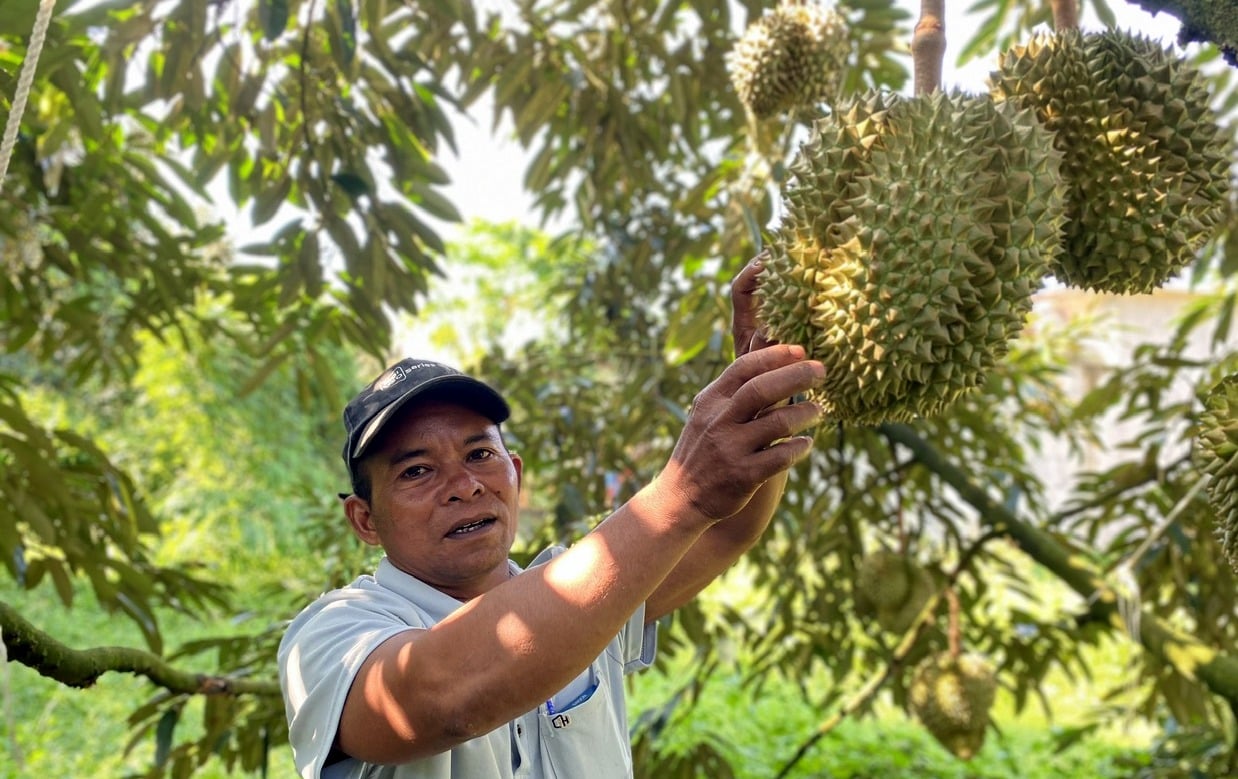
India is expected to open its market to Vietnamese durian imports this July. Photo: VAN.
“This is a highly promising market, although it will take time for Indian consumers to become familiar with the flavor of Vietnamese durian. Expanding into new markets will help diversify export destinations, reduce dependence on a few key markets, and create sustainable growth momentum for the durian sector,” emphasized Ms. Nguyen Thi Thu Huong.
According to data from Viet Nam Customs, durian exports in the first four months of 2026 showed strong growth in both volume and value, despite not yet being in the peak harvest season. Export markets for Vietnamese durian have also continued to expand alongside branding efforts.
In the first quarter of 2026 alone, Viet Nam’s durian exports reached approximately USD 221.7 million, up 230% year-on-year. The higher growth in export value relative to export volume indicates that the industry is gradually shifting from volume-based growth toward higher-value-added development.
One of the brightest spots has been the rapid expansion of frozen durian exports. While Viet Nam exported just over 4,600 tons of frozen durian in 2024, the figure surged to more than 91,000 tons in 2025 – nearly a twentyfold increase.
This momentum has continued into 2026. The average export price of frozen durian remains significantly higher than that of fresh durian. In the first quarter of 2026, the average export price for frozen durian reached around USD 4,302 per ton, up more than 20% compared to the same period last year and approximately 18-22% higher than fresh durian prices.
In addition to China, several other demanding markets posted strong growth in Vietnamese durian imports during the first quarter of 2026, including the United States, up over 107%; South Korea, up nearly 262%; Australia, up more than 40%; and Japan, up nearly 12%.
These figures demonstrate that Viet Nam’s durian industry is steadily improving its capacity to meet technical standards and adapt to international market requirements. Vietnamese durian has gradually established a foothold and built its own brand in the global market.
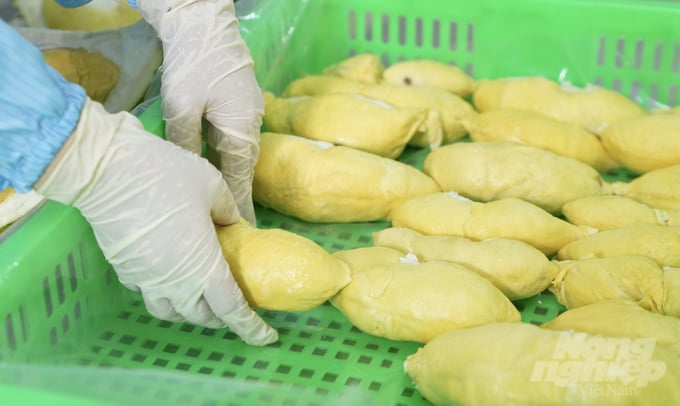
Durian exports have surged despite the sector not yet entering the peak harvest season.
In 2025, durian emerged as the “flagship” export commodity of Viet Nam’s fruit and vegetable sector, generating USD 3.86 billion and accounting for more than 45% of the industry’s total export turnover. Viet Nam’s durian industry is now targeting USD 4.5 billion in exports in 2026. Beyond traditional markets, Vietnamese durian, with its increasingly established brand reputation, is confidently expanding into new destinations such as the European Union and India.
Despite the sharp rise in exports, Nguyen Thi Thu Huong affirmed that Viet Nam is not experiencing uncontrolled expansion in durian cultivation areas. Newly planted durian acreage in recent years has reached around 100,000 hectares, but most of these areas have not yet entered the harvest stage. The pace of area expansion has also slowed since last year due to rising land prices, limited suitable farmland, and competition from other crops such as coffee and pepper.
“The sector’s orientation is not to expand durian acreage at all costs, but instead to focus on improving cultivation quality on existing areas, increasing value, productivity, and brand recognition in order to expand market access,” she said.
Ms. Huong also emphasized that the broader direction for Viet Nam’s durian industry is sustainable cultivation, including soil improvement, reducing fertilizer and chemical pesticide use, lowering input costs while still ensuring productivity and quality. This approach is also expected to create opportunities for participation in carbon credit markets.
“If production is well organized toward emissions reduction, the crop sector, including durian, can fully participate in carbon credit schemes and generate additional added value from sustainable farming practices,” she noted.
Stricter regulatory framework introduced
Nguyen Thi Thu Huong said Viet Nam’s durian exports recorded strong growth in both volume and value during the first months of the year. Market signals have become increasingly positive despite this being Thailand’s peak harvest season. According to her, this demonstrates that the quality and brand value of Vietnamese durian have gradually been recognized in international markets.
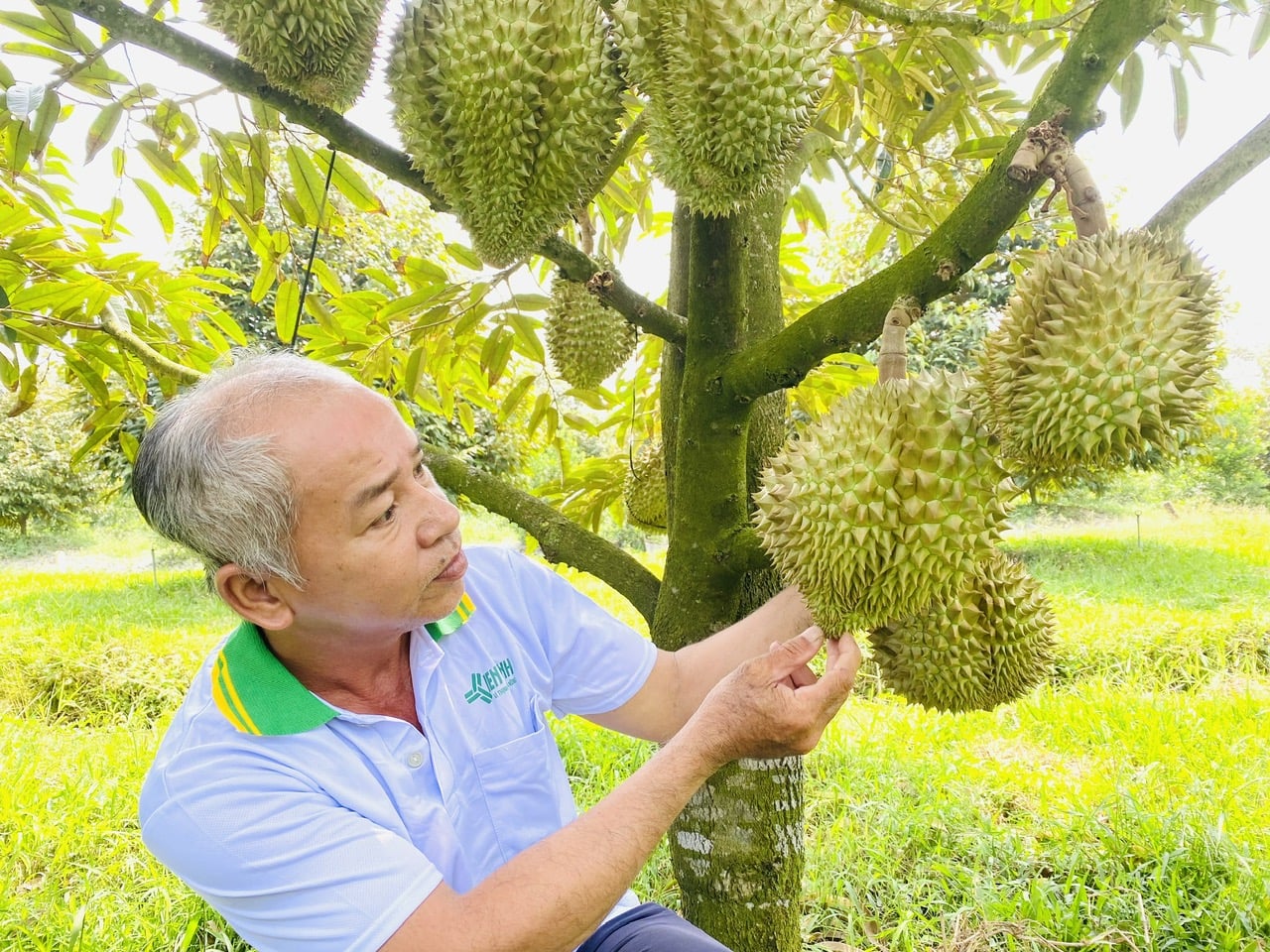
Vietnamese durian could become a model for how Vietnamese agricultural products conquer global markets. Photo: Le Hoang Vu.
A key foundation behind these achievements has been the standardization of packing facilities and the management of planting area codes. These are no longer merely technical requirements imposed by importing countries but have become a “passport” that enables Vietnamese agricultural products to demonstrate transparency and traceability in international markets.
Over the past year, Viet Nam’s durian sector has achieved greater consistency and coordination in production organization and quality control across central and local levels.
Ms. Nguyen Thi Thu Huong emphasized the role of Decree No. 38/2025/ND-CP in clearly decentralizing responsibilities: the central government acts as the policy architect, local authorities organize implementation, while importing countries participate in the approval process. Processing timelines, responsible focal points, and procedures for suspending or revoking planting area codes are now clearly stipulated, making management more transparent and effective.
Currently, the PPPD is finalizing a decree on administrative sanctions, which will add violations related to the management of planting area codes. Once issued, the regulation is expected to provide a stronger legal framework for local authorities to enforce compliance and tighten discipline throughout the export-oriented durian production chain.
From the story of durian, it is evident that Vietnamese agriculture is entering a new stage of development – one that is more standardized, transparent, and sustainable. As each planting area code is strictly managed, each packing facility standardized, and each cultivation process adjusted toward lower emissions, the value of Vietnamese durian will increasingly lie not only in the fruit itself, but also in the credibility and environmental responsibility that accompany it.
The opening of the Indian market not only adds another billion-consumer destination for Vietnamese durian, but also serves as strong evidence of the sector’s growing adaptability and rising standards. If this trajectory continues steadily, Vietnamese durian could become a model for how Vietnamese agricultural products conquer global markets through quality, professionalism, and a long-term development vision.
Agriculture News | Agri Products Price