



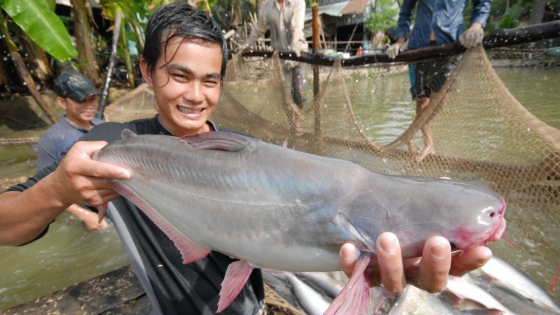
(VAN) From ponds in the Mekong Delta, over more than 35 years, pangasius has reached global markets, affirming its position as a key export and turning the Mekong Delta into a leading freshwater aquaculture hub.
Presence in over 140 countries and territories
Currently, several countries such as India, Bangladesh, Indonesia, Egypt, and China are also developing pangasius farming. However, Vietnamese pangasius remains the preferred choice of major importers worldwide. To date, thanks to stable quality and increasingly standardized production processes, Vietnamese pangasius has expanded to more than 140 countries and territories, supplying over 90% of the world’s frozen pangasius fillets.
This success is built on a solid foundation in the Mekong Delta, which possesses a dense river network, abundant water resources, and a long-standing aquaculture tradition. Of which, An Giang and Dong Thap play central roles, not only supplying key raw materials but also pioneering value chain linkages and sustainable development, thereby elevating Viet Nam’s pangasius industry in international markets.
In An Giang, the pangasius farming sector has seen remarkable growth, with a cultivation area of approximately 1,200 ha and an annual output of 600,000 tons. According to Mr. Le Huu Toan, Director of the An Giang Department of Agriculture and Environment, pangasius is identified as a strategic species to position An Giang as the freshwater aquaculture center of the region. With extensive water surface area, abundant fingerling supply, and increasingly standardized farming techniques, An Giang has strong potential for sustainable development of its pangasius industry. The province aims for pangasius to account for up to 80% of its seafood export turnover.
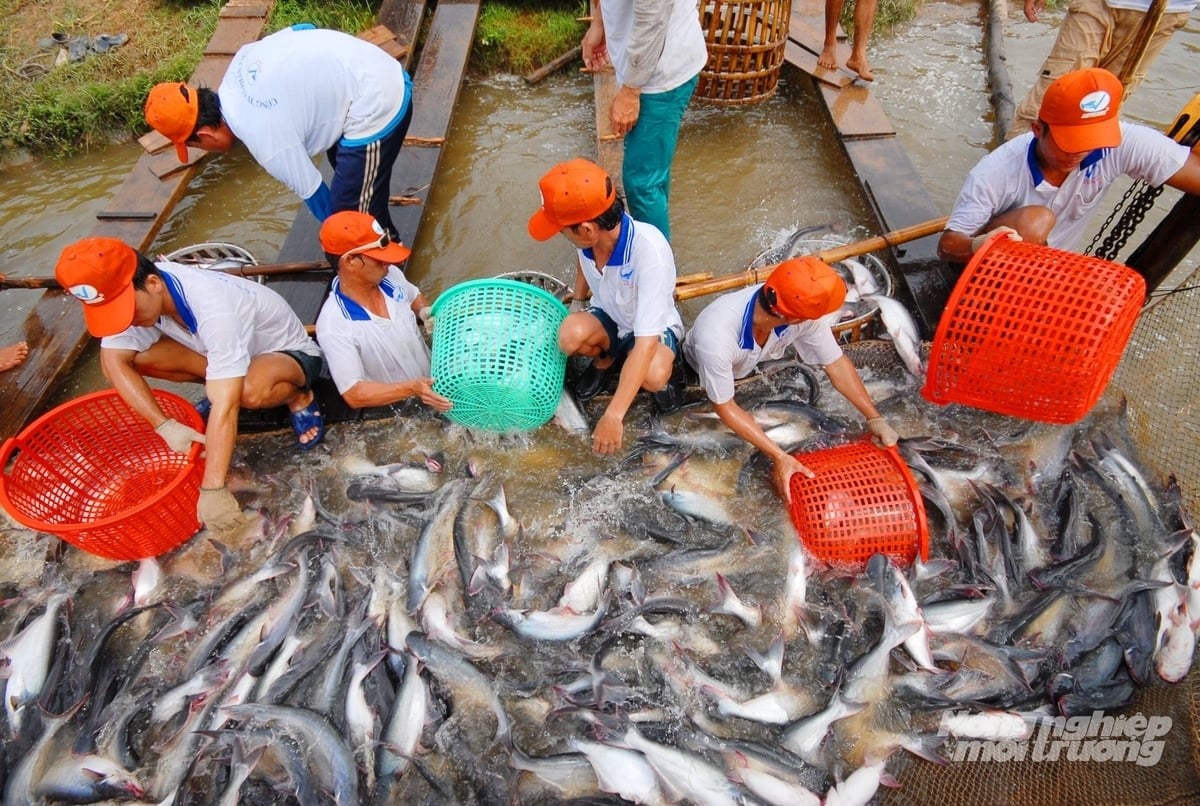
Large-scale pangasius harvest in Dong Thap provides abundant raw materials for seafood processing and export. Photo: Le Hoang Vu.
Meanwhile, Dong Thap has also identified pangasius as a key commodity in its agricultural restructuring. The province currently has more than 2,600 ha of pangasius farming, with total seafood output of over 1 million tons/year and export turnover reaching billions of USD. Particularly, a network of around 80 seafood processing plants, with a total capacity of nearly 1 million tons/year, has enabled the locality to establish a closed value chain from farming and processing to consumption, thereby enhancing production efficiency and competitiveness.
Beyond production, Dong Thap is also oriented toward expanding export markets through diversification, maintaining traditional markets while tapping into potential new ones. By 2026, the province targets export turnover of approximately USD 8 billion, with pangasius continuing to serve as a key growth driver.
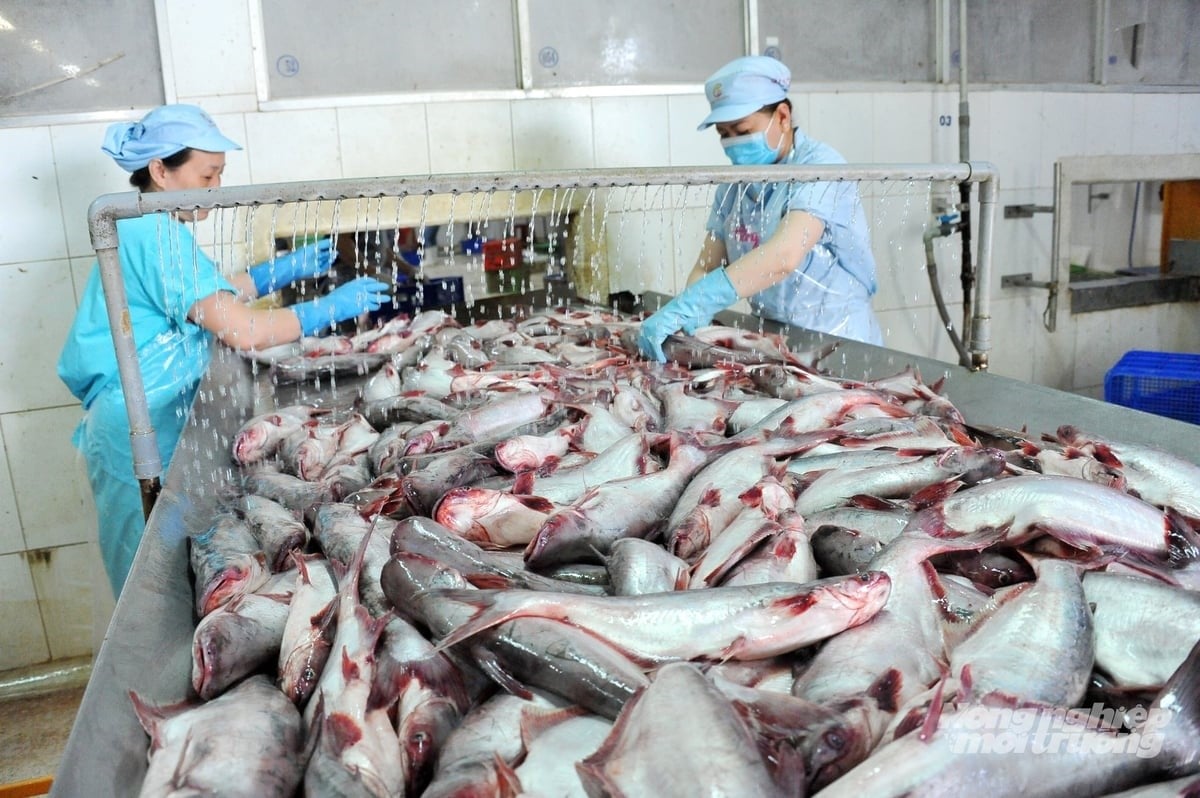
Raw pangasius is pre-processed at factories to meet food safety standards before deep processing. Photo: Le Hoang Vu.
In the processing stage, enterprises are shifting strongly toward increasing added value. Mr. Nguyen Van Dao, Chairman of the Board and CEO of Go Dang Joint Stock Company (GODACO), said the company focuses on developing key product lines such as pangasius fillets and deep-processed products in order to optimize raw materials, enhance value, and strengthen competitiveness in international markets.
A turning point in mindset
The most significant turning point in pangasius’s journey of becoming a global brand came in 2000, when Viet Nam’s seafood industry was shaken by the anti-dumping lawsuit against pangasius and basa filed by the Catfish Farmers of America (CFA). The case became a boost that forced industry stakeholders to change their production mindset, market approach, and development strategies.
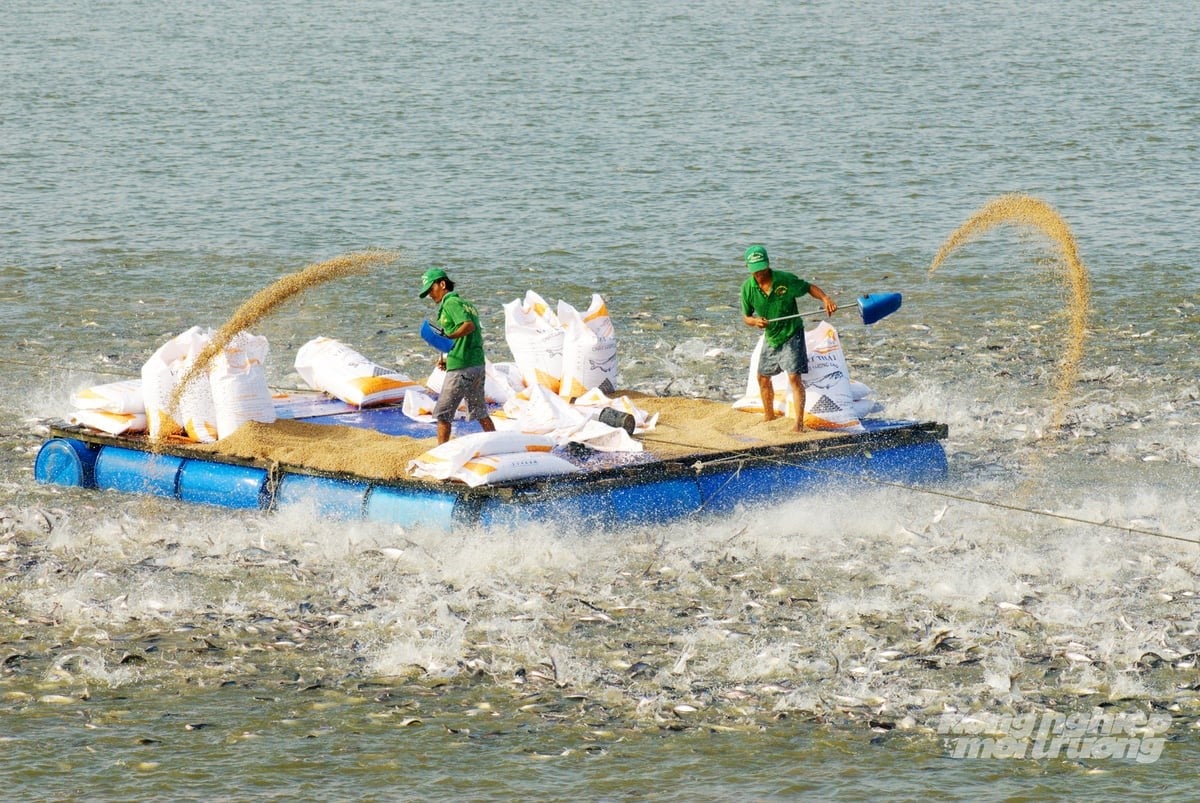
Pangasius farmers in An Giang feed fish in industrial cages, applying modern technical processes to enhance productivity and product quality for export. Photo: Le Hoang Vu.
For pangasius farmers, there was a time when prices plummeted, leaving many households in severe difficulty. From that experience, they realized that small-scale, fragmented farming was no longer suitable. Instead, scientific and technological applications had to be integrated into production, along with linkages with enterprises, adoption of advanced aquaculture standards, and quality control to enhance value and meet the stringent requirements of international markets.
In parallel with changes from farmers, the State and relevant ministries have introduced a range of policies to plan farming zones, standardize production processes, and promote large-scale, commodity-oriented development. Enterprises have also made more methodical investments in farming areas and processing plants and supported farmers on fingerlings, feed, techniques, and consumption. This has helped reduce risks and stabilize incomes for local communities.
As a result, Viet Nam’s pangasius industry has recorded strong growth, playing an important role in the country’s aquaculture and export structure. In 2025, export turnover was estimated at USD 2.1 billion, with farming area exceeding 5,500 ha and output reaching approximately 1.74 million tons, surpassing the annual target by 6%.
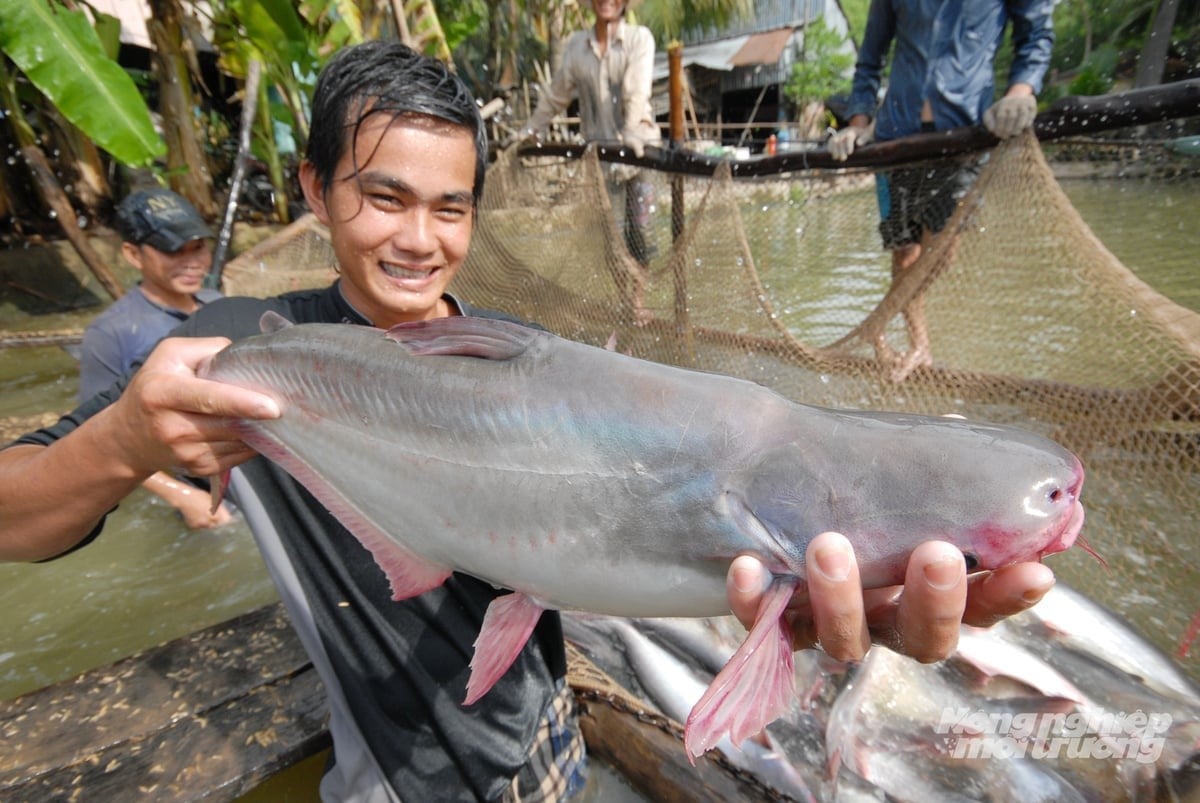
Farmers harvest pangasius in ponds in the Mekong Delta, where linkages with enterprises help ensure stable output and improve incomes. Photo: Le Hoang Vu.
The notable thing is not only the figures but also the shift in production mindset. Within a short period, farmers have moved from small-scale operations to linkages with enterprises, applying modern technical processes and paying attention to environmental protection.
Mr. Nguyen Van Tai, a pangasius farmer along the Hau River in Cho Moi commune (An Giang), shared: “In the past, small-scale farming was highly risky, with unstable prices. Since joining chain linkages with enterprises and receiving systematic technical support, both inputs and outputs have become stable, so farmers now make profits in every crop.”
Amid changes in politics, trade, tariffs, and increasingly stringent requirements, to further affirm pangasius as a pillar industry, the Ministry of Agriculture and Environment has oriented a strong shift from a “volume-driven” to a “value-driven” approach, with quality, food safety, reputation, and sustainability as the foundation. The development of concentrated farming areas and broodstock production zones, along with synchronous infrastructure in key Mekong Delta localities, will play a decisive role.
Pangasius farming in Viet Nam began quite early in the Mekong Delta. However, after 1975, farmers started expanding pond areas using relatively simple techniques. From the late 1990s onward, as export demand surged, pangasius entered a phase of industrial-scale development. Particularly after 2000, the sector was restructured along value chains, with the establishment of concentrated farming zones, the application of modern technologies, and linkages with processing and export. Since then, pangasius has transformed from a traditional farming species into one of Viet Nam’s key export commodities.
Agriculture News | Agri Products Price