

(VAN) Implementing ESG standards and improving transparency across the value chain are emerging as core solutions for Vietnam’s seafood industry to overcome trade barriers and strengthen its position in global markets.
Sustainable development has long been a central orientation of Viet Nam’s seafood sector. As global integration deepens, selecting and applying the right international standards is no longer simply a technical requirement, but a decisive factor shaping the competitiveness of businesses.
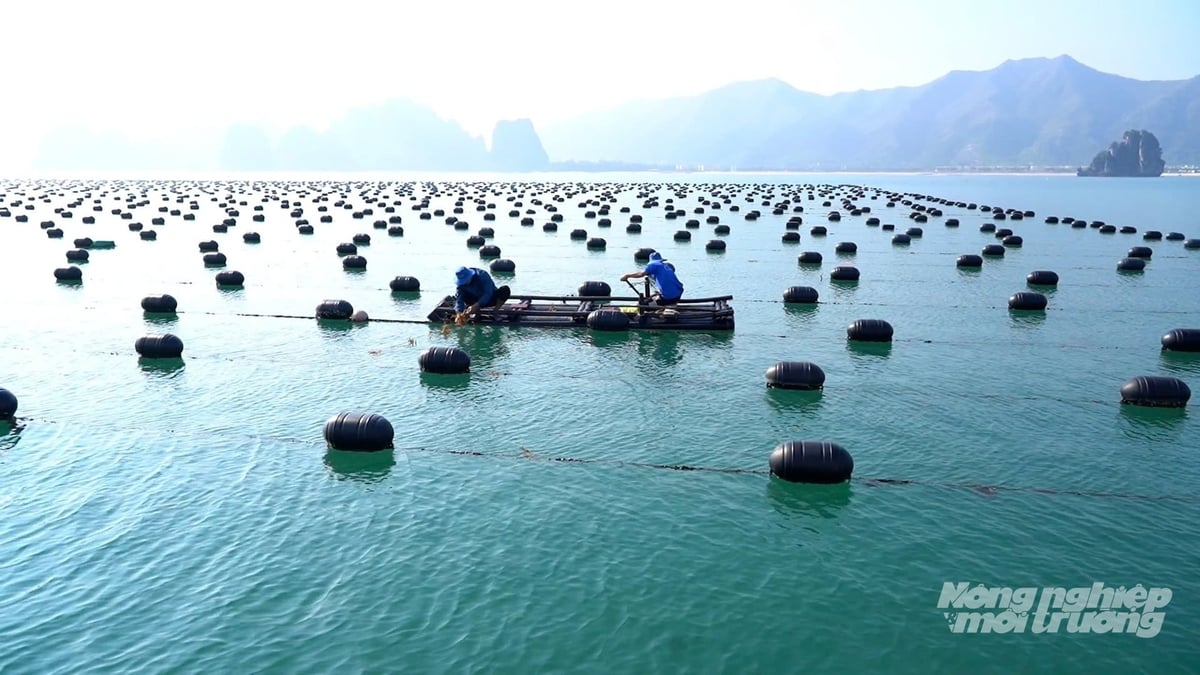
According to statistics from the Department of Fisheries and Surveillance, Viet Nam’s waters possess rich and diverse marine resources, with 2,040 fish species, including around 110 species of high economic value, in addition to seaweed and more than 600 species of crustaceans and mollusks. Photo: Nguyen Thuy.
Traceability: A mandatory market requirement
According to Dinh Xuan Lap, Deputy Director of the International Collaborating Center for Aquaculture and Fisheries Sustainability (ICAFIS), global consumption trends are shifting rapidly toward responsible and sustainable seafood products. Notably, these demands now extend beyond finished products to encompass the entire supply chain, particularly aquaculture feed production.
Major export markets such as Europe and the United States are tightening regulations on traceability, environmental protection and social responsibility. In this context, international certifications such as MSC, IFFO RS, MarinTrust and Fair Trade have effectively become mandatory “entry tickets” for companies seeking deeper participation in global supply chains.
These standards require fisheries to avoid overexploitation, protect marine ecosystems and biodiversity, maintain effective fisheries management and comply with regulations at both local and international levels. In particular, full traceability is required throughout the production chain, from raw materials to final products.
In Viet Nam, the pressure is especially visible in the aquaculture feed sector. However, one of the industry’s biggest bottlenecks remains the sourcing of wild-caught raw materials, which are often difficult to verify for legality and traceability.
Against this backdrop, Fisheries Improvement Projects (FIPs) have emerged as a global multi-stakeholder initiative. Lap said FIPs help connect actors across the supply chain, from fishers and businesses to retailers, in order to gradually improve fishing practices and meet anti-IUU fishing requirements, while also improving incomes and working conditions for fishers. The initiative is also viewed as a pathway for Viet Nam’s seafood industry to move closer to international standards.
From a governance perspective, Truong Hoang Lac, senior assessor and trainer at SGS Viet Nam, said international markets are shifting from monitoring individual products to overseeing entire value chains. As a result, businesses are being forced to establish integrated food safety management systems covering food safety, food security and food fraud prevention.
Standards within the Global Food Safety Initiative (GFSI) framework, including BRCGS, FSSC 22000, IFS, SQF and GlobalG.A.P., are now being applied throughout the entire supply chain. In particular, Chain of Custody (CoC) certifications allow traceability from broodstock and feed to fishing grounds, processing plants and distribution systems, ensuring transparency across the entire supply chain.
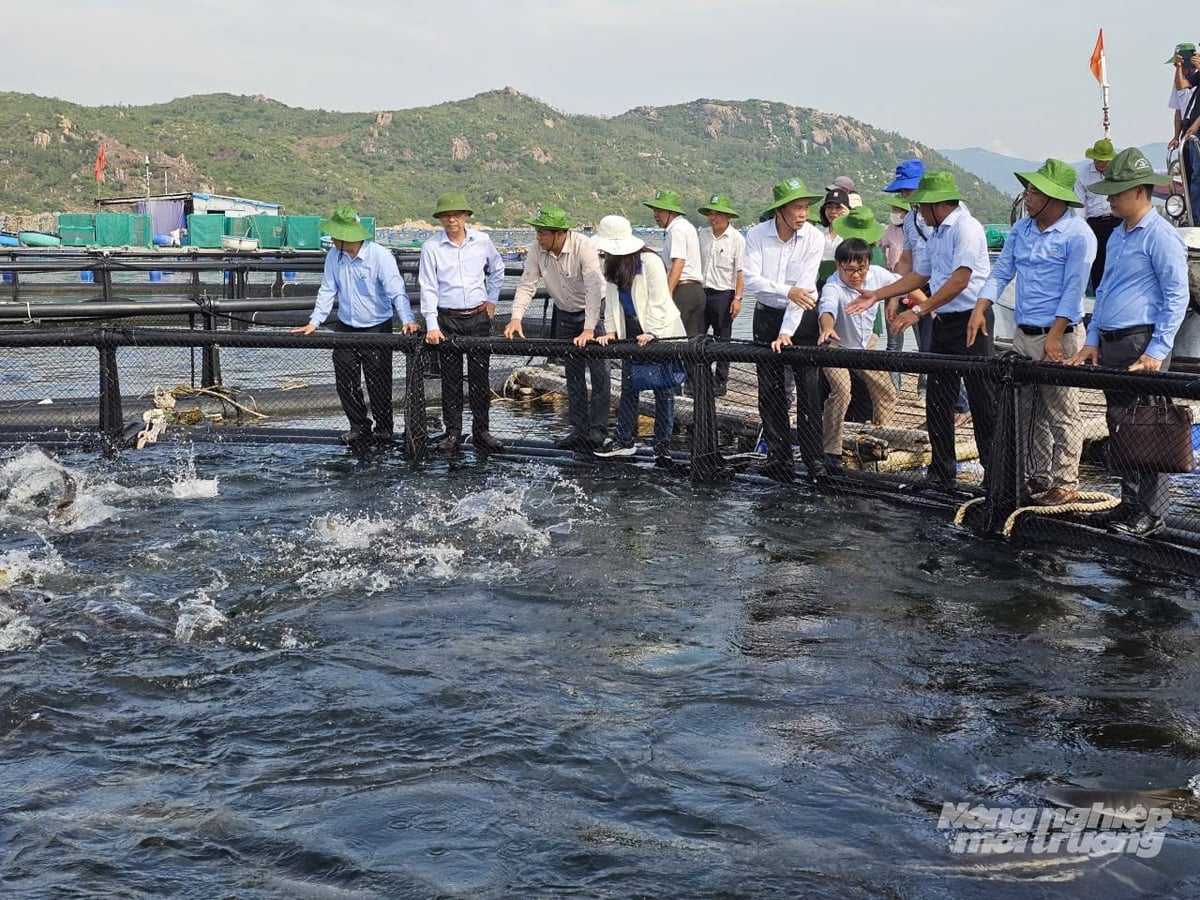
Officials from Vietnam’s Ministry of Agriculture and Environment visit a high-tech marine aquaculture model in Khanh Hoa Province. Photo: Kim So.
Shifting from volume to value
According to Pham Van Long, Deputy Director of the Southern Marine Research Center under the Viet Nam Fisheries Science Institute, Viet Nam’s seafood industry is facing a paradox of “high output but low added value.”
The country’s seafood production is estimated at around 10 million tons annually, generating approximately $11.3 billion in export revenue. However, while marine capture fisheries account for nearly 40% of total output, they contribute only around 20 – 25% of export value.
The key bottleneck lies in post-harvest handling, where losses remain as high as 20 – 30%. The main causes are outdated preservation technologies and fragmented cold-chain systems. Crushed ice without temperature control remains the dominant preservation method, resulting in rapid quality deterioration within 24–48 hours and limiting the industry’s ability to meet international standards.
At the same time, international standards are imposing increasingly strict requirements on raw materials, especially fishmeal and fish oil. Lac noted that international standards now require full traceability of harvested species, exclusion of endangered species listed by the IUCN or CITES and a complete ban on raw materials linked to illegal, unreported and unregulated (IUU) fishing.
Under GlobalG.A.P., at least 60% of marine ingredients must come from responsibly managed fisheries, with the threshold rising to 75% from 2025. The Best Aquaculture Practices (BAP) standard also sets a roadmap toward 100% certified raw materials after 2030.
In cases where certified sources are not yet available, businesses are required to participate in Fisheries Improvement Projects and demonstrate annual progress toward compliance. This underscores that sustainability requirements are no longer voluntary recommendations, but binding market conditions.
Feed production, which accounts for roughly 90% of the environmental impact in aquaculture, is also facing stricter controls. Do Thanh Muon, lead assessor at VinaCert, said the ASC Feed Standard version 1.2, which takes effect on Feb. 2, 2026, introduces a comprehensive control framework.
The standard requires companies to simultaneously meet environmental, social and sourcing criteria, including legal compliance, labor rights protection, emissions management and full traceability of raw material flows.
To address these bottlenecks, Long proposed reorganizing production through linked value chains connecting harvesting, procurement, processing and distribution. He also called for wider adoption of advanced preservation technologies such as RSW, slurry ice and IQF systems, alongside the development of integrated cold-chain infrastructure.
Additional recommendations include deploying electronic fishing logs, QR-code traceability systems, blockchain technology and big data analytics for fishing-ground forecasting. The goal is to reduce post-harvest losses to below 10–15% while increasing added value by 20 – 30%.
In aquaculture, Nguyen Dinh Quang, Head of Biotic Product Management and Development at C.P. Viet Nam, emphasized that shrimp farming solutions must be based on biosecurity and integrated control of shrimp health, pathogens and environmental conditions. He said the shift toward microbial management and technology-driven farming is becoming inevitable in order to reduce dependence on chemicals and improve farming efficiency.
Nguyen Dinh Hai, technical marketing manager at CJ Bio Viet Nam, said new trends are focusing on the development of functional protein sources to replace fishmeal, combining peptides and nucleotides to improve digestion, growth and immunity in farmed species.
Similarly, Bui Thi Ngoc Phi, Technical Director for Aquaculture at Lai Thieu Livestock Feed, said the use of astaxanthin derived from shrimp byproducts combined with hydrolyzed protein not only improves product quality but also opens opportunities to reduce dependence on imported raw materials.
According to representatives from the Directorate of Fisheries and Fisheries Surveillance under Viet Nam’s Ministry of Agriculture and Environment, maintaining Viet Nam’s position among the world’s leading seafood exporters will require businesses to proactively meet ESG standards covering environmental, social and governance criteria.
The combination of technology, traceability management and community responsibility is increasingly becoming the foundation that will enable Viet Nam’s seafood industry to overcome technical barriers while building a transparent and trustworthy reputation in global markets.
Agriculture News | Agri Products Price