

(VAN) For Ha Noi Xanh Cooperative, transparent traceability, safe production processes, and ethical practices are required for the Halal market.
As women’s role is increasingly recognized in agricultural value chains, the Asia – Pacific Women’s Conference 2026, recently held in Hanoi, has provided a platform to connect new initiatives on the cooperative economy, green transition, and women’s empowerment in the region, particularly in response to the International Year of Women Farmers 2026 launched by FAO.

Women farmer leaders from cooperatives in the region conduct a field visit as part of the Asia–Pacific Women’s Conference 2026. Photo: Kieu Chi.
A new model of agriculture
Within the program framework, delegates conducted field visits to a women-managed model at the Ha Noi Xanh Cooperative. This initiative is making its mark with a green agriculture approach aligned with Halal market standards.
Ms. Ba Thi Nguyet Thu, Director of Ha Noi Xanh Cooperative, affirmed that the cooperative has pursued a new-style mindset in agriculture and cooperative development from the very beginning.
“I have always believed that if we choose green agriculture, it must be sustainably green. And once it is sustainable, it must be able to integrate globally, not remain confined within a small model,” she said.
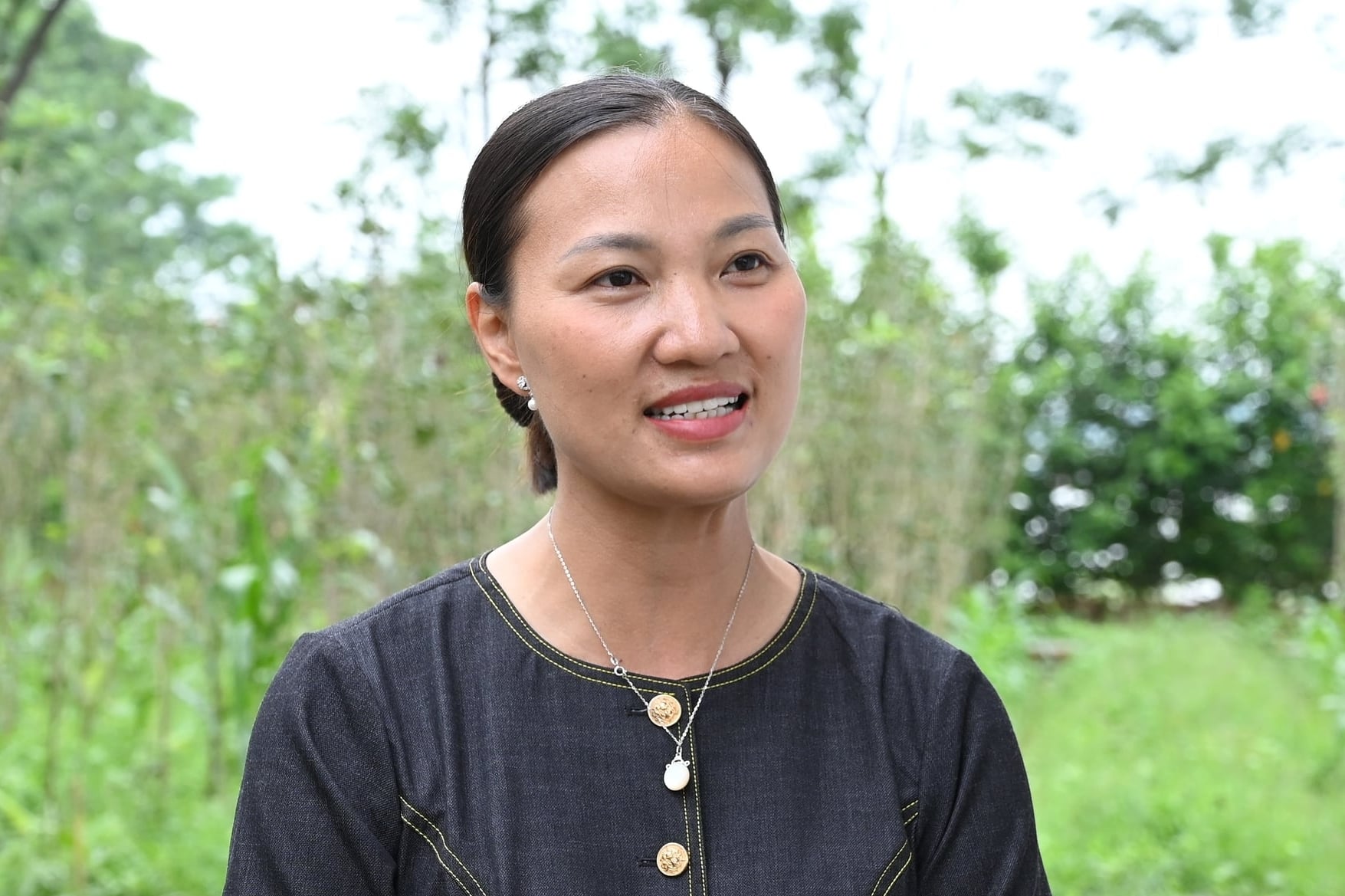
Ms. Ba Thi Nguyet Thu, Director of Ha Noi Xanh Cooperative. Photo: Kieu Chi.
The core strength of Ha Noi Xanh Cooperative lies in combining technology with indigenous knowledge to enhance the value of agricultural products. According to the cooperative’s female director, technology can be acquired, but the real challenge is integrating it with local specialties in a meaningful and effective way.
Based on this approach, Ha Noi Xanh Cooperative has chosen Diễn pomelo as its core product for the development of deep processing. Beyond using the fruit itself, the cooperative also fully utilizes other parts of the pomelo tree, including leaves, flowers, and fruit, to create high-value products such as hair care, skincare, and organic wellness goods.
Ms. Thu said the cooperative currently focuses on harvesting pomelo fruit and flowers from fruit-thinning operations, aiming to optimize economic value while helping farmers balance supply and market demand.
According to her, one of the biggest challenges for clean agricultural products today is market trust. “Our story is not about saying, it is about proving,” she emphasized.
Consumers no longer simply accept labels such as organic or green; instead, they demand clear proof through standards, production processes, and transparent traceability systems. Experience in international markets before expanding domestically has helped Ha Noi Xanh Cooperative recognize early on that standards are an essential “passport” to market access.
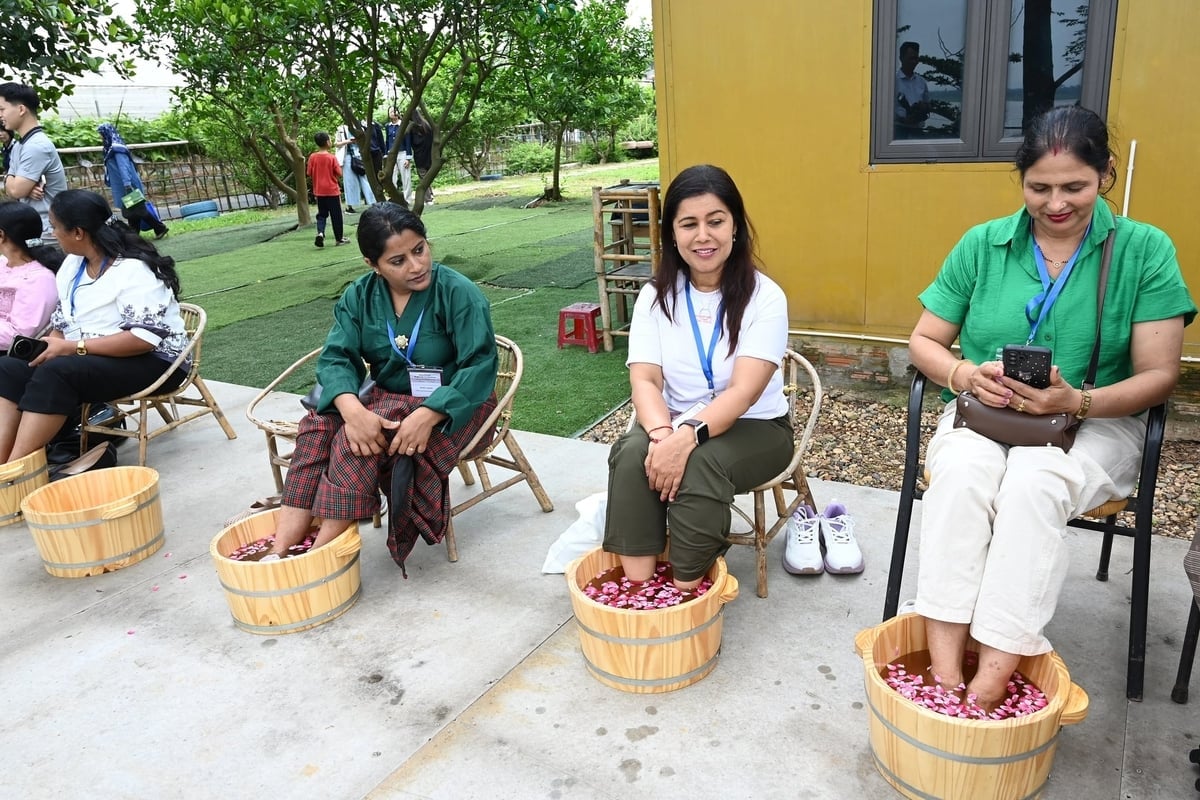
Women farmer leaders of cooperatives experience a herbal foot-soaking activity at Ha Noi Xanh Cooperative. Photo: Kieu Chi.
“If a product is priced higher, it must prove that value through what customers actually need,” she said.
Based on this orientation, the cooperative has chosen to develop in line with Halal standards, a fast-growing, highly potential global market. According to Ms. Thu, Halal standards are not only for Muslim-majority countries but also reflect a new global consumer trend: safety, green production, sustainability, and ethics.
She also emphasized that to convince farmers to shift toward green production, leadership plays a crucial role. At Ha Noi Xanh Cooperative, the leadership team directly participates in all stages, from cultivation and care to harvesting and processing, serving as a practical model for members.
This “hands-on leadership with farmers” approach has helped the cooperative build strong consensus and trust within its membership.
In addition to production, Ha Noi Xanh Cooperative has implemented an organic waste treatment model at the community level by raising black soldier flies alongside poultry farming, aiming to turn waste into economic value and contribute to cleaner, greener rural development.
Affirming women’s role in the cooperative economy
Ms. Nguyen Thi Hoai Linh, Vice President of the Viet Nam Cooperative Alliance, said that the United Nations’ designation of 2026 as the International Year of Women in Agriculture is an important recognition of women’s contributions.
According to Ms. Linh, women account for more than 50% of the agricultural workforce, yet their contributions are still not fully recognized, and their access to resources, management roles, and participation in policymaking remains limited. Female farmers must simultaneously take on three roles: production, family care, and community engagement. Therefore, to succeed, they often have to exert greater effort than men.
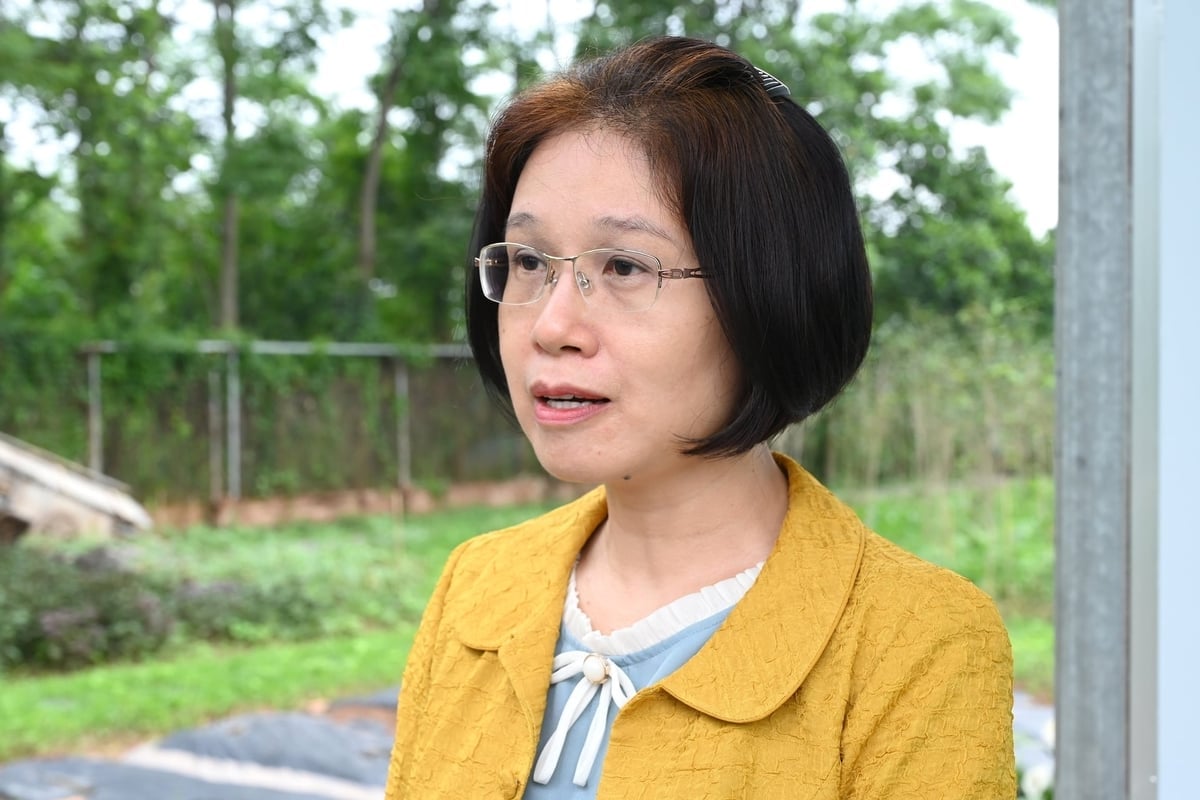
Ms. Nguyen Thi Hoai Linh, Vice President of the Vietnam Cooperative Alliance. Photo: Kieu Chi.
Ms. Linh said that it is necessary to strengthen awareness of gender equality in policy formulation, while also supporting women in accessing digital technology, digital transformation, and modern management tools so they are not left behind.
According to the Viet Nam Cooperative Alliance, the number of women-led cooperatives remains limited; however, an increasing number of outstanding models are emerging, demonstrating women’s leadership capacity and strong adaptability in the modern cooperative economy.
Ms. Ba Thi Nguyet Thu said that on May 15, Ha Noi Xanh Cooperative will coordinate with the Institute for Industry and Trade Policy Research to launch the HalalViet Promotion and Experience Center, aiming to connect enterprises and cooperatives across the country that have products meeting Halal standards.
The center will serve as a space for displaying and promoting products, while also supporting export connectivity to international markets through a network of embassies and foreign partners.
Agriculture News | Agri Products Price