

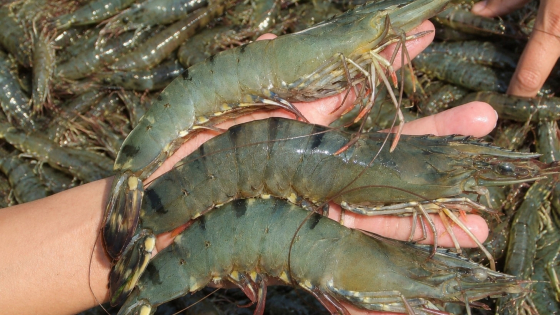
(VAN) A rice-shrimp farming zone in An Giang province has earned international ASC certification, boosting the value of ecologically farmed shrimp and positioning local producers for deeper integration into global supply chains.
Farming shrimp to international standards
In the final days of May, farmers in Dong Hoa commune, An Giang province, had reason to celebrate as their local rice-shrimp farming area was officially recognized with Aquaculture Stewardship Council (ASC) certification. The zone, spanning nearly 818 hectares and encompassing 254 farming households, is the first ASC-certified rice-shrimp area in An Giang province.
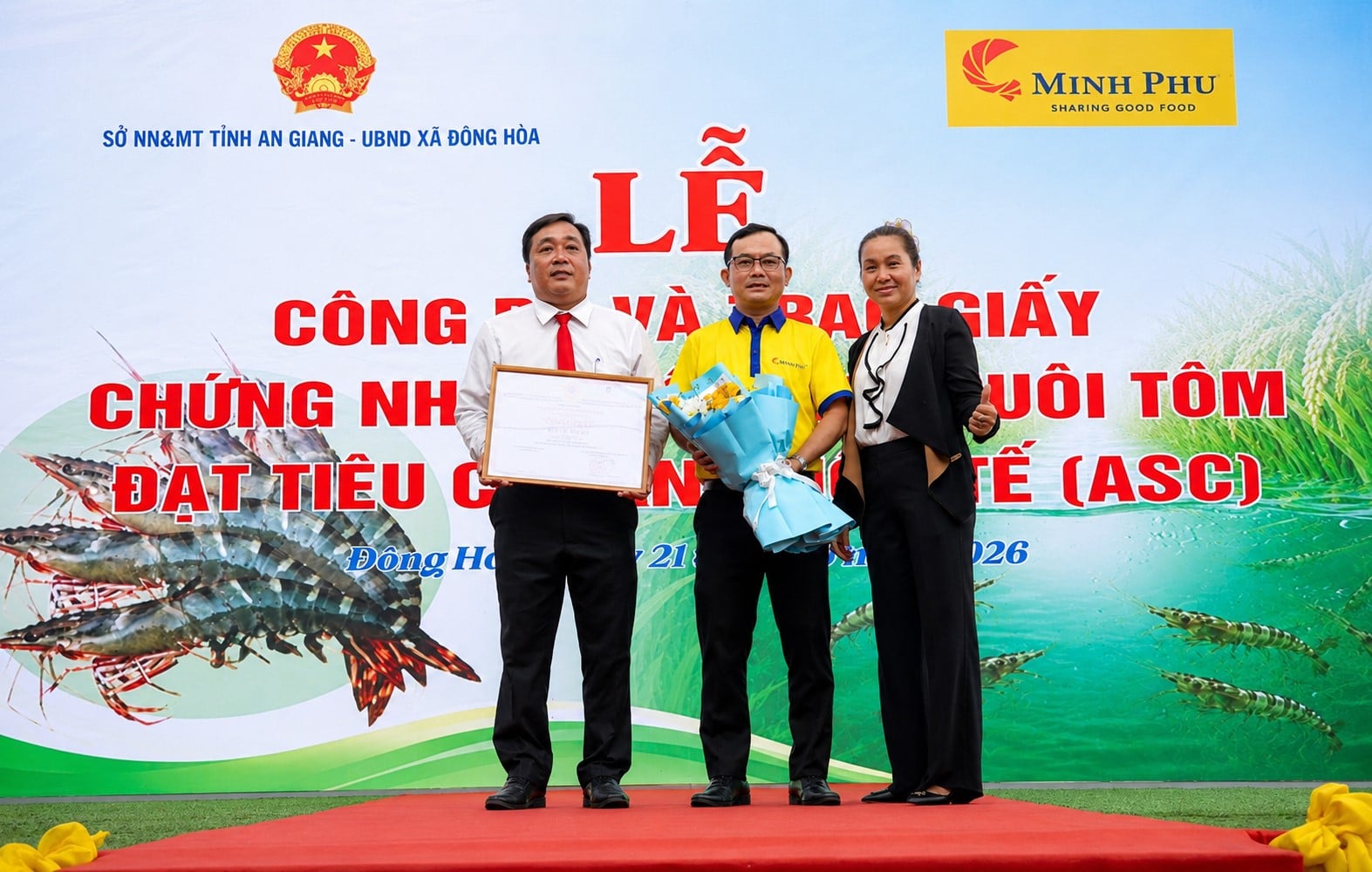
A representative of Control Union presents the international ASC certification to rice-shrimp farming households in Dong Hoa, accepted on behalf of the Dong Hoa Commune People’s Committee and Minh Phu Certified Shrimp Social Enterprise Co., Ltd. Photo: Trung Chanh.
Achieving that certification required years of gradual transformation in how farmers think about and conduct their work. Households that once relied primarily on extensive, experience-based aquaculture methods have steadily adopted modern production processes to meet the demanding requirements of international markets.
Nguyen Van Khanh, a member of the Thanh An Shrimp-Crab-Rice Cooperative in Dong Hoa commune and one of the earliest participants in the model, recalled his initial apprehension. “When I first heard about international ASC standards, I was worried I wouldn’t be able to meet them,” he said. “But with patient guidance from technical staff, I came to realize that the hardest part wasn’t the techniques; it was changing production habits that had been in place for years.”
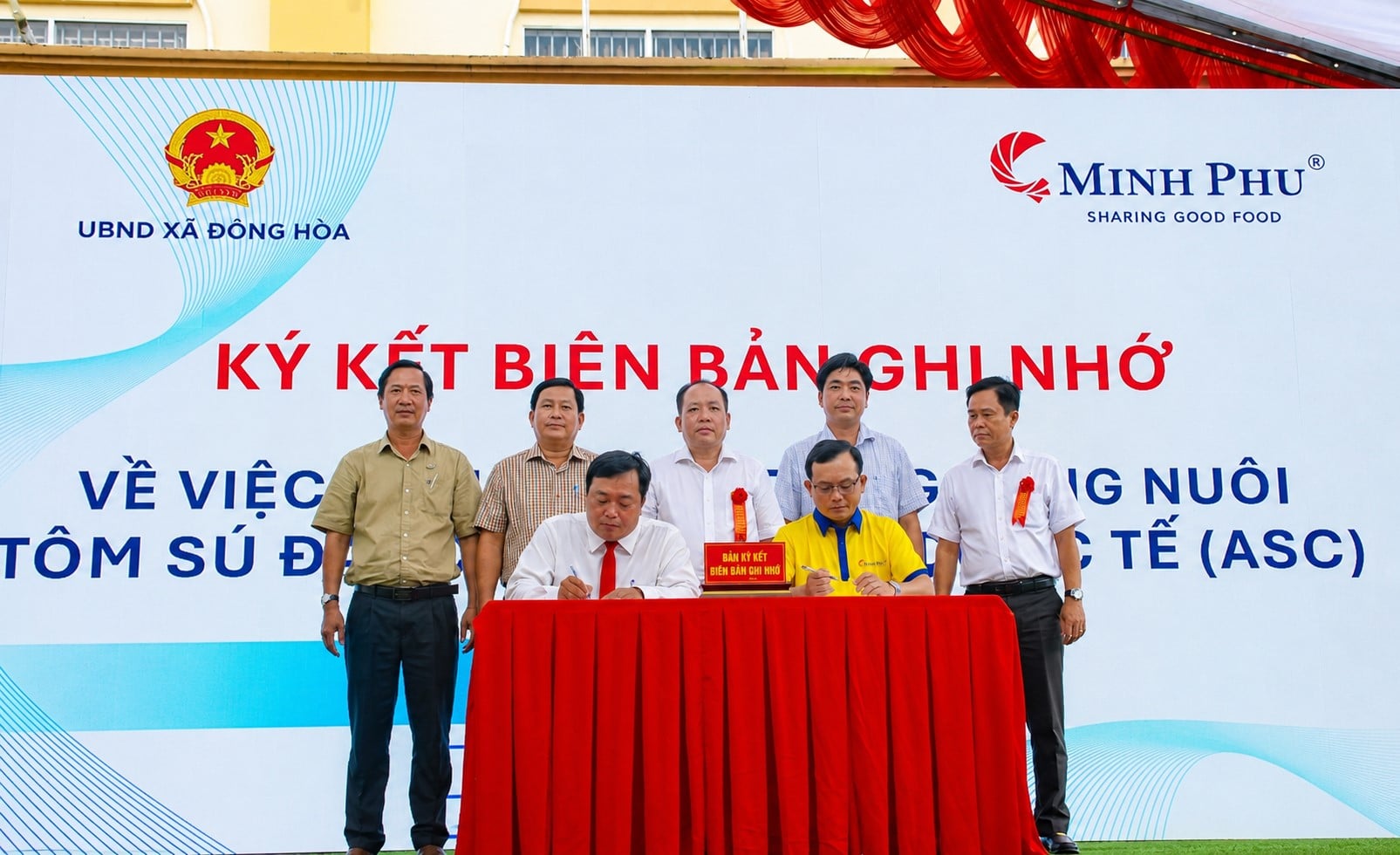
Representatives of the Dong Hoa Commune People’s Committee and Minh Phu Certified Shrimp Social Enterprise Co., Ltd. sign a memorandum of understanding to continue developing and expanding the ASC-certified rice-shrimp farming zone. Photo: Trung Chanh.
According to Nguyen Van Khanh, ASC compliance requires farmers to use seed stock of verified origin, maintain detailed production logs, and strictly avoid prohibited antibiotics and any chemicals outside the approved list. Every stage of the process, from pond preparation and stocking to water quality monitoring and harvesting, must be documented to ensure full product traceability. The discipline has paid off: shrimp yields among participating households have risen considerably, from roughly 250 to 300 kilograms per hectare per crop previously, to between 350 and 450 kilograms per hectare per crop today, with a corresponding improvement in commercial shrimp quality.
Truong Van Tuan Em, Chairman of the Dong Hoa Commune People’s Committee, said local authorities would continue to promote ASC-certified aquaculture to expand the certified farming area, while working with technical agencies to refine aquaculture zoning plans that align with infrastructure, transportation, and irrigation development.
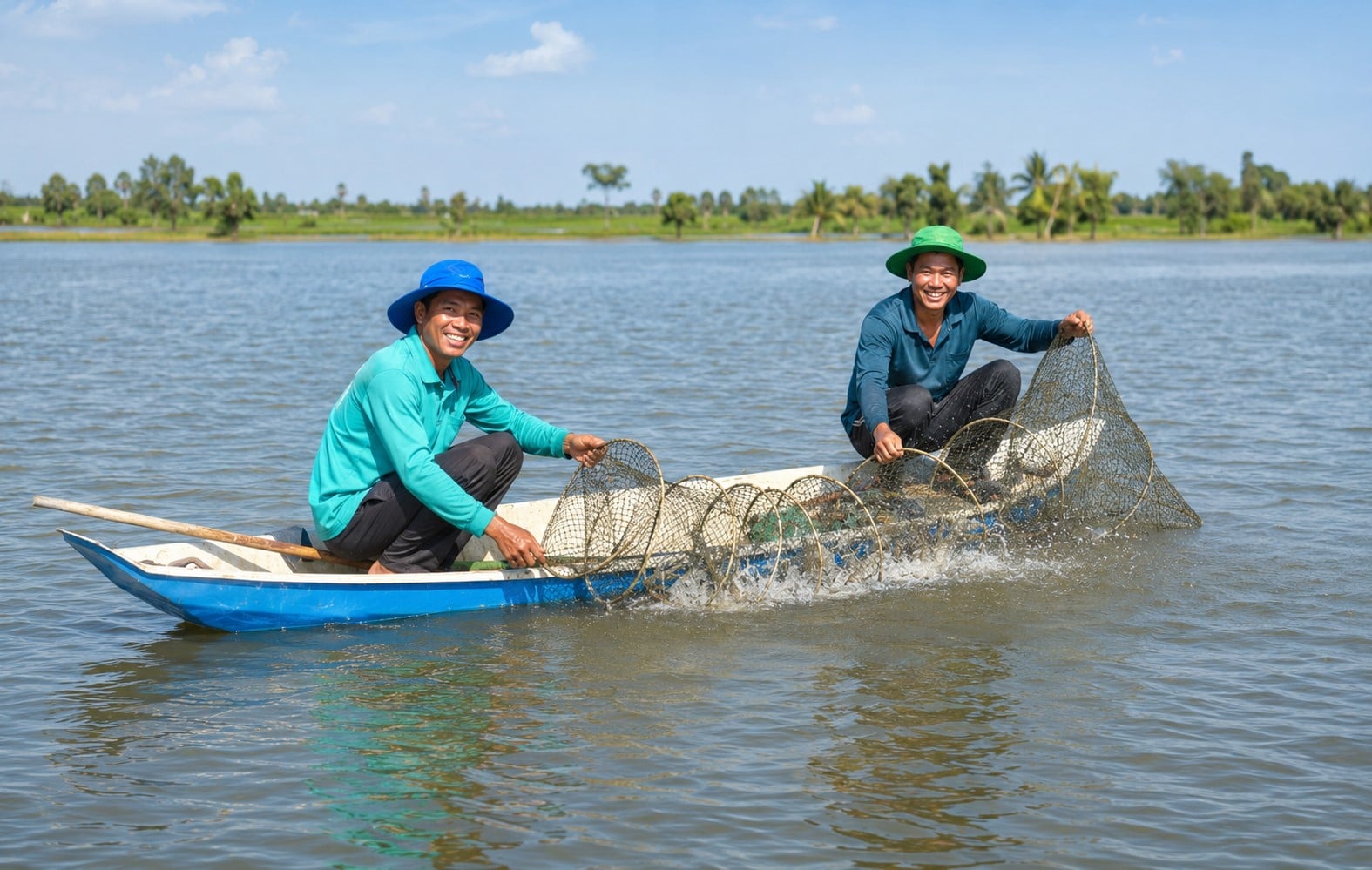
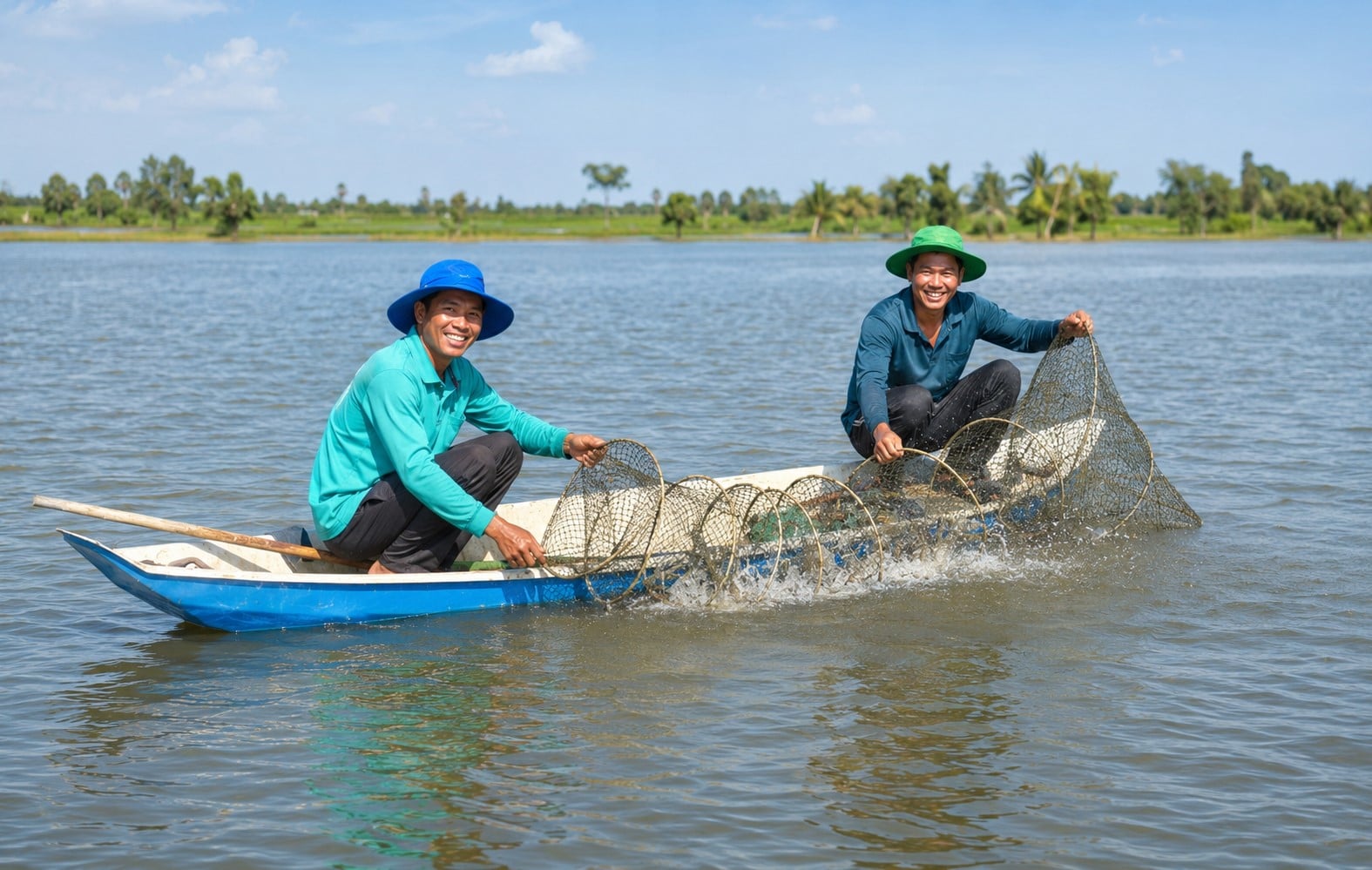
Achieving international ASC certification requires shrimp farmers to overhaul their production processes and comply with regulations on environmental protection, food safety, traceability, social responsibility, and animal welfare. Photo: Trung Chanh.
“Cooperatives must continue to strengthen the linkages between farmers and purchasing, processing, and export enterprises to ensure stable market outlets and higher product value,” Truong Van Tuan Em said. “Participants in the model need to maintain and expand their certified acreage and strictly uphold production standards to preserve product quality.”
Eco-shrimp poised for the global stage
Lam Thai Xuyen, Director of Minh Phu Certified Shrimp Social Enterprise Co., Ltd., described ASC as one of the most rigorous responsible aquaculture certification frameworks, encompassing more than 320 criteria across legal compliance, environmental protection, food safety, traceability, social responsibility, and animal welfare.
For individual farmers, however, the practical focus narrows to roughly 13 to 15 core criteria directly relevant to production processes. The bulk of the remaining requirements are fulfilled through coordinated public-private partnerships and community management models involving enterprises, local authorities, and relevant agencies.
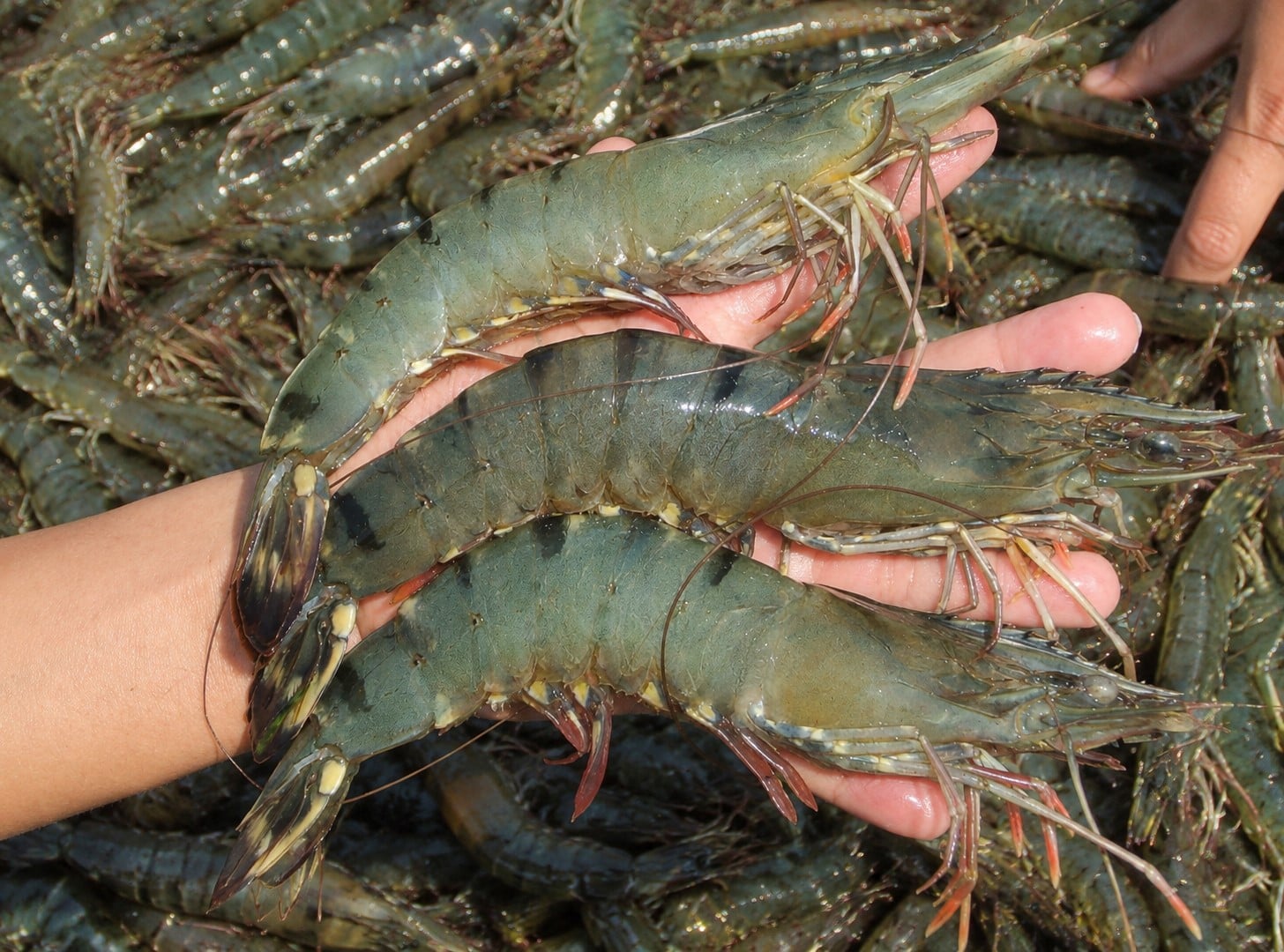
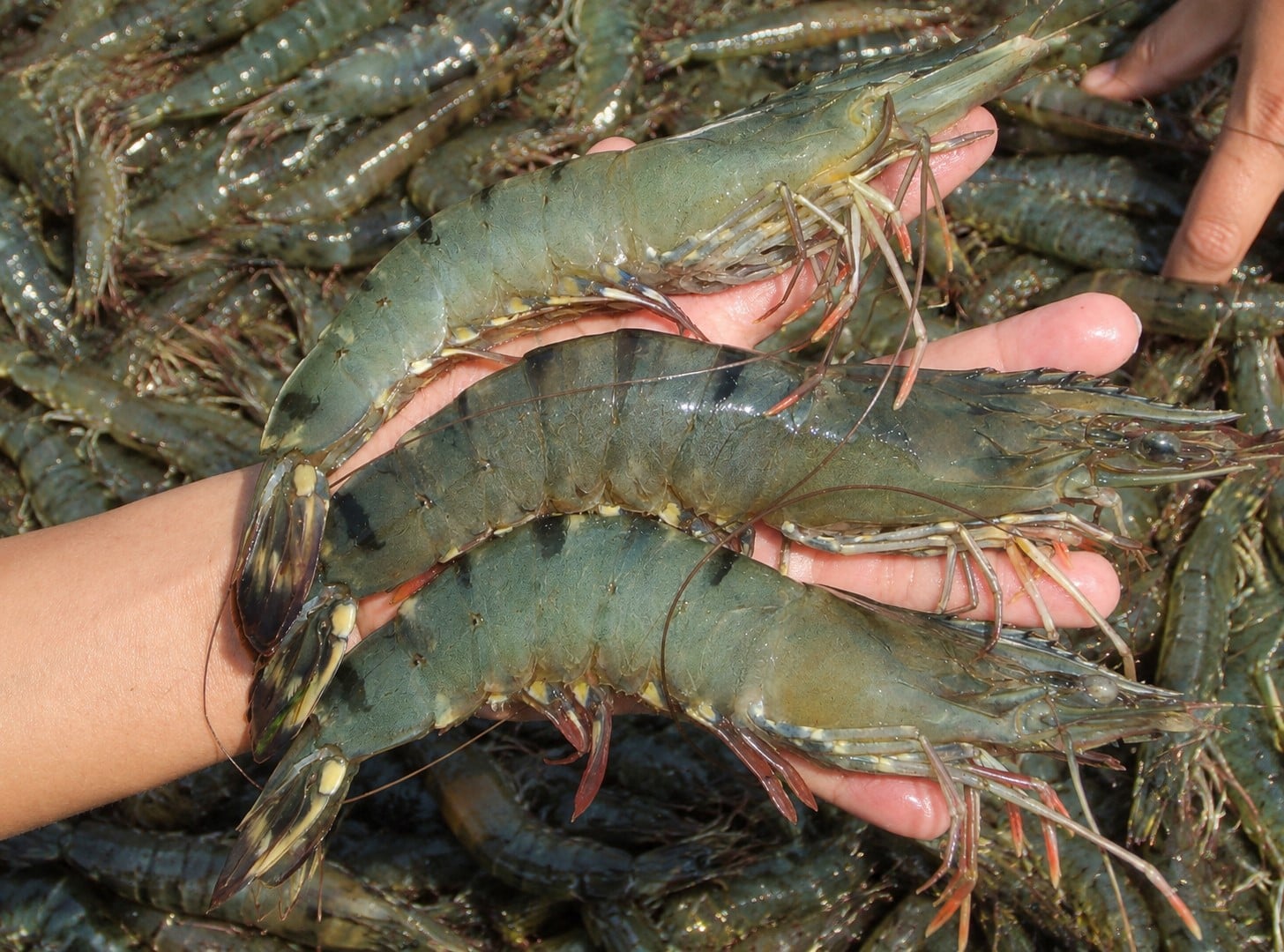
ASC-certified eco-farmed shrimp is not only a clean and safe product but also one that carries environmental, social, and livelihood value for farming communities. Photo: Trung Chanh.
Lam Thai Xuyen noted that Viet Nam currently ranks second in the world in certified ASC shrimp output, trailing only Ecuador. In the segment of extensive black tiger shrimp, shrimp-mangrove, shrimp-rice, and improved extensive eco-shrimp farming, Viet Nam leads the world.
“ASC-certified shrimp is not merely a clean, safe product; it carries environmental, social, and livelihood value for farming communities,” Lam Thai Xuyen said. “This certification is the passport that allows Vietnamese shrimp to enter global supply chains at a deeper level.”
Quach Van Toan, Deputy Director of the An Giang Department of Agriculture and Environment, said the certification achieved in Dong Hoa commune was clear evidence of a broader shift from smallholder production toward market-standard, quality-focused, and sustainable aquaculture.
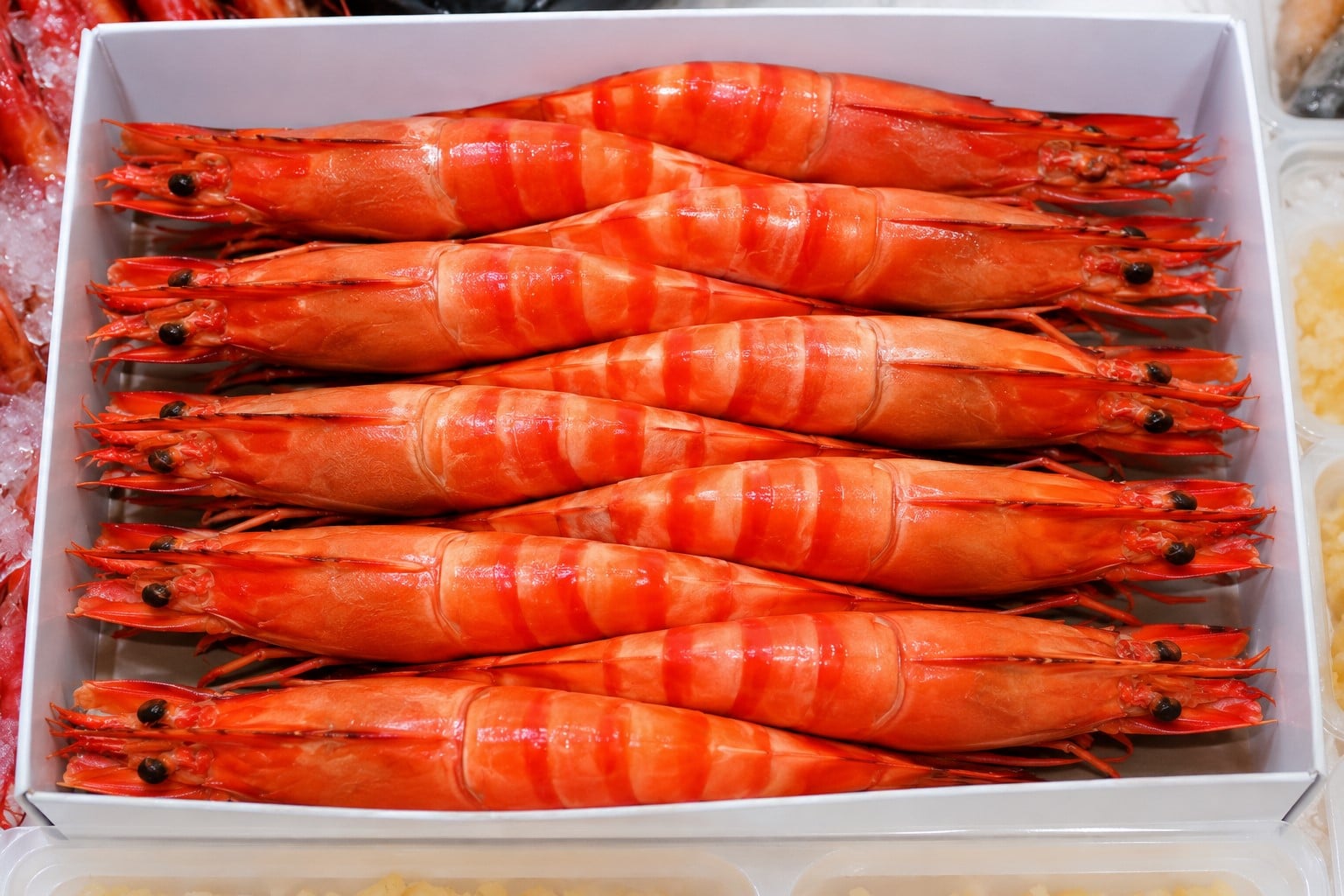
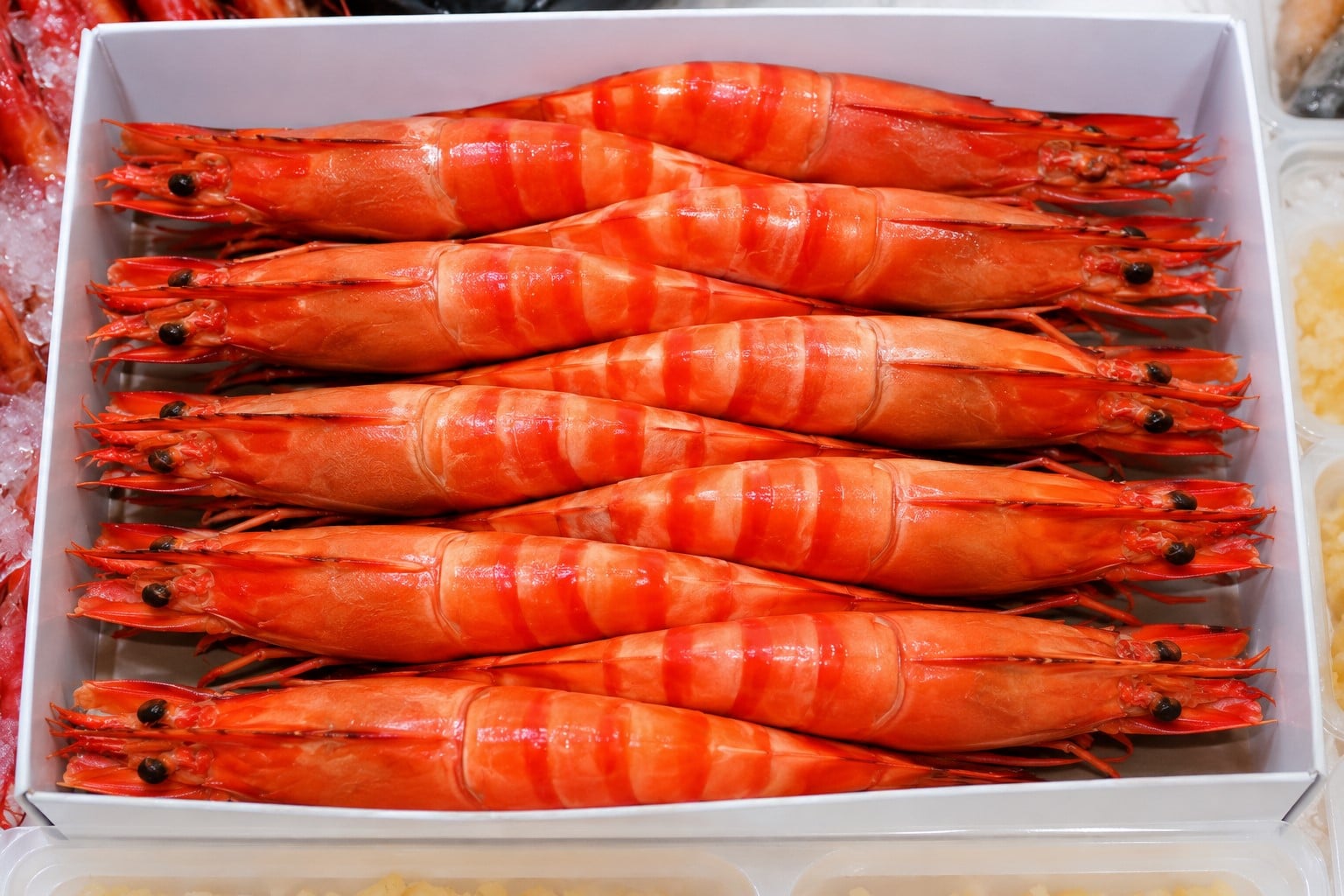
After processing, eco-farmed shrimp displays a distinctive brick-red color and superior meat quality, and ASC certification serves as the passport enabling Vietnamese shrimp to compete in global supply chains. Photo: Trung Chanh.
“This result affirms the effectiveness of the linkage between local government, enterprises, and farming households in developing the shrimp sector,” Quach Van Toan said. “Going forward, An Giang will continue to expand organic and eco-shrimp farming zones certified to international standards such as ASC and GlobalGAP, while strengthening integration across production, processing, and distribution, and building the An Giang shrimp brand around quality, responsibility, and international competitiveness.”
The ASC certification of the rice-shrimp farming zone in Dong Hoa commune marks a significant shift in local farmers’ production mindset and opens the door for An Giang’s eco-shrimp to move further up the global value chain, pointing the way toward a greener, more responsible, and more sustainably developed aquaculture sector.
Agriculture News | Agri Products Price