

(VAN) Leveraging its position as China’s gateway to ASEAN, Guangxi aims to become a hub for the aggregation, distribution, and consumption of regional agricultural products across the Chinese market.
Guangxi welcomes a wave of ASEAN agricultural products
On June 18, in Nanning City (Guangxi province), within the framework of China’s 618 Shopping Festival, the People’s Government of the Guangxi Zhuang Autonomous Region organized the “Made in ASEAN, Distributed through Guangxi, Sold across China” event, featuring the initiative “ASEAN Fruits Gather in Guangxi. “The event focuses on facilitating the entry of fruits and fruit-based products from ASEAN countries into the Chinese market.
The event is an important component of the “Big Market for All: Export to China” campaign launched by China’s Ministry of Commerce. The initiative aims to implement the country’s neighborhood diplomacy strategy while advancing Guangxi’s role as a key hub for ASEAN goods entering the Chinese market.
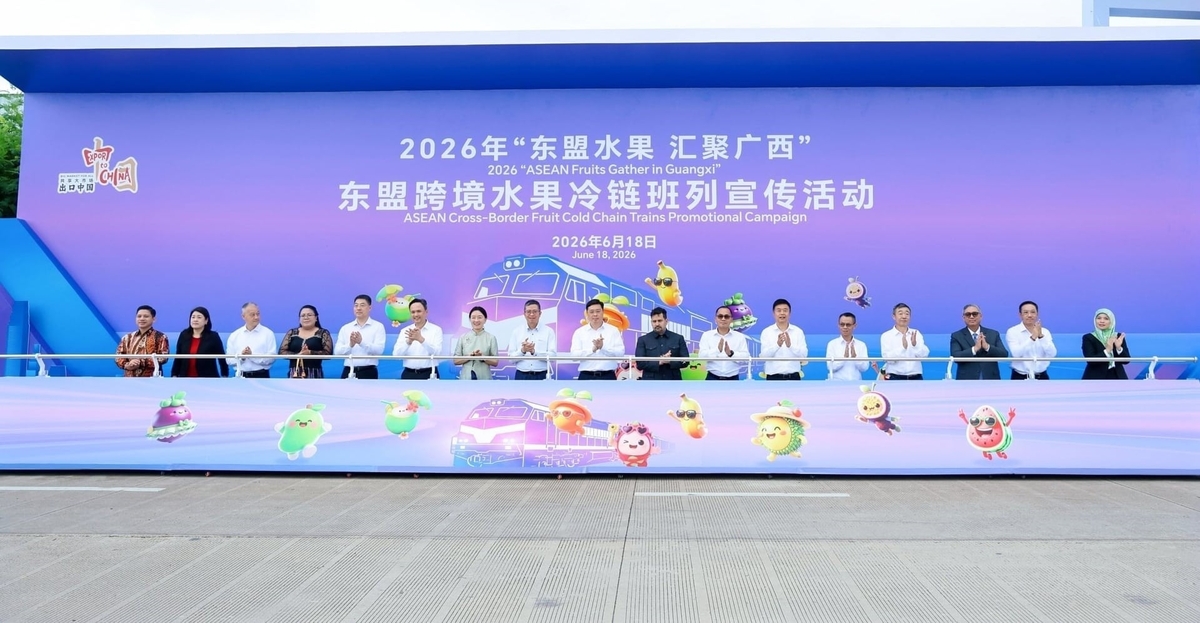
The “Made in ASEAN, Distributed through Guangxi, Sold across China” event was held within the framework of China’s 618 Shopping Festival. Photo: Organizing Committee.
The event was attended by the Chairman of the Guangxi Zhuang Autonomous Region, Ambassadors and Consuls General from ASEAN countries, logistics corporations, suppliers and distributors, Chinese investors, and representatives from ASEAN member states.
Leveraging Guangxi’s geographical advantages and efficient logistics infrastructure, importers and distributors of fruits and other agricultural products from ASEAN countries expressed their wish to gather shipments in Guangxi for sorting and distribution before reaching consumers across China, thereby transforming an aspiration into an achievable reality.
The initiative is expected to strengthen and expand the trade route of “Made in ASEAN, Distributed through Guangxi, Sold across China”; enhance Guangxi’s position as a key distribution hub; establish an efficient platform connecting the entire agricultural value chain; deliver benefits to Chinese consumers; and further deepen China–ASEAN cooperation.
Vietnamese fruits benefit from Guangxi’s distribution initiative
Speaking at the event, Mr. Pham Thanh Binh, Ambassador Extraordinary and Plenipotentiary of Viet Nam to China, highly appreciated the initiatives and efforts of the Guangxi Autonomous Region to promote trade relations between China and ASEAN countries. He also affirmed Viet Nam’s active participation in and strong support for the entire process.
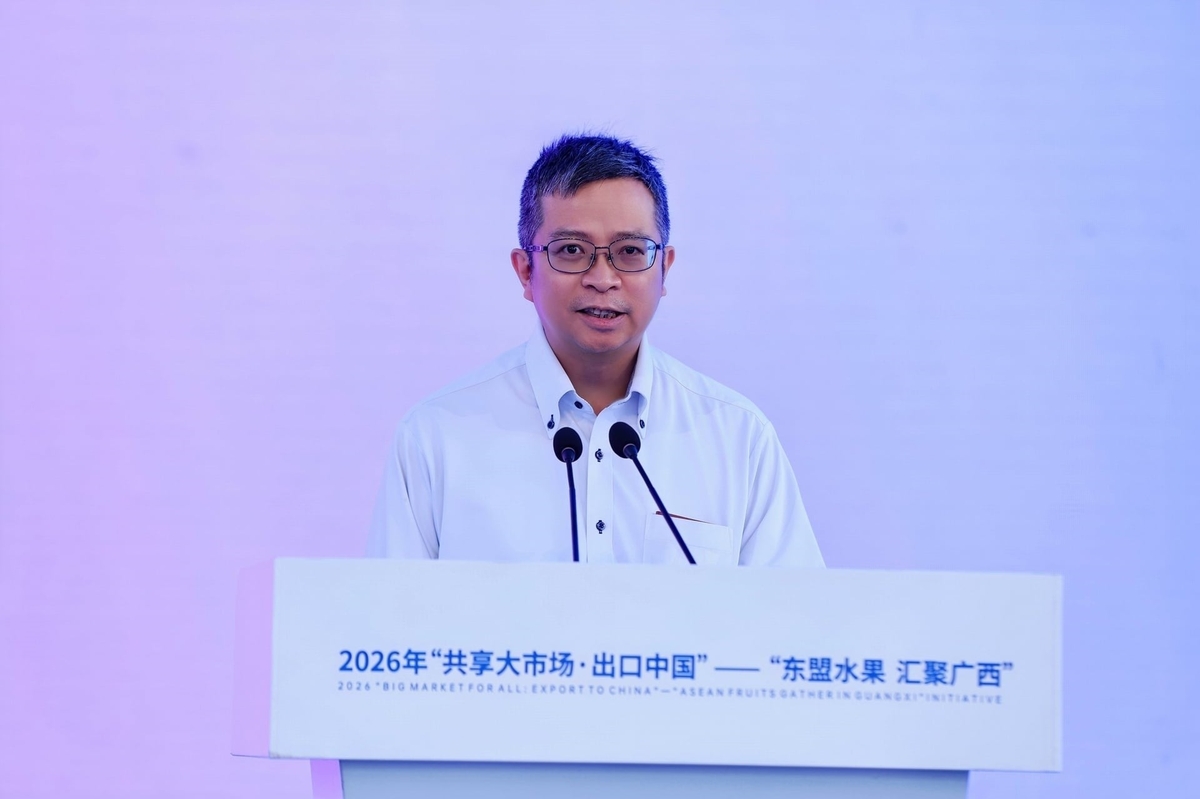
Ambassador Pham Thanh Binh speaks at the “Made in ASEAN, Distributed through Guangxi, Sold across China” event. Photo: Do Quang Tung.
According to Ambassador Pham Thanh Binh, the event takes place at a time when China and ASEAN are actively implementing the Regional Comprehensive Economic Partnership (RCEP) and advancing the development of Version 3.0 of the ASEAN–China Free Trade Area.
“I highly appreciate Guangxi’s role as a gateway connecting China and ASEAN. With an increasingly modern system of border gates, logistics facilities, and cold transportation, Guangxi has become an important transit hub enabling ASEAN agricultural products, including those from Viet Nam, to gain efficient access to the Chinese market,” Ambassador Pham Thanh Binh stated.
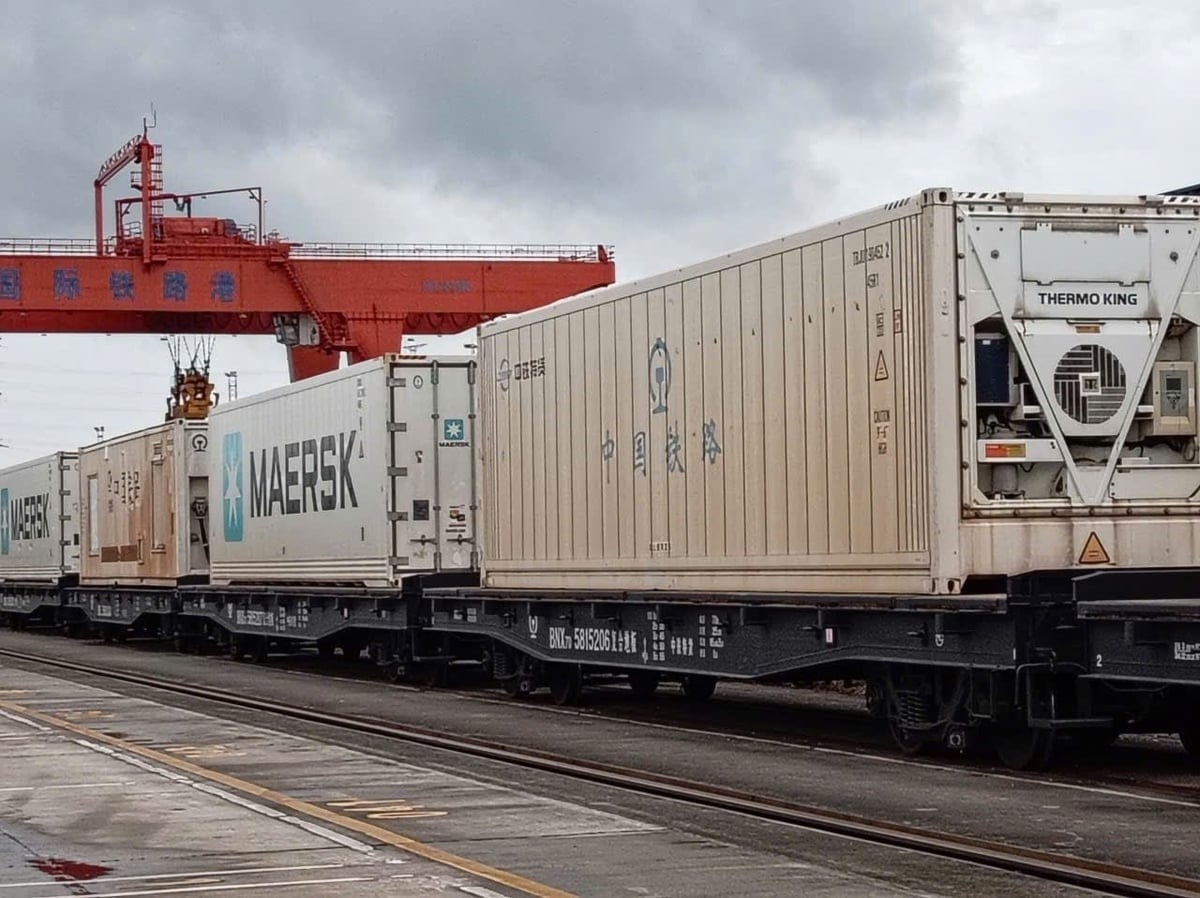
The event contributes to strengthening and expanding the trade route of “Made in ASEAN, Distributed through Guangxi, Sold across China.” Photo: Do Quang Tung.
Leaders of Guangxi Province and representatives of ASEAN diplomatic missions jointly launched the “ASEAN Cross-Border Cold-Chain Fruit Train Promotion Campaign” and welcomed the arrival of a refrigerated container train transporting fruit from Viet Nam. This is a strategic trade initiative designed to accelerate the export of perishable ASEAN agricultural products (such as durian, coconuts, longan, and dragon fruit) directly into the Chinese market. The campaign highlights massive advancements in regional refrigerated rail logistics, significantly reducing spoilage and transit times.
As ASEAN’s largest fruit import market, with import turnover reaching USD 12.16 billion in 2025, including USD 7.49 billion of durian alone, China’s efforts to facilitate trade, logistics, transportation, and customs clearance for ASEAN exporters and diversify supply sources are expected to intensify competitive pressures on Vietnamese fruits.
Notably, the Laos–China Railway has demonstrated remarkable efficiency in the transport of agricultural products, while maritime routes linking ASEAN and China continue to expand. Meanwhile, the Pinglu Canal, a major transport route connecting Nanning to the Gulf of Tonkin via the Qin River, is projected to commence operations in September 2026. The project is expected to reduce transportation costs by approximately 30%, significantly enhancing the competitiveness of many regional exporting countries.
Logistics enterprises estimate that, under a single-window and single-stop system and smart customs, fruit shipments can reach Nanning from Hanoi in 16 hours and from Bangkok in 36 hours. From Nanning, products can then be distributed to more than 100 cities across China within a single day.
Agriculture News | Agri Products Price