


(VAN) Returning to extensive shrimp farming, lowering stocking, and cutting back on feeding are the measures to cope with rising feed costs and falling prices.
Farming shrimp while worrying
Late June is typically when shrimp farmers in eastern Gia Lai stock ponds for the second crop. However, in many key farming areas, the atmosphere has been unusually quiet. The reason is simple: after heavy losses throughout 2025 and the first crop of 2026, many farmers have exhausted their investment capacity and lost enthusiasm for shrimp farming.
This is the third year that Mr. Duong Thanh Hy (32), from Diem Van Hamlet (Tuy Phuoc Commune), has leased 2 hectares of shrimp ponds in Vinh Quang 2 Hamlet (Tuy Phuoc Dong Commune, Gia Lai) through a public auction, paying VND 106 million/year. He divided the area into ten ponds, including nine grow-out ponds and one settling pond.
In 2025, Mr. Hy suffered total losses. Disease wiped out his shrimp during the first crop, while historic flooding during the second crop breached pond embankments and washed away the remaining stock. Entering the first crop of 2026, unfavorable weather triggered another disease outbreak, resulting in yet another failed season.
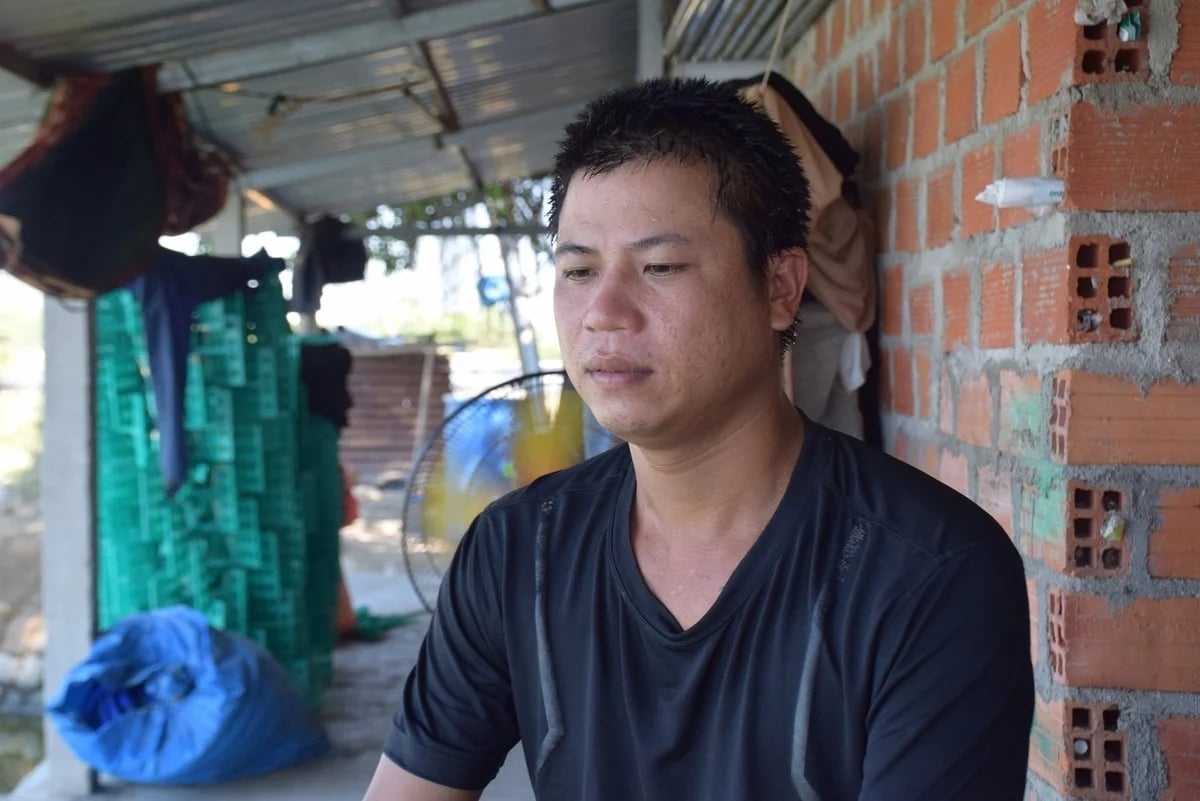
Mr. Duong Thanh Hy recalls his consecutive losing shrimp crops. Photo: V.D.T.
These days, when most shrimp farmers are busy preparing ponds for the second crop, Mr. Hy’s ponds remain empty under the scorching sun. Even the two high-tech ponds covering 1,200 square meters, into which he invested heavily, now sit idle and lifeless.
“I spent VND 400 million on dredging, machinery, and pond liners for the two high-tech ponds. But during the first crop of 2026, unexpected heavy rains triggered disease outbreaks, killing all the shrimp when they were just over a month old. I stocked 400,000 post-larvae, and after including pond lease fees, pond preparation costs, and seed purchases, I lost hundreds of millions of dong, not even counting feed expenses”, Mr. Hy said.
Mr. Nguyen Duy Luan (43), also from Vinh Quang 2 Hamlet, owns 10,000 square meters of ponds divided into three sections: one for whiteleg shrimp, one for black tiger shrimp, and one for fish. During the first crop of 2026, adverse weather conditions caused disease outbreaks after only 40 days of culture. Dead shrimp appeared daily. The few surviving shrimp are now being harvested before he prepares the ponds for the next crop.
Mr. Nguyen Van Phap, who also owns 10,000 square meters of ponds in the same area, divides his farm into three ponds: one 1,800-square-meter intensive shrimp pond and two extensive ponds stocked with shrimp and mud crabs. While his intensive pond suffered major losses during the first crop, the extensive ponds generated reasonable income.
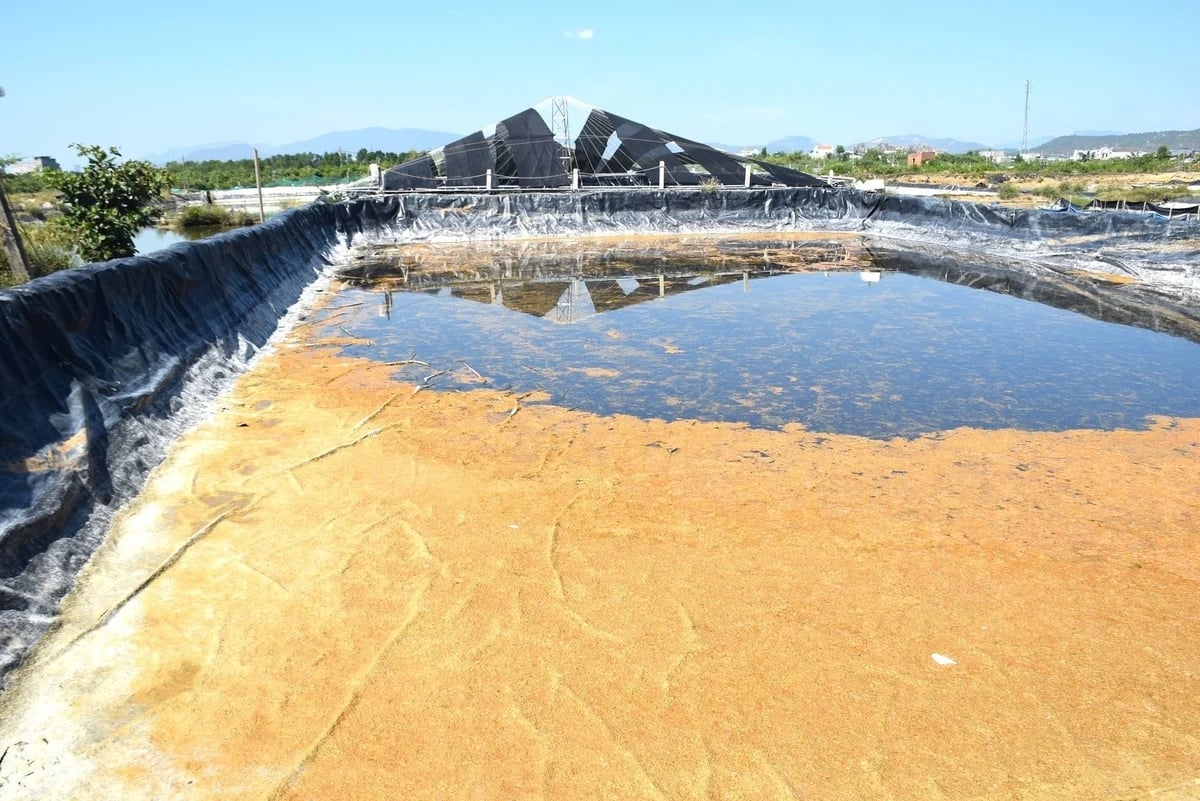
Mr. Hy’s intensive shrimp ponds have been left empty this season due to fears of further losses. Photo: V.D.T.
“The weather during the first crop of 2026 was extremely unusual. Disease hit my intensive pond, and despite spending heavily on treatments, I couldn’t stop it. All the shrimp died when they were just over a month old. In contrast, I stocked the extensive ponds at low densities alongside crabs and harvested about 1 ton of shrimp. Fortunately, the income from those ponds offset the losses from the intensive pond”, Mr. Phap said.
According to Mr. Ton Ky Hai, Vice Chairman of the People’s Committee of Tuy Phuoc Dong Commune, the commune has more than 400 hectares of shrimp farming area. Farmers are now entering the second crop, but rising feed costs are creating significant challenges.
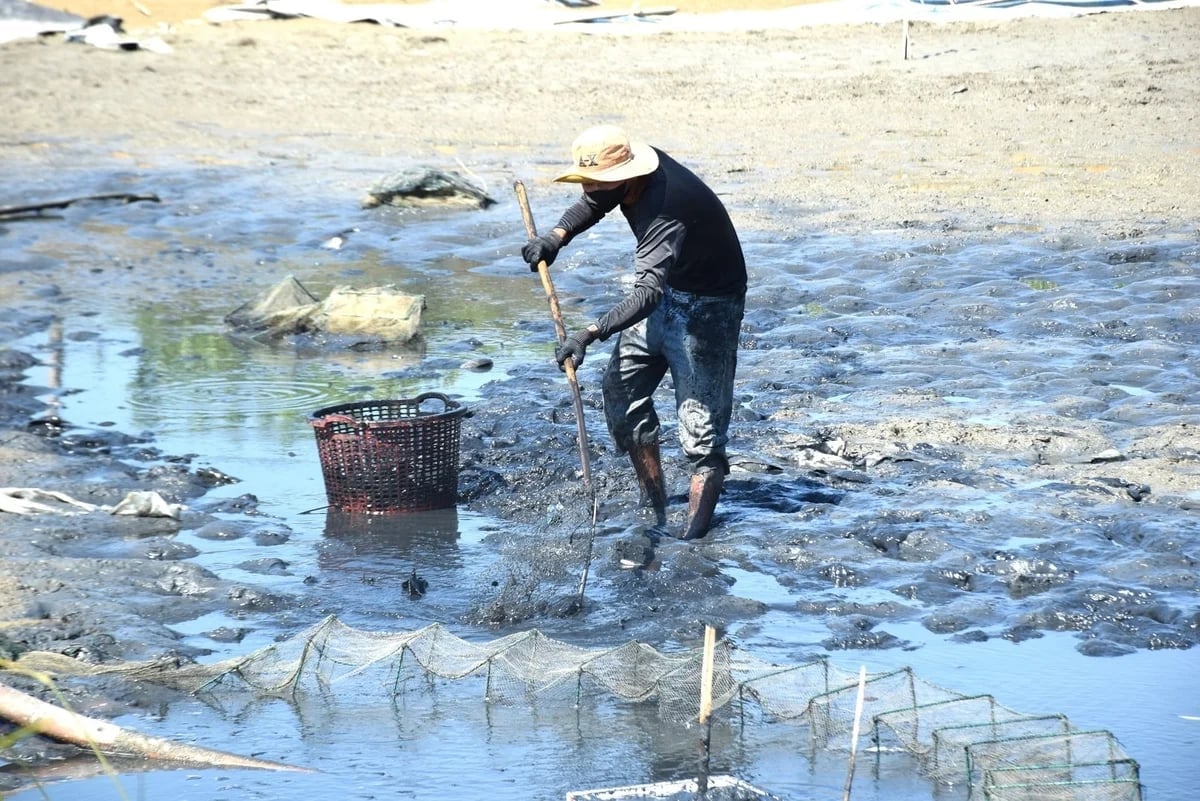
For the second crop of 2026, Mr. Duong Thanh Hy is converting one of his ten ponds to extensive shrimp farming. Photo: V.D.T.
Shrimp feed prices have increased twice in six months
According to Mr. Phap, extensive farming requires fewer seed shrimp due to lower stocking densities. It also reduces electricity consumption for aerators, lowers disease treatment costs, and significantly eases feed expenses, particularly important now that feed prices have continued to rise while shrimp prices have weakened.
Mr. Phap noted that during the first crop of 2026, shrimp weighing 35 shrimp per kilogram were previously sold for VND 180,000-200,000/kg. Recently, however, he could only sell them for VND 140,000-150,000/kg, depending on market conditions.
“Shrimp farming is becoming increasingly difficult. Everything is more expensive, labor, electricity, and feed, while shrimp prices keep falling. If the crop goes smoothly and disease-free, farmers can still earn a modest profit. But if disease strikes, the losses are severe,” he said.
According to Mr. Luan, shrimp feed prices remained stable throughout 2025, but since the beginning of 2026, feed prices have increased twice, rising by a total of VND 3,000/kg.
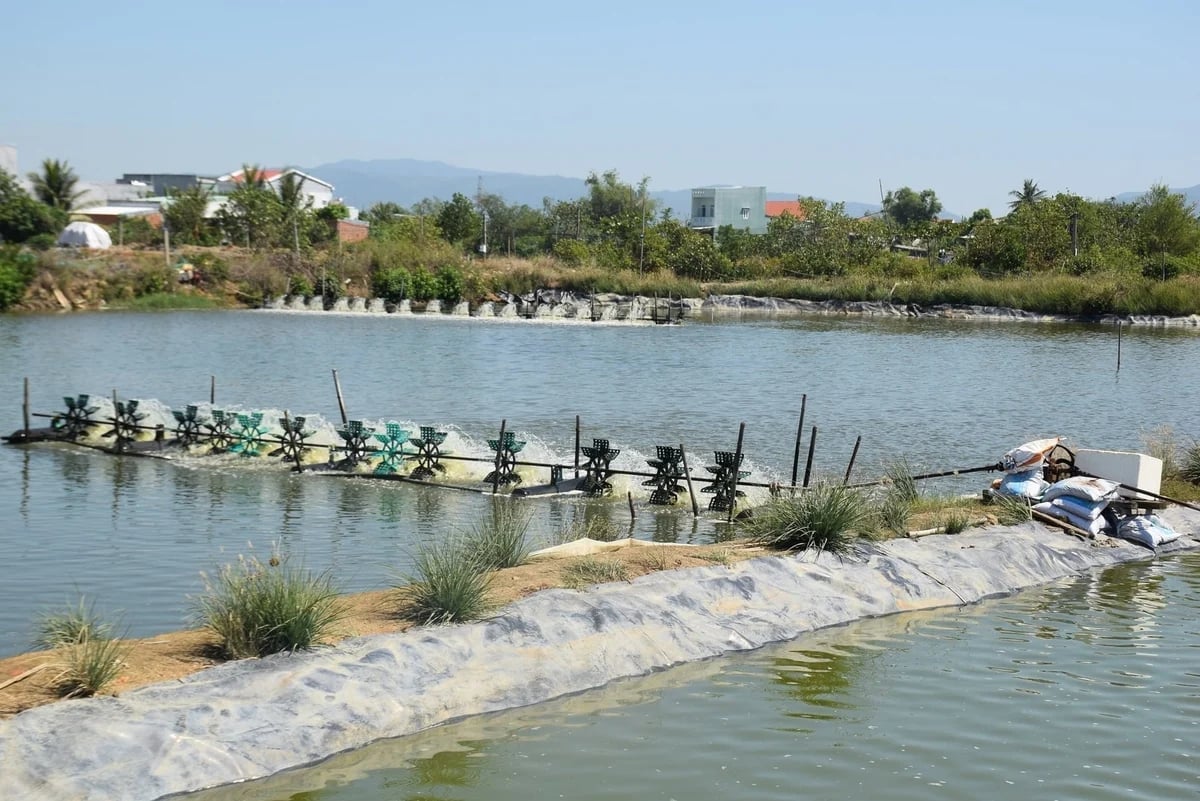
Only a small number of ponds in Vinh Quang 2 Hamlet are currently stocked and operating. Photo: V.D.T.
To cope with the current situation, Mr. Hy plans to significantly reduce stocking density this season. Previously, he stocked 60 shrimp per square meter; this crop, he will stock only 12 shrimp per square meter.
“When stocking density is high during hot weather like this, we need to run aerators throughout the afternoon, which consumes a lot of electricity. With feed prices so high, I will switch to feed containing 36% protein instead of the 42% protein feed I used before. The 36% protein feed costs VND 750,000 per 25-kg bag, while the 42% protein feed costs about VND 1.1 million per 25-kg bag. I will also reduce feeding frequency. Previously, I fed shrimp four times per day; now I will feed them only once or twice,” Mr. Hy explained.
According to Mr. Hy, shrimp farmers today face constant uncertainty, especially in areas with weak infrastructure such as Vinh Quang 2 Hamlet. Drainage canals are too small, making it difficult for wastewater from diseased ponds to flow away. Instead, contaminated water remains in the canals and gradually seeps into neighboring ponds, spreading disease throughout the farming area.
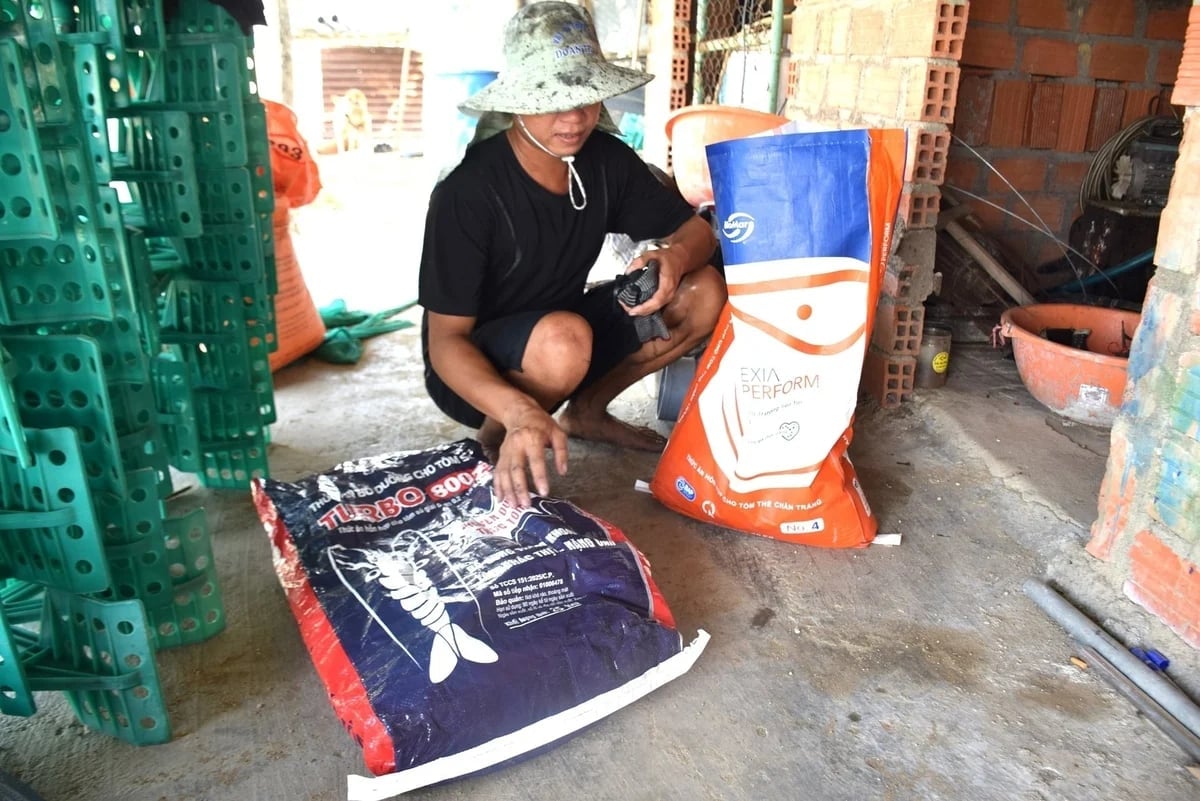
Previously, Mr. Duong Thanh Hy used 42% protein feed (left), but now he uses 36% protein feed (right) to reduce input costs. Photo: V.D.T.
“The biggest concern for farmers right now is disease. The second concern is that feed prices keep rising while shrimp prices remain low. In the past, harvesting shrimp at 50 shrimp per kilogram generated substantial profits – sometimes doubling the investment. Today, costs have increased across the board, so profits are minimal even when everything goes well. If disease strikes, farmers can lose everything,” Mr. Hy said.
According to Mr. Pham Thanh Nhan, Head of the Aquaculture Division under Gia Lai’s Fisheries Sub-Department, the province currently has 1,689 hectares of brackish-water aquaculture, including 27.5 hectares of high-tech shrimp farming. Total shrimp production has reached approximately 4,193 tons.
“Feed manufacturers are now producing feeds with higher protein content than before, which partly explains the price increases. Because these feeds are more concentrated, farmers can use smaller quantities, so the overall feed cost may not increase significantly,” Mr. Nhan said.
$ 1 = 26,448 VND (source: Vietcombank).
Agriculture News | Agri Products Price