

(VAN) The rising share of high-quality rice exports and low-emission rice is helping Vietnamese rice gain a foothold in premium markets worldwide.
Rice prices are recovering
According to the Plant Production and Protection Department, the harvest of the 2025-2026 winter-spring crop in the Mekong Delta has essentially concluded. Total cultivated area reached approximately 1.239 million hectares, with more than 1.237 million hectares harvested and average yields estimated at nearly 7.4 tons per hectare.
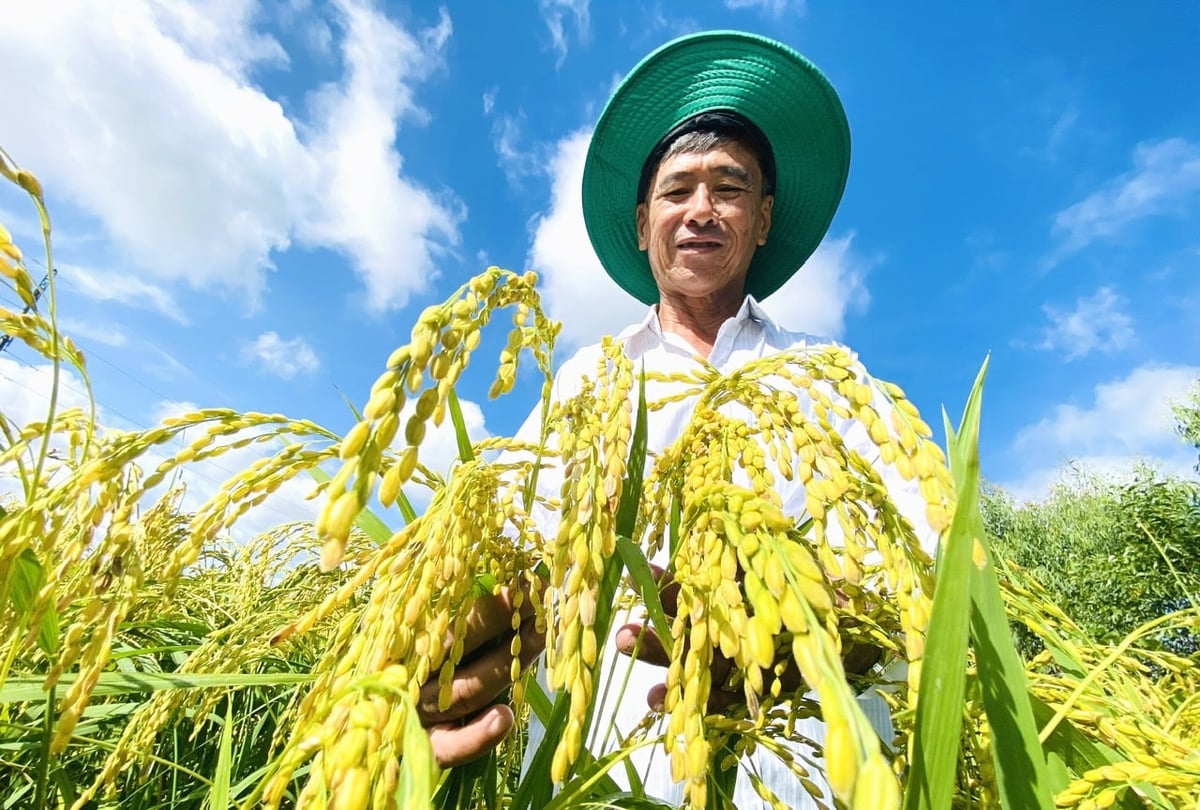
Rice prices in the Mekong Delta are recovering. Photo: Le Hoang Vu.
After a period of sharp decline due to export difficulties, rice prices in the Mekong Delta have shown signs of recovery. Current fresh paddy purchase prices remain VND 800 – 1,300/kg lower than the same period in 2025, but compared to the peak harvest period of the 2025-2026 winter-spring crop, prices have improved.
During the peak harvest period in February-March 2026, prices for Dai Thom 8/OM18 rice fell to around VND 5,500 – 5,700/kg, while OM5451 dropped to approximately VND 5,300 – 5,500/kg. Prices have since rebounded for several varieties. Dai Thom 8/OM18 now sells for VND 6,000 – 6,100/kg; OM5451 for VND 5,600 – 5,700/kg; and IR50404 for VND 5,400 – 5,500/kg.
Meanwhile, export rice prices are also in an uptrend. In early May, Vietnam’s 5% broken rice was priced below USD 400 per ton. It later surpassed USD 400 per ton and reached USD 407 per ton by May 14.
Although rice export volumes in the first four months of the year were slightly lower than the same period last year, shipment progress has remained strong. In April alone, more than 1.1 million tons of rice were exported, nearly matching April 2025 levels.
Rising export prices and sustained export volumes are expected to support further improvements in domestic rice prices. Up to this point, rice exports in 2026 have remained stable, helping farmers sell all commercial rice from the winter-spring crop while the summer-autumn harvest begins.
Prospects for “Green Vietnamese rice”
The year 2026 is opening a new chapter for Vietnam’s rice sector – no longer focused solely on exporting larger volumes, but on increasing value, building green brands, and repositioning Vietnamese rice in the global sustainable agriculture map.
From the rice fields of the Mekong Delta, a profound transformation is underway, shifting from quantity to quality, from traditional farming to low-emission agriculture, and from competing through low prices to competing through green value and environmental responsibility.
At the center of this transformation is the Scheme to grow one million hectares of high-quality, low-emission rice in the Mekong Delta (the Scheme) under Decision 1490/QD-TTg – regarded as the largest restructuring program in Vietnam’s rice industry history.
As of May 2026, more than 354,000 hectares of high-quality, low-emission rice cultivation had been implemented. This demonstrates a major shift in production mindset across the entire system – from government agencies and businesses to cooperatives and farmers.
A revolution from the fields
Across fields in Dong Thap, An Giang, Can Tho, and Soc Trang, farmers are becoming familiar with concepts once considered foreign, such as AWD (alternate wetting and drying), MRV (measurement, reporting, and verification of emissions), and digital traceability systems.
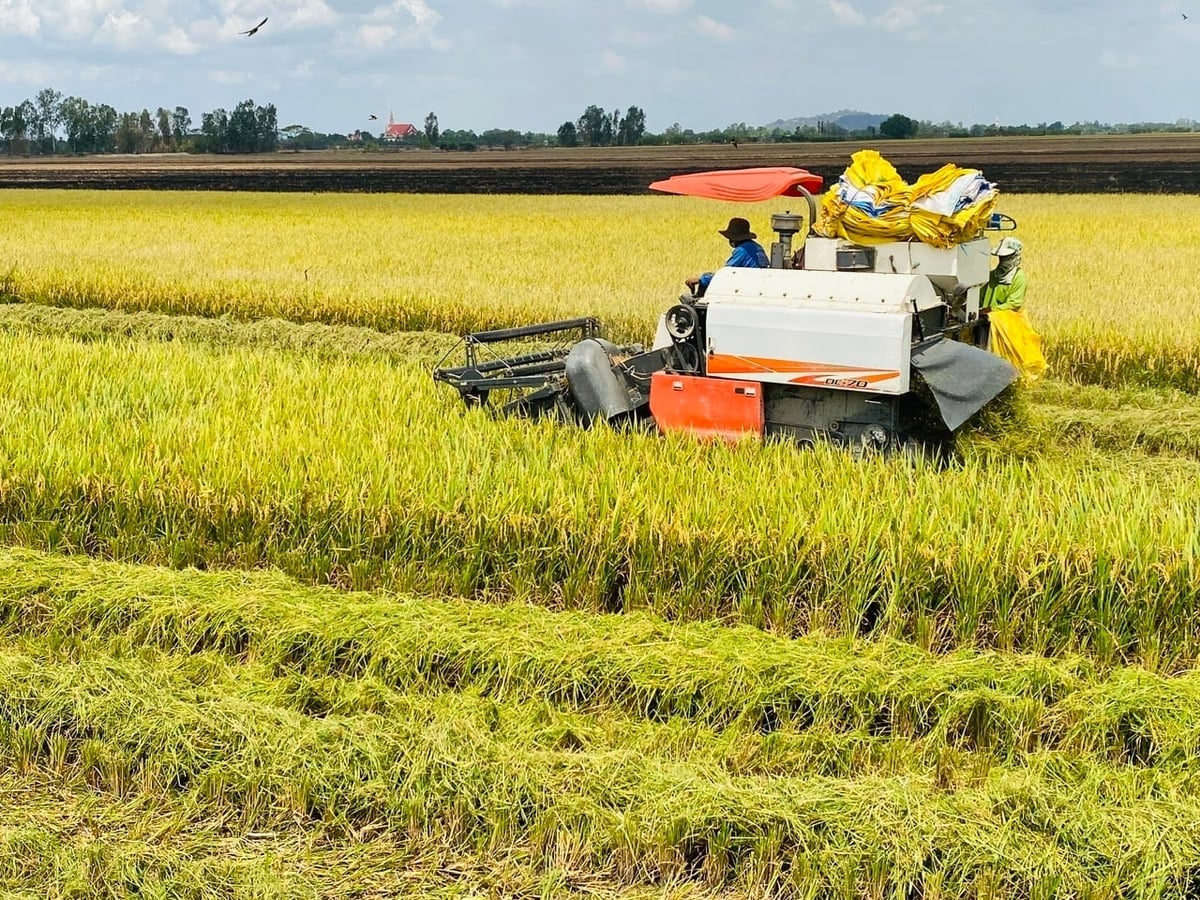
Farmers in the Mekong Delta harvest rice. Photo: Le Hoang Vu.
Rice cultivation is no longer about “sowing more to harvest more”. Instead, farmers are planting less densely, applying fertilizers more precisely, reducing pesticide use, and especially eliminating post-harvest straw burning. These seemingly small changes are producing significant results.
Models participating in the Scheme have reduced seed use by 30-50%, nitrogen fertilizer by around 30%, and pesticide spraying by two to three applications per crop. As a result, input costs have declined sharply while yields have increased by 5-10%.
In Dong Thap, one pilot model achieved yields of up to 7.1 tons per hectare, generating profits of nearly VND 28 million per hectare, up VND 4.6 – 4.8 million compared to conventional models. More advanced models reduced average costs by VND 4.12 million per hectare and increased yields by an additional 0.78 tons per hectare.
According to field data, greenhouse gas emissions have been reduced by between 3.13 and over 8 tons of CO₂ equivalent per hectare per crop in many models. This positions Vietnam among the world’s pioneering countries in large-scale low-carbon rice production.
Behind this success is the emergence of digital tools such as ViRiCert – a platform supporting cultivation monitoring, emissions verification, and certification of “low-emission rice.” This is considered a crucial foundation for Vietnamese rice to enter carbon credit markets in the future.
Vietnamese rice enters premium segments
While Vietnamese rice previously competed mainly through low prices in traditional markets, 2026 has witnessed a strong shift toward premium segments.
Rice exports in the first four months of the year declined in both volume and value, reaching 3.37 million tons worth USD 1.58 billion – down 1.4% in volume and 10.3% in export value, mainly due to lower global rice prices.
However, the export structure continues shifting positively. High-quality rice now accounts for around 89% of total exports, with fragrant and specialty rice making up 60-70%. Brands such as ST24, ST25, Hat Ngoc Troi, and Japonica are gradually gaining acceptance in demanding markets, including the EU, the United States, and Japan.
June 2025 marked a historic milestone when the first shipment of “Green Vietnamese low-emission rice” was exported to Japan at an FOB price exceeding USD 800 per ton. Some premium fragrant rice varieties now achieve prices of USD 700-800 per ton, while ST25 has reached USD 1,150 per ton, 10-25% higher than conventional rice.
This shows how rapidly global markets are changing. Consumers are no longer buying “rice grains”; they are buying the story behind them – stories of environmental responsibility, carbon emissions, social accountability, and transparent supply chains.
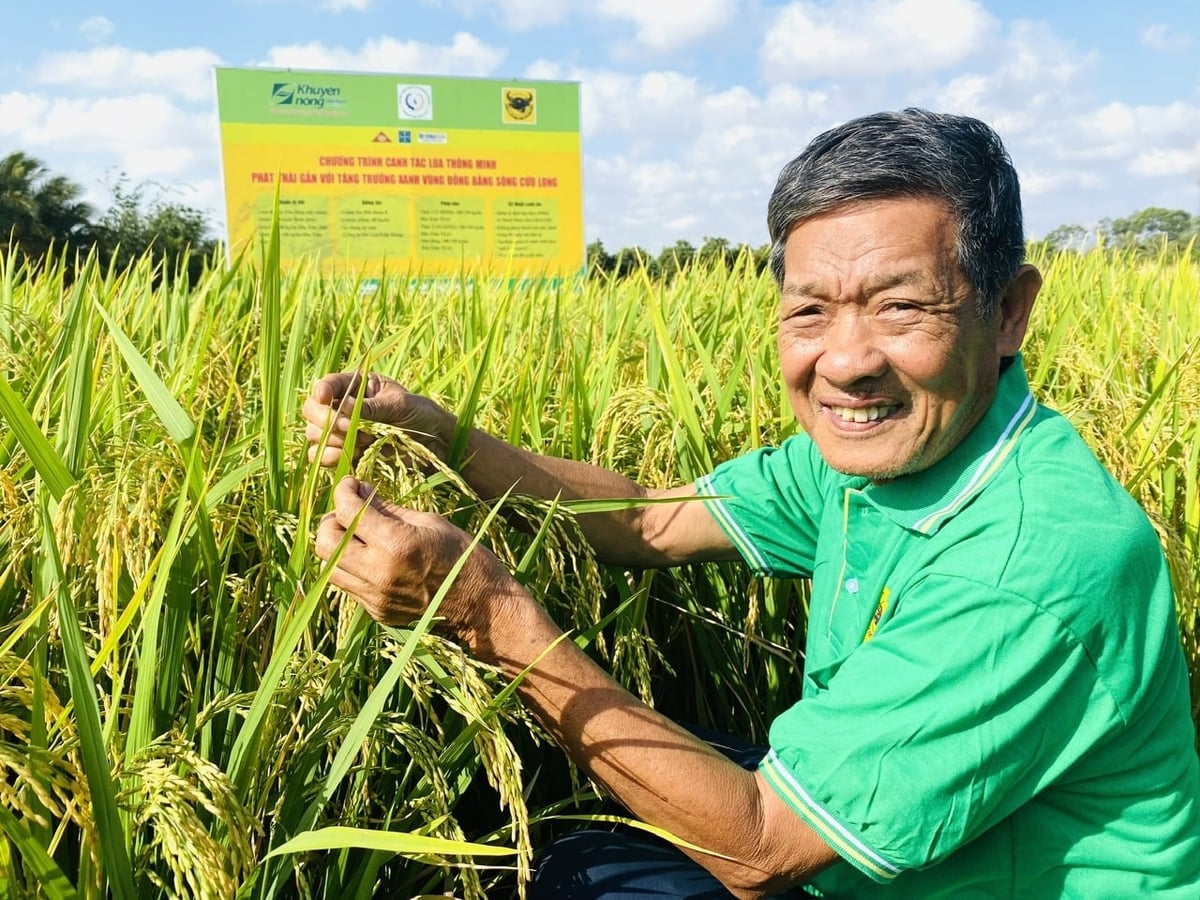
A field participating in the one-million-hectare high-quality, low-emission rice Scheme. Photo: Le Hoang Vu.
The strength of collaboration
One of the most important factors behind the Scheme’s initial success is the increasingly close cooperation among the “four stakeholders”: government, scientists, businesses, and farmers.
The government provides policy frameworks and infrastructure investment. Research institutes, universities, and international organizations such as IRRI and the World Bank offer technical support, develop MRV systems, and establish low-emission standards.
Businesses have also changed their approach – no longer simply purchasing rice after harvest, but participating in raw material zone development, signing long-term procurement contracts, and supporting traceability systems.
Meanwhile, cooperatives are becoming the “organizational nucleus” of the new value chain. They help standardize production area data, implement digital farming records, coordinate production, and connect with exporting enterprises. In many localities, farmers no longer see emissions reduction as a burden but a new competitive advantage for Vietnamese rice.
$ 1 = VND 26,387 – Source: Vietcombank.
Agriculture News | Agri Products Price