


Migration and the trend of young people left agriculture, causing many gardens and fields in the West to have only elderly people to cultivate, facing the risk of no inheritance generation.
Mr. Nguyen Van Mach, 63, managed 1.2 ha of Cat Chu mango in My Tho commune (former Cao Lanh district, Dong Thap). His three children were mature but they did not want to follow agriculture. Each month, it took him nearly a dozen days of spraying, spreading stool, a few days of mowing the grass, adding trimming time, cleaning the garden.
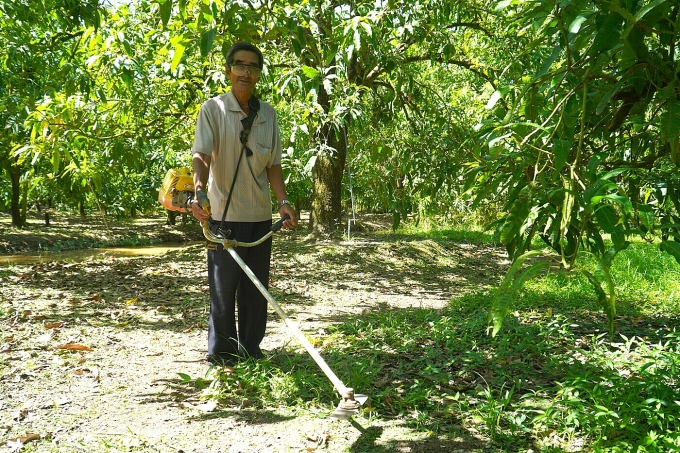
Mr. Nguyen Van Mach, broadcast grass in a 30 -year -old mango garden. Image: Ngoc Tai
Some work he can take care of themselves with cutting machines, automatic irrigation systems. Particularly for fruit, harvesting must hire a group of seasonal labor, priced at 400,000 VND a day, not to mention rice and a drink when the job is done. “Gardening every day has a job. In a few years, I can’t do it, but my children and grandchildren are not interested. The garden is difficult to sell,” Mr. Tiem said.
Not far away, Mr. Tran Phu Hau, 62 years old, also in the scene alone worth 5,000 m2. All three children choose to be a worker and trade. “The children said that they were extremely shallow, the income was precarious, while going to work at the workshop with regular salary, insurance, pension,” he said. Currently, the garden brings about 150 million VND per year, sufficient activities for the old couple. It is expected that in a few years, when his health is weak, he will rent a garden, accept income decreases.
According to farmers, seasonal workers are increasingly scarce, cannot rent for all stages. Fragmented gardens, many canals make it difficult for machines to apply synchronously. In order to use high technology like abroad, farmers must simultaneously plant new, renovate the entire garden, conditions that few households can do.
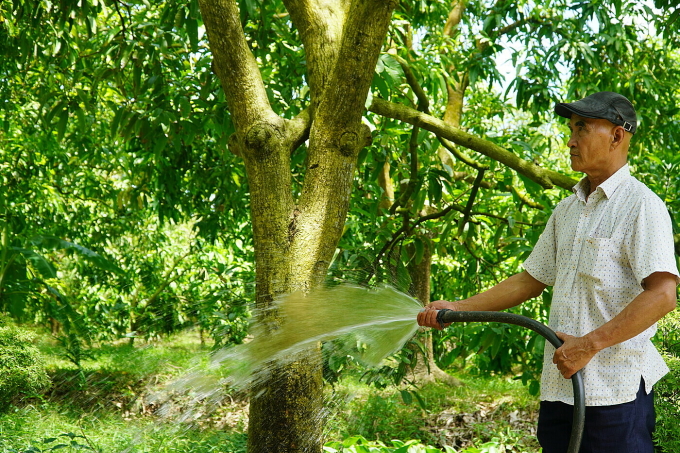
Mr. Tran Phu Hau Dinh rented mango garden when his health could not take over farming. Image: Ngoc Tai
Many Western farmers like Mr. Khoa, Mr. Hau have no successors, although this region is the largest “granary” in the country, accounting for 50% of rice production, 65% of aquatic farming and contributing 17% of GDP.
According to the General Statistics Office, in the period of 2011-2021, agricultural labor in the Mekong Delta decreased from 5.1 million to 3.6 million people, only accounting for 40% of the labor force. In particular, young workers under the age of 30 dropped sharply, while the group over 40 years old accounted for nearly 60% and continued to increase.
A survey at Can Tho University and An Giang University with nearly 450 students with agricultural families showed that only 20% intended to stick with this field, less than 3% wanted to directly produce.
According to experts, labor transfer from agriculture to industry, service is an indispensable trend in the process of modernization. But the absence of young forces inherited the agriculture facing the risk of lagging, difficulty applying high technology and maintaining the “supporting” role of the economy.
Western agriculture also faces the heavy impact of climate change. Research by the lecturers of the University of Natural Resources and Environment of Ho Chi Minh City and the University of Economics and Law of Ho Chi Minh City show that most farmers respond to experience, spontaneously, while human resources are mainly over 40 years old, universal level, difficult to access modern production technology.
“In order to thrive, agriculture must rely on knowledge and science and technology. If the younger generation is qualified, the conversion will be very slow,” the study said.
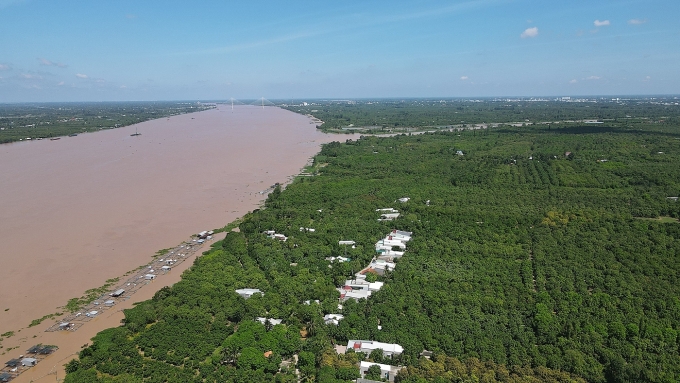
The mango cultivation area in Dong Thap is located along the Tien River. Image: Ngoc Tai
Mr. Le Ha Luan, Director of Dong Thap Department of Agriculture and Rural Development, said that the elderly directly produced is a trend not only in Vietnam but also many countries, because this industry’s income is difficult to compete. In the long term, it is necessary to develop the agricultural service system, cooperatives, and groups of machinery applications to replace direct labor. At that time, the elderly farmers played the role of management and supervision, not having to carry all the heavy work.
Dong Thap currently opens many training courses for older farmers, in order to improve skills, gradually professionalize production. The government also encourages the formation of a new type of cooperative, agricultural enterprises, attracting young workers to participate in the value chain instead of just directly cultivating.
However, according to many experts, want to retain young people, agriculture must become an attractive profession with stable income, promotion opportunities and protected by the system of security policies similar to industrial and services.
Ngoc Tai