

(VAN) As global markets impose increasingly stringent requirements on quality and traceability, technology adoption and innovation are emerging as new drivers of competitiveness for Vietnamese agricultural products.
The issue was highlighted at the opening ceremony of Agri Viet Nam & Biotech Viet Nam 2026, held on June 10 in Ho Chi Minh City. Mr. Le Thanh Hoa, Deputy Director General of the National Authority for Agro-Forestry-Fishery Quality, Processing and Market Development (NAFIQPM) under the Ministry of Agriculture and Environment, said that after 40 years of economic reform, Viet Nam’s agriculture sector has undergone a remarkable transformation, evolving from a country once facing food shortages into one of the world’s leading exporters of agricultural, forestry and fishery products, with exports reaching 196 countries and territories.
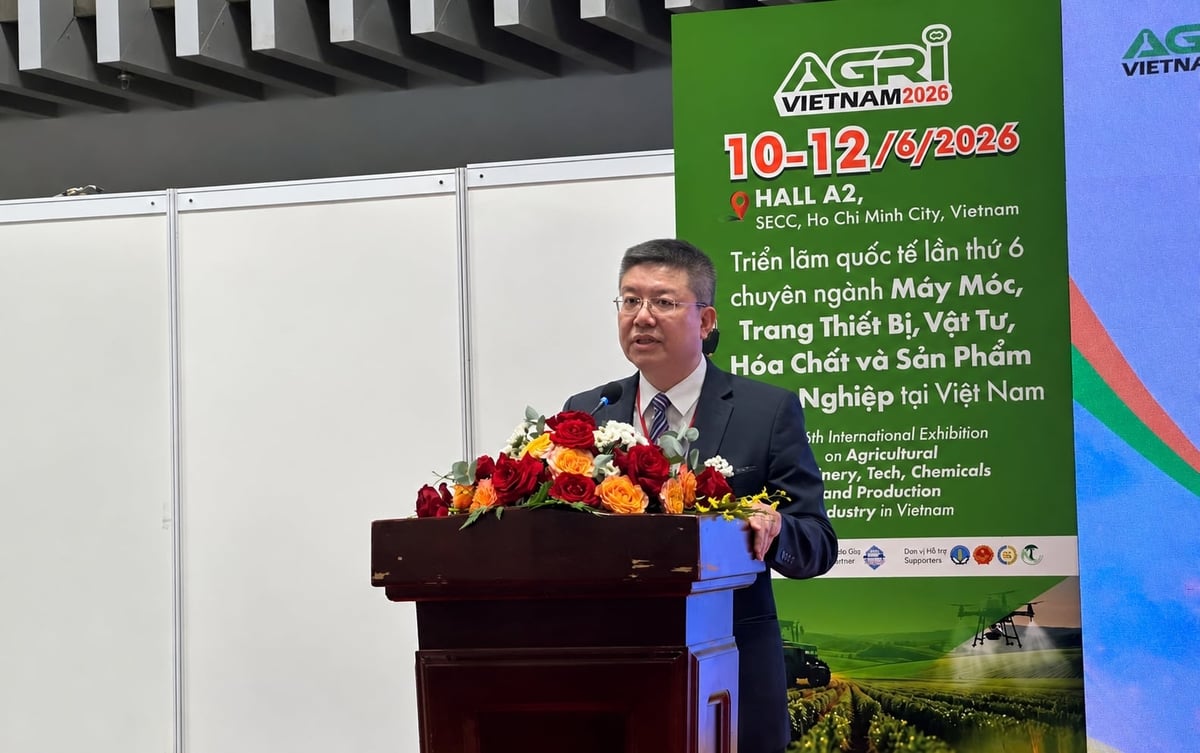
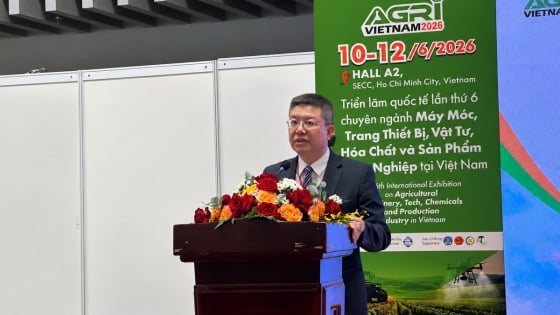
Mr. Le Thanh Hoa, Deputy Director General of the NAFIQPM under the Ministry of Agriculture and Environment, said that science and technology applications are the foundation for enhancing the competitiveness of Vietnamese agricultural products. Photo: Ha Duyen.
According to Mr. Hoa, these achievements have been driven in large part by advances in science and technology across crop cultivation, livestock farming, aquaculture, as well as post-harvest processing, preservation and value-added production for both domestic consumption and exports.
In 2025, Viet Nam’s agricultural export turnover exceeded USD 70.6 billion, up 12% from the previous year and surpassing the government’s target. Fruit and vegetable exports alone reached USD 8.56 billion. In the first quarter of 2026, agricultural exports totaled USD 16.69 billion, including USD 1.54 billion from fruits and vegetables, up 32.1% from the same period in 2025.
According to the NAFIQPM, these results provide an important foundation for the agriculture, forestry and fisheries sector to pursue an export target of USD 73-74 billion in 2026.
However, as the sector enters a new phase of development, Vietnamese agriculture is shifting from a quantity-driven growth model toward one that prioritizes quality. The application of advanced technologies in production, storage and processing is being accelerated to optimize resource efficiency while improving product quality and value.
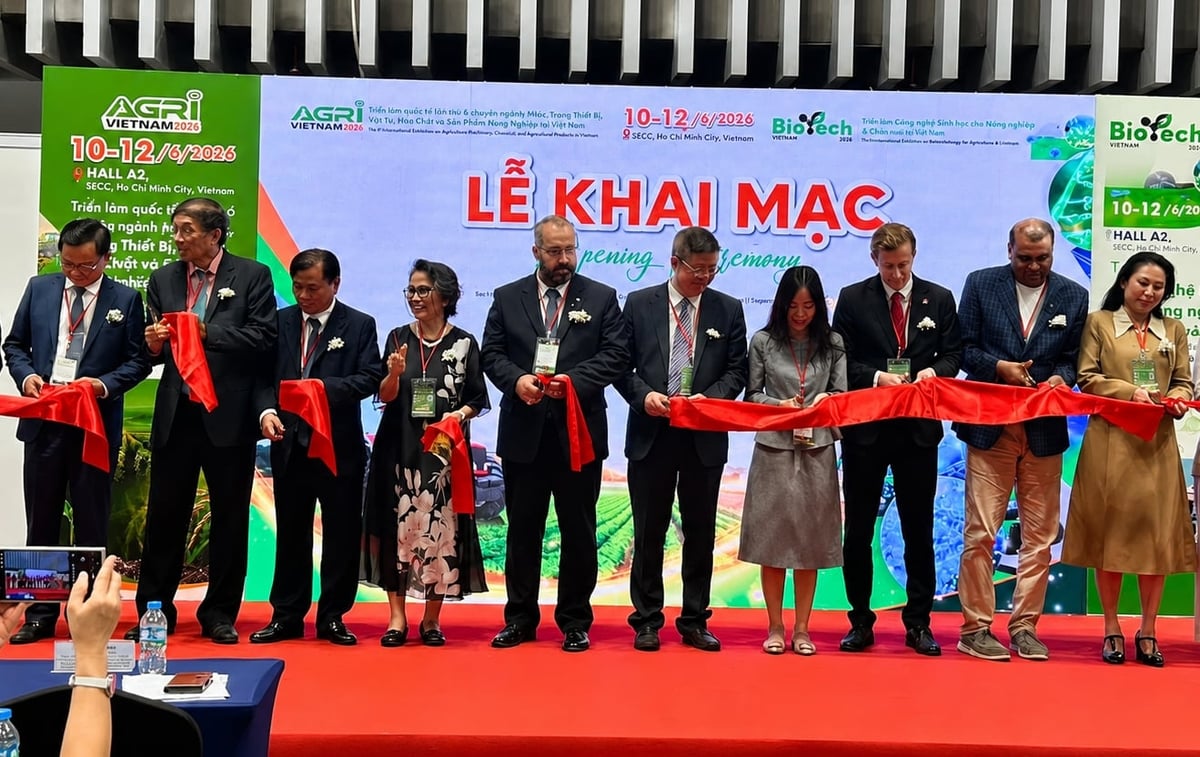
Delegates perform the ribbon-cutting ceremony at the opening of Agri Viet Nam & Biotech Viet Nam 2026. Photo: Ha Duyen.
At the same time, modern processing technologies and circular economy models are increasingly being integrated into agricultural value chains to create high-quality, safe and sustainable products that not only generate economic benefits but also contribute to social and environmental goals.
Mr. Hoa noted that scientific advances and biotechnology applications in crop production, livestock farming, aquaculture, post-harvest preservation and processing are playing an increasingly important role in the sector’s development.
Through innovations in plant and animal breeding, biological products, microbial technologies, crop protection solutions and biosecure livestock farming models, biotechnology is helping improve productivity and product quality, protect the environment and enable producers to meet increasingly demanding international market standards.
Nevertheless, agricultural production and exports continue to face numerous challenges, including stricter traceability requirements, outbreaks of plant and animal diseases, climate change impacts, localized flooding, water shortages, saltwater intrusion and uneven digital transformation across localities.
Against this backdrop, Mr. Hoa stressed that applying science and technology, developing integrated agricultural databases, strengthening regional cooperation and improving traceability systems will serve as key foundations for building a modern, green, ecological and sustainable agriculture sector.
Sharing the same view, Ms. Nguyen Thi Lam Ha, Deputy Director of Minh Vi Advertising and Exhibition Services Co., Ltd. (VEAS), said that amid increasingly demanding domestic and international market requirements, biotechnology is becoming a critical tool for improving agricultural productivity and product quality while enhancing the resilience of crops and livestock against climate change impacts.
According to Ms. Ha, biological solutions not only help reduce environmental pollution but also support Viet Nam’s transition toward greener, more sustainable agriculture and deeper integration into global markets.
Taking place from June 10-12 in Ho Chi Minh City, Agri Viet Nam & Biotech Viet Nam 2026 has brought together more than 200 businesses and organizations from 15 countries and territories, showcasing a wide range of new technologies and solutions in agriculture and biotechnology.
Agri Viet Nam & Biotech Viet Nam is one of Vietnam’s annual specialized exhibitions focusing on agriculture, agricultural machinery and biotechnology. The event serves as a platform for domestic and international businesses, researchers and industry experts to connect, exchange technologies and explore cooperation opportunities in agricultural production and processing. In recent years, the exhibition has increasingly attracted companies introducing solutions related to smart farming, biological products, greenhouse technologies, irrigation systems, post-harvest preservation and environmentally friendly agricultural inputs, reflecting the broader transition toward sustainable and technology-driven agriculture in Viet Nam.
Agriculture News | Agri Products Price